How Many Boxes of Vinyl Plank Flooring Do You Need?
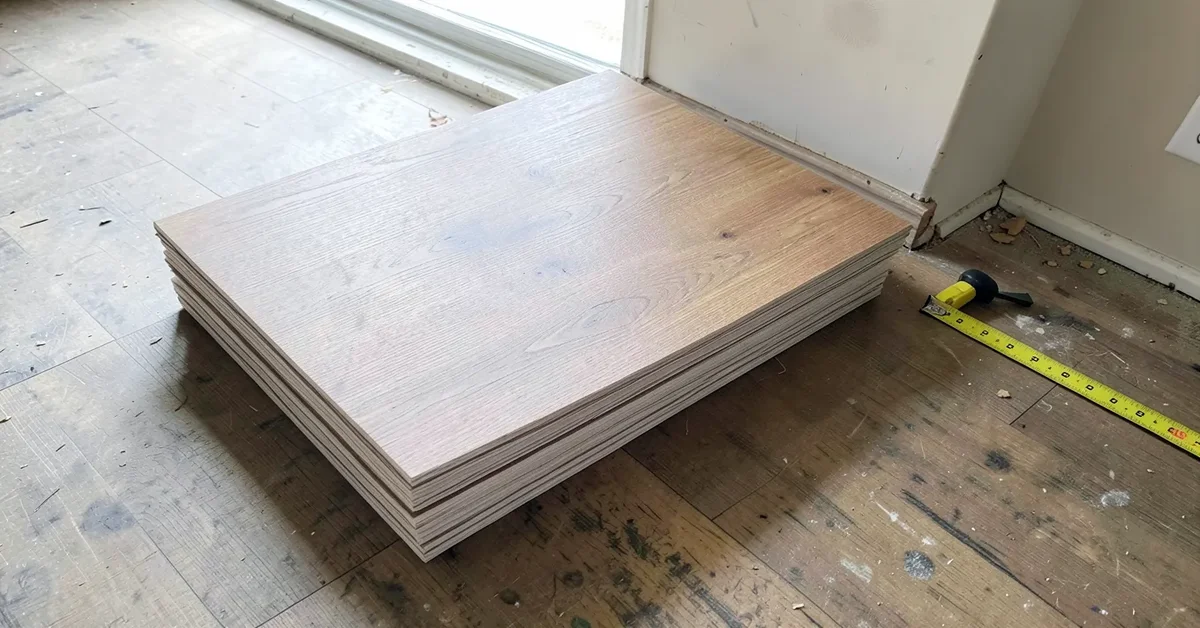
Measure the room’s square footage, divide by the square footage one box covers (check the box, but 18-24 square feet is typical), then add 10% for straight layouts or 15-20% for diagonal or herringbone patterns before rounding up. The box coverage varies by brand and plank size, so skipping that one label check is the most common reason people buy the wrong amount.
Step 1: Measure the Actual Square Footage
Best Install Kit For Vinyl Plank
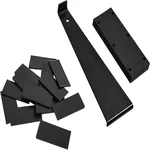 |
Roberts Laminate and Wood Flooring Installation Kit – $22.97 A pull bar, tapping block, and 50 spacers, exactly what you need to fit planks tight against walls and each other without damaging the edges.
|
Measure the length and width of the room in feet, rounding each measurement up to the nearest whole foot, then multiply them together. A 10 by 12 room comes to 120 square feet. If the room isn’t a simple rectangle, closets, alcoves, and bump-outs, break it into rectangular sections, calculate each separately, and add them together rather than guessing at an average.
Step 2: Find Your Box’s Actual Coverage (Don’t Assume 20 Sq Ft)
This is the step most guides gloss over. Box coverage isn’t a fixed number across the whole vinyl plank category; it depends entirely on the plank dimensions and how many planks the manufacturer packs per box. A box of wider, longer planks might cover 30 square feet with fewer pieces, while a box of narrower, shorter planks covers less with more pieces in it. Always check the actual coverage printed on the box itself or the product page rather than assuming a round number, since using the wrong figure throws off every calculation that follows.
If you want to know how many individual planks are in a box rather than just the square footage, that number is also on the box, and it’s worth checking specifically if you’re calculating cuts for a pattern like herringbone, where waste is counted in pieces as much as square feet.
Step 3: Add a Waste Buffer That Matches Your Layout
A straight, simple layout with minimal cuts needs about 10% extra to cover trimming at walls and the occasional mistake. A diagonal layout needs closer to 15%, since diagonal cuts waste more of each plank than straight cuts do. A herringbone or chevron pattern needs 15-20% or more, because nearly every plank at the room’s edges requires an angled cut, and matching the pattern correctly means more offcuts end up unusable for the next row.
It’s also worth buying one extra box beyond your calculated total and setting it aside unopened. Keeping a few unused planks from the same dye lot means you can repair a damaged plank years later with a color and finish that actually matches, instead of hunting for a discontinued style.
Putting It Together: A Worked Example
Say your room measures 12 by 15 feet, for 180 square feet. You’re using a straight layout, so you add 10% waste: 180 x 1.10 = 198 square feet needed. If your specific box covers 24 square feet (check yours; don’t assume), divide 198 by 24 to get 8.25 boxes. Since you can’t buy a fraction of a box, round up to 9 boxes.
- Room square footage: 12 ft × 15 ft = 180 sq ft
- Add 10% waste (straight layout): 180 × 1.10 = 198 sq ft
- Divide by box coverage (24 sq ft per box in this example): 198 ÷ 24 = 8.25
- Round up: 9 boxes
Redo this same math with your own room dimensions and your specific box’s printed coverage, and adjust the waste percentage up if you’re doing a diagonal or herringbone pattern.
Multiple Rooms or Irregular Layouts
For more than one room using the same flooring, calculate each room’s square footage separately, add them together, then apply your waste percentage to the combined total rather than to each room individually; this avoids over-rounding multiple times. For an irregular room, split it into rectangles on paper, measure and calculate each rectangle, and sum the results before adding waste.
Frequently Asked Questions
How many square feet are in a box of vinyl plank flooring?
It varies by brand and plank size, typically somewhere between 18 and 24 square feet per box, though some products differ. Always check the coverage printed on your specific box rather than assuming a standard number.
How many planks are in a box of vinyl flooring?
This depends on the plank’s length and width and the total square footage the box covers; it’s printed on the box itself. Wider or longer planks mean fewer pieces per box for the same coverage, while narrower or shorter planks mean more pieces.
Do I just divide the room’s square footage by the square footage per box?
Not quite; divide the room’s square footage plus your waste buffer (10% for a straight layout, 15-20% for diagonal or herringbone) by the box’s coverage, then round up to the next whole box. Dividing the raw room size without adding waste is the most common reason people come up short mid-install.
Should I buy extra boxes beyond my calculated total?
Yes, beyond your waste percentage it’s worth keeping one full unopened box in reserve from the same production lot, specifically for future repairs, since matching color and finish gets harder once a style is discontinued.
Bottom Line
The formula itself is simple: room square footage, plus a waste buffer matched to your layout, divided by your box’s actual printed coverage, rounded up. The part worth double-checking is that box coverage number itself, since assuming a generic 20-square-foot figure instead of your product’s real coverage is what leads to buying the wrong number of boxes in the first place.
Sponsored / affiliate links. As an Amazon Associate I earn from qualifying purchases. I may earn additional commission from eligible campaigns.