How Many Maple Taps Per Tree: The Ultimate, Safe Guide
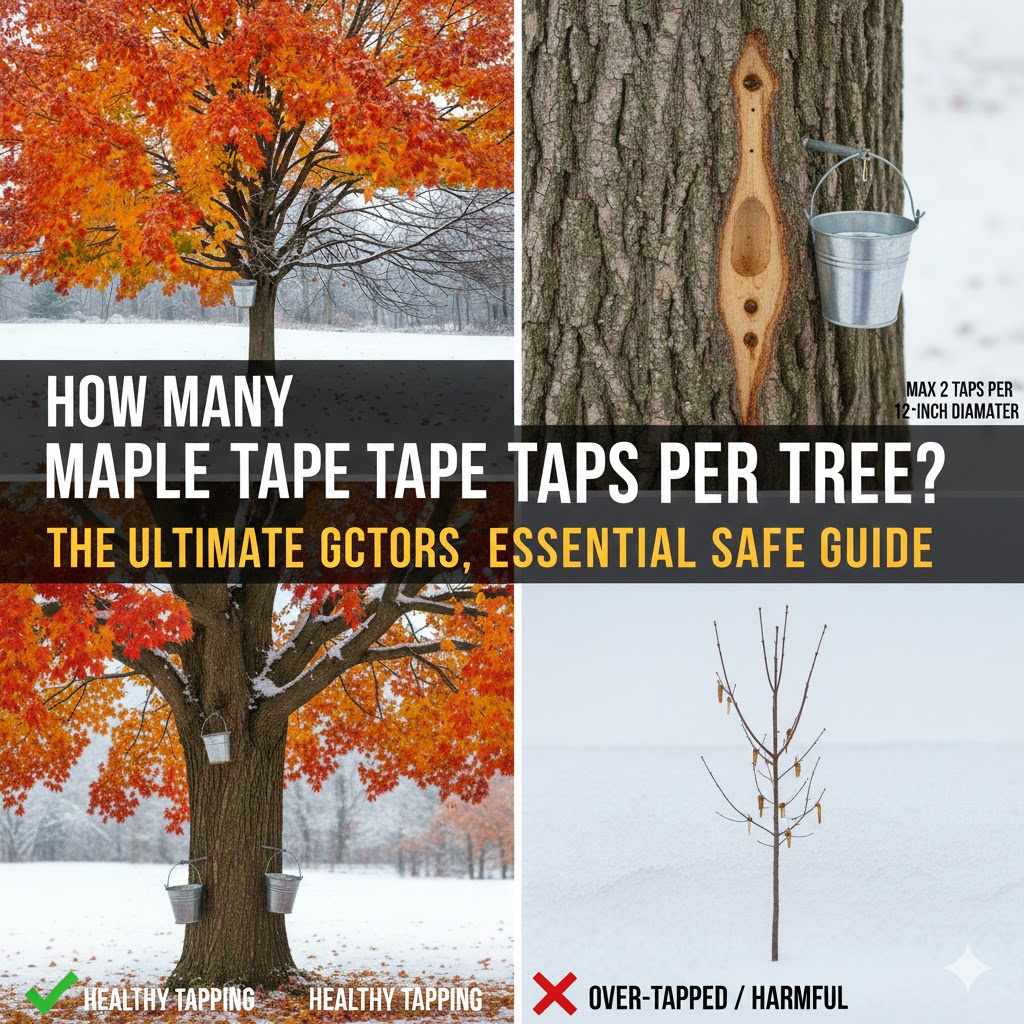
A healthy maple tree measuring 10–17 inches in diameter can safely support one tap. For trees 18–24 inches in diameter, you can use two taps. Large, mature trees over 25 inches in diameter can handle a maximum of three taps. Never tap a tree that is less than 10 inches in diameter to protect its health.
Have you ever looked at a big, beautiful maple tree and wondered if you could make your own syrup? It’s a wonderful project! But one of the first questions everyone asks is, “How many taps can I put in this tree?” It’s a great question, because getting it right is the key to enjoying delicious syrup for years to come.
Putting too many taps in a tree can hurt it, and we definitely don’t want to do that. The good news is that the rules are very simple. In this guide, I’ll walk you through everything, step-by-step. We’ll learn how to measure your tree and tap it safely, ensuring it stays happy and healthy.
Why Your Tree’s Health Always Comes First
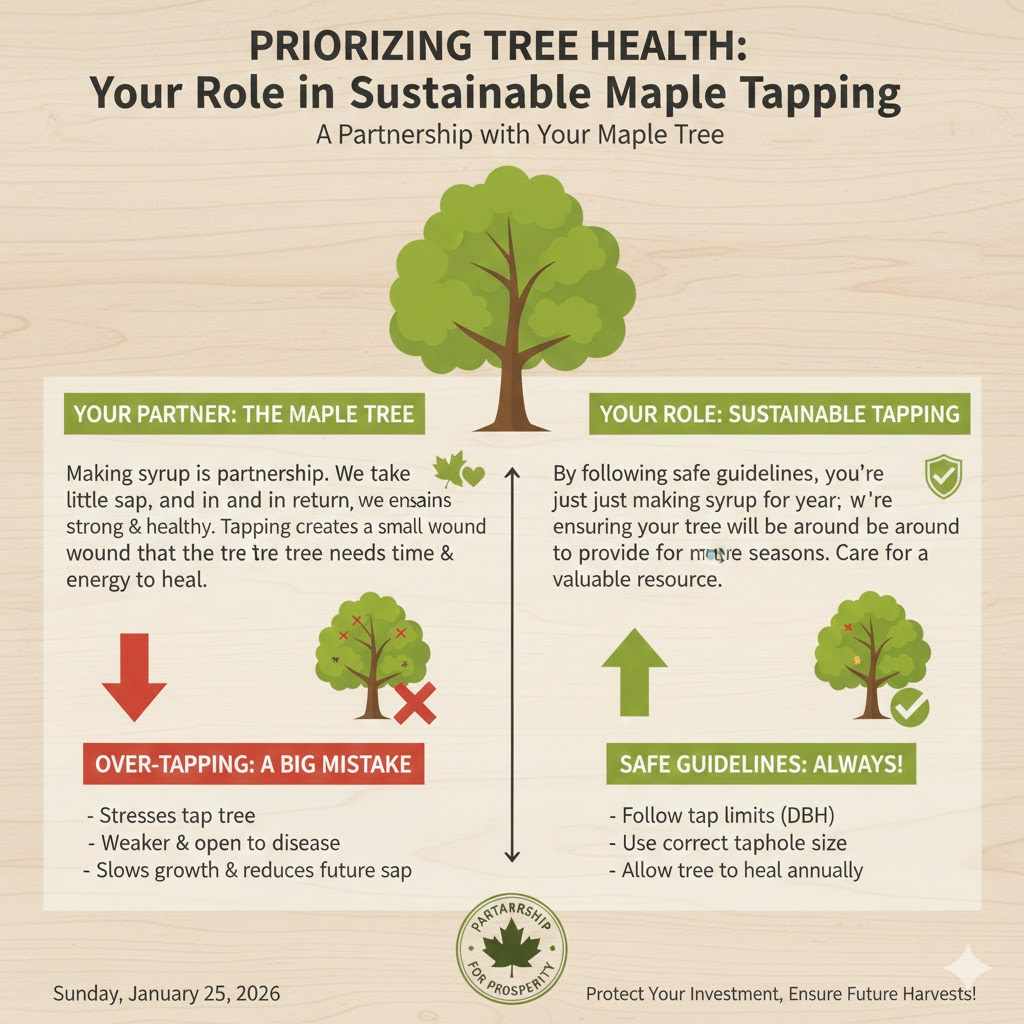
Before we grab our drills, let’s talk about our most important partner in this process: the maple tree itself. Making syrup is a partnership. We take a little bit of sap, and in return, we must make sure the tree remains strong and healthy. Tapping creates a small wound, and just like us, a tree needs time and energy to heal.
Over-tapping is like asking too much of a friend. It can stress the tree, making it weaker and more open to disease or insect damage. It can even slow its growth or reduce the amount of sap it can give in the future. By following safe guidelines, you’re not just making syrup for this year; you’re ensuring your tree will be around to provide for many more seasons. Think of it as caring for a valuable resource that gives back.
The Golden Rule: Measure Your Tree’s Diameter
The number one factor that determines how many taps a tree can handle is its diameter (the distance straight through its trunk). Not its height, not its age, but its thickness. We measure this at a standard spot called “breast height,” which is about 4.5 feet up from the ground.
Don’t worry, you don’t need fancy tools. Here are two easy ways to do it:
Method 1: Using a Flexible Measuring Tape (Easiest)
- Wrap a flexible sewing tape measure around the tree trunk, about 4.5 feet from the ground.
- Make sure the tape is straight and level.
- The number you get is the tree’s circumference.
- To find the diameter, just divide that number by 3.14 (pi). For example, if the circumference is 38 inches, the diameter is just over 12 inches (38 ÷ 3.14 = 12.1).
Method 2: Using a String and a Ruler
- Wrap a piece of string around the tree at the 4.5-foot mark.
- Mark the string where it meets the end.
- Lay the string flat and measure the length up to your mark with a ruler or tape measure. This is the circumference.
- Just like before, divide that number by 3.14 to get the diameter.
Once you have your diameter, you can easily figure out the right number of taps.
Maple Tapping Guidelines at a Glance
This simple table is your cheat sheet for safe tapping. These guidelines are trusted by experts and are designed to protect the tree’s health for the long term. According to forestry experts at institutions like the Cornell Maple Program, following these diameter rules is crucial for sustainable sugaring.
| Tree Diameter (at 4.5 ft high) | Recommended Number of Taps | Notes |
|---|---|---|
| Under 10 inches | 0 Taps | This tree is too young. Let it grow! |
| 10 to 17 inches | 1 Tap | A healthy, mature tree ready for its first tap. |
| 18 to 24 inches | 2 Taps | A large, strong tree that can safely support two taps. |
| 25 inches or more | 3 Taps | A very large, mature tree. This is the maximum recommended. |
Remember, three taps is the absolute maximum, no matter how huge the tree looks. This ensures the tree has more than enough healthy bark and wood to heal properly and continue thriving.
How to Identify the Right Maple Trees
Before you tap, you need to be sure you have a maple tree! While many types of maples produce sap, some are much better than others. The best ones have sap with high sugar content, which means less boiling for you.
Here are the top three maples to look for during tapping season (late winter/early spring), when there are no leaves to help you.
- Sugar Maple (Best): The undisputed king of syrup. Its sap has the highest sugar content, often 2-3%. Look for thick, grayish-brown bark with deep grooves that can look shaggy or plated on older trees. Its buds are very sharp, pointed, and brown.
- Red Maple: A very common tree and a good choice for syrup. Its sap has a lower sugar content (around 1-2%), so you’ll need to boil it longer. Young Red Maples have smooth, light gray bark. Older trees have bark that forms shaggy plates or narrow ridges. Its buds are reddish and more rounded or blunt compared to the sharp Sugar Maple buds.
- Silver Maple: Another option, though its sap has lower sugar content similar to the Red Maple. It also tends to bud out earlier in the spring, which can shorten your tapping season. The bark on mature Silver Maples is very shaggy, with long, thin strips that peel off.
Focus on identifying the bark and buds. Take a picture with you if you need to! Any of these trees will give you delicious syrup, so don’t worry if you can’t find a Sugar Maple.
Choosing the Perfect Spot to Place Your Tap
Once you know how many taps to use, where you place them on the tree is just as important. Choosing a good spot ensures you get great sap flow and helps the tree heal quickly.
- Find Healthy Wood: Look for a section of the trunk that is smooth and free of cracks, bumps, or old wounds. Never tap near a spot that looks damaged or rotten. You want to drill into solid, healthy wood.
- Pick the Sunny Side: The south or southwest side of the tree usually gets the most sun. This warmth encourages the sap to flow, especially on chilly mornings. If you’re putting in more than one tap, you can spread them around the trunk.
- Space Out Your Taps: This is very important! You never want to use the same taphole twice. Always drill a new hole each year. To avoid damaging the tree, place your new taphole at least 6 inches to the side of and 24 inches above or below an old taphole. You can usually see the marks from previous years. This gives the tree plenty of space to heal and build new, healthy wood.
- Drill at a Slight Angle: When you drill the taphole, aim your drill at a slight upward angle (about 5 to 10 degrees). This helps the sap drain out of the hole and into your bucket instead of pooling inside the tree.
By following these simple steps, you’ll find the perfect spot for your tap every time.
What Happens If You Over-Tap a Tree?
It can be tempting to add an extra tap, thinking you’ll get more syrup. But this can cause serious problems for the tree. Understanding the risks helps reinforce why following the guidelines is so important for long-term success.
Here’s what can happen if a tree is over-tapped:
- Slower Healing: Each taphole is a wound. Too many wounds at once makes it hard for the tree to heal them all, leaving it vulnerable.
- Increased Risk of Disease and Decay: Open, unhealed wounds are an entry point for bacteria, fungi, and insects that can cause disease and rot inside the tree.
*Reduced Growth: The tree has to use its energy reserves to heal the extra wounds instead of using that energy for growing new leaves, branches, and roots.
- Lower Sap Production in the Future: A stressed, unhealthy tree won’t produce as much sap in the following years. By being patient today, you ensure a better harvest tomorrow.
- Compartmentalization Breakdown: Trees have an amazing ability to “wall off” wounded areas to prevent decay from spreading. This is called compartmentalization. Over-tapping can overwhelm this natural defense system. As the U.S. Forest Service explains, proper tapping works with this healing process, not against it.
Tapping correctly is a sign of a good steward of the forest. It shows you respect the tree and the process.
Tools You’ll Need for the Job
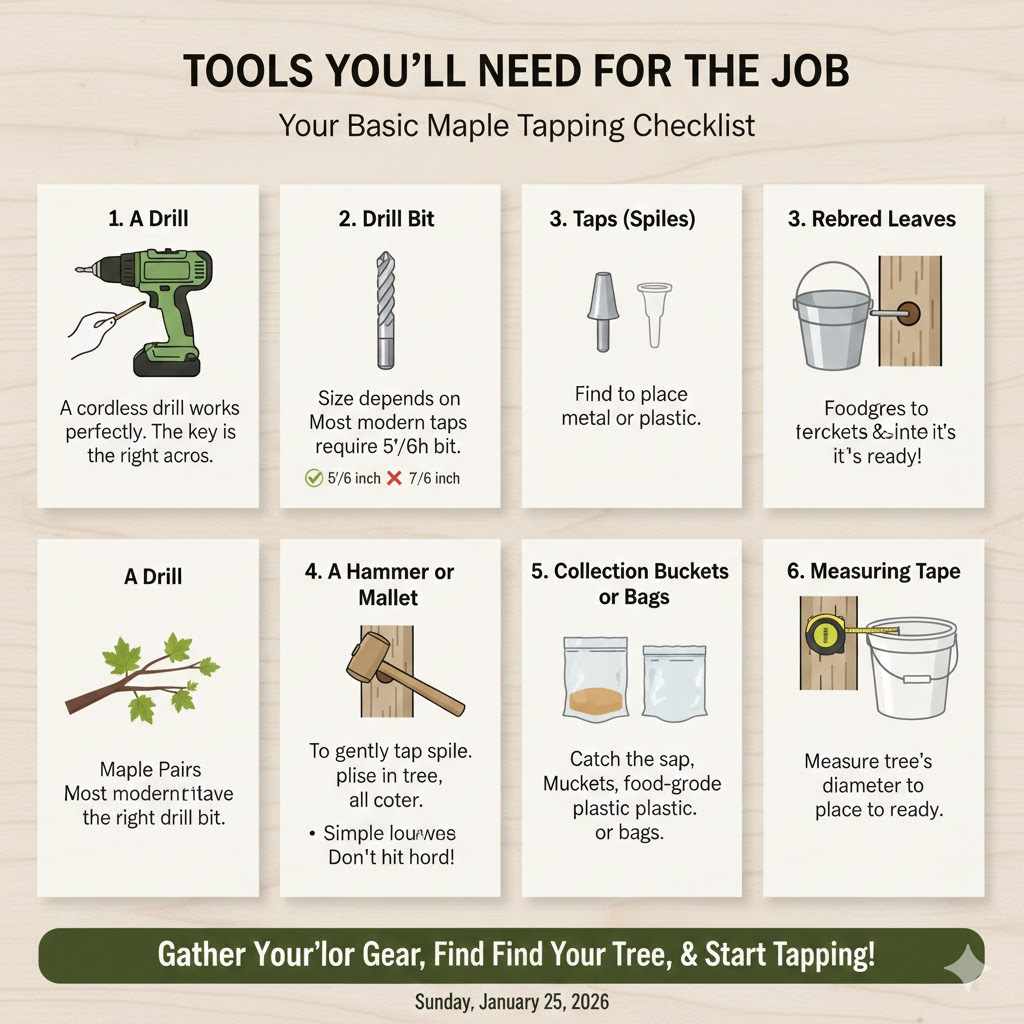
Getting started with maple tapping doesn’t require a lot of fancy equipment. You can get by with a few simple, affordable tools. Here’s your basic checklist:
- A Drill: A cordless drill works perfectly. The key is to have the right drill bit.
- Drill Bit: The size depends on your taps. Most modern taps (or “spiles”) require a 5/16-inch drill bit. Older styles might need a 7/16-inch bit. Check your taps before you drill! Using a smaller bit is always better for the tree.
- Taps (Spiles): These are the spouts you place in the tree. You can find them in metal or plastic at hardware stores, farm supply stores, or online.
- A Hammer or Mallet: You’ll need this to gently tap the spile into the tree. Don’t hit it too hard!
- Collection Buckets or Bags: You need something to catch the sap. Traditional metal buckets with lids look great, but clean, food-grade plastic buckets or specially designed plastic bags work just as well.
- Measuring Tape: To measure your tree’s diameter and make sure it’s ready for tapping.
With these few items, you’re ready to head outside and find your perfect maple tree!
Frequently Asked Questions
Can I tap a maple tree in my own yard?
Absolutely! As long as the tree is a maple, is at least 10 inches in diameter, and appears healthy (no major dead branches or signs of disease), you can tap it. Yard trees often get plenty of sunlight, which can lead to great sap flow.
Does tapping hurt the tree?
When done correctly, tapping causes minimal, temporary harm to a healthy tree. Think of it like a person donating blood. The tree has more than enough sap, and the small taphole will heal over in time. Following the guidelines for tap number, size, and location ensures the tree remains strong.
When is the best time of year to tap maple trees?
Tapping season is typically in the late winter or early spring. The sap flows best when you have freezing nights (below 32°F / 0°C) followed by warmer, sunny days (above 40°F / 4°C). This temperature fluctuation creates the pressure that pushes the sap out.
How deep should I drill the tap hole?
Drill the hole about 1.5 to 2 inches deep into the white wood (sapwood) just under the bark. Don’t go deeper than that. The hole should be drilled at a slight upward angle to help the sap flow out.
Can I use the same tap hole next year?
No, you should never reuse a taphole. That area of wood is healing and won’t produce sap. Always drill a new hole each year, following the spacing guidelines (at least 6 inches away and 24 inches above or below an old hole).
How much sap can I expect from one tap?
This varies a lot depending on the tree and the weather, but a single tap can produce anywhere from 10 to 20 gallons of sap over the entire season. Remember, it takes about 40 gallons of sap to make just 1 gallon of syrup!
What should I do after the season is over?
Once the weather warms up and the tree buds begin to swell, the sap will change flavor and the season is over. Simply pull the taps out of the tree. There is no need to plug the hole with anything. The tree knows how to heal itself and will begin closing the wound naturally.
Conclusion: A Sweet and Sustainable Partnership
Making your own maple syrup is a truly rewarding experience, connecting you directly to the changing seasons and the nature in your own backyard. And as you can see, the most important part of that process is starting with a deep respect for the tree itself.
By simply measuring your tree’s diameter and following the one, two, or three-tap rule, you are guaranteeing its health and productivity for many years to come. It’s a simple act of care that pays off with the sweetest reward imaginable. So, grab your measuring tape, find a healthy maple, and get ready to enjoy one of nature’s most delicious gifts. Happy tapping!