Preventing Cedar Rot: Why “Rot-Resistant” Isn’t Rot-Proof
Cedar has a reputation as the wood that doesn’t rot. That reputation is only half true, and the half people miss is the half that actually matters when a fence post or deck ledger starts crumbling a few years after installation. Cedar’s rot resistance comes from a real, documented compound, not just lumberyard folklore, but that resistance is concentrated in one specific part of the tree and can still be overwhelmed by conditions that beat any wood eventually. Here is what actually slows cedar rot, what speeds it up, and where the “cedar can’t rot” assumption gets people into trouble.
Why “Rot-Resistant” Doesn’t Mean Rot-Proof
Cedar’s natural resistance comes from thujaplicins, a group of compounds produced in the heartwood that act as a built-in fungicide, making it harder for decay fungi to establish themselves in the wood. It’s a real, measurable chemical property, not just a reputation, and it’s the reason cedar posts commonly outlast pine or spruce posts installed the same way in the same yard. But thujaplicin levels fade as the wood weathers and ages, and the compound was never built to survive constant standing water. Give cedar the two conditions decay fungi need, sustained moisture and trapped air, and even dense heartwood eventually loses that fight. “Rot-resistant” is a head start, not a lifetime warranty.
BEST FOR EXTENDING CEDAR’S NATURAL RESISTANCE
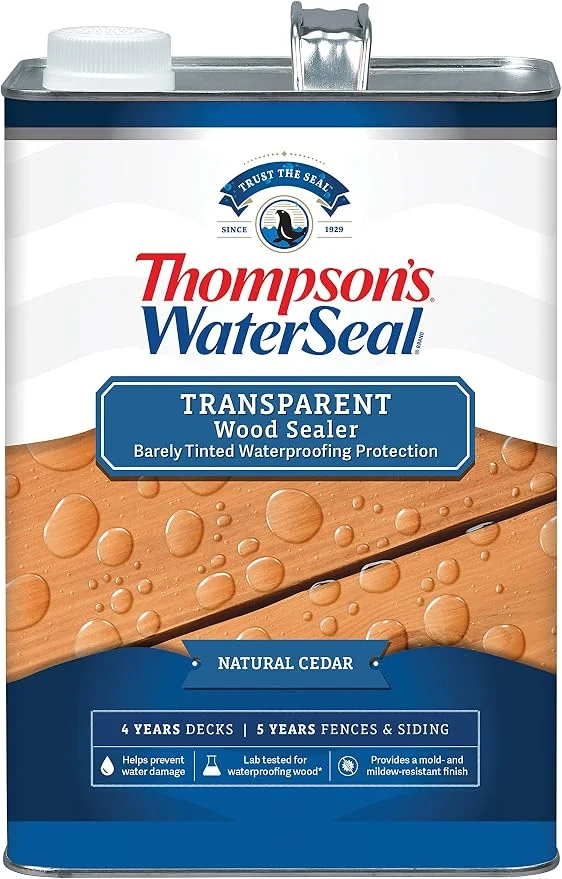 |
Thompson’s WaterSeal Transparent Wood Sealer – $29.94 A transparent, barely-tinted sealer built for exactly the moisture and UV exposure that undermines cedar’s natural resistance over time.
|
Heartwood vs. Sapwood: The Difference That Actually Matters
Almost every rot-resistance claim about cedar is really a claim about heartwood, the older, denser wood from the center of the tree. Thujaplicins concentrate there, not in sapwood, the pale outer rings that carried water and nutrients in the living tree. Sapwood has close to none of heartwood’s natural resistance, behaving much closer to ordinary pine than to the cedar reputation buyers expect. The catch is that cheap or fast-cut cedar lumber, especially from younger, smaller-diameter trees, often contains a higher proportion of sapwood by volume. Two boards can be sold side by side under the same “cedar” label, and one can rot years before the other simply because of how much of its cross-section is sapwood instead of heartwood.
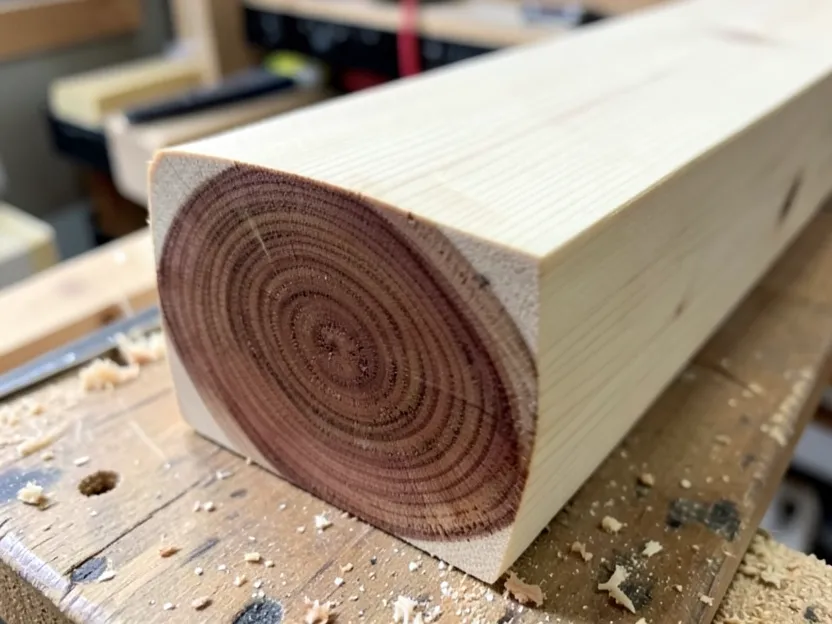
For ground-level posts, deck ledgers, or anything in sustained contact with moisture, look for all-heartwood or “construction heart” grades rather than assuming any board stamped cedar carries the same protection, since grade also affects what you’ll pay for cedar lumber. Species matters too. Our Eastern Red Cedar vs Western Red Cedar guide covers how heartwood proportion and rot resistance actually differ between the two cedars most commonly sold in the US.
Ground Contact Is the Single Biggest Risk Factor
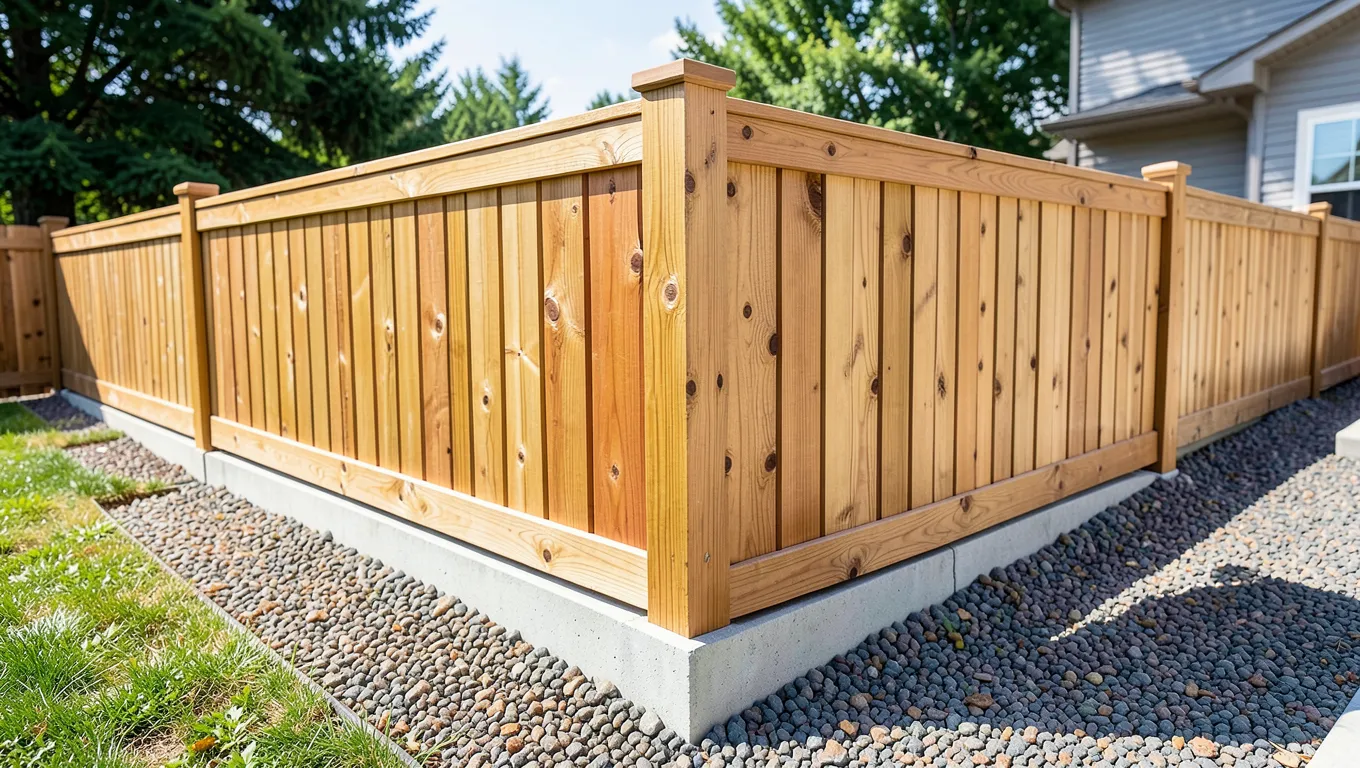
Of every condition that shortens a cedar structure’s life, direct ground contact does the most damage, and it isn’t close. Soil holds moisture against the wood around the clock, wicks it upward through capillary action, and stays damp and shaded even during a dry week, exactly the combination decay fungi need to keep working month after month. A cedar fence post set on a compacted gravel bed and anchored in a concrete footing that stops at or above grade will consistently outlast an otherwise identical post buried directly in soil, often by years, simply because the wood is never in sustained contact with damp earth.
For posts that are already in the ground, a post-saver sleeve or a coat of copper naphthenate preservative on the buried section helps somewhat (our 7-step guide to keeping wood posts from rotting covers the full set of fixes). But the more reliable fix is architectural, not chemical: keep the wood out of the soil in the first place, using a footing, a post base bracket, or a raised sill, rather than counting on the wood’s own resistance to outlast years of constant ground moisture.
Drainage and Airflow Prevent Trapped Moisture
Ground contact isn’t the only way cedar ends up sitting in water. Deck boards installed tight against each other with no gap trap water between them after every rain. Fence pickets mounted flush to the ground catch splash-back and rarely dry out fully between storms. A gutter that dumps roof runoff directly onto a deck ledger keeps that one board wetter than the rest of the structure for weeks at a stretch. The fix in each case is the same principle: give water somewhere to go, and give the wood room to dry. That means gapping deck boards during installation, keeping the bottom of fence pickets an inch or two above soil level, sloping any horizontal cedar surface slightly so water runs off instead of pooling, and pointing downspouts away from wood structures instead of onto them.
Sealants and Preservatives: What They Actually Do
A water-repellent sealant doesn’t make cedar rot-proof, but it slows the two things that speed up decay. It reduces how much moisture the wood absorbs in the first place, and it blocks the UV exposure that breaks down surface wood fibers, and the thujaplicins near them, over time. Reapplication interval matters more than which product you pick. Most transparent or semi-transparent wood sealers are rated for around 4 years on horizontal surfaces like decking, which take direct foot traffic and standing water, and closer to 5 years on vertical surfaces like fencing and siding, which shed water faster. If you’d rather add color while you’re at it, our guide on staining cedar wood covers how solid and semi-transparent stains handle this same moisture-blocking job.
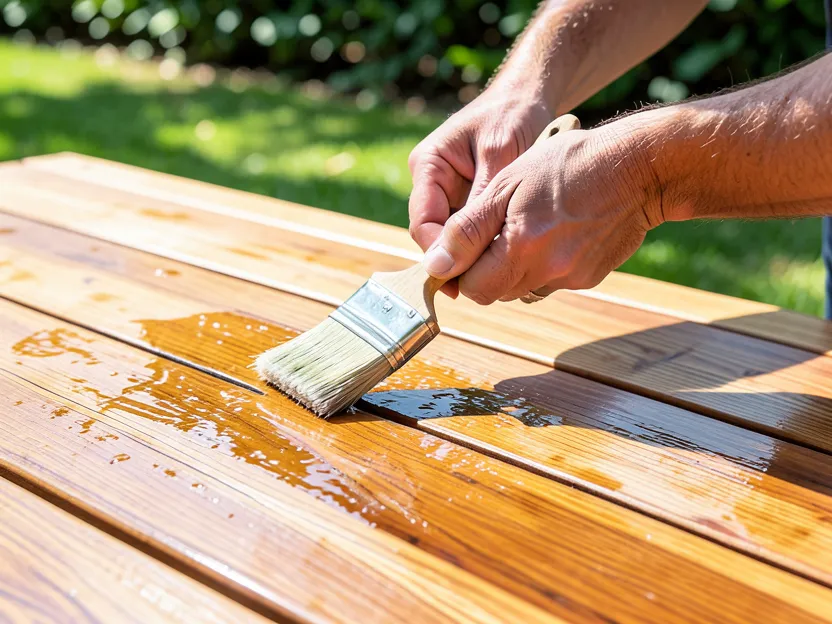
Skipping reapplication doesn’t just cost you the sheen. It means the wood goes back to absorbing water at close to its original, unsealed rate, well before it visibly looks like it needs another coat.
A Few Habits That Add Years
- Sweep leaves, pine needles, and wet debris off deck boards and out of fence-picket gaps regularly. Damp organic matter against wood recreates the trapped-moisture problem drainage and airflow are meant to prevent.
- Keep mulch and dense plantings pulled back a few inches from fence bases and deck skirting so soil moisture and shade don’t sit against the wood.
- Inspect once each spring and fall for soft, spongy spots, especially near the ground line and around fasteners. Catching early decay is far cheaper than replacing a post or a section of decking.
- Reapply sealant on the schedule the product label states, not “whenever it looks faded.” Water resistance and surface color fade on different timelines, and the coating usually needs renewal before it looks like it does.
FAQ
Does cedar rot if it’s not treated?
Yes. Untreated cedar heartwood resists rot longer than most softwoods because of its natural thujaplicins, but it will still decay under sustained moisture, especially in ground contact or standing water. Sapwood offers almost no extra protection even left untreated.
Is cedar sapwood as rot-resistant as cedar heartwood?
No. The natural fungicidal compounds that give cedar its reputation are concentrated in the heartwood. Sapwood, the pale outer wood, carries little of that resistance and behaves more like an ordinary softwood.
How often should I reseal a cedar fence or deck?
Most water-repellent sealants are labeled for about 4 years on decking and 5 years on fencing and siding, though heavy sun exposure or foot traffic can shorten that. Check the specific product label rather than relying on a general rule.
Should cedar fence posts be set directly in the ground?
It’s better to avoid it where possible. Setting posts on a gravel bed inside a concrete footing that stops at or above grade keeps the wood out of sustained soil contact, which is the single biggest factor in how fast a cedar post rots.
Conclusion
Cedar’s reputation for lasting outdoors is earned, but it depends on which part of the wood you’re using and what conditions it’s exposed to, not on the word “cedar” printed on the lumber tag. Keep the wood out of standing water and soil contact, let it breathe, and keep a water-repellent sealant on its actual reapplication schedule, and cedar’s natural resistance has a real chance to do what it’s supposed to do for decades instead of years.
Sponsored / affiliate links. As an Amazon Associate I earn from qualifying purchases. I may earn additional commission from eligible campaigns.