How Do You Know If an Ash Tree Is Dying? 7 Signs to Check
A dying ash tree shows D-shaped exit holes, a thinning crown, and bark that cracks or peels away — unless it just hasn’t leafed out yet, which looks similar for a few weeks each spring. Emerald ash borer kills most infected ash within 2 to 4 years, and insecticide treatment rarely helps once canopy loss passes 30 percent. This guide covers the visible signs, the bark scratch test, and when treatment beats removal.
Identifying Ash Trees
Best EAB Treatment Pick
Fertilome Tree & Shrub Drench Systemic Insecticide, 1 gal – $33.60
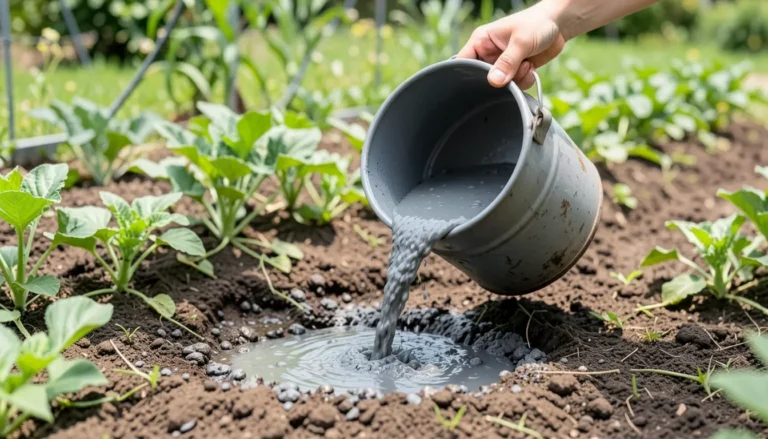
A soil-drench systemic insecticide for exactly the under-30%-canopy-loss case this guide covers — mix with water, pour around the base, and one application protects the tree for up to 12 months.
- Best for: Homeowners treating EAB early, before canopy loss passes 30%
- Why we picked it: No injection equipment needed — matches the DIY drench option in our cost table above
- Main drawback: Needs to reach the root zone, so it works best on trees with accessible soil around the base
Compare more EAB treatment options
 Option 1 Fertilome Drench Insecticide, 32 oz – $18.52
|
 Option 2 Quali-Pro Imidacloprid 2F Concentrate – $58.57
|
 Option 3 Mauget Imicide Tree Injector, 24-Pack – $163.00
|
As an Amazon Associate we earn from qualifying purchases.
For more on the species and how ash wood is used once a tree comes down, see our full ash tree and wood guide hub. Ash trees have compound leaves arranged in pairs, with multiple leaflets per leaf. The bark is smooth and gray when young, becoming furrowed with a tight diamond pattern as it ages. Branches grow directly opposite each other — a quick way to rule out other species before you worry about disease. In spring, small greenish flowers bloom, and ash trees produce winged seeds called samaras that look like paddles.
There are several types of ash. White Ash grows tall and strong and is the most common landscape tree. Green Ash is hardy and adaptable to poor soil. Black Ash prefers wet, swampy areas. Blue Ash is less common and has unique squared stems. Each variety shows decline slightly differently, but the core warning signs below apply to all of them.
Common Threats To Ash Trees
The emerald ash borer (EAB) is the single biggest threat to ash trees in North America. This small, metallic-green beetle lays eggs in bark crevices; the larvae tunnel into the wood and feed on the tissue that carries water and nutrients, which is what actually kills the tree. According to the USDA Animal and Plant Health Inspection Service, EAB has killed hundreds of millions of ash trees since it was first found in the U.S. in 2002 and has since spread to most states with native ash populations.
Fungal infections, including ash dieback, can also weaken or kill a tree. Infections typically start in the roots or leaves, causing leaves to turn brown or wilt and spreading rot through the tree if untreated. Environmental stressors — drought, strong winds, soil compaction, and pollution — don’t kill ash trees directly, but they weaken the tree’s defenses and make it far more vulnerable to both EAB and fungal disease.
Visible Signs Of A Dying Ash Tree
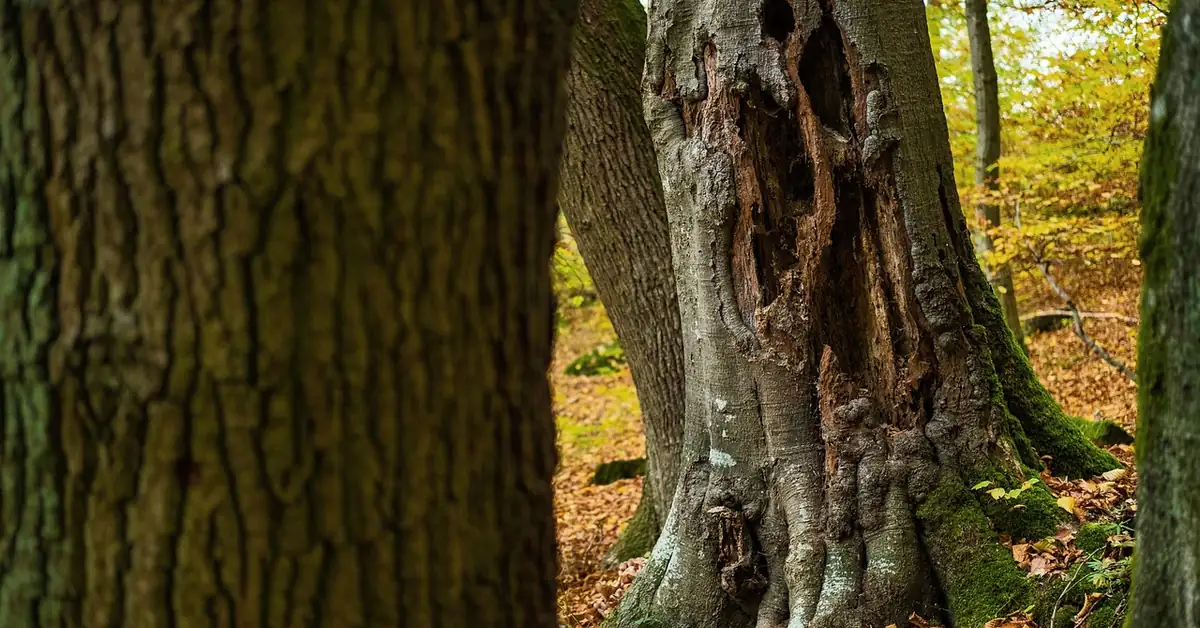
Leaves on a dying ash tree often change color out of season. Yellowing or browning where green is normal, dead patches on individual leaves, and leaves dropping early are all warning signs. The bark should be strong and mostly intact — cracks, splits, or bark peeling away exposes the tree to pests and decay, and missing bark usually means the wood underneath is already dead. Branches that wither, die back, or snap easily instead of bending are another clear sign, along with a canopy that’s visibly thinner or shorter than it used to be.
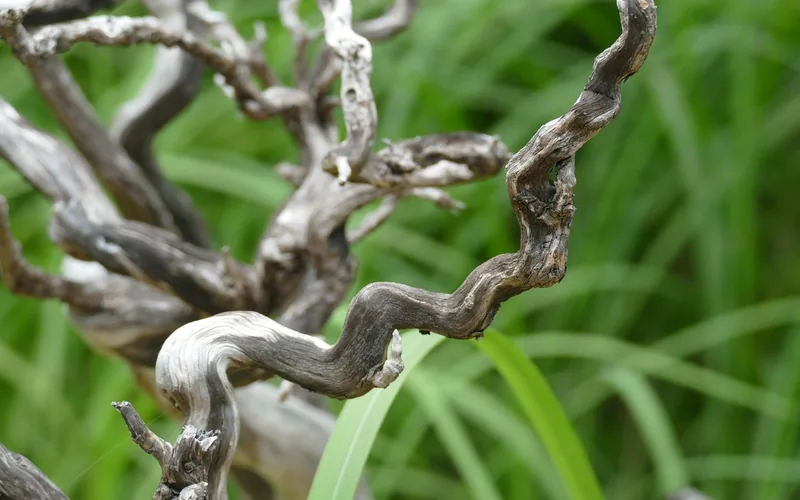
Inspecting Ash Tree Health
Look closely at the trunk and main branches for D-shaped exit holes roughly 1/8 inch wide — these are left behind when adult emerald ash borers chew their way out of the bark, usually in late spring or early summer. If you can peel back a section of loose bark, look underneath for winding, S-shaped tunnels packed with fine sawdust-like frass; these larval galleries are one of the most reliable EAB signs, even before any exit holes appear on the surface. Because several other pests and diseases can mimic individual symptoms, look for at least two separate signs together before assuming EAB is the cause.
Leaves tell a lot about tree health on their own. Healthy leaves are green and full; yellow or brown leaves, or leaves with visible holes, point to pests or disease. Falling leaves outside of autumn is a warning sign at any time of year. Bark should be firm; cracked, peeling, or unusually bumpy bark, or visible fungus and mold, all indicate decay underneath.
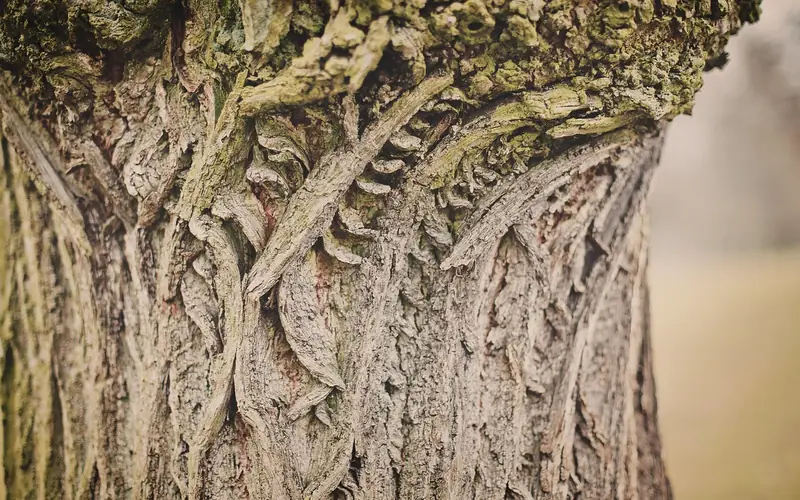
The Bark Scratch Test: Is Your Ash Tree Still Alive?
Before you assume a branch or an entire tree is dead, run the scratch test. It takes under a minute and tells you whether the tissue just beneath the bark is still living.
- Choose your spot: Pick a pencil-thick branch or a section of trunk bark that already looks suspect, not the healthiest-looking side of the tree.
- Scratch a small patch: Use a thumbnail or a pocketknife to peel back a dime-sized patch of the thin outer bark.
- Check the color underneath: Green, moist tissue means that part of the tree is alive; brown, dry, brittle tissue means it’s dead.
- Test two or three spots: Check a few branches and the lower trunk, since one dead branch doesn’t mean the whole tree is dead.
- Weigh it against the other signs: If most spots come back brown and you’re also seeing D-shaped holes or a thinning canopy, the tree is likely in advanced decline.
Advanced Symptoms Of Decline
As decline progresses, the crown loses leaves from the top down, leaving branches looking bare and the canopy visibly thin and scattered compared to a full, healthy crown. New shoots sprouting low on the trunk — called epicormic shoots — are a stress response, the tree’s attempt to grow new leaf surface after losing so much of its canopy. Increased woodpecker activity is another tell: woodpeckers feed on EAB larvae under the bark, and their feeding often leaves patches of lighter, flecked bark where they’ve stripped away the outer layer — sometimes visible before you spot any exit holes yourself.
📊 Infested ash trees typically show canopy thinning within 1 to 3 years, with decline becoming severe by year 3 and the canopy often dead by year 4 if left untreated. — Source: University of Minnesota Extension
Treatment Options For Dying Ash Trees
Whether to treat or remove a declining ash tree comes down almost entirely to how much canopy is already gone. Systemic insecticides — applied as a soil drench, trunk injection, or bark spray — target EAB larvae feeding under the bark and typically cost $100 to $400 per tree from a professional, or roughly $30 to $50 per treatment for DIY homeowner products applied annually. Removal of a mature ash generally runs $1,800 to $3,600 or more once stump grinding and a replacement tree are factored in.
“Trees with less than 30% canopy loss are usually good candidates for treatment; trees that have lost more than 50% of their canopy are unlikely to recover and are better candidates for removal.”
— Guidance summarized from Wisconsin Horticulture Extension
| Canopy Loss | Recommended Action | Typical Cost | Best For |
|---|---|---|---|
| Under 30% | Treat with systemic insecticide | $30–$400/tree | Trees caught early you want to keep |
| 30%–50% | Treat only if otherwise healthy; reassess in a year | $100–$400/tree | Borderline cases — get an arborist opinion |
| Over 50% | Remove | $1,800–$3,600+ | Structurally unsafe or unlikely to recover |
Pruning away dead branches can buy a stressed tree time, but once the trunk itself is compromised, removal is the safer call — a dead ash becomes brittle and unpredictable, and it’s not a tree to leave standing near a house or driveway. Good soil moisture and avoiding root damage from construction or heavy equipment help healthy ash trees resist infestation in the first place.
Preventive Measures
Spotting signs like thinning foliage or brittle branches early can mean the difference between saving a tree and losing it. Regular inspections catch symptoms while treatment is still an option, and addressing a confirmed infestation promptly helps prevent EAB from spreading to nearby ash trees.
Regular Monitoring
Check your ash tree a few times a year, especially in late spring when EAB adults emerge. Look for dead branches, unusual leaf drop, D-shaped holes, and bark damage. Catching problems early is what makes treatment worth considering at all. For the full breakdown of when treatment actually works versus when removal makes more sense, and how to slow EAB spread to nearby trees, see our guide on how to prevent ash tree disease. Healthy trees grow strong when problems are caught before they spread.
Promoting Tree Health
Water during dry spells, use mulch to retain soil moisture, and avoid compacting soil near the roots. Prune conservatively — remove only what’s dead or damaged. A well-watered, unstressed tree recovers from minor pest and weather damage far better than one already struggling.
Understanding Tree Lifecycle
Older ash trees are more vulnerable to both EAB and storm damage than younger, more vigorous ones, so a mature tree’s decline symptoms are worth taking seriously sooner. Understanding roughly where your tree sits in its natural lifespan helps you judge whether decline is age-related, pest-related, or both.
Frequently Asked Questions
What Does A Sick Ash Tree Look Like?
A sick ash tree shows yellowing leaves, a thinning canopy, and bark that’s splitting or cracking. You might also notice dead branches and D-shaped exit holes from emerald ash borers — though it helps to confirm the tree is actually ash first, since bark splitting alone isn’t a reliable species clue. Fungal infections can also cause dark lesions on leaves, and any of these signs warrant a closer look.
Can A Dying Ash Tree Be Saved?
Yes, if you catch it early. Trees with less than 30% canopy loss usually respond well to systemic insecticide treatment for emerald ash borer, combined with regular pruning and good watering. Once canopy loss passes 50%, the tree usually can’t recover and removal becomes the safer, more cost-effective option.
What Are The First Signs Of Ash Dieback?
Ash dieback first shows as leaf wilting and dark lesions on young stems. From there, branches gradually die back and lose leaves, working inward toward the trunk over one or more growing seasons.
What Does Dead Ash Look Like?
A dead ash tree has gray, dry bark with no green cambium underneath, brittle branches that snap instead of bend, and no live buds or leaves. The surface often looks cracked and dry, and bark may be peeling or missing in patches.
How Long Does It Take For An Ash Tree To Die From Emerald Ash Borer?
Most untreated ash trees die within 2 to 4 years of an emerald ash borer infestation, though small or already-stressed trees can decline faster. Canopy thinning is usually visible by the second or third year.
Is It Worth Treating An Ash Tree For Emerald Ash Borer?
Usually, yes, if canopy loss is under 30% and the tree is otherwise healthy — a few years of insecticide treatment costs less than removal. Once canopy loss passes 50%, removal is typically the safer and more cost-effective choice.
How Can I Tell If My Ash Tree Is Still Alive Without Cutting It Down?
Scratch a small patch of bark with a fingernail or pocketknife. Green, moist tissue underneath means that part is alive; brown, dry, brittle tissue means it’s dead. Check a few different spots before deciding.
Conclusion
Spotting a dying ash tree isn’t hard once you know what to look for: D-shaped exit holes, a thinning canopy, bark that’s splitting or peeling, and brittle branches that snap easily. The bark scratch test gives you a fast way to check whether a branch or trunk section is still alive. Early detection matters most — a tree with less than 30% canopy loss is often worth treating, while one past 50% usually isn’t.
Check your ash trees a few times a year, especially in late spring and early summer when emerald ash borer adults are active. Regular inspection is what turns a dying tree into a saved one.
Sponsored / affiliate links. As an Amazon Associate I earn from qualifying purchases. I may earn additional commission from eligible campaigns.