How Much Sap From 1 Maple Tree: The Ultimate Answer
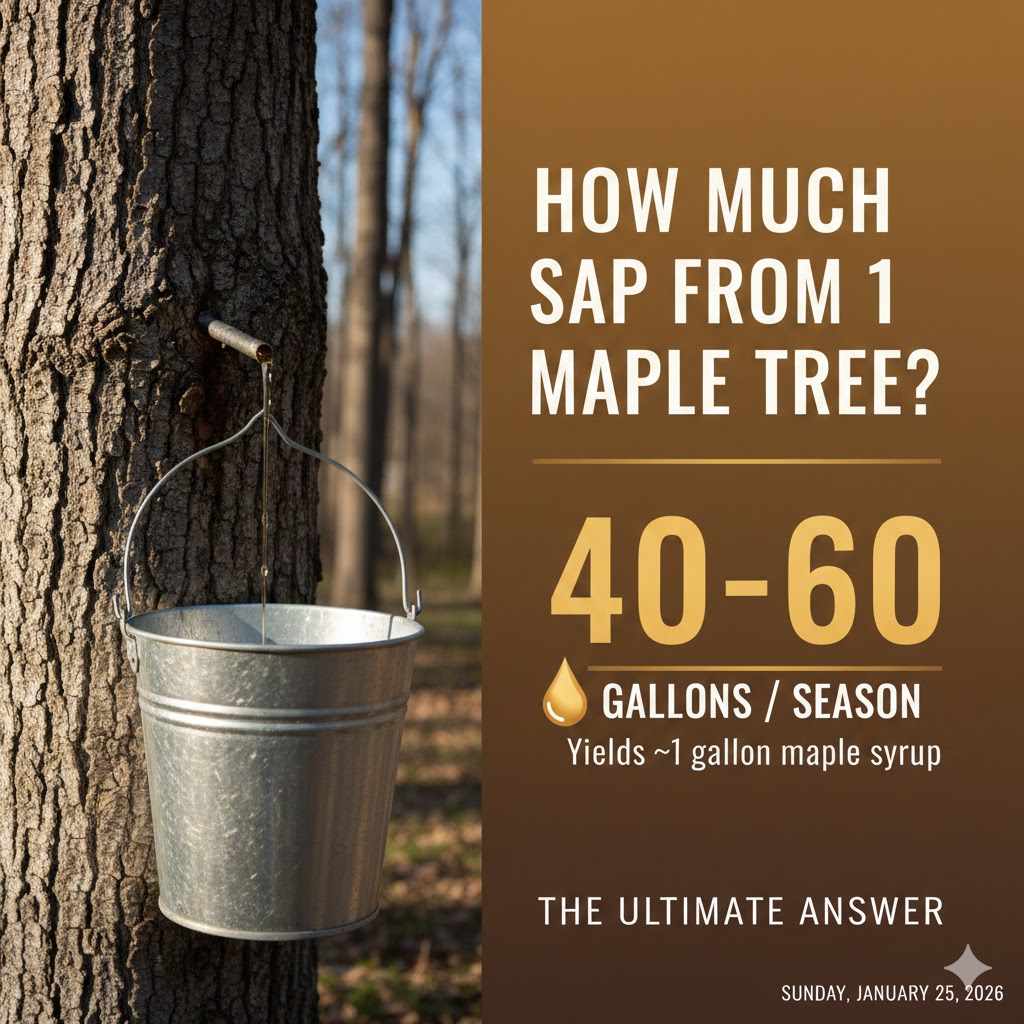
A single, healthy maple tree can produce between 10 to 20 gallons of sap per season. However, this amount varies greatly based on the tree’s size, age, health, and the weather. Remember the 40-to-1 rule: it takes about 40 gallons of sap to make just 1 gallon of delicious maple syrup.
Have you ever looked at a big maple tree in your yard and wondered, “How much sap is in there?” It’s a great question! Many people thinking about making their own maple syrup get stuck on this first step. It can feel confusing because there is no single magic number. You might feel worried you won’t get enough sap for your efforts.
Don’t worry, I’m here to help you understand it all. We will break down exactly what you can expect from your tree. I will show you the simple things that change how much sap you get. By the end, you’ll feel confident and ready for this sweet, rewarding project. Let’s get started!
The Golden Rule of Maple Syrup: The 40-to-1 Ratio
Before we talk about how much sap a tree gives, we need to understand the most important rule in maple syrup making. It’s called the 40-to-1 ratio. This means, on average, it takes 40 gallons of maple sap to make 1 gallon of finished maple syrup. Think about that for a moment. Forty gallons!
Why so much? Maple sap is mostly water—about 98% water and only 2% sugar. The process of making syrup is really just boiling away the extra water to concentrate the sugar. That simple fact is why you need a lot of sap for even a small amount of syrup. This ratio can change. Sometimes it might be 30-to-1 if you have sap with high sugar content. Other times, it could be 60-to-1 or more. But 40-to-1 is the best number to keep in your head as a beginner.
What Really Determines Your Sap Flow? 5 Key Factors
So, why does one tree give 10 gallons while its neighbor gives 20? It comes down to a few key things. Understanding these will help you choose the best trees and know what to expect. Think of it like a recipe—you need the right ingredients for the best results.
1. Tree Size (Diameter)
This is the biggest factor. A larger, older tree simply has a bigger root system and more branches, allowing it to produce and store more sugar. A bigger tree can also safely handle more taps. You should never tap a small tree. The rule is to measure the tree’s diameter at about chest height (4.5 feet from the ground).
- Never tap a tree smaller than 10 inches in diameter. It’s not healthy for the tree and won’t give you much sap anyway.
- A larger tree can support more than one tap, which means more sap for you.
Here is a simple chart to help you figure out how many taps your tree can handle and a rough estimate of the sap you might get. Remember, these are just estimates!
| Tree Diameter (at Chest Height) | Maximum Number of Taps | Estimated Sap Yield Per Season |
|---|---|---|
| 10 to 15 inches | 1 tap | 6 to 12 gallons |
| 16 to 20 inches | 2 taps | 12 to 20 gallons |
| 21 to 27 inches | 3 taps | 18 to 25 gallons |
| 28+ inches | 3 taps (some say 4, but 3 is safer for the tree’s health) | 20 to 30 gallons |
2. Tree Health and Crown
A healthy tree is a happy, productive tree. Look for a tree that has a large, full crown of branches. The crown is where the leaves grow in the summer. Those leaves are like tiny sugar factories, using sunlight to make the sugar that you’ll eventually collect in your sap. A tree with a big, wide-open crown that gets lots of sun will produce sweeter sap and more of it.
Avoid trees with large dead branches, cracks in the trunk, or other signs of damage or disease. A healthy tree will heal from the small tap hole much faster.
3. The Weather’s Magic Trick: The Freeze-Thaw Cycle
This is the engine that drives the sap flow. Sap doesn’t just drip out on its own. It needs the right weather conditions. Specifically, it needs a freeze-thaw cycle. This means temperatures need to drop below freezing at night (ideally into the 20s F) and then rise above freezing during the day (into the 40s F).
Here’s how it works in simple terms:
- At night (below 32°F / 0°C): The tree’s fibers freeze and contract. This creates suction that pulls water up from the roots into the trunk and branches.
- During the day (above 32°F / 0°C): The tree thaws. This creates positive pressure inside the tree. If you’ve drilled a tap hole, this pressure pushes the sugary sap out.
If you have many days in a row without a freeze at night, the sap flow will stop. If it stays frozen all day, it won’t run either. You need that daily up-and-down temperature swing for a good sap run.
4. Time of the Tapping Season
The maple season is short, usually lasting about 4 to 6 weeks, typically from late winter to early spring (February to April, depending on where you live). The sap you collect changes during this time.
- Early Season: The first few sap runs often have the highest sugar content. This means you need less sap to make a gallon of syrup. The syrup made from this sap is usually lighter in color and has a more delicate flavor.
- Late Season: As the weather warms up and the tree gets ready to bud, the chemistry of the sap changes. The sugar content often drops, meaning you have to boil it longer. The syrup will be darker and have a stronger, more robust flavor. Once the tree’s buds break open, the season is over. The sap will turn “buddy” and give the syrup a bad taste.
5. The Type of Maple Tree
While you can tap many types of maple trees, they are not all created equal. The king of syrup making is the Sugar Maple because, as its name suggests, its sap has the highest sugar content.
| Maple Tree Type | Average Sugar Content | Notes |
|---|---|---|
| Sugar Maple (Acer saccharum) | 2% – 5% | The best choice. Produces the sweetest sap, meaning less boiling time. |
| Red Maple (Acer rubrum) | 1.5% – 2.5% | A good alternative. Sap is less sweet, and it tends to bud out earlier in the spring, ending the season sooner. |
| Silver Maple (Acer saccharinum) | 1% – 2% | Similar to Red Maple. Also buds out very early. The sap is less sweet. |
You can still make great syrup from Red or Silver maples, you’ll just need to collect more sap and boil it for a longer time to get the same amount of syrup. For a deep dive into tree identification, the U.S. Department of Agriculture offers great resources for maple producers.
A Quick Guide to Estimating Your Tree’s Potential
Feeling ready to figure out what your tree might give? Follow these simple steps to make a good guess.
- Identify Your Tree: First, make sure you have a maple tree. Look at the leaves (if you can find old ones on the ground) or the bark. Maple trees have opposite branching, meaning branches and buds grow directly across from each other.
- Measure the Trunk: Grab a flexible measuring tape. Wrap it around the trunk about 4.5 feet off the ground. Divide that number (the circumference) by 3.14 (pi) to get the diameter. For example, if your tree is 38 inches around, its diameter is about 12 inches.
- Check Its Health: Look up at the branches. Do they look full and healthy, or are there a lot of dead limbs? A full crown that gets good sunlight is a great sign.
- Watch the Weather: Keep an eye on the long-range forecast. Are you seeing a pattern of cold nights and warm days coming up? That’s your signal that the sap will soon be running!
- Make Your Estimate: Use the table above to get a baseline idea. If you have a healthy, 18-inch diameter Sugar Maple and the weather looks perfect, you could expect to be on the higher end of the estimate, perhaps close to 20 gallons of sap.
Play it Safe: How to Tap Sustainably
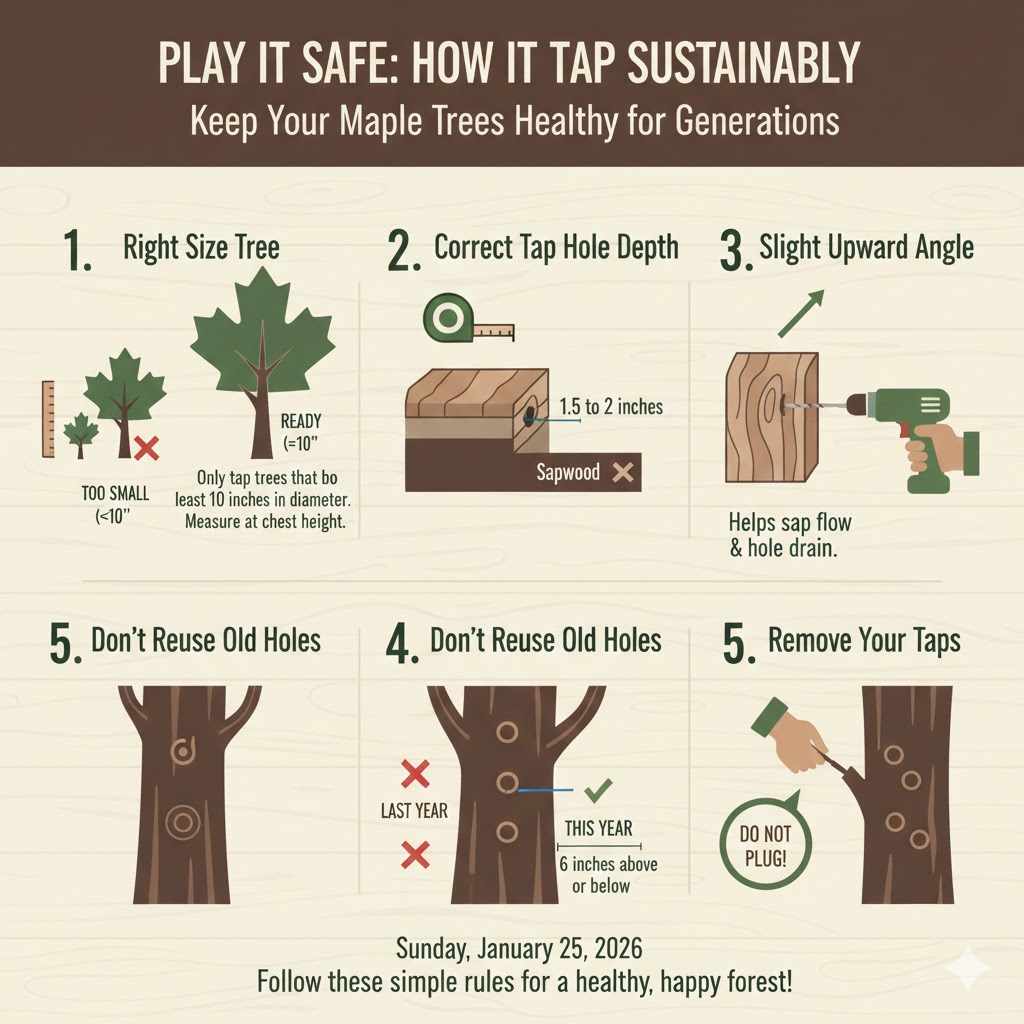
Collecting sap is a wonderful partnership with nature. To keep your trees healthy for years to come, it’s critical to practice sustainable tapping. A healthy tree can be tapped for generations without any harm if you follow these simple rules.
- Right Size Tree: Only tap trees that are at least 10 inches in diameter. Tapping a tree that’s too small can stress it and make it vulnerable to disease.
- Correct Tap Hole Depth: Drill a clean hole about 1.5 to 2 inches deep. The most productive sap flows in the outer layers of the wood (the sapwood). Drilling deeper doesn’t help and can injure the tree.
- Slight Upward Angle: Angle your drill bit slightly upward as you drill. This helps the sap flow out easily and allows the hole to drain properly when the season is over.
- Don’t Reuse Old Holes: Never drill in the same spot. The wood around an old tap hole creates non-conductive tissue to heal itself. Move your new tap hole at least 6 inches to the side and 2 inches above or below the previous year’s hole.
- Remove Your Taps: At the end of the season, when the trees start to bud, gently remove your taps. The hole will begin to heal on its own. Do not plug the hole with anything! The tree knows how to heal itself.
Following these steps ensures your maple trees remain a healthy, beautiful part of your yard and a source of sweet joy for many years. It’s about respect for the tree that gives us this amazing gift.
Frequently Asked Questions (FAQ)
How much syrup will 10 gallons of sap make?
Using the average 40-to-1 ratio, 10 gallons of sap will make about one quart (or 4 cups) of maple syrup. If your sap is sweeter, you might get a little more. If it has less sugar, you’ll get a little less.
Can you tap a maple tree every year?
Yes, you absolutely can! As long as the tree is healthy and large enough, you can tap it year after year. Just be sure to follow sustainable tapping guidelines and rotate the location of your tap holes each season to allow the tree to heal properly.
What time of year is best for tapping maple trees?
The best time is late winter or early spring when you have the perfect freeze-thaw cycle: nights below freezing (20-25°F) and days above freezing (40-45°F). This typically happens between February and April, but it depends entirely on your local climate.
Does tapping hurt the maple tree?
When done correctly on a healthy, mature tree, tapping causes minimal and temporary harm. The tap hole is a small wound that the tree will heal over in time. It is similar to a person giving blood—the body quickly replaces it. Improper tapping, however, can damage a tree.
What does maple sap taste like?
Maple sap looks just like water and has a very faint, slightly sweet taste. It’s not thick or syrupy at all straight from the tree. Most of the flavor we associate with maple syrup is developed during the boiling process.
Can I drink maple sap directly from the tree?
Yes, you can! Fresh maple sap is a refreshing drink, full of minerals and antioxidants. Many people enjoy drinking it cold. Just be sure to keep it refrigerated like you would with milk, as it can spoil quickly once it comes out of the tree.
Can you tap other trees for syrup?
Yes, you can make syrup from other trees like Birch and Walnut. However, their sap has a much lower sugar content, meaning you’ll need a lot more sap (often 100 gallons or more for 1 gallon of syrup) and a longer boiling time. Maple is by far the most efficient tree for syrup making.
Conclusion: Your Sweet Reward is Within Reach
So, how much sap from 1 maple tree? As we’ve seen, the answer is “it depends.” But now you know exactly what it depends on. A good rule of thumb is to expect 10 to 20 gallons of sap from a healthy, medium-sized tree in a typical season. More importantly, you now understand the key factors—tree size, health, weather, and type—that all play a part in your final harvest.
Don’t get too caught up in hitting a specific number. The true joy of making maple syrup comes from the process itself: spending time outdoors, connecting with nature, and turning a simple, watery sap into a rich, sweet treasure. It’s a project that is both a science and an art. Whether you get enough sap for one pancake breakfast or for a whole year, the experience is always worth it. Now, go find your perfect maple tree and get ready for a sweet adventure!