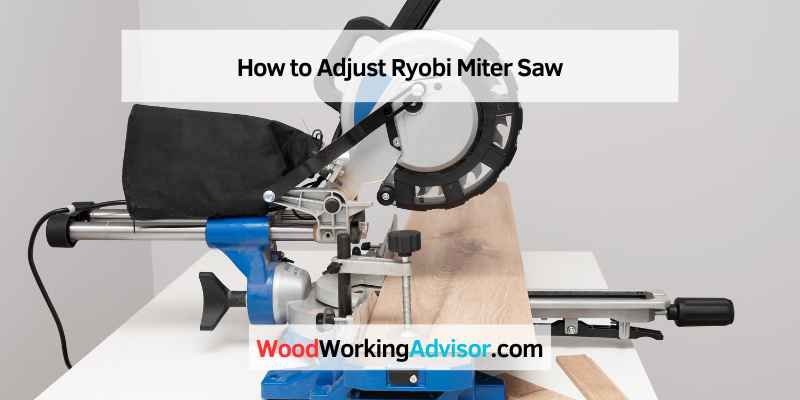
How to Adjust a Ryobi Miter Saw for Perfectly Square Cuts
A Ryobi miter saw drifts out of square from shipping vibration and shop use, not from a factory defect — the fix is three separate checks: blade-to-table, fence-to-blade, and the 45° stops, each held by its own bolts. Skip one and a single degree of error stretches a 45° miter about 0.21 inch out of true. This guide covers each adjustment with a combination square, plus the flip test that confirms you got it right.
Quick Answer
Unplug the saw, then check and adjust three points in order: the blade-to-table angle (bevel stop screw), the fence-to-blade angle (fence mounting bolts), and the 45° miter stops. Test each with a combination square before and after, then confirm the whole saw with a flip-test cut — a gap you can slip a business card into is close enough for trim work.
Tools You Need to Adjust a Ryobi Miter Saw
Best Miter Saw Squaring Pick
IRWIN 12-Inch Combination Square
A stainless-steel combination square with a locking head for both the 90° blade-to-table check and the 90° fence check in this guide.
- Best for: squaring the blade and fence on a Ryobi miter saw
- Why we picked it: the 12-inch length reaches across most Ryobi tables in one placement, and the head locks so it doesn’t shift mid-check
- Main drawback: the stamped steel ruler can nick if dropped on concrete
Compare more squaring tool options
 Option 1 Swanson Speed Square + Combination Square Pack
|
 Option 2 IRWIN 6-Inch Combination Square
|
 Option 3 WORKPRO Rafter & Combination Square Set
|
As an Amazon Associate we earn from qualifying purchases.
- A combination square or speed square (for both the blade and fence checks)
- A Phillips or flathead screwdriver — most Ryobi fence lock screws use one or the other
- A hex/Allen key — sliding compound models use one on the bevel lock; check the pouch that came with your saw
- If the head handle itself will not lower before you even start adjusting, that is a separate locking-pin issue — see how to unlock a Ryobi miter saw first
- A pencil, a tape measure, and two scrap boards at least 4 inches wide for the flip test
Why Ryobi Miter Saws Go Out of Square
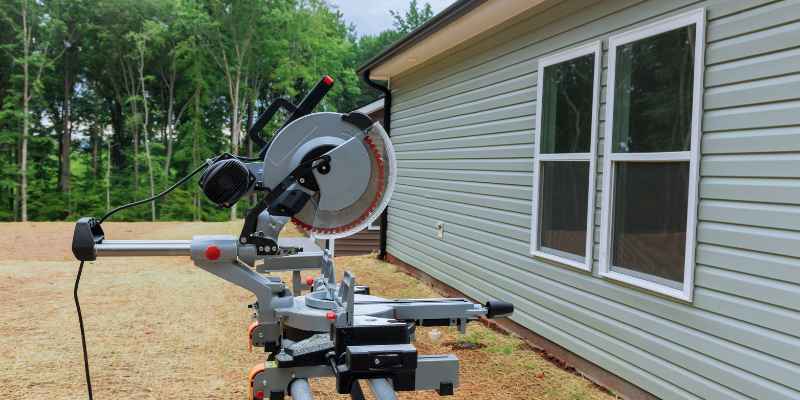
Most of the time nothing is broken. The saw arm and fence are held to their factory angles by stop screws and bolts, not welded joints, and normal use loosens them. The usual causes: the saw was dropped or bumped while being carried, sawdust packed in behind the bevel scale is holding the arm off its stop, the blade was swapped and not fully reseated against the arbor flange, or the fence bolts were never checked after the saw shipped. None of these need a new saw — they need the same three checks below.
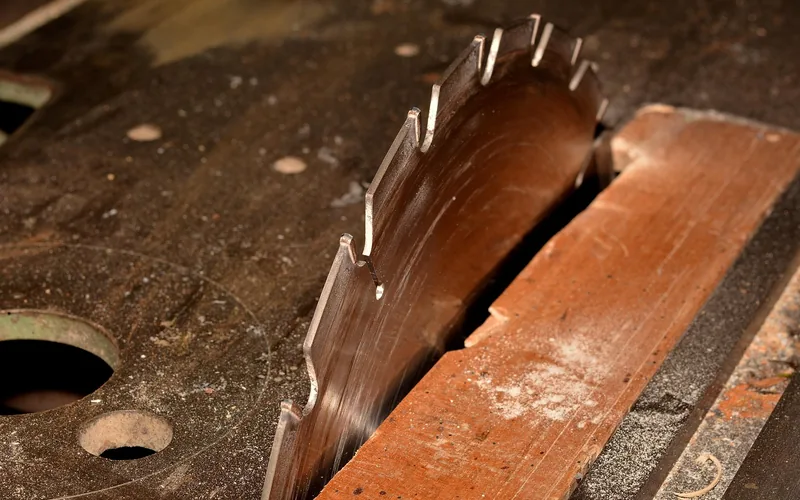
Sawdust behind the bevel scale is the most overlooked cause. In my own shop, a compound miter saw that cut square for years started drifting after a summer of trim work — the culprit wasn’t the stop screw at all, it was packed dust holding the bevel arm a hair off its 0° detent. A quick blow-out with compressed air before you touch any screw saves you from “adjusting” a saw that was never actually out of alignment.
How to Adjust a Ryobi Miter Saw: Step-by-Step
Work through these three checks in order — blade first, then fence, then the 45° stops. Each one depends on the last being correct.
- Unplug the saw and lower the blade fully before touching any adjustment.
- Set the bevel to 0° and lock the bevel lever, then hold a combination square’s base flat on the table with the blade of the square against the saw blade’s flat body — never against a tooth, since the teeth are set (bent) slightly outward and will give a false reading.
- Check for a gap at the top and bottom of the square. If either end shows daylight, the blade isn’t square to the table.
- Loosen the bevel stop screw (a single hex-head or Phillips screw behind the bevel scale, opposite the lock lever), tap the saw arm until the gap closes, and retighten the screw without letting the arm shift.
- Set the miter angle to 0° and let the detent pin engage, then repeat the square check — this time with the square’s base against the fence and the blade of the square touching the saw blade’s flat body.
- Loosen the fence mounting bolts — each fence half has its own slotted holes, so back off both sides evenly and move one side at a time to avoid racking the fence out of a straight line.
- Tap the fence into full contact front and back against the square, tightening the bolts alternately and rechecking after each turn.
- Swing the saw to its 45° stop on each side, hold a speed square’s 45° edge against the fence and blade, and if it’s off, loosen the 45° stop screw on the miter scale and nudge the stop until the edges align flush before retightening.
Confirm Your Adjustment With the Flip Test
A combination square tells you if the saw is close, but the flip test tells you if it’s actually cutting square. Make a crosscut a few inches from the end of a scrap board, then cut a second piece a few inches long. Flip that second piece end-for-end so the freshly cut edges meet, and push both pieces flat against the fence. A perfectly square saw leaves the two edges flush with no gap; any gap means the saw is still off, and the adjustment needed is half of what you see — since the error is doubled by the flip.
📊 1° of error stretches a 45° miter joint about 0.21 inch out of true over a 12-inch cut — basic miter-angle trigonometry (tan of the error angle × board width). A flip-test gap thin enough to slip a business card into (roughly 0.01–0.015 inch) is within normal tolerance for trim and framing; a gap you can see daylight through means another round of adjustment.
Adjustment Differences Between Ryobi Miter Saw Models
The three checks above apply to every Ryobi miter saw, but where you find the stop screws depends on the saw type. Compact single-bevel models keep the bevel stop screw directly behind the bevel scale, easy to reach with the blade guard open. Sliding compound models add a rail lock lever on the back rails — leave that engaged while you check the blade-to-table angle, or the head can rock forward and give a false reading. Dual-bevel models have a 45° stop on both sides of center, so repeat the 45° check on the left and right; it’s common for one side to be square and the other off by a degree or more after a bump.
Common Mistakes to Avoid When Adjusting a Ryobi Miter Saw
- Loosening only one fence bolt. Adjusting a single side racks the fence out of a straight line instead of squaring it — always loosen both sides and move them evenly.
- Checking square against a tooth instead of the blade body. Saw teeth are set (bent) slightly wider than the blade plate, so resting a square against a tooth gives a reading that’s off by the set amount.
- Trusting the printed miter scale. The scale is a reference, not a guarantee — a saw that was bumped in transport can read “0°” on the scale while the blade is actually a degree or more off.
- Over-tightening the bevel lock before checking. Locking the arm down hard can mask whether it’s actually resting on the stop screw or just wedged against the lock itself.
If you’re also replacing the blade itself, reseat it fully against the arbor flange before rechecking square — a blade that isn’t flush against the flange throws off the blade-to-table reading even on a saw that was previously calibrated correctly.
FAQ: Adjusting a Ryobi Miter Saw
Why is my Ryobi miter saw not cutting square?
Usually one of three things: the blade isn’t square to the table, the fence isn’t square to the blade, or sawdust is packed behind the bevel scale holding the arm off its stop. Check all three with a combination square before assuming the saw needs replacing — a bump during transport or storage is the most common cause, not a manufacturing defect.
How do you calibrate a Ryobi chop saw?
Unplug the saw and confirm the blade lines up with your marked cut line on a test piece. Loosen the fence-mounting screws, slide the fence until it’s flush against a square held to the blade, then retighten the screws in small increments, rechecking square after each turn until the fence holds its position with no gap.
How do you set the depth on a Ryobi miter saw?
Most Ryobi miter saws use a depth-stop rod or lever separate from the bevel and miter adjustments. Loosen the knob or nut holding the depth stop, lower the blade to your target depth against a test piece, then retighten. On saws without a dedicated depth stop, the blade height lever sets the maximum cut depth directly — lower the blade fully before locking it for a through-cut.
How often should I recheck my miter saw’s calibration?
Check it before any project where the miters actually need to close tight, such as picture frames or crown molding, and any time the saw has been moved, dropped, or had its blade changed. For a saw that stays bolted to one bench and isn’t moved, a quick flip-test check every few months of regular use is enough to catch drift early.
Can I adjust a Ryobi miter saw without a square?
You can get close with the flip test alone, since it only needs two test cuts and no measuring tool, but you won’t know which of the three adjustment points is actually off without a square to check each one individually. A combination square is inexpensive enough that it’s worth keeping at the saw station rather than skipping it.
Once your saw is cutting true, the same square works for checking baseboard and trim miters as you go, so gaps show up before you’ve cut a whole room’s worth of material. For the full breakdown of miter-angle tolerance math on any brand of saw, see our miter saw adjustment and calibration guide; if you’re still learning the saw itself rather than fixing an alignment issue, start with how to use a Ryobi miter saw. If the fence itself is bent, cracked, or missing hardware rather than just misaligned, see how to replace a Ryobi miter saw fence. For background on the tool itself, see Wikipedia’s miter saw overview, and for a Ryobi-specific manual lookup, use Ryobi’s official support page.
A Ryobi miter saw that’s drifted out of square isn’t a saw that needs replacing — it’s three bolted connections that need a fifteen-minute check. Work through the blade, the fence, and the 45° stops in order, confirm with a flip test, and you’ll be back to clean, tight miters.
Sponsored / affiliate links. As an Amazon Associate I earn from qualifying purchases. I may earn additional commission from eligible campaigns.