How Do You Cut a 120 Degree Angle on a Miter Saw?
A 120-degree corner on a miter saw is cut by setting the miter gauge to 30°, not by dialing 120° into the saw itself — no standard 10 or 12-inch miter saw scale even reaches that high. Get the setting wrong and a hexagon frame or planter box gaps at every joint instead of closing flush. This guide covers the two-cut method, the formula behind it, and where 120° corners actually show up.
Insert your Affiliate Disclosure reusable block here
Tools and Materials Needed
Best Digital Angle Finder Pick
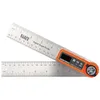
Klein Tools 935DAF Digital Angle Finder
Reads the actual corner angle directly, so you can confirm a 120° joint before you glue instead of trusting the saw’s stamped scale alone.
- Best for: verifying miter and bevel settings on hexagon, octagon, and other multi-sided builds
- Why we picked it: trusted electrical-and-trade brand, magnetic base holds steady on the saw table while you read it
- Main drawback: costs more than a basic plastic protractor
Compare more angle finder options
 Best Budget GemRed 82305 Digital Angle Finder
|
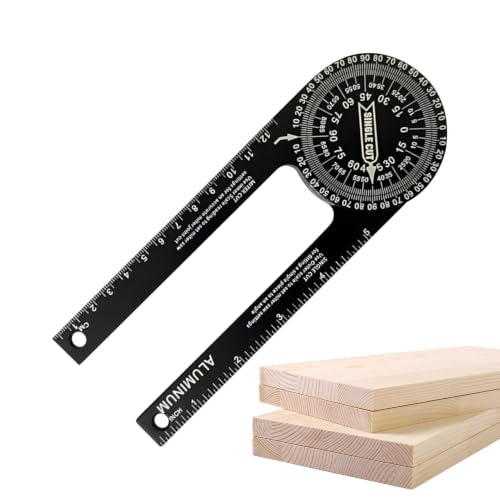
 Best Dedicated Miter Read Saker 7-Inch Aluminum Miter Saw Protractor
|
 Best Rust-Proof Build LEXIVON Aluminum Miter Saw Protractor
|
As an Amazon Associate we earn from qualifying purchases.
- A standard miter saw — any 10-inch or 12-inch miter saw works; no specialty wide-angle saw is required
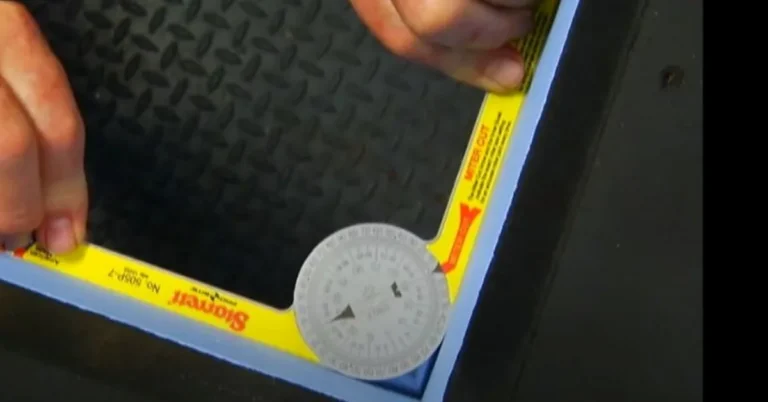
- A digital angle finder or protractor, to verify the cut before you commit good stock to it
- A stop block or clamp, so repeat cuts stay identical
- A combination square and pencil for layout
- Wood glue and corner clamps (or painter’s tape) for dry-fitting and assembly
How to Cut a 120 Degree Angle on a Miter Saw: The Two-Cut Method
A 120° angle almost always refers to the interior corner two boards make when joined — the angle of a hexagon, for example — not a single number you enter on the saw. Here is the six-step process for cutting it cleanly.
If you’re still getting comfortable with the saw itself, our beginner’s guide to using a sliding miter saw covers the basics before you attempt an angled corner joint.
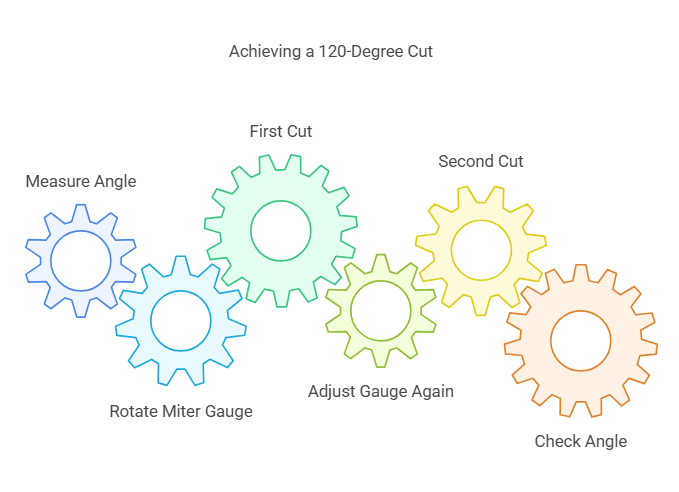
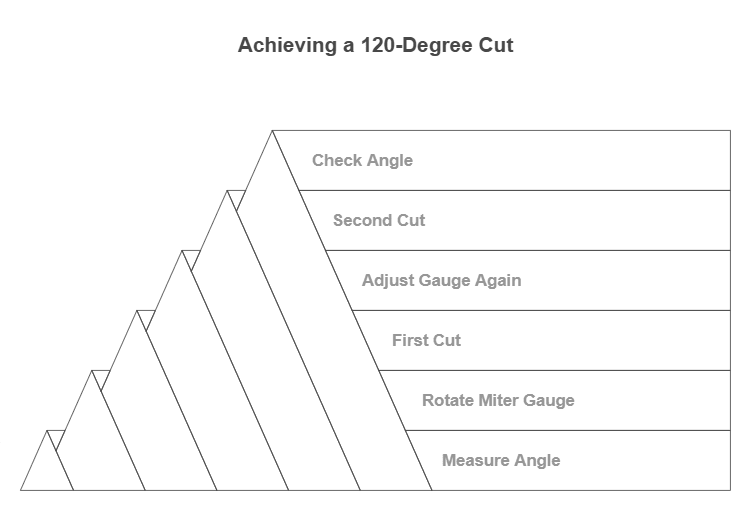
- Confirm what you’re actually cutting: decide whether 120° is the finished corner angle (most common — a hexagon frame, planter, or box) or a bevel between two out-of-plane faces. This guide covers the flat-corner case, which is what “120 degree angle miter saw” almost always means in practice.
- Calculate the miter saw setting: subtract the corner angle from 180°, then divide by two — (180° − 120°) ÷ 2 = 30°. That 30° figure, not 120°, is what you dial into the miter gauge.
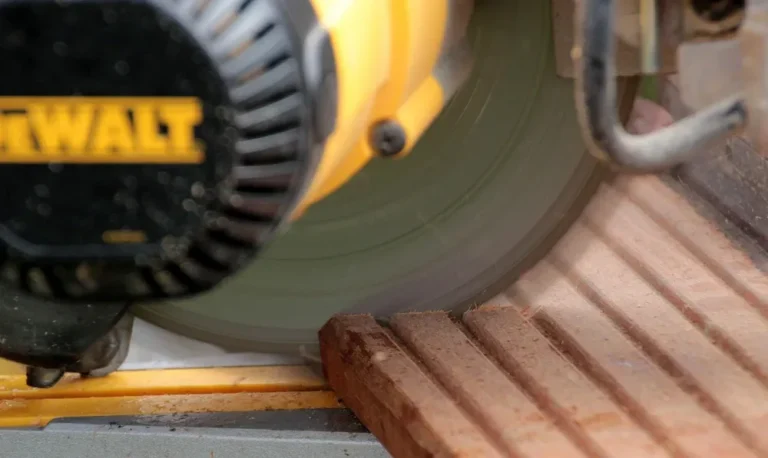
- Set and lock the miter gauge to 30°: rotate the saw table to the 30° mark on either side of center and lock it down firmly before cutting.
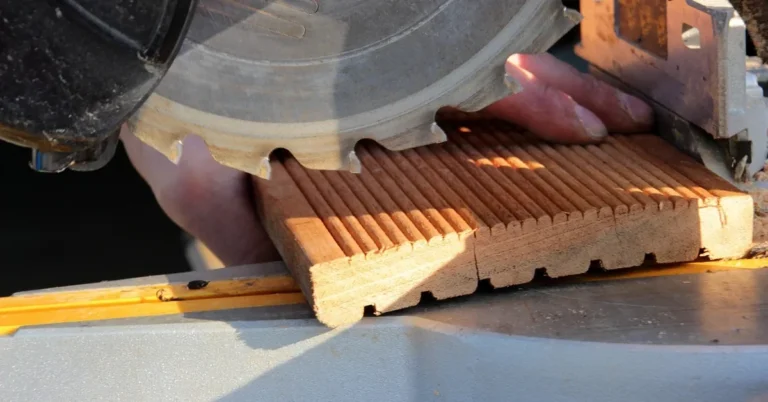
- Cut the first board: feed the board through with the fence supporting it squarely. Use a stop block if you need multiple identical pieces.
- Flip the saw to the mirrored 30° mark for the second board: the two boards need opposite-hand cuts so the angled faces meet correctly when flipped together — most miter saws mark 30° on both the left and right of the 0° center mark for exactly this reason.
- Dry-fit and verify before gluing: hold the two cut ends together and check the joint with a digital angle finder or against a hexagon template. If it reads 120° and closes without a gap, glue and clamp; if not, re-check the saw’s 30° lock before recutting.
Where a 120 Degree Angle Actually Comes From: Hexagon Math
A 120-degree angle is the interior corner of a regular hexagon — a six-sided shape whose interior angles are found with (n − 2) × 180 ÷ n, or (6 − 2) × 180 ÷ 6 = 120°. That’s why it turns up constantly in hexagonal planter boxes, six-sided picture frames, gazebo and pergola framing, and hex-shaped shelving — any project built from six equal sides needs a 120° corner at every joint, cut with the same 30° miter setting on all twelve ends.
The same formula extends to any regular polygon, which is useful if a project calls for a related shape instead. The table below covers the angles builders ask about most.
| Shape (sides) | Interior Corner Angle | Miter Saw Setting |
|---|---|---|
| Square/rectangle frame (4) | 90° | 45° |
| Pentagon (5) | 108° | 36° |
| Hexagon (6) | 120° | 30° |
| Heptagon (7) | ~128.6° | ~25.7° |
| Octagon (8) | 135° | 22.5° |
| Dodecagon (12) | 150° | 15° |
Working on an eight-sided project instead? See our guide to cutting an octagon on a miter saw for the 22.5° version of this same method.
Need a completely different specific angle instead, like 65°? Our 65 degree angle miter saw guide walks through that setting the same way.
Is a 120 Degree Angle a Miter Cut or a Bevel Cut?
A miter cut is an angled cut made by rotating the saw table left or right while the blade stays vertical — this is what produces a 120° hexagon corner, since all the pieces sit flat in the same plane. A bevel cut tilts the blade itself and is only needed when the two surfaces meet at an angle out of that flat plane. For a flat hexagon, planter, or picture-frame corner, you only ever need the miter function — not a compound setup. See our full miter vs. bevel breakdown if your project mixes both.
A common example of a true compound setup is crown molding, which sits against both a wall and a ceiling at once — unlike the flat 120° hexagon corner covered here.
If a project of yours does call for that kind of compound setup, our compound miter saw beginner’s guide covers setting both axes correctly.
Common Mistakes to Avoid When Cutting a 120 Degree Angle
- Dialing in 120° instead of 30°: the single most common error — the saw’s scale reads the miter setting, not the finished corner angle.
- Forgetting to mirror the second cut: both boards need opposite-hand 30° cuts; cutting both from the same side produces a parallelogram instead of a corner.
- Not accounting for blade kerf on repeat cuts: if you’re cutting six identical hexagon sides from one long board, measure to the far edge of the kerf each time, or lengths will creep short by the blade width after several cuts.
- Skipping the dry-fit: gluing before checking the angle with a digital angle finder means any saw drift or fence misalignment only shows up after the glue sets.
In our own shop, a saw’s miter detent drifting a degree off true is the single most common reason a “correct” 30° setting still leaves a hairline gap at the joint — worth checking with a squared and calibrated saw before blaming the math.
FAQ: 120 Degree Angle Miter Saw Cuts
What angle do I set my miter saw to for a 120 degree cut?
Set the miter gauge to 30°, not 120°. The formula is (180° − corner angle) ÷ 2, and for a 120° corner that works out to 30° on each of the two mating boards.
Can a standard miter saw cut a 120 degree angle?
Yes. Since the actual saw setting is only 30°, well within the roughly 45–50° range every standard 10-inch or 12-inch miter saw offers, no specialty saw or jig is needed for a flat hexagon-style 120° corner.
What shape has 120 degree interior corners?
A regular hexagon (six equal sides) has interior angles of exactly 120° at every corner, which is why hexagonal planter boxes, picture frames, and shelving are the most common projects that call for this cut.
Is 120 degrees a miter angle or a bevel angle?
It’s a miter angle. The 120° figure describes the flat corner two boards form in the same plane, cut by rotating the saw table (miter), not by tilting the blade (bevel).
How do I cut other obtuse angles like 108 or 135 degrees?
Use the same formula: (180° − corner angle) ÷ 2. That gives 36° for a 108° pentagon corner and 22.5° for a 135° octagon corner — see the reference table above for the most common shapes.
Conclusion
Cutting a 120° angle on a miter saw comes down to one number that trips people up: set the gauge to 30°, cut both mating boards with opposite-hand cuts, and verify the joint with an angle finder before gluing. That single formula — (180° − corner angle) ÷ 2 — covers not just hexagons but pentagons, octagons, and every other regular polygon a project might call for.
Sponsored / affiliate links. As an Amazon Associate I earn from qualifying purchases. I may earn additional commission from eligible campaigns.