Cut Crown Molding Corners on a Table Saw (52°/38° Angle Guide)
Crown molding on a table saw is cut flat, face-up, at the industry-standard 52° miter and 38° bevel angle for a square 90° corner — unless the molding label says otherwise. Skipping the test cut is the single biggest cause of a gapped corner, and pieces longer than 5 feet need outrigger support or the blade can bind. This guide covers the flat-cut method, the upright sled/jig alternative, and the exact angle chart for both common spring-angle profiles.
Quick Answer
To cut crown molding corners on a table saw, lay the molding flat against the fence exactly as it will sit “upside down and backward” on a miter saw, then set the blade to the corresponding miter and bevel angle for your molding’s spring angle (usually 52°/38° or 45°/45°). Always make a test cut on scrap first — a table saw has no miter gauge detents for crown, so the angle must be set and verified manually every time.
What You Need to Cut Crown Molding on a Table Saw
Gather these before you start — running back to the shop mid-cut with the saw still set up is how angles get bumped:
- Tape measure and pencil
- Combination square or a digital angle finder
- Miter gauge with an auxiliary fence (stock miter gauges rarely lock at 52°)
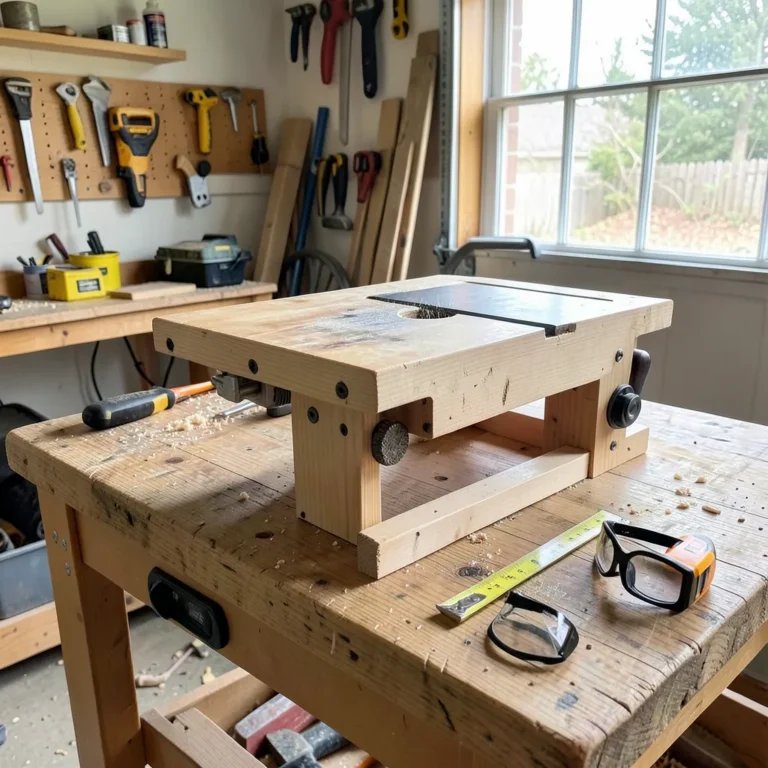
- Table saw with a tilting arbor, or a shop-built crown molding sled
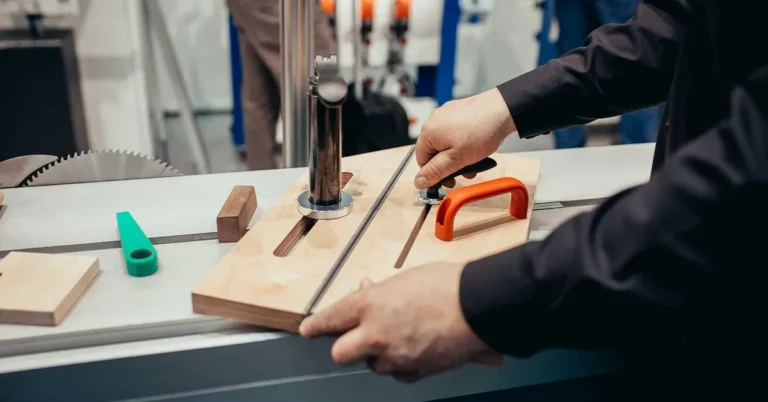
- Featherboards or clamps to hold the molding against the fence
- Scrap molding of the same profile for test cuts
Profile size changes the setup too — a small cabinet-grade crown molding on kitchen cabinetry cuts the same angles as full-size wall crown, just with a shorter blade-height clearance to check.
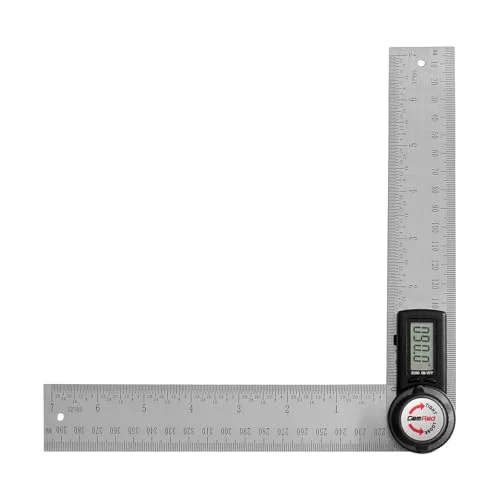
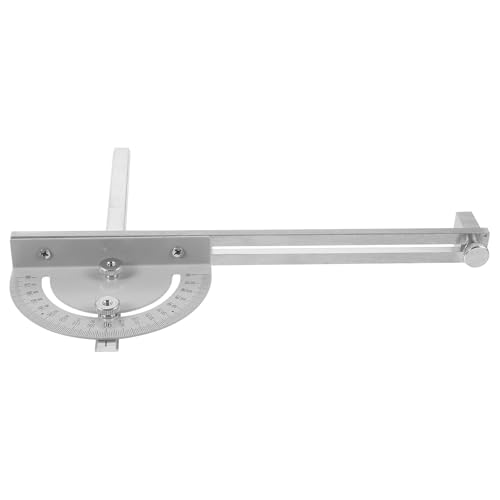
GemRed 82305 Digital Angle Finder
Reads the miter gauge and blade-tilt angle to 0.1° — the fastest way to confirm a 31.6° or 35.3° setting before a test cut.
Check Price on AmazonFlat-Cut Method: Step-by-Step
This is the same technique a miter saw uses, adapted to a table saw’s miter gauge and tilting blade. It works for straight lengths and does not require a jig, but the molding must be small enough to control safely against the fence.
- Identify the spring angle. Check the molding’s packaging or measure the back with a protractor — most stock crown is either 52°/38° or 45°/45°. This single number determines every angle you set below.
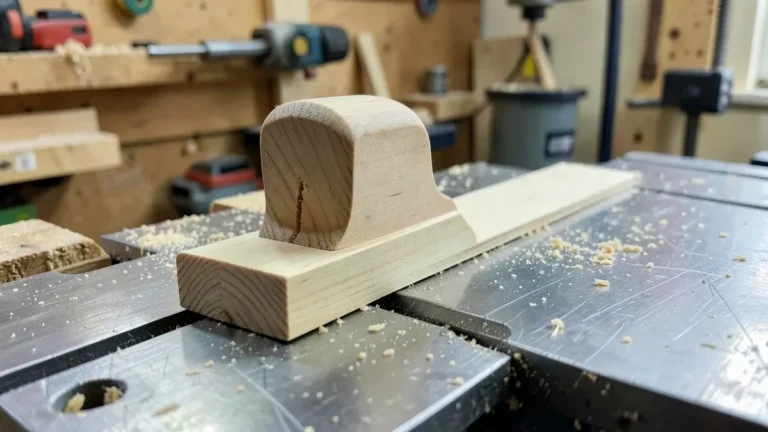
- Lay the molding flat, upside down. The decorative face sits down on the table, and the edge that touches the ceiling rests against the rip fence or an auxiliary fence on the miter gauge.
- Set the miter gauge angle. For a standard 90° inside or outside corner with 52°/38° crown, that’s 31.6° on the miter gauge. For 45°/45° crown, it’s 35.3°.
- Tilt the blade to the bevel angle. Pair 31.6° miter with a 33.9° blade tilt for 52°/38° crown, or 35.3° miter with a 30.0° tilt for 45°/45° crown.
- Make a test cut on scrap. Hold two test pieces together at the corner to check for gaps before touching the real molding.
- Cut the two corner pieces. Inside corners and outside corners mirror each other — flip the piece end-for-end rather than resetting the saw between the left and right cut of the same corner.

Upright Jig Method (For Long or Awkward Pieces)
Full-length crown molding — 8 to 16 feet is common — is hard to control lying flat on a table saw. Many finish carpenters instead build a plywood sled with two risers set at the molding’s spring angle, so the crown stands upright against the sled the same way it sits on the wall. The sled itself rides the miter slot or fence, and the blade is simply tilted to the bevel angle; the miter gauge angle becomes irrelevant because the sled geometry replaces it.
| Factor | Flat-Cut Method | Upright Jig Method |
|---|---|---|
| Best piece length | Under 5 ft | 5 ft and longer |
| Setup time | Fast — miter gauge + blade tilt | Slower — build or fetch the sled first |
| Support needed | Standard fence and featherboards | Outrigger tables, extra clamping |
| Best For | Short returns, repairs, small rooms | Whole-room crown runs |
Safety note: keep hands clear of the blade path on both methods, use a push stick for the final few inches of any cut, and never force a piece that’s binding — back off and check the fence and blade angle before continuing.
Crown Molding Angle Chart for a Table Saw
The two spring angles below cover the vast majority of stock crown molding sold in the U.S. Find the row matching your saw’s miter gauge reading, then set the blade tilt to the paired bevel angle.
52°/38° Spring Angle Crown (Most Common Profile)
| Miter Angle | Bevel Angle | Notes |
| 26.5° | 29.7° | Wide obtuse corner |
| 27.3° | 30.4° | |
| 28.2° | 31.1° | |
| 29.0° | 31.8° | |
| 29.9° | 32.5° | |
| 30.7° | 33.2° | |
| 31.6° | 33.9° | Standard 90° square corner |
| 32.5° | 34.4° | |
| 33.4° | 35.2° | |
| 34.4° | 35.9° | |
| 35.3° | 36.5° | |
| 36.3° | 37.1° | |
| 37.2° | 37.8° | Narrow acute corner |
45°/45° Spring Angle Crown
| Miter Angle | Bevel Angle | Notes |
| 29.8° | 26.4° | Wide obtuse corner |
| 30.5° | 27.0° | |
| 31.6° | 27.6° | |
| 32.5° | 28.2° | |
| 33.4° | 28.8° | |
| 34.3° | 29.4° | |
| 35.3° | 30.0° | Standard 90° square corner |
| 36.2° | 30.4° | |
| 37.2° | 31.1° | |
| 38.1° | 31.7° | |
| 39.1° | 32.3° | |
| 40.1° | 32.8° | |
| 41.1° | 33.3° | Narrow acute corner |
📊 52° miter / 38° bevel is the standard flat-cut setting for a square 90° corner on ordinary 52°/38°-spring stock crown. Source: compound-angle reference tables published by Woodweb and SBE Builders’ crown molding calculator.
Common Mistakes When Cutting Crown Molding on a Table Saw
- Skipping the test cut. Every angle setting should be proven on scrap first — a half-degree of error compounds into a visible gap at the corner.
- Confusing miter and bevel. The miter gauge rotates the workpiece; the blade tilt is a separate bevel setting. Both must be set correctly at the same time.
- Cutting long pieces without outrigger support. An unsupported 10-foot length of crown will lift or twist off the fence mid-cut.
- Mixing spring angles on the same job. A 45°/45° length paired with a 52°/38° length at the same corner will never close cleanly — check the profile before cutting mismatched stock.
“The mistake I see most often on a table saw isn’t the angle math — it’s rushing the test cut. I hold two scrap corners together under a work light before every real cut; a gap you can see under a shop light is a gap you’ll see from the floor once it’s painted.”
FAQ: Cutting Crown Molding Corners With a Table Saw
Can you cut crown molding on a table saw instead of a miter saw?
Yes. A table saw can cut crown molding flat, face-down, by tilting the blade to the bevel angle and setting the miter gauge to the matching miter angle for your molding’s spring angle. It takes more setup than a dual bevel miter saw and works best on pieces under 5 feet unless you build an outrigger or upright jig.
What is the best angle for cutting crown molding corners with a table saw?
For a standard 90° square corner on the most common 52°/38° spring-angle crown, set a 31.6° miter angle and a 33.9° bevel angle. For 45°/45° spring crown, use a 35.3° miter angle and a 30.0° bevel angle instead.
How do you cut inside corners on crown molding with a table saw?
Lay the molding flat against the fence in the same orientation used for the outside corner, but rotate the miter gauge to the opposite side. Test-cut scrap first and hold both pieces together at the corner to confirm the angle before cutting the real molding.
How long does it take to cut a crown molding corner with a table saw?
Budget 10 to 15 minutes to identify the spring angle and set the miter gauge and blade tilt, plus a few minutes per test cut. Once the angles are dialed in and confirmed on scrap, each additional corner takes only a minute or two to cut.
Do you cut crown molding upside down on a table saw?
Yes, in the flat-cut method the decorative face goes down against the table and the ceiling edge rests against the fence — the same “upside down and backward” orientation used on a miter saw. This is what lets a single blade-tilt-plus-miter-angle combination produce the compound corner cut.
Conclusion
Cutting crown molding corners on a table saw comes down to identifying the spring angle, setting the matching miter and bevel angles, and proving every setting on scrap before the real cut. Use the flat-cut method for shorter pieces and repairs, and build or borrow an upright jig once you’re running full-length crown around an entire room.
Sponsored / affiliate links. As an Amazon Associate I earn from qualifying purchases. I may earn additional commission from eligible campaigns.