How to Finish a Cutting Board (Food-Safe Oil + Board Butter)
To finish a cutting board, sand it to about 220 grit, wipe on food grade mineral oil, let each coat soak, wipe off the excess, and repeat until the wood stops drinking it. End grain takes more coats than edge grain, but over-oiling is a real mistake too. This guide gives the sanding grits, the maker-stated coat counts and soak times, and a re-oil schedule.
What You’ll Need
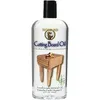 |
Best Cutting Board Oil Pick Howard Products Cutting Board Oil (12 oz), $8.93 Single-ingredient USP food grade mineral oil, the same product whose coat counts and soak times we quote in the maker table below.
|
As an Amazon Associate we earn from qualifying purchases.
- Food grade (USP) mineral oil, labeled for cutting boards
- Optional wax topcoat: a board cream or beeswax-and-mineral-oil board butter
- Sandpaper in 80, 150 and 220 grit (320 for a smoother final pass if you want it)
- Clean lint-free cloths, one for oil and one for wiping
- A slightly damp rag, to wipe off sanding dust and raise the grain
What Is the Best Finish for a Wood Cutting Board?
The standard answer from board makers is a penetrating food grade mineral oil, followed if you like by a wax-based cream or butter that slows moisture loss. Howard states its Cutting Board Oil is 100% USP food grade mineral oil that meets FDA 21 CFR 172.878 and 178.3620(a) for contact with food. Boos sells the same two-step system: Mystery Oil first, then Board Cream to lock in the moisture.
We cover the FDA rule, the full food-safe finish comparison, and the myths around drying oils in our guide to what to put on wood to make it food safe, so this page sticks to the finishing process itself. If you are choosing between hardwax oils and film finishes for a butcher block countertop instead of a board, see our butcher block finish comparison, which lists cure times.
What the Makers Actually Tell You to Do
Most finishing advice online is a number someone remembers. Here are the directions actually printed by the companies and builders quoted in this guide.
| Source | Product or method | Coats and soak time | Then |
|---|---|---|---|
| Howard Products | Cutting Board Oil, new or raw board | At least 2 coats | Wipe away excess before use |
| Howard Products | Cutting Board Oil, thick butcher block | 3-4 coats, each soaked at least 1 hour | Wipe away excess before use |
| Howard Products | Cutting Board Oil, wooden bowls and utensils | Soak at least 20 minutes | Wipe off excess |
| John Boos | Mystery Oil, routine care | One even coat on all surfaces, soak overnight | Wipe off excess oil |
| John Boos | Board Cream, applied after the oil | One even coat, soak overnight | Wipe off excess cream |
| Honey’s Woodworks (maker interview) | Mineral oil bath, then wood wax | 5 minute oil dip, drip 12 hours; wax sits about 1 hour | Buff remaining wax into the board |
The pattern is useful: a new board gets multiple short-soak coats, while a board in maintenance gets one overnight coat. Sources: Howard Products, John Boos care instructions, and Gearheart Industry.
How to Sand a Cutting Board Before Finishing
Sanding sets how much oil the wood will take, and the common belief that a finer grit is always better is not quite right. The Wood Whisperer notes that sanding to a higher grit burnishes the surface and limits the absorption of finish. That is a benefit when you want end grain to stay light, and a cost when you want the board to soak up oil.
- Flatten and remove saw marks: start at 80 grit (eQualle gives 80, 150, 220 as its core sequence).
- Smooth the scratches: move to 150 grit, then 220 grit, which eQualle describes as the step that prepares the surface for finish absorption.
- Decide on a final grit: stop at 220 for the most absorbent board, or go to 320 on face and edge grain. Honey’s Woodworks finishes face and edge grain at 320 and end grain at 400.
- Raise the grain: wipe with a slightly damp rag, let it dry, and sand lightly with 220 grit or finer in the direction of the grain, as Howard describes for butcher block.
- Remove the dust: vacuum or wipe the board, and let it dry fully before any oil goes on.
| Surface | Typical final grit from sources | What it does |
|---|---|---|
| Face or edge grain, absorbent finish | 220 (eQualle, Howard) | Leaves pores open so oil soaks in |
| Face or edge grain, smoother feel | 320 (Honey’s Woodworks) | Smoother surface, slightly less absorption |
| End grain | 320 to 400 (Wood Whisperer, Honey’s Woodworks) | Limits how much finish it soaks up and how dark it goes |
| Anything past 400 | Not recommended (eQualle) | Oils will not penetrate well |
Sources: eQualle sanding guide, The Wood Whisperer, and Howard Products FAQ.
How to Apply Food-Grade Mineral Oil to a Cutting Board
- Start clean and dry: the surface should be free of food debris, dirt and grease before oil goes on, per the Boos instructions.
- Apply an even coat: use a clean cloth, disposable towel or applicator on all surfaces, including the edges and the underside.
- Let it soak: Howard says at least 1 hour per coat on thick surfaces; Boos says overnight for a routine coat.
- Wipe off the excess: use a clean cloth, and do not leave a pool on the surface.
- Repeat for a new board: Howard says at least 2 coats on a new or raw cutting board and 3-4 on butcher block. Boos warns not to over-oil.
- Use the board: once the excess is wiped away the board is ready, since mineral oil does not cure like a varnish.
End Grain vs Edge Grain: Why One Board Needs More Coats
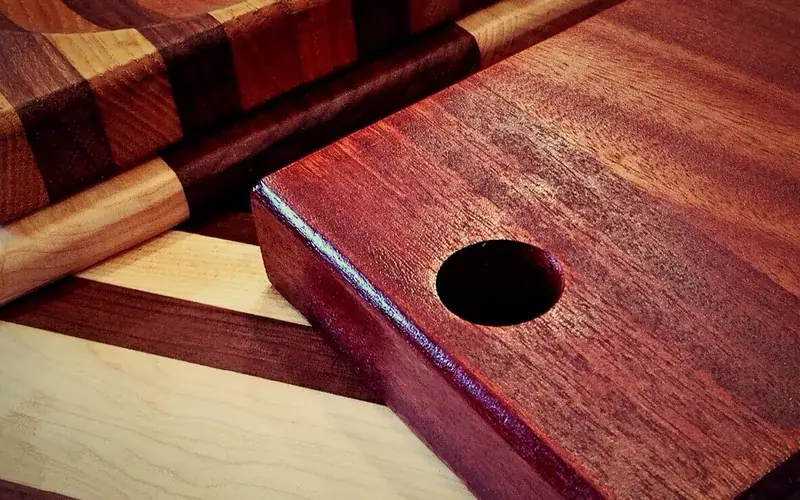
End grain exposes the open ends of the wood fibers, so it takes up oil much faster than a board made of long edges. The Wood Whisperer puts it simply: end grain will always soak up more finish than face grain. eQualle describes the open pores as acting like straws.
In practice that means the same bottle goes further on an edge-grain board. On an end-grain board, plan on the higher end of the maker numbers (3-4 coats) and judge by the surface: when a coat soaks in and nothing is left to wipe, the wood is still catching up; when oil sits on top after the soak, stop and wipe.
How to Make DIY Board Butter (Beeswax + Mineral Oil)
Board butter is mineral oil thickened with beeswax. In Boos’s two-step system the cream goes on second, after the oil, to lock in the moisture the oil restored. Apply an even coat, let it penetrate overnight, then wipe off the excess cream.
A home ratio of about 1 part beeswax to 4 parts food grade mineral oil is a woodworker rule of thumb, not a regulatory number. Our full recipe, melting steps and oil-versus-wax comparison are in the beeswax and mineral oil guide, so we will not repeat them here.
How Often Should You Oil a Wood Cutting Board?
John Boos says to oil at least once a month, depending on use and household conditions. Two of its own rules refine that: the more often a board is washed, the more often it needs oil, and a dry appearance means it is time. Howard’s product page gives coat counts for seasoning but no re-oiling interval, so use the dry-look test rather than a fixed calendar.
| Situation | Re-oil guidance | Source |
|---|---|---|
| Routine board | At least once a month | Boos |
| Washed often | More often than monthly | Boos |
| Board looks dry or pale | Oil now, regardless of the date | Boos |
| Board feels oily on top | Hold off on the next coat; Boos says do not over-oil | Boos |
📊 At least once a month is the oiling floor in the official John Boos care instructions. Source: John Boos, Care and Maintenance
Is Walnut Oil Safe for a Cutting Board?
Walnut oil is a tree-nut product, so it needs an allergy caveat before anything else. Food Allergy Canada reports allergist Dr. Julia Upton explaining that reactions are triggered by the nut protein, that highly refined oils contain very little of it, and that less refined oils can potentially be problematic. Finishing-grade walnut oil is not sold with a standard that guarantees how refined it is, so if anyone in the household has a tree-nut allergy, use mineral oil or board butter instead. Source: Food Allergy Canada.
Why You Shouldn’t Use Polyurethane, Varnish, or Raw Tung Oil on a Cutting Board
Polyurethane, varnish and lacquer are film finishes: they form a layer on top of the wood instead of soaking in, which is the opposite of the oil-and-wax approach on this page. Both makers quoted above, Howard and Boos, tell you to oil and wax a cutting board, not coat it. Whether a particular cured product is food-contact safe depends on its own label and cure time, which our food-safe finish guide walks through.
Keeping a Finished Board in Good Shape
Finishing slows drying out; it does not replace care. The Boos instructions are specific about what to avoid: do not put the board in the dishwasher, do not wash it with harsh detergents, do not leave fresh wet meats or liquids standing on it for long periods, and do not over-oil. For cleaning steps and deep cuts, see our wood cutting board cleaning guide. For the broader picture, our wood finishing guide covers every finish type.
Frequently Asked Questions
What is the best finish for a wood cutting board?
Food grade mineral oil is the standard finish from board makers such as Howard and Boos, optionally followed by a wax-based cream or butter. Both are penetrating finishes, not films.
How many coats of mineral oil does a new cutting board need?
Howard says at least 2 coats for a new or raw cutting board and 3-4 coats for thick butcher block, letting each soak at least an hour on thick surfaces. Wipe away the excess before use.
What grit should you sand a cutting board to before oiling?
About 220 grit is the common finish for an absorbent board. Some makers go to 320 on face and edge grain and 400 on end grain, but sanding past about 400 limits how well oil penetrates.
How often should you oil a cutting board?
John Boos says at least once a month, depending on use and household conditions, and more often if you wash the board often. A dry appearance means it is time.
Is walnut oil safe on a cutting board if someone has a nut allergy?
Skip it. Allergic reactions to nuts come from the nut protein, and less refined oils can potentially cause problems. Use mineral oil or board butter instead.
Conclusion
Sand to about 220 grit, oil with food grade mineral oil, let each coat soak, wipe off the excess, and add a wax topcoat if you want one. Give a new or end-grain board 2-4 coats, then oil at least monthly and sooner when it looks dry. For the recipe behind the wax step, see the beeswax and mineral oil guide.
Sponsored / affiliate links. As an Amazon Associate I earn from qualifying purchases. I may earn additional commission from eligible campaigns.