How to Fix an MDF Panel to a Wall (Adhesive, Screws & Anchors)
MDF panels fix to a wall one of three ways: construction adhesive, screws into wall studs (typically 16 inches apart), or heavy-duty toggle anchors when no stud lines up — using the wrong one is why panels bulge or fall. A panel mounted on undersized anchors can pull loose and crack on the floor. This guide covers all three methods, plus fixing a panel already loose on the wall.
Insert your Affiliate Disclosure reusable block here
Choose Your Fixing Method: Adhesive, Screws, or Wall Anchors
Best MDF Panel Adhesive Pick
Loctite PL Premium Polyurethane Construction Adhesive – $7.38
Rated for wood-to-drywall bonds, which matters for the full-surface-contact method covered above — it stays flexible enough to handle minor wall movement without the bond line cracking.
- Best for: Flat, sound walls where you want an adhesive-only install
- Why we picked it: Bonds wood, drywall, and MDF without a separate primer step
- Main drawback: Needs a caulk gun and full cure time before the panel can take any load
Compare more MDF panel fixing supplies
 Option 1 Gorilla Heavy Duty Construction Adhesive – $9.88
|
 Option 2 Toggler SnapToggle Drywall Anchors (20-Pack) – $19.99
|
 Option 3 Liquid Nails Heavy Duty Construction Adhesive – $3.48
|
As an Amazon Associate we earn from qualifying purchases.
The right method depends on what’s behind the panel. If you can hit a stud every 16 inches, screws give the strongest hold. If the panel lands on open drywall between studs, adhesive or a rated toggle anchor carries the load instead — a standard plastic wall plug is not rated for a full-size panel and will pull out over time.
| Method | Holding Strength | Best For |
|---|---|---|
| Construction adhesive | High, if full-surface contact | Flat, sound walls; no visible fasteners |
| Screws into studs | Highest | Heavier panels, uneven walls, removable installs |
| Toggle wall anchors | Medium-high (rated per anchor) | Hollow wall sections with no stud access |
Tools and Materials You’ll Need
- Tape measure, pencil, and a 4-foot level
- Stud finder
- Circular saw or jigsaw for cutting the panel to size
- Drill/driver plus a countersink or pilot bit sized for your pre-drilled screw holes
- Construction adhesive, 1″–1.25″ trim screws, or rated toggle anchors (see comparison above)
- Caulk and a caulk gun for filling seams and gaps
- Sandpaper (120–150 grit) for smoothing cut edges
- A properly fitted dust mask — MDF dust is fine and irritating to breathe when cutting or sanding
How to Fix an MDF Panel to a Wall With Adhesive
Adhesive works best on a flat, clean wall with full-surface contact — it spreads the load across the whole panel instead of a handful of points, which is why manufacturer guides call it the fastest method: roughly 10 minutes per panel versus about 20 minutes with screws.
- Prep the wall: Clean off dust, grease, and any loose paint so the adhesive bonds to solid material.
- Dry-fit the panel: Hold it in place, check it with a level, and mark the top edge in pencil.
- Apply the adhesive: Run three wavy beads down the back of the panel, spaced no more than 12 inches apart, staying about 4 inches from each edge.
- Press and pull: Push the panel into place, then pull it back off the wall about an inch and wait 60 seconds before pressing it back — this lets the adhesive tack up for a stronger initial grip.
- Brace it: Support the panel with painter’s tape or temporary props until the adhesive fully cures (check the product’s cure time — most need 24 hours before the panel can take any load).
- Fill and finish: Caulk the seams and edges, let it dry, then sand lightly before painting or finishing.
How to Screw an MDF Panel Into Wall Studs
Screws hold more weight than adhesive alone and let you remove the panel later without damaging the wall. Find studs with a stud finder before you start — most homes frame studs 16 inches on-center, though older builds sometimes use 24 inches.
- Mark stud lines: Locate and pencil-mark every stud the panel will cross.
- Pilot-drill the panel: Drill pilot holes about 1/2 inch smaller than the screw shaft to stop the MDF edge from splitting, spaced every 8–12 inches along each stud line.
- Countersink each hole: A slight countersink lets the screw head sit flush so it’s easy to fill and hide.
- Drive the screws: Use 1–1.25 inch trim-head screws for 1/4-inch MDF, driving into each marked stud.
- Check with a level: Re-check the panel is plumb before fully tightening the last few screws.
For general pilot-hole sizing and nail-versus-screw guidance that applies to any MDF project — not just wall panels — see our full MDF installation guide.
Can You Use Wall Anchors for an MDF Panel?
Yes — but only a wall anchor rated for the panel’s weight, not a standard plastic screw anchor. A toggle-style anchor is a wall fastener that spreads its holding force across a spring-loaded or folding wing behind the drywall, rated for far more weight than a plastic plug. Use one wherever the panel lands between studs and adhesive alone isn’t an option, such as a rental where you need a removable install.
Drill the pilot hole to the size printed on the anchor’s packaging, insert the anchor, then drive the screw through the panel and into the anchor. Space anchor points the same way you’d space stud screws — every 8–12 inches — since each anchor only carries its own share of the panel’s weight.
Fixing MDF Panels on an Uneven Wall With Battens
If a level shows dips or bows in the wall, skip fixing the panel directly to the drywall. Install vertical or horizontal wood battens first, using thin packers or shims behind the low spots to bring every batten into the same plane. Screw or glue the panel to the battens instead of the wall itself — this is also the standard approach for mounting MDF over a brick or masonry wall, where battens give you something flat and fastener-friendly to work with.
How to Fix MDF Acoustic Panels to a Wall
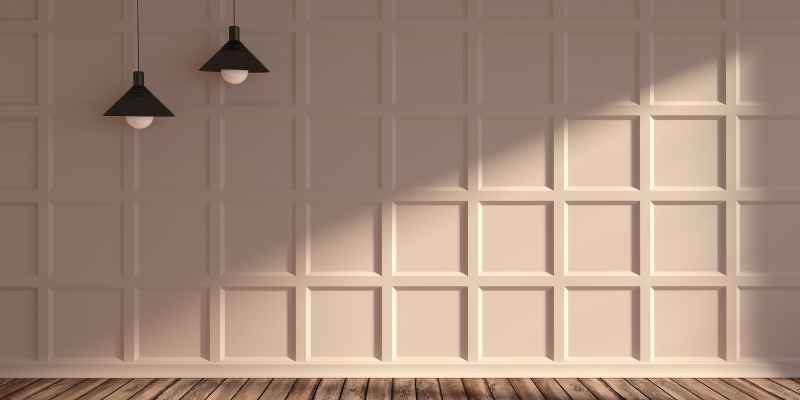
Acoustic MDF panels follow the same adhesive-or-screw choice, with one difference: sound-dampening panels are heavier per square foot than plain MDF sheet, so a wall with any unevenness needs mechanical fixing (screws or anchors) rather than adhesive alone. Full-coverage adhesive can work on a flat, sound wall, but ceiling installs or heavy slat-style acoustic panels should always add screws as backup — gravity eventually wins against adhesive by itself.
📊 Adhesive-only MDF panel installs run about 10 minutes per panel versus roughly 20 minutes for a screwed installation. — Source: Planeo Acoustic Panel Installation Guide, 2026
“If the wall has significant unevenness that cannot be levelled, securing the panels with screws is recommended — which also applies to ceiling installations, where screws provide assurance that gravity won’t cause the installation to fail over time.”
Common Mistakes When Fixing MDF Panels to a Wall
- Skipping the stud finder. Screwing into open drywall instead of a stud is the single biggest reason panels sag or fall within a few months.
- Using standard plastic wall plugs on a full panel. They’re rated for picture frames, not a several-pound MDF sheet — use a toggle-style anchor instead.
- Not letting adhesive cure before loading the panel. A panel that’s braced and left alone for the full cure time holds far better than one bumped or leaned on the same day.
- Cutting MDF without a dust mask. MDF dust is fine enough to get deep into your lungs — always cut and sand with proper respiratory protection.
- Painting over gaps instead of caulking them first. Paint doesn’t fill seams — caulk, sand, then paint for a factory-smooth finish.
Frequently Asked Questions
What is the best adhesive for MDF wall panels?
A polyurethane or hybrid-polymer construction adhesive rated for wood-to-drywall bonds works best. Apply it in beads across the full back of the panel rather than a few dabs, since load-bearing strength comes from surface contact area, not adhesive volume.
How do you secure MDF to a wall without hitting a stud?
Use a rated toggle-style wall anchor, not a standard plastic plug. Drill the pilot hole to the size printed on the anchor packaging, insert the anchor, and drive the screw through the panel into it. Space anchors every 8–12 inches for even weight distribution.
Can MDF wall panels be removed without damaging the wall?
Yes, if they’re screwed to studs or anchors rather than glued. Removing an adhesive-mounted panel usually pulls off the top layer of drywall paper with it, so choose screws or anchors over adhesive whenever you expect to take the panel down later, such as in a rental.
How do you fix a loose or bulging MDF wall panel?
First check whether the original fasteners missed the stud or anchor point — that’s the most common cause. Pull the panel back gently, inject a bit of fresh construction adhesive behind the bulging section, and add a screw into the nearest stud or a new toggle anchor to hold it while the adhesive cures.
Conclusion
Match the fixing method to what’s behind the panel: screws into studs for the strongest hold, rated toggle anchors where there’s no stud, and full-surface adhesive on a flat wall where you don’t want visible fasteners. Once the panel is up and the seams are caulked, see our guide on painting MDF board for a smooth, streak-free finish, or compare materials first in our MDF vs. OSB board guide if you haven’t bought panels yet.
Sponsored / affiliate links. As an Amazon Associate I earn from qualifying purchases. I may earn additional commission from eligible campaigns.