Best Paint for Plywood: Seal the Edges First (Top Picks)
The best paint for plywood is a 100% acrylic latex exterior paint like INSL-X Tough Shield outdoors, or a water-based furniture paint like DWIL Matte Finish indoors — though primer matters more than the topcoat. Skip sealing the raw edges and moisture wicks in through capillary action, splitting the plies within a season. This guide covers our top picks, why edge-sealing is non-negotiable, and how exterior, interior, and marine-grade plywood each need a different system.
Quick Answer
Use a 100% acrylic latex exterior paint (INSL-X Tough Shield) for outdoor plywood, or a water-based furniture paint (DWIL Matte Finish) indoors. Neither lasts unless you sand the face to 150–220 grit and seal the raw edges first — untreated end-grain wicks moisture and causes delamination within a season.
Best Paint and Sealer Picks for Plywood
Best Exterior/Interior Paint Pick
Krylon ColorMaxx Satin Interior/Exterior Acrylic Latex Paint
A 100% acrylic latex paint rated for both indoor and outdoor plywood, in a satin finish that hides surface imperfections better than gloss.
- Best for: plywood furniture, shelving, or trim that moves between indoor and outdoor use
- Why we picked it: one acrylic formula covers both environments, so you are not buying two separate paints
- Main drawback: satin finish shows roller stipple more than a dedicated floor paint on high-traffic surfaces
Compare more plywood paint prep options
 Option 1 INSL-X Block Out Stain-Blocking Primer
|
 Option 2 4-Inch High-Density Foam Roller, 8-Pack
|
 Option 3 Rust-Oleum Painter’s Touch Gloss White Latex
|
As an Amazon Associate we earn from qualifying purchases.
These four products cover the real use cases we researched below: general interior/exterior surfaces, marine and moisture-heavy applications, and furniture refinishing. Each pick includes what it is actually good for and where it falls short.
INSL-X Tough Shield Floor and Patio Paint
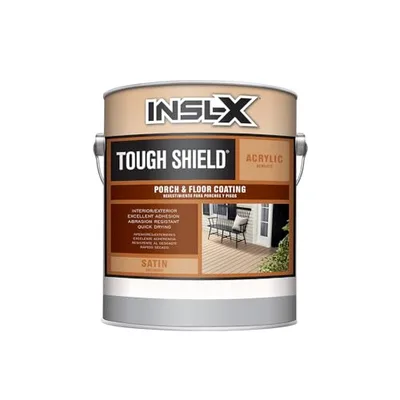
The INSL-X Tough Shield Porch & Floor Coating in Saddle Brown is a durable acrylic paint built for both interior and exterior plywood. It is manufactured by Benjamin Moore & Co. under the INSL-X brand and ships in a 1-gallon (128 fl oz) can.
Pros:
- Durable, water-resistant finish rated for both interior and exterior use
- Provides a protective shield against foot traffic and weather
- 100% acrylic formula holds up on floors and patios
Cons:
- Limited color options
- Needs two coats minimum for full coverage — more on plywood that has not been sealed first
This paint is a reliable choice for plywood floors, patios, and other high-traffic surfaces. It performs best when the plywood underneath has already been sanded and the edges sealed — see the priming section below for why that step changes how long this paint actually lasts.
To buy this product, click here.
TotalBoat Wood Sealer
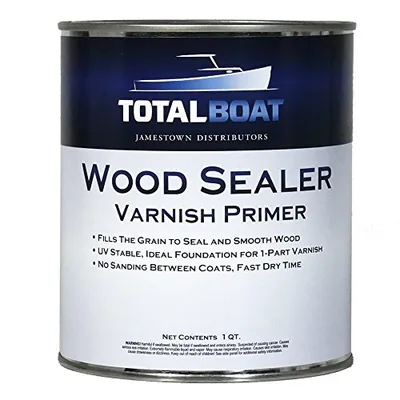
TotalBoat Wood Sealer is a marine-grade sanding sealer and pre-varnish primer, not a topcoat paint. It penetrates the wood to block moisture before a finish coat goes on — exactly the role the edge-sealing section below explains plywood needs most.
Pros:
- Penetrates deep into end-grain to block moisture before it reaches the inner plies
- Suitable for boats, outdoor furniture, and other wood exposed to harsh conditions
- Creates a smooth base coat that highlights the wood grain under a clear finish
Cons:
- Needs multiple coats to fully saturate thirsty end-grain
- Strong odor during application — use in a ventilated space
For marine-grade wood sealers, TotalBoat stands out for durability on boats and outdoor woodworking projects. Its clear formula lets the wood grain show through, creating a visually appealing finish once a topcoat is applied over it.
To buy this product, click here.
DWIL Matte Finish Furniture Paint
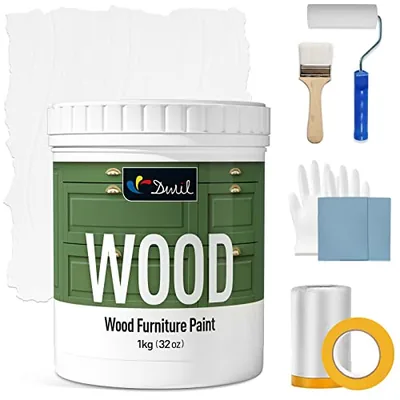
DWIL Matte Finish Furniture Paint is a water-based, non-toxic, odorless paint built for refinishing plywood cabinets, doors, tables, and dressers indoors.
Pros:
- Water-based and non-toxic, safe for indoor furniture projects
- Matte finish gives a modern, low-sheen look
- Ships with application tools included
Cons:
- Limited color options
- May need multiple coats for darker wood tones to fully cover
This paint is built for indoor plywood furniture, not exterior or high-moisture use — pair it with a stain-blocking primer first if the plywood has visible knots or resin, since the matte formula will show any bleed-through underneath.
To buy this product, click here.
Seal-Once Marine Premium Wood Sealer
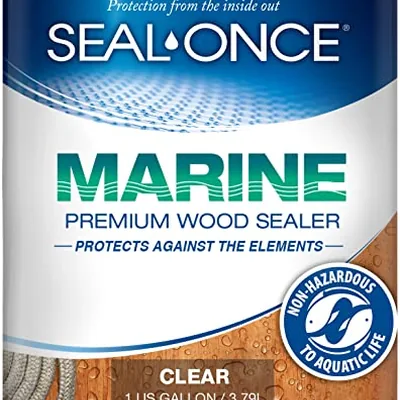
Seal-Once Marine Premium Wood Sealer combines a stain and a waterproof sealer in one product, built for plywood exposed to marine environments and outdoor weather.
Pros:
- Waterproofs the surface and blocks UV fading in one application
- Can be applied with a brush, roller, or sprayer
- Good match for boat decks, docks, and other marine-grade plywood
Cons:
- Higher upfront cost than a basic exterior paint
- Needs full drying time between coats, which extends the project timeline
Because it is a sealer-stain hybrid rather than a solid-color topcoat, this product works best on plywood where you want the wood grain to stay visible — not as a substitute for the opaque exterior paints above.
To buy this product, click here.
Why Plywood Needs Sealed Edges Before You Paint It
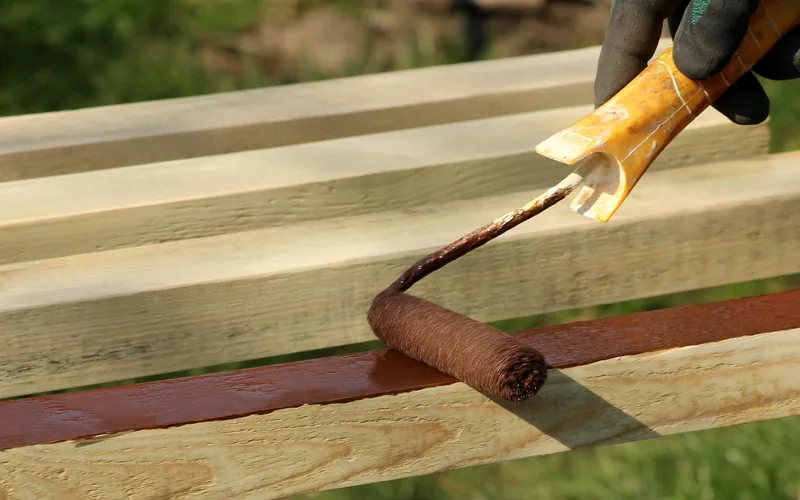
Plywood edges are exposed end-grain — a stack of tiny wood tubes that draw up water through capillary action, the same way a paper towel wicks up a spill. A topcoat on the flat faces does nothing to stop this if the cut edges are left bare.
Once moisture gets into an unsealed edge, it penetrates between the plies. Because each veneer layer absorbs and swells at a slightly different rate, the internal pressure that builds up is what causes delamination — the plies physically separating, often starting at a cut edge or a screw hole.
The fix: saturate the end-grain with a dedicated sealer (TotalBoat Wood Sealer or a stain-blocking primer like INSL-X Block Out) until it stops absorbing liquid — usually 2–3 coats, since the first coat is fully soaked up by the thirsty end-grain before it can build a film. Only after the edges stop drinking should you move on to the topcoat.
A high-quality primer does two jobs a topcoat paint cannot: it blocks knots and resin from bleeding through, and it gives the topcoat something uniform to bond to. Skipping primer on raw plywood is the single most common reason a “durable” exterior paint peels within a year.
“Acrylic latex is the only paint system recommended for plywood used outdoors — oil-based topcoats trap moisture against the panel instead of letting it breathe.”
Exterior vs Interior Plywood Paint: What’s Different
The paint that works on an indoor plywood shelf will not survive a season outdoors, and an exterior-rated paint is overkill (and pricier) for furniture that never sees rain. Match the system to the environment first, then pick a specific product.
| Use Case | Paint Type | Primer Needed | Best For |
|---|---|---|---|
| Interior furniture/cabinets | Water-based acrylic/latex | Stain-blocking primer if knots or resin are visible | DWIL Matte Finish Furniture Paint |
| Interior floors | Dedicated floor/patio paint | Oil- or shellac-based stain-blocking primer on raw plywood | High-traffic plywood subfloors |
| Exterior siding/decking | 100% acrylic latex exterior paint | Acrylic exterior primer, edges sealed first | INSL-X Tough Shield |
| Marine/boat/dock | Marine sealer + varnish system | Dedicated marine sanding sealer as the primer coat | TotalBoat Wood Sealer, Seal-Once Marine |
Do You Need to Sand Plywood Before Painting?
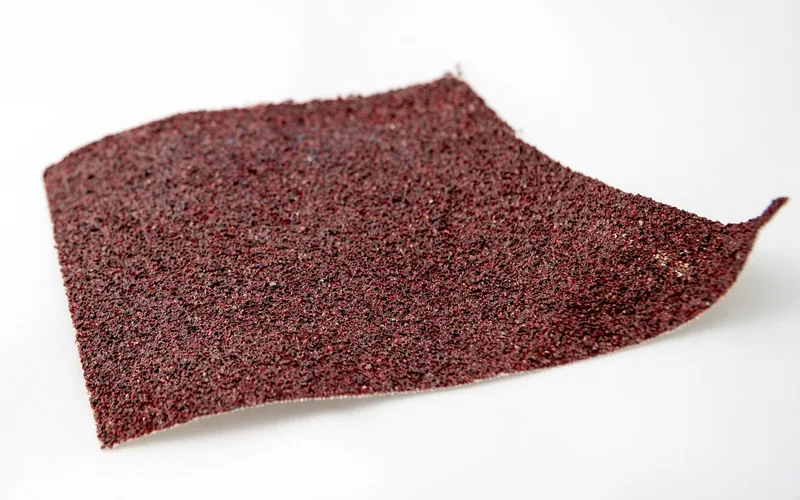
Yes — plywood face veneers come from the factory with mill glaze, minor tear-out, and manufacturing residue that block paint adhesion. Skipping this step is the second most common reason paint peels off plywood early.
Start with 120-grit to knock down rough patches, then finish with 150–220-grit for a smooth, paint-ready surface. Always sand in the direction of the grain — cross-grain scratches show through paint, especially under a satin or gloss finish. Plywood face veneers are thin, often under a millimeter, so use a light hand: sanding through the veneer exposes the core layer underneath, which will not take paint or stain the same way.
After sanding, remove all dust with a tack cloth or a vacuum with a brush attachment before priming. Leftover dust creates a barrier between the primer and the wood that shows up as a rough, poorly-bonded finish. For a deeper walkthrough of grit progressions and technique, see our guide on sanding plywood smooth, and if you are sanding between multiple primer coats, our guide to sanding between primer coats covers the timing.
Marine-Grade vs Construction-Grade Plywood: Does It Change How You Paint?
Marine-grade plywood is built with void-free inner plies and waterproof glue, while construction-grade plywood like CDX is allowed to have internal voids — gaps between plies — while still using exterior-rated adhesive.
📊 Marine plywood specifications cap internal core voids at about 1/8 inch, while standard CDX exterior sheathing can have voids approaching a full inch. — Source: APA marine plywood specification, industry documentation
Paint hides the cosmetic difference — a properly primed and sanded sheet of C-plugged CDX can look identical to marine-grade under two coats. What paint cannot fix is what happens after a fastener hole or cut edge lets water in: on CDX, that water reaches a void and gets trapped, accelerating rot from the inside where you cannot see it. On void-free marine plywood, there is no pocket for it to collect in.
For furniture, shelving, and most interior projects, construction-grade plywood painted correctly — sanded, primed, edges sealed — will last for decades. Reach for marine-grade specifically for boat parts, dock components, or anything with sustained water contact where a trapped void is a real risk, not just a cosmetic one. If you are working with plywood indoors and unsure whether it needs painting at all, see our guide on painting plywood walls.
Frequently Asked Questions
What are the benefits of using INSL-X Tough Shield Floor and Patio Paint?
INSL-X Tough Shield Floor and Patio Paint offers durable, water-resistant protection for plywood surfaces, resisting scuffs and stains. Its 100% acrylic formula is rated for both interior and exterior use, making it a solid choice for plywood floors and patios once the surface has been sanded and sealed.
How does TotalBoat Wood Sealer protect plywood surfaces?
TotalBoat Wood Sealer is a marine-grade sanding sealer and pre-varnish primer. It penetrates deep into the end-grain, blocking the capillary action that pulls moisture into plywood edges, which is what prevents delamination over time.
What makes DWIL Matte Finish Furniture Paint suitable for plywood?
DWIL Matte Finish Furniture Paint is a water-based, non-toxic paint designed for indoor plywood refinishing. Its odorless formula and included application tools make it a straightforward choice for cabinets, doors, tables, and dressers.
How does Seal-Once Marine Premium Wood Sealer benefit plywood?
Seal-Once Marine Premium Wood Sealer combines waterproofing and UV protection in one product, ideal for plywood used in marine environments or exposed to sustained outdoor weather where the wood grain should stay visible.
Do you need to sand plywood before painting?
Yes. Sand the face grain with 120-grit followed by 150–220-grit, always in the direction of the grain, and remove all dust before priming. Skipping this step is one of the most common reasons paint fails to bond to plywood.
Why does plywood need a primer before painting?
Plywood is a composite of glue, resin, and multiple wood species that can bleed through paint if left unsealed. A stain-blocking primer stops that bleed-through and gives the topcoat a uniform surface to bond to, which extends how long the paint job lasts.
Can you use the same paint for interior and exterior plywood?
Only if it is specifically labeled for both, like a 100% acrylic latex paint. A true exterior formula will typically outperform an interior-only paint outdoors, and an exterior paint is unnecessary cost and off-gassing for furniture that stays inside.
Conclusion
The right paint for plywood depends on where the project lives: INSL-X Tough Shield for exterior and high-traffic interior surfaces, DWIL Matte Finish for indoor furniture, and TotalBoat or Seal-Once where moisture exposure is constant, like boats and docks. But the paint is the last decision, not the first — sanding the face grain and sealing the raw edges is what actually determines whether that paint lasts one season or ten.
Plywood itself is a layered composite material, and that layered structure is exactly why edge-sealing matters more here than on solid lumber.
Sponsored / affiliate links. As an Amazon Associate I earn from qualifying purchases. I may earn additional commission from eligible campaigns.