How to Square Plywood on a Table Saw (5-Cut Method Included)
A table saw squares plywood only when paired with a crosscut sled or straightedge guide — the rip fence alone keeps sides parallel, not square, so factory sheets often arrive slightly out of true. Cutting cabinet parts from an unsquare panel leaves gaps you’ll fight with shims for the rest of the build. This guide covers the straightedge and sled methods, checking square with the 3-4-5 rule and diagonals, plus the 5-cut method for calibrating a sled to within 0.005 inch.
What You’ll Need
Best Speed Square Pick
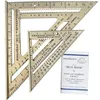
SWANSON SW1201K 7" Speed Square & 12" Combo Square Value Pack
Pairs a standard speed square with a longer combination square, so you can check tight corners and mark longer reference lines with the same set.
- Best for: checking corners and marking longer reference lines from one kit
- Why we picked it: covers both checks this guide uses — quick 90° corner reads and a longer straightedge for full-sheet marking
- Main drawback: the 12-inch square is bulkier to store than a single speed square
Compare more speed square options
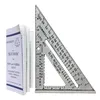 Option 1 SWANSON S0101 7" Speed Square
|
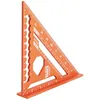 Option 2 Klein Tools 9357SSQ Rafter Square
|
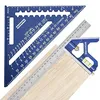 Option 3 WORKPRO Aluminum Carpenter Square Set
|
As an Amazon Associate we earn from qualifying purchases.
Squaring plywood is less about the saw and more about having a second reference beyond the fence. Gather these before you start:
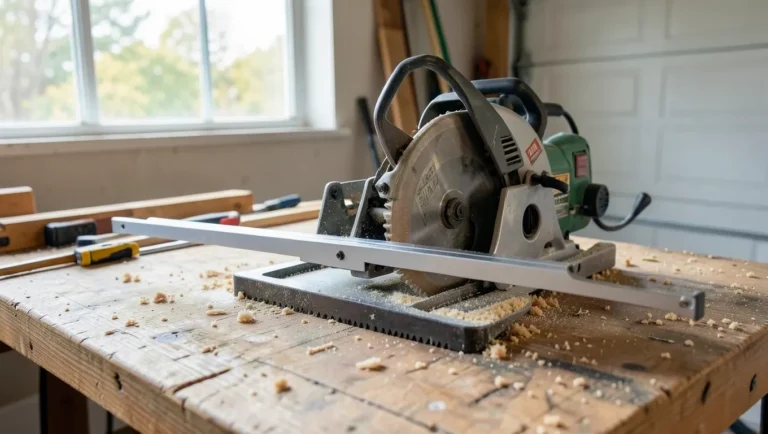
- A table saw with a rip fence, or a circular saw and straightedge if you don’t have a table large enough for a full sheet
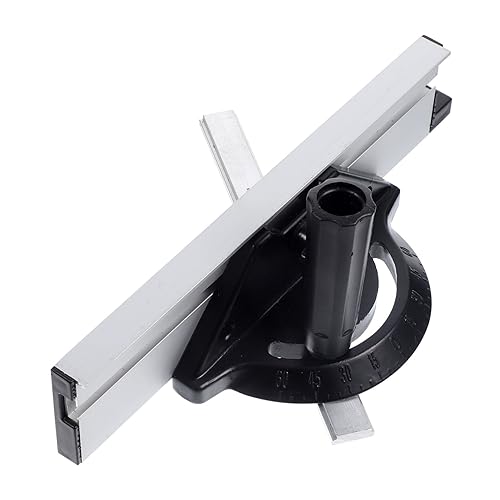
- A shop-built or aftermarket crosscut sled, or a miter gauge with an extension fence
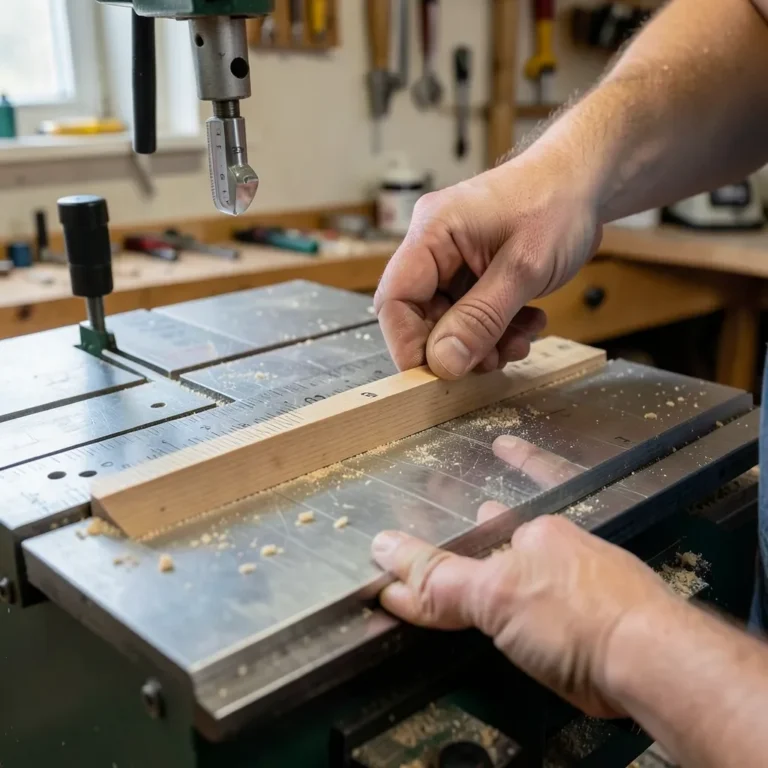
- A speed square or combination square for quick corner checks
- A tape measure long enough to read both diagonals of a full sheet
- A second straightedge (a factory-edge scrap of plywood works) for the guide method
- Push stick, safety glasses, and hearing protection
Method 1: Straightedge Guide for One True Edge
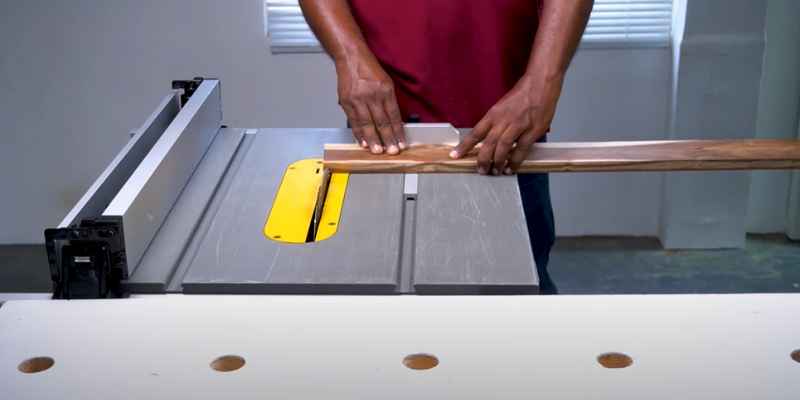
Factory plywood is rarely square out of the box, and the rip fence can’t fix that on its own — it only keeps two edges parallel to each other, not perpendicular to the other two. So the first job is creating one genuinely straight, true edge you can trust as a reference for every cut after it.
- Pick your reference: Find a second piece of plywood or MDF with one factory-straight edge, long enough to span the cut.
- Clamp it down: Lay the straightedge on top of your workpiece so its straight edge overhangs the area you want to trim, then clamp both pieces together.
- Guide the cut: Run the straightedge along the rip fence (or against a circular saw’s base plate) so the blade trims your workpiece flush with the reference edge.
- Flip and repeat: Once one edge is true, flip the panel and rip the opposite side using your new edge against the fence — this gives you two parallel, straight sides.
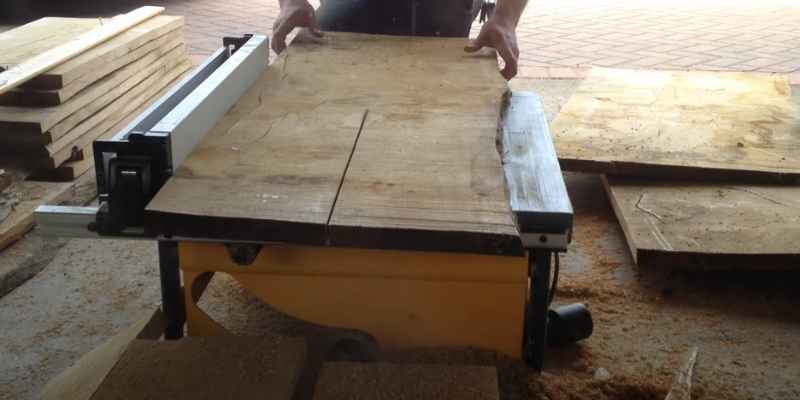
For sheets too large to balance on the saw alone, support the far end so the panel doesn’t sag or twist mid-cut — the same setup used when cutting long boards on a table saw applies directly to full plywood sheets.
Method 2: Crosscut Sled for Repeatable Square Corners
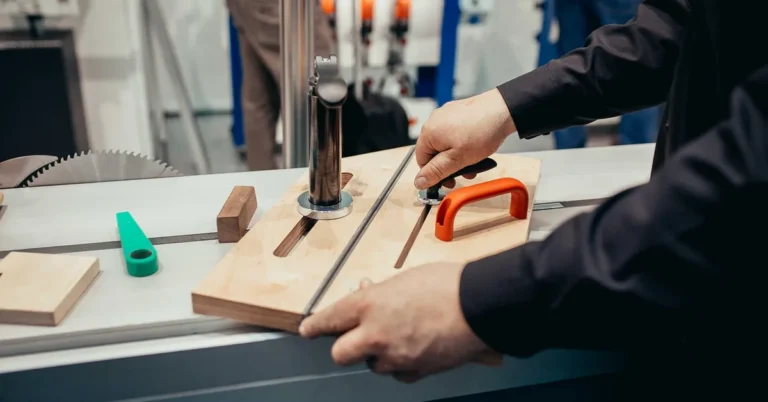
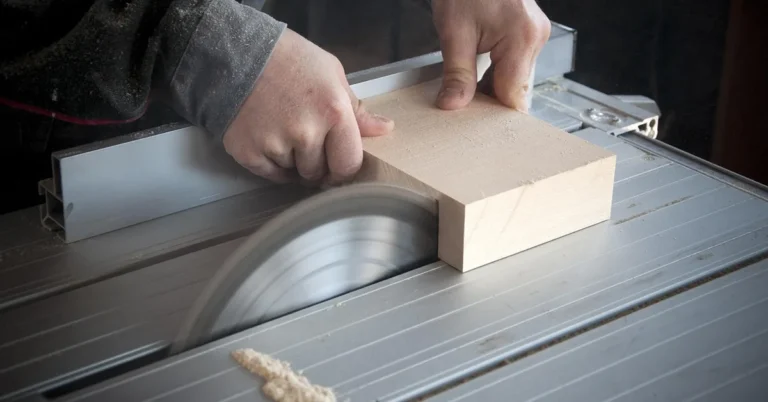
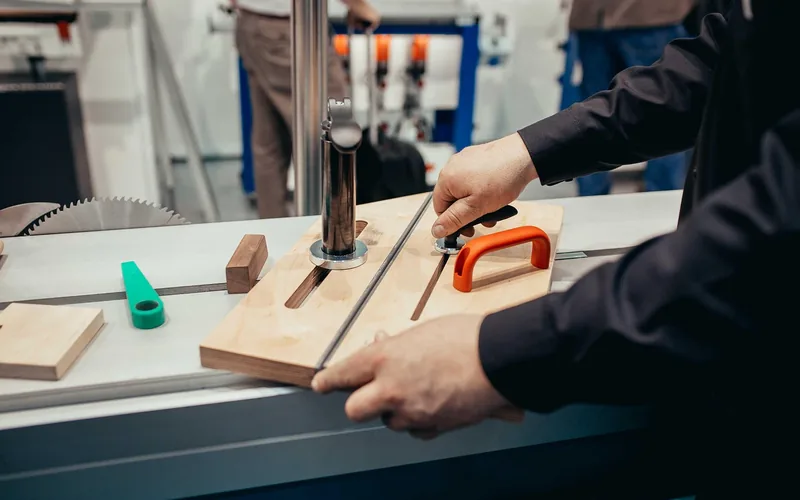
Once you have one true edge, the fastest way to square the ends is a crosscut sled or a miter gauge set to exactly 90 degrees, referenced off that edge rather than the rip fence.
- Reference the true edge: Place your straightened edge against the sled’s fence or the miter gauge’s extension board.
- Trim the first end: Push the sled through the blade to square the first end — this end is now perpendicular to your reference edge.
- Flip for length: Measure and mark your final length, then flip the panel so the squared end registers against a stop block, and crosscut the second end.
Never run the rip fence and the sled or miter gauge at the same time. Using both guides on the same cut traps the offcut between the blade and the fence, which is one of the most common causes of kickback on a table saw — pick one guide per cut, always.
If you’re cutting plywood into shape rather than just squaring the panel, the setup is nearly identical to crosscutting plywood on a table saw — the difference here is that every cut references the same true edge instead of a fresh mark each time.
The 5-Cut Method: Calibrate Your Sled to True Square
A crosscut sled that’s even slightly out of square will square every panel you cut on it — consistently wrong. The 5-cut method checks a sled without relying on a square that might itself be off, by amplifying any error until it’s easy to measure.
- Rough-cut a scrap: Crosscut a piece of scrap plywood roughly square, at least 12 inches across, using your sled.
- Mark a reference edge: Draw an arrow on one edge so you can track which side runs against the sled’s fence each time.
- Make four rotating cuts: Cut side one, rotate the piece 90 degrees keeping the marked edge sequence consistent, and repeat for a second, third, and fourth cut.
- Make the fifth cut: Without touching the sled’s fence, make one final light cut that trims a thin sliver off the very first edge you cut.
- Measure the sliver: Measure that sliver’s width at both ends with calipers. Equal widths mean the sled is square; a difference is the sled’s error, doubled through the four rotations — adjust the sled’s rear fence by half that difference and re-test.
📊 The 5-cut method can typically calibrate a shop-built crosscut sled to within roughly 0.005 inch over a 24-inch cut — Source: woodworking sled-calibration community guides, 2026.
“A sled that’s off by even 1/32 inch over a 24-inch crosscut shows up as a visible gap the moment you dry-fit a cabinet carcass — the 5-cut method is the fastest way to catch that before glue-up, not after.”
How to Check If Plywood Is Square
What Is the 3-4-5 Method?
Mark a point 3 inches from a corner along one edge, and a second point 4 inches from that same corner along the adjacent edge. Measure the diagonal distance between the two marks — a true 90-degree corner measures exactly 5 inches. Scaling the same ratio up to 6-8-10 or 9-12-15 inches gives a more forgiving, more accurate read on a full sheet.
How Do You Check Squareness With a Speed Square?
Hook the speed square’s lip against one edge of the panel and slide the perpendicular blade toward the corner. Light showing under the blade, or the corner not lining up flush, means that corner isn’t a true 90 degrees — mark the gap and true it up before cutting to final size.
How Do You Check a Full Sheet With Diagonal Measurements?
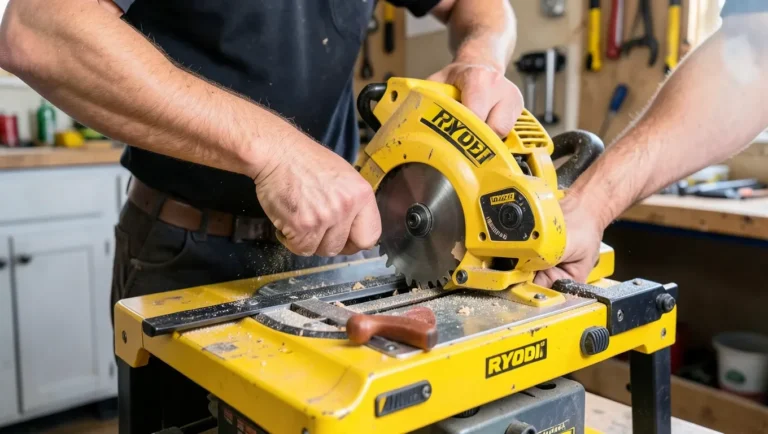
Measure corner to corner across both diagonals of the sheet. If the two measurements match, the panel is square; if they don’t, the longer diagonal points toward the pair of corners that are too wide — that’s the side to trim. This same diagonal check is what confirms the work you did in squaring a piece of plywood with a circular saw or by hand, not just on a table saw.
Common Mistakes to Avoid
- Trusting the fence alone. The rip fence only guarantees parallel sides, not square ones — it can’t fix a panel that started out of true.
- Running two guides at once. Combining the rip fence with a sled or miter gauge on the same cut can trap the offcut and kick back.
- Supporting only the ends of a large sheet. Plywood can hold internal stress from manufacturing; cutting it without support in the middle lets it flex and bow mid-cut, throwing off an otherwise square setup.
- Setting the blade height too high. A blade set well above the material increases tear-out on the face veneer and gives the offcut more room to lift and bind — keep it just clearing the plywood’s thickness.
FAQ
Why Isn’t My Plywood Square After Cutting It on a Table Saw?
Because the rip fence only keeps two edges parallel to each other — it doesn’t square the ends. If the panel wasn’t square before the first cut, or the fence has drifted out of parallel with the blade, the parallel sides you cut will still be part of a parallelogram, not a rectangle. Establish one true edge first with a straightedge guide or crosscut sled, then reference every other cut off that edge.
What Is the 3-4-5 Method for Checking Square?
Mark a point 3 inches from a corner along one edge and a second point 4 inches from that same corner along the adjacent edge. Measure the diagonal distance between the two marks — a true 90-degree corner measures exactly 5 inches. Scaling the same ratio up to 6-8-10 or 9-12-15 inches gives a more forgiving read on a full sheet.
What Is the 5-Cut Method for a Crosscut Sled?
It’s a calibration test that rotates one scrap piece through four cuts against the same sled fence, then trims a thin fifth sliver off the original edge. Any angular error in the sled is amplified through the four rotations, so measuring the sliver’s width at both ends reveals — and lets you correct — even a hairline misalignment.
Can the Rip Fence Alone Square a Sheet of Plywood?
No. The rip fence only guarantees that the two edges it guides are parallel to each other; it says nothing about whether those edges are perpendicular to the other two. Squaring requires a second reference — a crosscut sled, miter gauge, or straightedge guide — used against one already-true edge.
How Accurate Does a Squared Plywood Panel Need to Be?
For most cabinet and shelving work, matching diagonal measurements within about 1/16 inch on a full sheet is a workable target. Fine joinery or parts that must nest tightly benefit from the tighter tolerance a calibrated crosscut sled and the 5-cut method can deliver, often within a few thousandths of an inch.
Squaring plywood comes down to giving the saw a reference the rip fence can’t provide on its own: one true edge, established with a straightedge guide or a crosscut sled calibrated with the 5-cut method. Get that first edge right, reference every other cut off it, and the diagonal check at the end will confirm the panel is ready for the rest of the build. For more table saw setups and jigs, see our table saw hub.
Sponsored / affiliate links. As an Amazon Associate I earn from qualifying purchases. I may earn additional commission from eligible campaigns.