
How To Stain Between Deck Boards: Expert Tips & Tricks
To stain between deck boards, use a small sprayer or a brush to apply the stain in a back-and-forth motion. The stain should penetrate the cracks and spaces between the boards, ensuring even coverage and protection for your deck.
When it comes to maintaining the aesthetics and longevity of your deck, staining is an essential step. It not only enhances the natural beauty of the wood but also provides a protective barrier against moisture, UV rays, and other outdoor elements.
However, carefully staining between deck boards can be a challenging task. The following guide will give you expert tips on how to effectively stain between deck boards, ensuring that every inch of your deck is well-coated and protected.
Preparing The Deck
Before staining between deck boards, it’s essential to prepare the deck surface properly. This step is crucial to ensure a smooth and long-lasting finish that enhances the overall appearance of your deck. The preparation process involves cleaning the deck surface and removing debris from between the boards.
Cleaning The Deck Surface
Start by thoroughly cleaning the deck surface to remove dirt, dust, mildew, and any other contaminants that can hinder the staining process. Cleaning the deck not only improves the final results but also helps the stain to penetrate evenly, providing better protection to the wood.
Here are some steps to follow when cleaning your deck surface:
Clear the deck of any furniture, planters, or other items, ensuring complete access to the entire surface.
Sweep the deck:
Sweep the deck using a broom or brush to remove loose debris like leaves, branches, and dirt. Pay extra attention to the areas between the deck boards, ensuring they are clear of any obstructions.
Wash the deck:
Use a pressure washer or hose with a high-pressure nozzle to wash away stubborn dirt and grime. Start from one end of the deck and work your way towards the other, moving in the direction of the boards. Be careful not to use excessive pressure, as it can damage the wood surface.
Apply a deck cleaner:
If your deck has tough stains or mildew, consider using a deck cleaner. Follow the manufacturer’s instructions and apply the cleaner evenly, ensuring it reaches all areas of the deck surface. Scrub the surface gently with a brush to loosen dirt and stains.
Rinse the deck:
Once you have applied the deck cleaner, rinse it off with clean water. Use a hose or pressure washer with a low-pressure setting to remove any residue. Ensure all the cleaning solution and dirt are completely rinsed off, paying close attention to the gaps between the deck boards.
Allow the deck to dry:
After cleaning and rinsing, give your deck ample time to dry thoroughly. Ideally, wait for at least 48 hours, ensuring there is no moisture left on the surface. A dry deck allows the stain to adhere properly and ensures a more even application.
Removing Debris From Between The Boards
In addition to cleaning the deck surface, it’s important to remove any debris that has accumulated between the boards. Leaves, dirt, and other particles not only detract from the deck’s appearance but can also trap moisture, leading to rot and decay over time.
Here’s how you can effectively remove debris from between the deck boards:
Use a putty knife or scraper:
Start by gently inserting a putty knife or scraper blade between the boards. Slide it along the gap, ensuring it lifts out any debris trapped inside. Be careful not to damage the surface or edges of the boards while doing this.
Vacuum or blow debris:
If the gap between the boards is too narrow for a putty knife, use a vacuum cleaner or leaf blower to remove the debris. Point the nozzle or blower towards the gaps and direct the airflow to effectively dislodge and remove the debris.
Brush the gaps:
An alternative method is to use a small brush or old toothbrush to brush away the debris. Lightly scrub the gaps in a back-and-forth motion until all the dirt and particles are loosened and cleared away.
By thoroughly cleaning the deck surface and diligently removing debris from between the boards, you’ll ensure optimal conditions for staining and create a beautiful, well-maintained deck that you can enjoy for years to come.
Choosing The Right Stain
Choosing the right stain for your deck boards is crucial to ensure a long-lasting and beautiful finish. Follow these steps to effectively stain between deck boards, enhancing the overall appearance and protection of your outdoor space.
When it comes to staining between deck boards, choosing the right stain is essential for achieving a beautiful and long-lasting finish. Consider the type of wood, determine the desired finish, and select a stain with UV protection to ensure that your deck stays protected from the elements. Let’s dive deeper into each of these factors.
Consider The Type Of Wood
The first step in choosing the right stain for staining between deck boards is to consider the type of wood you have. Different types of wood have varying levels of porosity, which affects how well the stain will penetrate and adhere to the surface. For example, softwoods like pine may require a different type of stain compared to hardwoods like cedar or mahogany.
Determine The Desired Finish
Next, determine the desired finish for your deck. Consider if you prefer a natural, transparent look that showcases the wood’s grain, or if you prefer a more opaque finish that provides better protection against the sun and moisture. Keep in mind that the desired finish will also impact the type of stain you choose.
Select A Stain With Uv Protection
When staining between deck boards, it is crucial to select a stain that offers UV protection. UV rays from the sun can cause the wood to fade and deteriorate over time. By choosing a stain with UV protection, you can ensure that your deck remains vibrant and protected from the sun’s harmful rays. Look for stains that specifically mention UV protection on the label.
To summarize, when staining between deck boards, consider the type of wood and its porosity, determine the desired finish, and select a stain with UV protection. By keeping these factors in mind, you can choose the right stain that will not only enhance the natural beauty of your deck but also provide long-lasting protection against the elements.
Applying The Stain
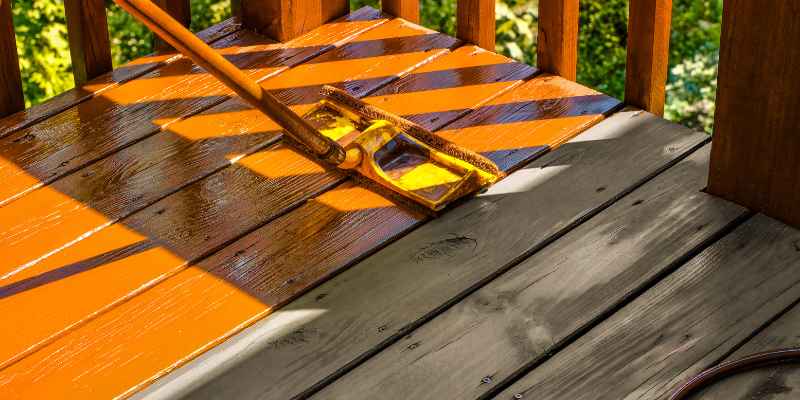
To stain between deck boards, carefully apply the stain using a brush or roller, making sure to cover all the exposed surfaces evenly. Take your time and work in small sections to ensure a thorough and professional-looking finish.
Ensure Weather Conditions Are Optimal
Before applying the stain between deck boards, it is crucial to ensure that the weather conditions are optimal. Choose a dry day with mild temperatures, avoiding extreme heat or cold, as these conditions can affect the staining process. Ideally, temperatures should be between 50°F and 90°F, with low humidity and no rain in the forecast. Checking the weather conditions beforehand will ensure that the stain is applied effectively and provides long-lasting protection to your deck.
Protect Surrounding Areas
When applying stain between deck boards, it is essential to protect the surrounding areas to prevent any accidental staining. Cover nearby plants, furniture, or other surfaces using plastic sheets or drop cloths. This will prevent any stain drips or overspray from landing on unintended surfaces, saving you time and effort in the cleanup process. Ensuring proper protection will result in a cleaner and neater staining job, enhancing the overall appearance of your deck.
Use A Brush Or Sprayer To Apply The Stain
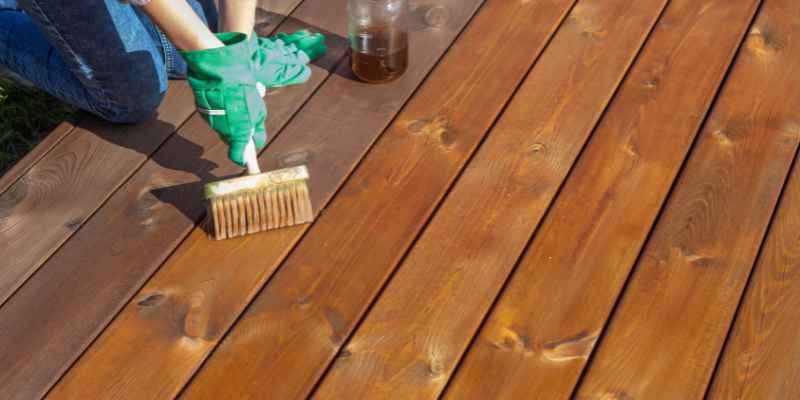
The next step in staining between deck boards is choosing the right applicator. You have two primary options: using a brush or a sprayer. A brush allows for better control and precision, especially when applying the stain in narrow spaces between the boards. Ensure that the brush has firm bristles to penetrate the gaps effectively. Alternatively, a sprayer can be used to cover larger areas more quickly, but it may require additional brushwork to ensure even distribution and penetration into the gaps. Select the applicator that best suits your preferences and the size of your deck.
Work In Sections
Applying the stain between deck boards requires a systematic approach to avoid missing any areas. Working in sections is the key to achieving a uniform and consistent result. Start by focusing on one section at a time, such as a few boards at a stretch. Apply the stain using long, even strokes, ensuring that the gaps between the boards are adequately covered. This methodical approach helps to prevent any inconsistencies in the stain application and ensures every inch of the deck is properly protected.
Wipe Off Excess Stain
After applying the stain between deck boards, it is crucial to wipe off any excess stain. This step helps to achieve a more even finish and prevents the stain from pooling on the surface. Take a clean cloth or rag and gently wipe off any excess stain lingering on the boards and in the gaps between them. This will also prevent the stain from drying unevenly or leaving unsightly marks. Remember to dispose of the stained cloths or rags properly, as they can be flammable due to the oil content of the stain.
Dealing With Challenges
Discover effective techniques for staining between deck boards, providing your outdoor space with a polished and vibrant look. From using a brush to employing a stain pad, these methods will help you tackle the challenge of staining those hard-to-reach areas and achieve a professional finish.
Dealing with challenges when staining between deck boards can be a little tricky, but with the right techniques and tools, you can achieve a beautiful and consistent finish. In this section, we will explore two common challenges homeowners face when staining their deck: removing old stain or paint and dealing with warped or uneven boards. Let’s dive in!
Removing Old Stain Or Paint
Removing old stain or paint from between deck boards is an essential step in achieving a smooth and even finish. The presence of old coatings can hinder the absorption of the new stain, leading to patchy results. To effectively remove old stain or paint, follow these steps:
1. Start by using a scraper or putty knife to gently scrape away loose or flaking paint or stain.
2. For stubborn areas, consider using a chemical paint or stain stripper. Apply the stripper following the manufacturer’s instructions, then use a brush or scrub pad to agitate the surface and lift the old coating.
3. Once the old stain or paint has been removed, thoroughly rinse the deck surface with water to ensure all traces of the stripper are removed. Allow the deck to dry completely before proceeding with the staining process.
Dealing With Warped Or Uneven Boards
Warped or uneven deck boards can present a challenge when trying to achieve an even stain application. To overcome this obstacle, follow these tips:
1. Inspect your deck boards for any signs of warping or unevenness. Identify the problem areas and mark them for further attention.
2. For smaller gaps or irregularities between the boards, consider using a paint pad or brush with fine bristles to apply the stain. This will help ensure that the stain reaches all the nooks and crannies, providing a more even coverage.
3. In cases where the boards are significantly warped, you may need to make adjustments. This could involve replacing the affected boards or using a sander to level out the surface before staining. Remember to smooth out any rough edges before proceeding with the staining process.
4. If your deck has extensive warping or unevenness, you may want to consider seeking professional help to address the structural issues before attempting to stain.
By following these tips on removing old stain or paint and dealing with warped or uneven boards, you’ll be better equipped to tackle the challenges that may arise when staining between deck boards. Don’t let these obstacles deter you from achieving a beautiful, long-lasting finish. Take the time to prepare your deck properly, and you’ll be rewarded with a stunning outdoor space for years to come.
Maintaining The Stained Deck
Maintaining a stained deck involves carefully staining between the deck boards. Learn effective techniques to ensure a thorough and even application for a beautiful, long-lasting finish.
Regularly Clean The Deck
Regular cleaning is essential to maintain the appearance and durability of your stained deck. Over time, the deck can accumulate dirt, debris, mildew, and other substances that can deteriorate the stain and cause the wood to rot. To prevent this, make sure to clean your deck at least once a year or as needed. Here are some simple steps to follow when cleaning your stained deck:
- Sweep the deck to remove loose dirt and debris.
- Use a mild detergent mixed with water to clean the deck surface. Scrub gently with a soft-bristle brush or mop.
- Rinse the deck thoroughly with water, preferably using a garden hose. Ensure that all the soap residue is removed.
- Allow the deck to dry completely before applying any additional treatments or sealants.
Regular cleaning not only keeps your stained deck looking its best but also helps preserve its longevity. By removing dirt and grime, you prevent the buildup of moisture, which can lead to rot and structural damage. Plus, a clean deck is more enjoyable to use and enhances the overall ambiance of your outdoor space.
Reapply Stain As Needed
Even the highest-quality deck stain will fade and wear off over time due to constant exposure to the elements. To maintain the beauty and protection of your deck, it is important to reapply stain as needed. Here are some signs that indicate it’s time to apply a fresh coat of stain:
- Fading: If you notice that the color of your deck is fading or becoming uneven, it’s a clear indication that the stain is wearing off.
- Water absorption: If water no longer beads up on the surface of your deck and instead gets absorbed into the wood, it’s time to reapply the stain.
- Loss of protection: If the stained deck no longer offers adequate protection against UV rays and moisture, it’s crucial to reapply the stain to prevent wood damage.
When reapplying stain, ensure you prepare the surface properly by cleaning it beforehand. Follow the manufacturer’s instructions on how to apply the stain, and choose a day with appropriate weather conditions for best results. By consistently reapplying the stain, you can extend the life of your deck while enhancing its visual appeal.
Conclusion
To sum up, staining between deck boards is a crucial step in maintaining the overall appearance and longevity of your deck. By following the simple yet effective steps mentioned above, you can achieve a professional and uniform finish. Remember to prioritize safety precautions and choose the right stain for your deck.
Regular maintenance and care will ensure that your deck remains protected for years to come.