How to Thin Gel Stain (and When You Actually Shouldn’t)
Most gel stain manufacturers say not to thin their product at all — and for good reason. Gel stain is built thick on purpose: instead of soaking into the wood grain like a liquid stain, it sits on the surface, which is exactly what makes it forgiving on vertical panels, pine, and blotchy woods. Thin it too much and you lose that entire advantage. But there is one real exception — spray application — where a small, controlled amount of thinner is genuinely the accepted approach, not a workaround.
Brands don’t all agree on this. Minwax’s own instructions say “do not thin” in almost every case. General Finishes takes the opposite position for its own product line, allowing up to 10% mineral spirits by volume. Neither is wrong — they’re describing different formulas. Below is what actually happens to gel stain when you thin it, when it’s worth doing, and the ratio that keeps you from ruining a can.
Should You Thin Gel Stain at All?
For brushing or wiping on with a rag — the normal way gel stain is used — the honest answer is no. Gel stain is formulated to stay at a specific viscosity so it clings to a vertical surface, sits evenly on end grain, and doesn’t drip. Thinning it for that kind of application just makes it run and lose color depth for no real benefit.
The one situation where thinning is a legitimate, commonly recommended step is spraying. Gel stain is too thick to pass through a spray gun tip at full strength — it will clog the nozzle or come out in an uneven, splotchy pattern. If you’re spraying cabinet doors, a large tabletop, or refinishing multiple pieces at once, a small percentage of mineral spirits is what gets the stain to move through the gun without breaking down what makes gel stain useful in the first place.
Best Thinner For Gel Stain
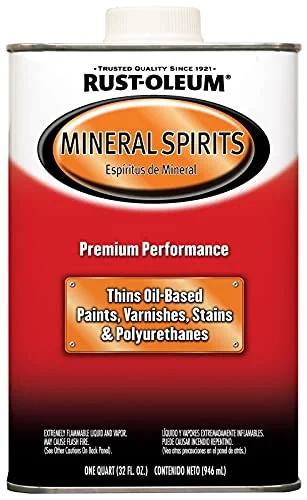 |
Rust-Oleum Mineral Spirits, 32 oz – $17.63 A low-odor, low-VOC mineral spirits made for exactly this job — thinning oil-based stains a small percentage at a time without overdoing it.
|
Why Gel Stain Resists Thinning
Liquid wood stain is mostly pigment or dye suspended in a thin carrier that soaks into open wood grain. Gel stain uses a thickening agent — usually a gelling additive in the resin — to hold the pigment in suspension at a much higher viscosity, closer to mayonnaise than to paint. That structure is what stops it from running on vertical surfaces and what keeps color even across woods like pine or maple that normally blotch with liquid stain.
Add solvent and you’re diluting that gelling structure, not just the color. Past a certain point the stain stops behaving like a gel and starts behaving like a thin liquid stain again — which defeats the reason most people reach for gel stain to begin with. That’s the mechanical reason Minwax and most gel stain manufacturers default to “don’t thin it,” rather than it being an arbitrary warning label.
What Manufacturers Actually Say (They Don’t Agree)
Check the actual label or FAQ page before thinning any specific can — formulas vary more than most articles on this topic let on:
- Minwax: instructs users not to thin their gel stain in normal use. The one published exception is fiberglass doors, where shaking the can vigorously (not adding solvent) loosens it to a syrup-like consistency.
- General Finishes: permits up to 10% mineral spirits by volume for its gel stain, and separately allows blending in up to 50% of its own liquid oil stain (starting at a 10% blend and testing) to thin color and consistency together. They note the mix thins out fast, so add gradually and test on scrap before committing.
- Other brands: read the can. A manufacturer that says nothing about thinning should be treated as a “do not thin” product until you’ve confirmed otherwise with them directly.
If a brand explicitly allows it, mineral spirits is the standard thinner for oil-based gel stain. Water-based gel stains are a separate category and take water in small amounts instead — never mix the two thinning methods.
How to Thin Gel Stain Safely (Step by Step)
Once you’ve confirmed your specific product allows thinning, keep the ratio small and test before committing the full batch:
- Pour the gel stain you need into a separate mixing container — never thin directly in the original can, in case the ratio needs adjusting.
- Add mineral spirits gradually, starting around 5% of the stain’s volume, and stir slowly with a flat stir stick rather than shaking (shaking introduces air bubbles that show up as tiny craters once sprayed).
- Test the mixture on a scrap piece of the same wood species you’re staining. Check both the color depth and how well it moves through your spray gun or brush.
- If it’s still too thick to spray cleanly, add more mineral spirits in small increments, testing after each addition. Most oil-based gel stains top out around 10% thinner before the color gets noticeably washed out.
- Mix only what you’ll use in that session — thinned gel stain separates faster than full-strength stain and doesn’t store as well once opened.
Application Tips After Thinning
- Spraying: use a slightly larger tip than you would for paint (1.4–1.8mm HVLP is typical) since gel stain, even thinned, is still heavier than liquid stain.
- Working time: thinned gel stain flashes off faster than full-strength stain. Work in smaller sections and wipe back excess sooner than you’re used to.
- Recoat window: if you need a second coat for deeper color, let the first coat dry to the manufacturer’s recommended time before adding another — thinned coats build color more gradually than full-strength gel stain.
- Ventilation: mineral spirits fumes are stronger when sprayed than when brushed. Spray in a ventilated space or outdoors, and wear a respirator rated for organic vapors.
Common Mistakes to Avoid
- Thinning a “do not thin” product anyway. If the can says not to, adding solvent can cause the gel structure to break down permanently — the stain won’t re-thicken and may separate in the can.
- Overshooting the ratio. Past roughly 10% thinner on most oil-based gel stains, color saturation drops noticeably and you lose the even, opaque look gel stain is known for.
- Skipping the scrap test. Wood species and even the batch of stain can change how a given ratio behaves. Five minutes on a scrap board is cheaper than redoing a cabinet door.
- Mixing water into an oil-based gel stain. The two won’t combine — you’ll get a separated, unusable mess. Match the thinner to the stain’s base.
Frequently Asked Questions
Do You Really Need to Thin Gel Stain?
Usually no. Gel stain is designed to be used at full strength for brushing or wiping on. The main case where thinning is genuinely useful is spray application, where the stain is too thick to pass through a spray gun tip without a small amount of mineral spirits added first.
Can You Thin Gel Stain With Water?
Only if it’s a water-based gel stain, and even then in small amounts. Oil-based gel stain needs mineral spirits or paint thinner — mixing water into an oil-based formula will cause it to separate rather than blend.
How Much Mineral Spirits Should You Add to Gel Stain?
Most oil-based gel stains that allow thinning top out around 10% mineral spirits by volume, per manufacturer guidance like General Finishes. Add it gradually, in roughly 5% increments, and test on scrap wood after each addition rather than mixing the full amount at once.
Does Thinning Gel Stain Weaken the Finish?
It can. Adding solvent dilutes the gelling agent that keeps the stain’s color and body intact, so an over-thinned batch loses color saturation and behaves more like a thin liquid stain — losing the even, blotch-resistant coverage that’s the main reason to use gel stain in the first place.
Bottom Line
Check your specific can before you thin anything — some gel stains are built to allow it, most aren’t. If you’re brushing or wiping the stain on, leave it at full strength. If you’re spraying, a small, tested amount of mineral spirits (5–10% for most oil-based formulas) gets it moving through the gun without giving up the even, surface-level coverage that makes gel stain worth using over a liquid stain in the first place. For thinning ratios on liquid oil-based and water-based stains instead, see our full guide to thinning wood stain by type.
Curious how gel stain compares to a standard liquid stain before you commit to a can? Our gel stain vs. regular stain breakdown covers vertical-surface performance, blotch resistance, and which one actually suits your project.
Sponsored / affiliate links. As an Amazon Associate I earn from qualifying purchases. I may earn additional commission from eligible campaigns.