
Is Cedar Breaks Worth Visiting? Essential Guide
Yes, absolutely! Cedar Breaks is worth visiting for its astounding hoodoo-filled amphitheater, stunning vistas, and unique geological formations, offering a breathtaking natural spectacle unlike any other in Utah. It’s far less crowded than nearby national parks, delivering an intimate and awe-inspiring experience ideal for nature lovers and photographers.
Ever looked at pictures of incredible natural wonders and wondered if they’re truly as amazing in person? If you’re planning a trip to Southern Utah, you might be asking yourself, “Is Cedar Breaks worth visiting?” It’s completely natural to want to make the most of your travel adventures! This hidden gem, often overshadowed by its famous neighbors like Zion and Bryce Canyon National Parks, offers a spectacle of a different, yet equally captivating, kind. With its towering spires, vibrant colors, and panoramic views, Cedar Breaks National Monument is a place that can truly take your breath away. We’ll walk through everything you need to know to decide if this unique spot is right for your next adventure.
Cedar Breaks National Monument: A Natural Masterpiece Awaits
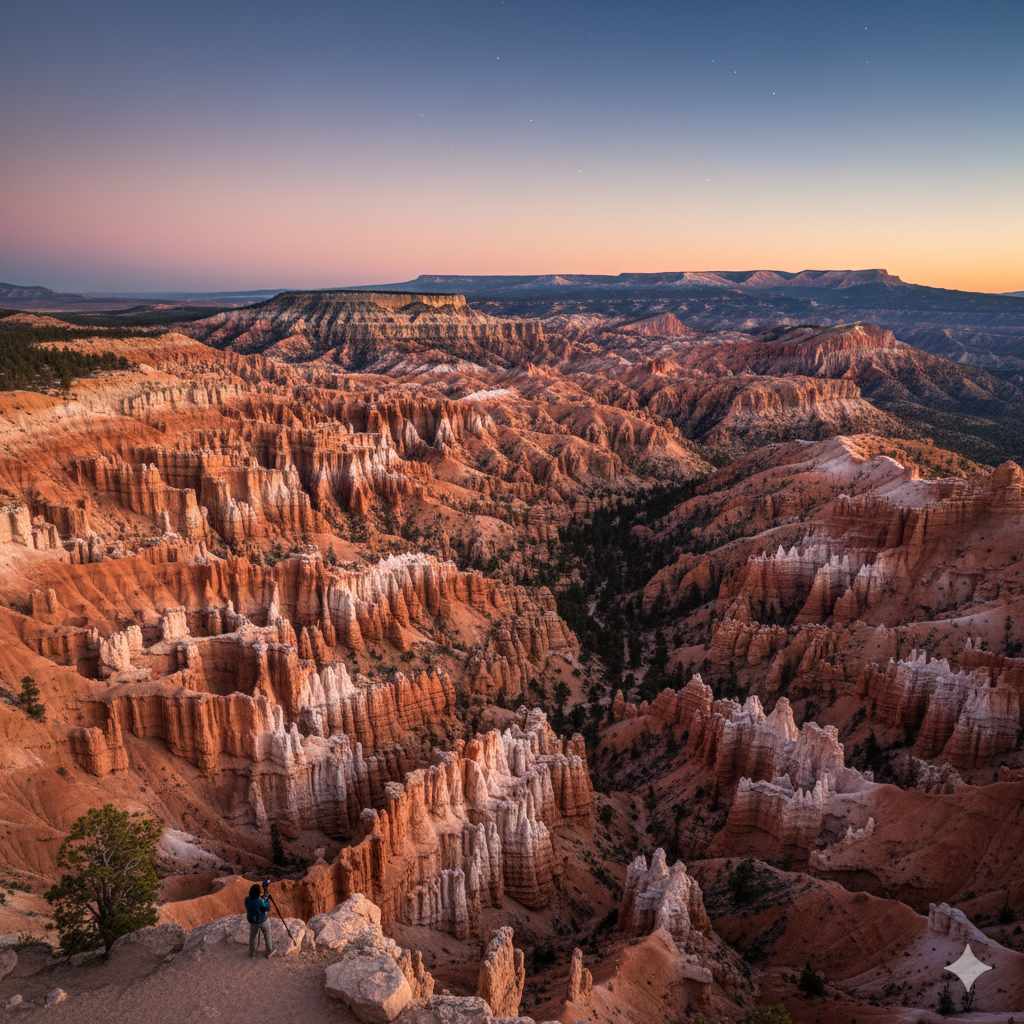
Cedar Breaks National Monument is a geological marvel carved deep into the Markagunt Plateau in Southern Utah. Imagine an amphitheater, but instead of seats, it’s filled with thousands of naturally sculpted pillars of rock, called hoodoos. These aren’t just any rocks; they’re a symphony of oranges, reds, and yellows, painted by millennia of wind and water erosion. Standing at the rim, gazing into this vast natural gallery, feels like stepping onto another planet. It’s a place that inspires awe and a deep appreciation for the power of nature.
What makes Cedar Breaks so special is its striking resemblance to Bryce Canyon, but with a fraction of the crowds. This means you can often enjoy its immense beauty in relative peace, allowing for a more personal and reflective experience. Whether you’re an avid hiker, a keen photographer, or simply someone who appreciates the grandeur of our natural world, Cedar Breaks offers a profoundly satisfying experience.
Why Cedar Breaks Stands Out: The Hoodoo Story
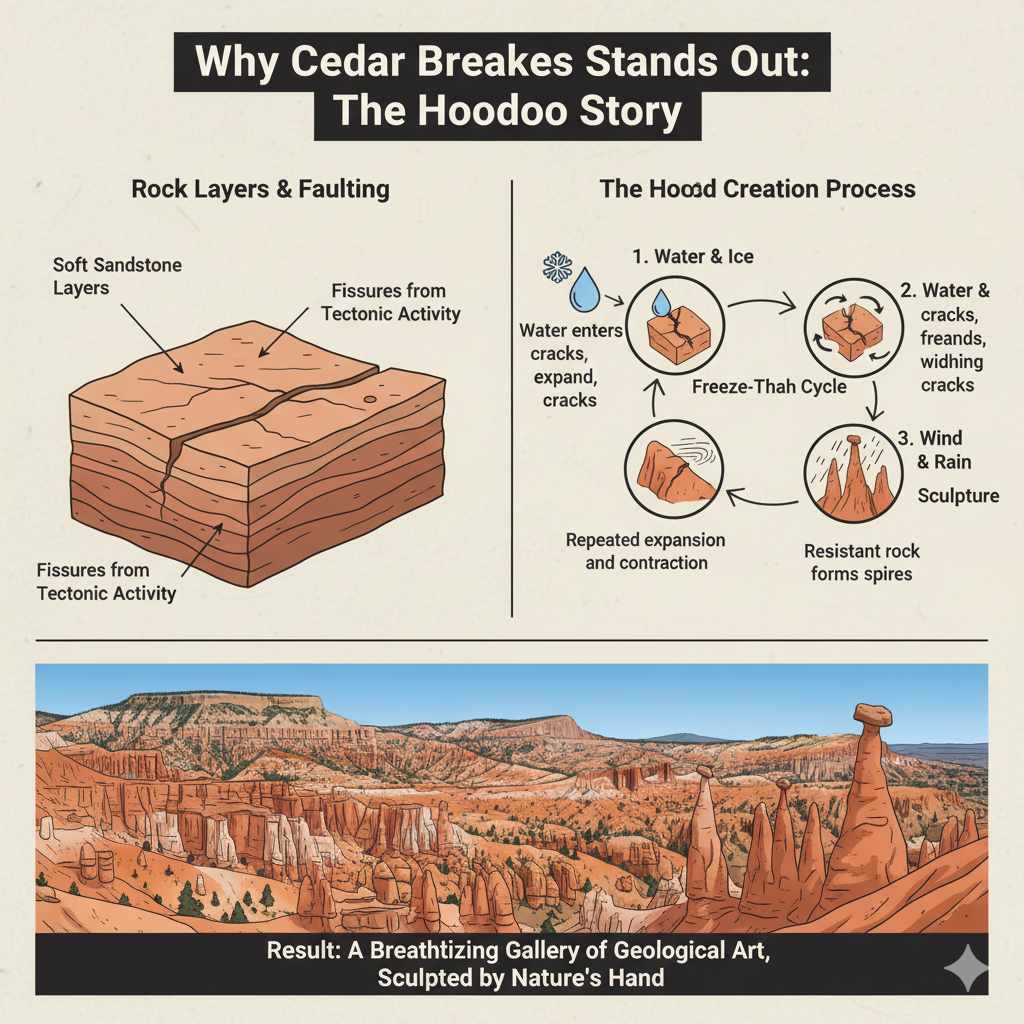
The star attraction of Cedar Breaks is undoubtedly its hoodoos. These spire-shaped rock formations are created through a process called weathering and erosion. Here’s a quick rundown:
- Rock Layers: The area is made of soft, porous sandstone, which is easily eroded.
- Faulting: Tectonic activity created fissures and cracks in the rock layers.
- Water and Ice: Water seeps into these cracks. In winter, ice expands, widening the cracks. This freeze-thaw cycle is a primary driver of erosion.
- Wind and Rain: Over thousands of years, wind and rain further sculpt the rock, wearing away softer parts and leaving behind more resistant fins and spires.
The result is a breathtaking landscape of towering, slender rock columns that guard the amphitheater. Each hoodoo has its own unique shape and character, sculpted by nature’s patient hand. Visiting Cedar Breaks is like looking at a gallery of geological art, where every piece tells a story of time and powerful natural forces.
Planning Your Visit: Essential Information
To make your trip to Cedar Breaks as enjoyable as possible, it’s helpful to have some key information at your fingertips. Knowing when to go, what to pack, and how to get around will ensure a smooth and memorable experience. Think of this as your personal toolkit for a fantastic visit!
Best Time to Visit
The best time to visit Cedar Breaks depends on what you’re looking for. The monument is typically open from late May/early June through mid-October, depending on snow conditions. Here’s a breakdown:
- Summer (July – September): This is the most popular time to visit. The weather is generally pleasant, with sunny days and cooler evenings. Wildflowers are often in bloom, adding vibrant colors to the landscape. This is ideal for hiking and scenic drives.
- Late Spring/Early Fall (June & October): These shoulder seasons can offer fewer crowds and crisp, clear air. However, be prepared for cooler temperatures, especially in the mornings and evenings. Road access can be variable in early June and late October due to snow.
- Winter: Cedar Breaks is accessible in winter by snowshoe or cross-country skis once the snow gates close access to the scenic drive. It’s a dramatically different, serene experience, covered in snow, but requires significant preparation and winter survival skills. For most visitors, summer and early fall are the most practical times.
Getting There
Cedar Breaks National Monument is located in southwestern Utah, about 25 miles west of Cedar City. The most common way to reach the monument is by car:
- From Cedar City: Take Utah Highway 14 West for about 22 miles, then turn north onto State Route 143 and follow signs to the monument’s entrance.
- From Panguitch: Take Utah Highway 143 South. The monument is accessible from this direction as well.
The main entrance fee is per vehicle and is valid for seven days. You can check current entrance fees on the official National Park Service website.
Visitor Center and Amenities
The Cedar Breaks Visitor Center is located at the south entrance of the monument. Here you can find:
- Park information and maps
- Ranger programs and advice
- Restrooms
- Drinking water
- A small gift shop
Keep in mind that amenities within the monument are limited. There are no gas stations, restaurants, or lodging facilities inside Cedar Breaks itself. Plan to bring your own food and drinks, and fill up your gas tank in Cedar City or Panguitch before you arrive.
Exploring Cedar Breaks: Must-Do Activities
Once you’re there, Cedar Breaks offers several ways to experience its beauty. Whether you prefer a leisurely drive or a more active hike, there’s something for everyone. These activities are designed to immerse you in the stunning scenery and geological wonders.
Scenic Drive: Rim Drive
The main attraction for many visitors is the 5-mile-long Rim Drive, which runs along the edge of the amphitheater. This paved road features several overlooks, each offering a unique perspective of the hoodoos and the vast expanse of the canyon.
- Point Supreme: The highest viewpoint, offering a panoramic vista.
- Sunrise Point: As the name suggests, a great spot for early morning light.
- Sunset Point: Perfect for watching the dramatic colors shift as the sun goes down.
- Chessmen Point: Known for its distinct hoodoo formations.
- Pyramid Point: Another excellent vantage point with unique rock formations.
You can drive this road yourself or utilize the shuttle bus service during peak season (typically summer weekends). The shuttle is a great option as it reduces traffic and parking hassles, allowing you to hop on and off at various viewpoints.
Hiking Trails: Immersive Experiences
For those who want to get up close and personal with the hoodoos, hiking is the way to go. The trails at Cedar Breaks are well-maintained and offer varying levels of difficulty. Remember that the elevation at Cedar Breaks is high (over 10,000 feet), so take it easy, stay hydrated, and be aware of altitude sickness.
Here are a few popular trails:
- Spectra Point Trail (2 miles roundtrip, moderate): This relatively easy trail leads you to a viewpoint with spectacular formations and good color. It’s a great option if you want a significant payoff with moderate effort.
- Riparian Trail (2.5 miles roundtrip, moderate): This trail winds down into the canyon, offering a different perspective of the hoodoos and passes through a beautiful forest. It’s a bit more strenuous due to the elevation change.
- Alpine Pond Trail (2 miles roundtrip, easy): A pleasant, relatively flat walk that leads to a small, serene alpine pond. This is a good option for families or those looking for a less strenuous hike.
- Point Supreme Overlook Trail (paved, accessible): A short, paved path leading from the main viewpoint to additional scenic spots, suitable for wheelchairs and strollers.
Always wear sturdy hiking shoes, bring plenty of water, and let someone know where you’re going and when you expect to be back.
Stargazing: A Celestial Show
Cedar Breaks National Monument is an International Dark Sky Park. This means that due to its remote location and high elevation, the night skies are exceptionally dark and free from light pollution. The Milky Way is often visible in stunning detail, and meteor showers are a spectacular sight.
The monument hosts regular stargazing programs during the summer months, led by park rangers. These events are a fantastic way to learn about the constellations and celestial wonders above. Even if you can’t attend a program, simply finding a safe spot away from the visitor center on a clear night will offer an unforgettable stargazing experience.
What to Pack for Your Cedar Breaks Adventure
Packing smart is key to enjoying your visit to Cedar Breaks, especially given its high elevation and often unpredictable mountain weather. Even in summer, temperatures can drop significantly, particularly after sunset. Think layers!
Clothing Essentials
- Layers: This is the most important tip. Pack a moisture-wicking base layer, an insulating layer like fleece or down, and a waterproof/windproof outer shell.
- Warm Hat and Gloves: Even in summer, mornings and evenings can be chilly at over 10,000 feet.
- Sun Hat: For protection during the day.
- Comfortable Hiking Shoes: With good ankle support and tread for trails.
- Socks: Moisture-wicking socks are a must to prevent blisters.
Other Important Items
- Water Bottles: Staying hydrated is crucial at high altitudes. Bring reusable bottles to refill.
- Sunscreen: The sun’s rays are stronger at higher elevations.
- Sunglasses: To protect your eyes.
- Snacks/Food: Since there are no services inside the monument, pack plenty of snacks and lunch.
- Camera: You’ll want to capture the incredible views!
- Binoculars: For a closer look at the hoodoos and surrounding landscape.
- First-Aid Kit: For minor cuts or scrapes.
- Insect Repellent: Can be useful, especially during warmer months.
- Navigation: A map of the monument and trails, as cell service can be spotty.
Cedar Breaks vs. Bryce Canyon: A Comparison
Many people wonder how Cedar Breaks National Monument compares to the more famous Bryce Canyon National Park, which is only about an hour’s drive away. Both offer incredible hoodoo landscapes, but they have distinct differences:
| Feature | Cedar Breaks National Monument | Bryce Canyon National Park |
|---|---|---|
| Size & Scale | Smaller amphitheater, more intimate feel. | Larger, more extensive amphitheaters, grander scale. |
| Crowds | Significantly fewer visitors. More peaceful experience. | Very popular, can be crowded, especially during peak season. |
| Hoodoo Density & Color | Stunning formations, vibrant colors, often seen as more concentrated in the main amphitheater. | Extensive hoodoos across multiple amphitheaters, varied colors and shapes. |
| Elevation | Higher average elevation (Visitor Center around 10,300 ft). | Lower average elevation (Visitor Center around 8,000-9,000 ft). |
| Services & Facilities | Minimal. Visitor center, restrooms, limited overlooks. No lodging or dining. | More extensive. Visitor centers, lodges, restaurants, multiple campgrounds, gas stations nearby. |
| Accessibility | Rim Drive is accessible. Some trails are strenuous. | Rim Drive is accessible in parts. Many trails descend into the hoodoos. |
| Recommendation | Ideal for those seeking a less crowded, more tranquil experience with impressive hoodoos. Great for photographers and nature enthusiasts. | Recommended for those who want to see a vast, iconic hoodoo landscape and don’t mind larger crowds. Offers more amenities and a wider range of activities within the park. |
Both destinations are spectacular. If you have time, visiting both offers a comprehensive understanding of the unique hoodoo geology of Southern Utah. Cedar Breaks is a wonderful introductory experience, offering all the splendor without the overwhelming crowds.
Conservation and Respect at Cedar Breaks
As visitors, we play a crucial role in preserving the delicate beauty of Cedar Breaks National Monument. It’s important to be mindful of the natural environment and follow park guidelines to ensure this place remains pristine for generations to come. Think of it like respecting someone’s workshop – you wouldn’t want to damage or mess up their carefully crafted pieces!
- Stay on Trails: Walking off-trail can damage fragile vegetation and contribute to erosion. The hoodoos themselves are also fragile and can be easily broken.
- Pack It In, Pack It Out: Carry out everything you bring in, including all trash.
- Do Not Disturb Wildlife: Observe animals from a distance and never feed them.
- Respect the Rocks: Do not climb on, break, or take any rocks or geological features.
- Use Designated Parking: Parking outside designated areas can damage vegetation and impede access.
- Minimize Your Impact: Follow Leave No Trace principles.
By being a responsible visitor, you help protect this incredible landscape. The National Park Service works hard to maintain these natural wonders, and our cooperation is vital.
Is Cedar Breaks Worth Visiting? The Verdict
So, to circle back to the big question: is Cedar Breaks worth visiting? From my perspective, as someone who appreciates the intricate beauty and natural artistry of the world, the answer is a resounding YES. Cedar Breaks offers a unique and profoundly beautiful experience that is easily accessible and, importantly, far less crowded than many of Utah’s more famous natural attractions.
If you’re looking for:
- Jaw-dropping geological formations
- Stunning photographic opportunities
- Peaceful and less crowded natural settings
- A chance to experience the magic of dark skies
- A taste of Utah’s incredible natural beauty without the overwhelming crowds
Then Cedar Breaks National Monument should absolutely be on your itinerary. It’s a place that can inspire awe, spark curiosity, and leave you with lasting memories of the raw, sculpted beauty of the American Southwest. It is a testament to the enduring power and artistry of nature.
Frequently Asked Questions (FAQs) About Cedar Breaks
Q1: How much time should I plan to spend at Cedar Breaks?
A: You can experience the main highlights of Cedar Breaks in about 2-4 hours. This would include driving Rim Drive, stopping at several overlooks, and perhaps a short, easy hike like the Alpine Pond Trail. If you plan to do longer hikes or attend a ranger program, you might want to allocate a full day.
Q2: Are there any services like food or gas inside Cedar Breaks?
A: No, there are no services like restaurants, gas stations, or grocery stores within Cedar Breaks National Monument. It is highly recommended to fill your gas tank and pack your own food and plenty of water before you enter the monument. The nearest services are in Cedar City or Panguitch.
Q3: Is Cedar Breaks suitable for RVs and large vehicles?
A: Yes, the paved Rim Drive is suitable for RVs and standard vehicles. However, due to the elevation and potential for snow, it is typically only open from late May/early June through mid-October. Check road conditions if you are traveling near the opening or closing dates.
Q4: What is the elevation at Cedar Breaks, and what precautions should I take?
A: The elevation at Cedar Breaks National Monument ranges from about 10,000 feet to over 10,400 feet. This high altitude can affect visitors. It’s crucial to drink plenty of water, avoid strenuous activity on your first day, limit or avoid alcohol, and be aware of symptoms of altitude sickness such as headaches, nausea, and shortness of breath. If symptoms are severe, descend to a lower elevation.
Q5: Can I visit Cedar Breaks in the winter?
A: Cedar Breaks is accessible in winter, but only via snowshoe or cross-country skis after the main road (Highway 143) is closed due to snow, usually from mid-October to late May. The visitor center is closed during winter. It offers a beautiful, quiet, snow-covered landscape but requires winter travel experience and appropriate gear.