Is Sassafras a Hardwood? Unveiling the Truth
Sassafras is classified as a hardwood. It belongs to the Lauraceae family and is known for its unique properties.
Sassafras trees thrive in the eastern United States and are recognized for their distinctive aromatic leaves and bark. These trees can grow tall and wide, making them a valuable resource in both landscaping and timber industries. The wood of sassafras is light yet durable, with a beautiful grain that appeals to furniture makers and craftsmen alike.
Its natural oils have historically been used for medicinal purposes and in culinary applications, particularly in traditional dishes like gumbo. Understanding sassafras as a hardwood can enhance knowledge about its uses and ecological significance in various environments.
Introduction To Sassafras
The Sassafras tree is known for its unique features. It can grow quite tall, reaching up to 100 feet. This tree has distinctive leaves that change shape. They can be oval, mitten-like, or lobed. The bark is smooth and can be a light brown color.
Sassafras plays a key role in ecosystems. Many animals find shelter in its branches. Pollinators like bees enjoy its flowers, which bloom in spring. The tree also provides food through its berries.
Culturally, Sassafras has historical significance. Native Americans used its roots for medicinal purposes. Today, its oil is popular in flavoring and aromatherapy. Some people even brew Sassafras tea for its unique flavor.
Hardwood Vs. Softwood
Hardwoods</strong and softwoods differ in their structure and usage. Hardwoods come from deciduous trees, while softwoods come from coniferous trees. This distinction affects their density and strength.
Sassafras is considered a hardwood. It has unique properties like aromatic oils. Many people use it for furniture and crafts.
| Characteristic | Hardwood | Softwood |
|---|---|---|
| Tree Type | Deciduous | Coniferous |
| Density | Higher | Lower |
| Common Uses | Furniture, flooring | Paper, construction |
Some people think all hardwoods are harder than softwoods. This is not always true.
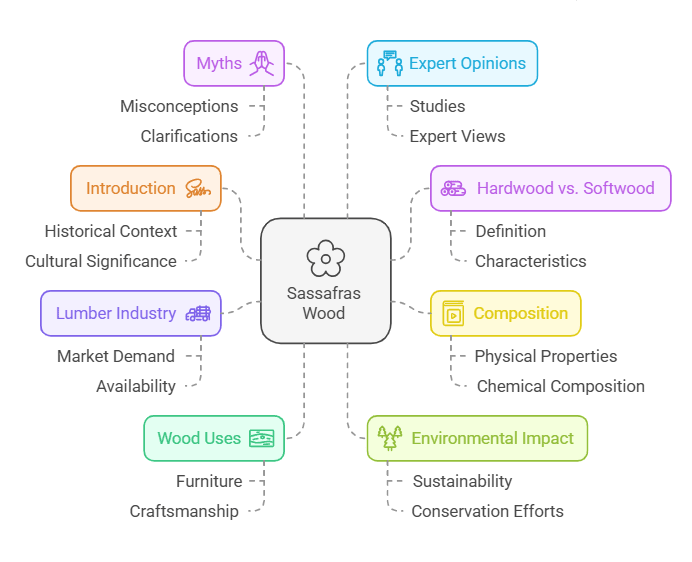
The Composition Of Sassafras Wood
Sassafras wood comes from the Sassafras tree. This tree has a unique structure. The bark is thick and aromatic. Leaves are often shaped like mittens. They can also be oval or lobed.
The wood is light and easy to work with. It has a beautiful yellow to orange color. This wood is known for its durability and resistance to rot. It is popular in furniture making and cabinetry.
Sassafras lumber is often used for outdoor projects. Its natural oils help protect it from pests. Many people enjoy its pleasant smell when cut.
Sassafras In The Lumber Industry
Sassafras is a unique wood. It is known for its aromatic properties. Many people use it in furniture and cabinetry. The market offers limited availability of sassafras lumber. This wood is not as common as others.
Comparing sassafras to other woods shows interesting results. It is softer than oak but harder than pine. The table below highlights these comparisons:
| Wood Type | Hardness (Janka Scale) |
|---|---|
| Sassafras | 1,100 lbs |
| Oak | 1,360 lbs |
| Pine | 690 lbs |
Sassafras is valued for its lightweight nature. Builders appreciate its easy workability. Many seek this wood for its distinctive color and grain.
Uses Of Sassafras Wood
Sassafras wood has many traditional applications. It was often used to make furniture. People crafted cabinets and musical instruments from it. The wood is lightweight and easy to work with.
Today, sassafras wood finds modern-day utilization. It is popular for making outdoor furniture. Many enjoy its natural resistance to decay. Some artisans create decorative items using this unique wood. The pleasing aroma adds to its charm.
Environmental Impact And Sustainability
Sassafras is a unique tree known for its fragrant leaves. It is often used in cooking and traditional medicine. Its harvesting practices can impact the environment. Sustainable methods must be used to prevent overharvesting.
Responsible harvesting helps maintain healthy forests. Many organizations promote safe methods for collecting sassafras. These practices ensure that the tree population remains stable.
Conservation efforts are crucial for sassafras. Protecting its habitat keeps the ecosystem balanced. Community awareness programs help educate people about the importance of this tree.
By supporting sustainable sassafras practices, everyone contributes to a healthier environment. This is essential for future generations.
Myths And Misunderstandings
Sassafras is often labeled as a hardwood, but this can be misleading. It comes from a tree that grows in North America. Many believe all hardwoods are durable and dense. Sassafras is actually lightweight and soft compared to other hardwoods.
Some people think all hardwoods come from broadleaf trees. This is not true. Softwoods come from coniferous trees, like pine and fir. Sassafras belongs to the laurel family, which adds to the confusion.
Knowing these facts helps clear up the myths about sassafras. It is important to understand that not all hardwoods are the same. Each type of wood has its own unique properties.
Expert Opinions And Research
Many experts agree that sassafras is classified as a softwood. It has a unique appearance and pleasant aroma. Various studies show its hardness level is moderate compared to other hardwoods.
Research indicates that sassafras is more durable than some softwoods. Its natural oils help resist decay and insects. This makes it a good choice for outdoor furniture.
| Property | Value |
|---|---|
| Hardness Level | Moderate |
| Durability | Resistant to decay |
| Aroma | Pleasant |
Experts recommend sassafras for various woodworking projects. It is suitable for cabinetry and decorative items.
Frequently Asked Questions
Is Sassafras Classified As Hardwood?
Sassafras is considered a hardwood, though it is often lighter than many other hardwoods. It has a unique aromatic quality and is commonly used in furniture and cabinetry. Its durability and resistance to decay also contribute to its classification as a hardwood.
What Are The Characteristics Of Sassafras Wood?
Sassafras wood is known for its light weight and distinctive grain patterns. It features a yellowish to reddish-brown color and has excellent workability. The wood’s natural oils provide a pleasant fragrance, making it a popular choice for various woodworking projects.
Where Is Sassafras Commonly Found?
Sassafras trees thrive in the eastern United States and parts of Canada. They prefer moist, well-drained soils and can often be found in mixed forests. The tree is also popular in gardens due to its unique leaves and vibrant fall colors.
How Durable Is Sassafras Wood?
Sassafras wood is moderately durable, suitable for various applications. Its natural resistance to decay makes it ideal for outdoor use, such as fencing and decking. However, it may require proper maintenance to prolong its lifespan, especially in harsh conditions.
Conclusion
Sassafras is classified as a hardwood, despite its softer characteristics. This unique wood offers durability and a distinctive grain, making it ideal for various applications. Understanding its classification helps in making informed choices for woodworking projects. Embrace the versatility of sassafras for your next creative endeavor and enjoy its natural beauty.