Is Watco Butcher Block Oil Waterproof
Lots of people wonder, Is Watco Butcher Block Oil Waterproof? It can feel a bit tricky to figure out if you’re new to taking care of wooden surfaces. You want your butcher block to look great and last a long time, but water can be a problem. Don’t worry, though.
We’ll break down exactly what you need to know in a way that’s super easy to follow. Get ready for simple steps to keep your wood looking its best.
Watco Butcher Block Oil Benefits
Watco Butcher Block Oil is a popular choice for many woodworkers and homeowners because it offers a unique blend of protection and aesthetic enhancement for wooden surfaces, especially those used for food preparation. It’s designed to penetrate deep into the wood fibers, providing a durable, food-safe finish that can withstand daily use. Unlike some finishes that sit on the surface, Watco Butcher Block Oil saturates the wood, giving it a natural look and feel.
This oil nourishes the wood, helping to prevent it from drying out and cracking, which is a common issue with untreated wood. Its ability to be easily reapplied makes it a low-maintenance option for maintaining the beauty and functionality of butcher block countertops, cutting boards, and other wooden kitchen items.
Deep Penetration and Nourishment
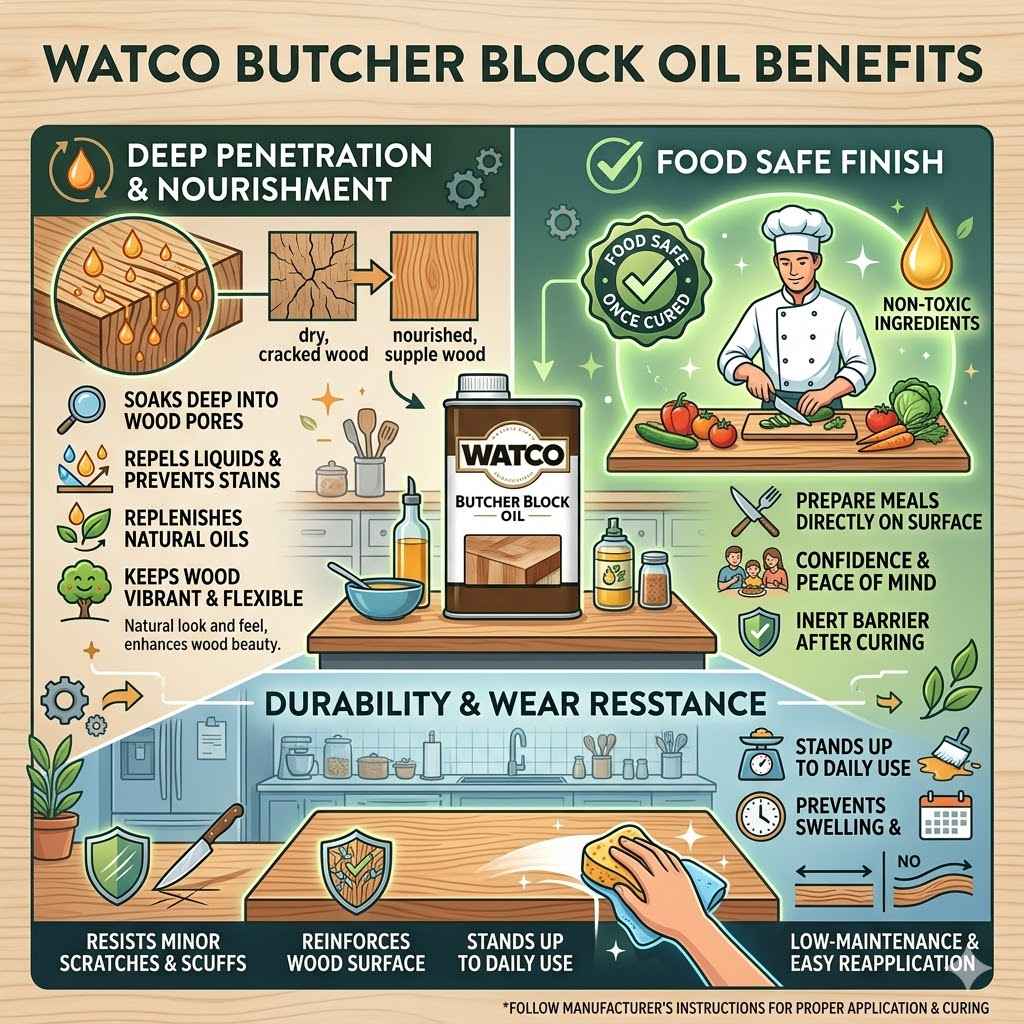
Watco Butcher Block Oil is formulated to soak deep into the pores of the wood. This deep penetration is key to its protective qualities. When the oil soaks in, it essentially fills the tiny spaces within the wood structure.
This makes the wood less likely to absorb liquids like water or oil, which can cause stains and damage. Think of it like soaking a sponge in water; if the sponge is already full of oil, it can’t absorb as much water. This process also helps to condition the wood from the inside out.
This conditioning is important because wood is a natural material. Over time, it can lose its natural oils, leading to dryness, brittleness, and cracking. Watco Butcher Block Oil replenishes these lost oils, keeping the wood supple and flexible.
This nourishment is what gives the wood a healthy, vibrant appearance and helps prevent unsightly damage from appearing. The result is a beautiful finish that feels smooth and natural to the touch, enhancing the overall user experience.
Food Safe Finish
A critical aspect of any product used on butcher block or cutting boards is its safety when coming into contact with food. Watco Butcher Block Oil is specifically formulated to be food safe once it has cured properly. This means you can confidently prepare meals directly on surfaces treated with this oil without worrying about harmful chemicals leaching into your food.
This is a significant advantage over many other types of wood finishes that are not intended for food-contact surfaces.
The food-safe nature of Watco Butcher Block Oil is achieved through its ingredient selection and curing process. The oil is typically made from natural ingredients that are non-toxic and safe for consumption in small trace amounts after the oil has bonded with the wood. It’s important to allow the oil to cure fully according to the manufacturer’s instructions before using the surface for food preparation.
This curing time allows the oil to harden and create a stable, inert barrier on the wood surface. This ensures that the finish remains safe and effective for its intended use, providing peace of mind for anyone using it in their kitchen.
Durability and Wear Resistance
While Watco Butcher Block Oil provides a beautiful finish, it also offers a good level of durability for everyday use. It creates a protective layer that helps resist minor scratches and scuffs that can occur on kitchen countertops and cutting boards. This resistance means your wooden surfaces will look better for longer, even with frequent use.
The oil helps to harden the wood surface slightly, making it more resilient to the wear and tear of chopping, slicing, and general kitchen activities.
This durability is enhanced by the way the oil penetrates the wood. It doesn’t just sit on top; it becomes part of the wood itself. This makes the protection more long-lasting compared to surface-only finishes.
When properly maintained with reapplication, the finish can stand up well to the demands of a busy kitchen. It helps prevent the wood from absorbing liquids that could lead to swelling, warping, or staining, further contributing to its overall longevity and resilience.
Is Watco Butcher Block Oil Waterproof?
When we talk about whether Is Watco Butcher Block Oil Waterproof?, it’s important to understand what “waterproof” means in this context. No wood finish, including Watco Butcher Block Oil, will make wood completely impervious to water indefinitely. Wood is a natural material that breathes and reacts to its environment.
However, Watco Butcher Block Oil does a very good job of making wood highly water-resistant. This means it significantly slows down the absorption of water, protecting the wood from many common issues like staining, swelling, and warping caused by moisture.
The oil works by filling the wood’s pores. Imagine tiny tunnels within the wood. The oil coats and seals these tunnels.
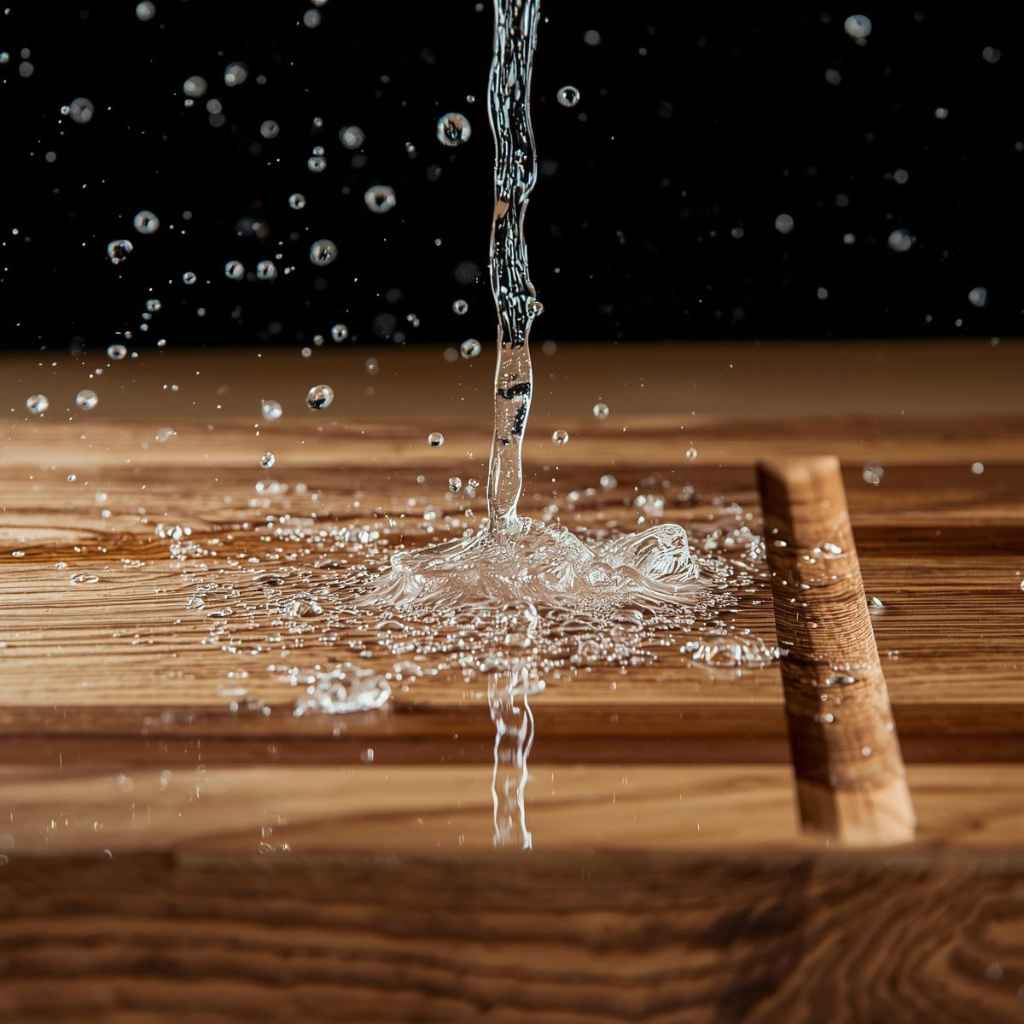
When water hits the surface, it can’t easily get into these sealed tunnels. Instead, water tends to bead up on the surface, similar to how water beads on a waxed car. This resistance is crucial for butcher blocks and countertops, as it minimizes the risk of damage from spills and everyday moisture.
While it’s not truly “waterproof” in the sense of being a plastic coating, its water-repellent properties are excellent for protecting wood in high-moisture environments like kitchens.
Understanding Water Resistance vs. Waterproofing
The distinction between water resistance and being waterproof is vital when discussing wood finishes. Being waterproof means a material can prevent water from passing through it under any circumstances. This is typically achieved with non-porous materials like plastic or metal.
Wood, by its very nature, is porous. It has tiny channels and cells that can absorb liquids. Therefore, no oil finish can make wood truly waterproof.
Water resistance, on the other hand, means a material can repel or significantly slow down the penetration of water. Watco Butcher Block Oil excels at providing this water resistance. It saturates the wood fibers and fills the microscopic pores, creating a barrier that prevents liquids from soaking in quickly.
This is why water will often bead up on a properly oiled butcher block. This beading action is a clear sign that the oil is doing its job, keeping the majority of the moisture on the surface where it can be easily wiped away, thus protecting the wood underneath.
How the Oil Repels Water
Watco Butcher Block Oil repels water through a process of surface tension and pore saturation. When the oil is applied and cures, it fills the open cells and capillaries within the wood. These tiny pathways are where moisture would normally enter and cause damage.
By blocking these pathways with oil, the wood becomes much less absorbent.
Furthermore, the oil creates a surface that has a higher surface tension for water. Water molecules tend to stick to each other more strongly than they stick to the oiled wood surface. This causes water to form beads, or droplets, that sit on top of the wood.
As long as these beads are wiped up promptly, they don’t have a chance to penetrate the wood. This physical barrier and surface property are what give the wood its excellent water-repellent quality. It’s a smart, natural way to protect wood without sealing it off completely.
Factors Affecting Water Resistance
The level of water resistance you get from Watco Butcher Block Oil can depend on a few things. The number of coats you apply is a big factor. More coats mean more oil saturation and a better barrier against water.
The type of wood also plays a role; denser woods might absorb the oil a bit differently than softer woods. Also, how often you reapply the oil is crucial. If the finish wears down over time, the wood will become more vulnerable to water.
Think about it this way: if you only put one thin coat of oil on your butcher block, it will resist water, but not as well as if you applied several thick coats. Over time, as you use your butcher block, the oil can wear away from the surface. This is normal.
When this happens, the wood’s ability to repel water decreases. That’s why regular maintenance and reapplication are so important. It’s like maintaining a car’s wax; you need to reapply it periodically to keep that shine and protection.
Applying Watco Butcher Block Oil for Maximum Protection
To get the best protection from Watco Butcher Block Oil, especially concerning its water-repelling capabilities, proper application is key. It’s not just about pouring the oil on; it’s about a process that ensures the oil penetrates deeply and forms a robust barrier. This involves preparing the wood correctly, applying multiple coats, and allowing adequate drying time between applications.
Following these steps ensures that your butcher block is not only beautiful but also well-protected against everyday moisture and spills.
Surface Preparation Steps
Before you even open the can of Watco Butcher Block Oil, you need to prepare your wooden surface. Start by making sure the wood is clean and dry. If it’s a new piece of wood, it might have dust or debris on it.
Wipe it down with a clean, dry cloth. If you’re refinishing an older piece, you might need to sand it first. Sanding should be done with progressively finer grit sandpaper to create a smooth surface.
For a new or newly sanded surface, it’s a good idea to wipe it down with a tack cloth after sanding. This removes any fine dust particles that a regular cloth might miss. Ensure the wood is completely dry before applying any oil.
Even a little bit of moisture trapped under the oil can cause issues later on. For existing surfaces that have an old finish, you’ll need to strip or sand off the old finish completely to ensure the Watco oil can penetrate properly.
Sanding Techniques for Smoothness
Sanding is a crucial step for preparing wood for any finish, including Watco Butcher Block Oil. The goal is to create a smooth, uniform surface that will readily accept the oil. You should start with a coarser grit sandpaper, like 80 or 100 grit, to remove any imperfections, old finish, or rough spots.
Work with the grain of the wood, applying even pressure.
After the initial sanding, move to finer grits. Progress to 120, then 150, and finally 180 or 220 grit sandpaper. Each successive grit removes the scratches left by the previous one, making the wood progressively smoother.
It’s important not to skip grits, as this can leave deeper scratches that will be visible even after oiling. The final sanding should leave the wood feeling silky smooth to the touch. This smooth surface allows the oil to spread evenly and penetrate without obstruction.
Cleaning After Sanding
Once you have finished sanding, the wood will be covered in fine dust. This dust needs to be removed thoroughly before applying the oil. The best tool for this job is a tack cloth.
A tack cloth is a specially treated cloth that has a sticky surface. When you wipe it over the wood, it picks up even the smallest dust particles.
It’s important to wipe in the direction of the wood grain. You might need to use a couple of tack cloths to ensure all the dust is gone, especially from the pores of the wood. After using the tack cloth, you can also follow up with a dry microfiber cloth for an extra layer of cleanliness.
Ensure there are no visible dust specks on the surface. Any remaining dust will be sealed into the wood by the oil, creating a rough or uneven finish.
Application Process
Applying Watco Butcher Block Oil is straightforward, but attention to detail makes a difference. Start by pouring a generous amount of oil onto the clean, dry wood surface. Use a clean, lint-free cloth or a foam brush to spread the oil evenly across the entire surface.
Make sure to cover all areas, including edges and ends.
Work the oil into the wood, ensuring it penetrates the grain. You should be able to see the wood darken as it absorbs the oil. Let the oil soak into the wood for about 15-20 minutes.
During this time, you might see dry spots appear as the wood absorbs the oil. If this happens, apply more oil to those areas.
Allowing for Proper Soaking Time
The soaking time is critical for the oil to penetrate the wood fibers effectively. When you first apply the oil, it sits on the surface. As time passes, the wood begins to draw the oil into its cellular structure.
This is how the wood becomes protected from within. If you don’t allow enough soaking time, the oil might not penetrate deeply enough, leaving the wood more vulnerable to moisture and damage.
The recommended soaking time of 15-20 minutes is a guideline. For very dry or porous woods, you might even let it soak a bit longer. The goal is for the wood to absorb as much oil as it can during this period.
This saturation is what provides the deep, protective conditioning that Watco Butcher Block Oil is known for. Don’t rush this step; it’s an investment in the longevity and beauty of your wood.
Wiping Off Excess Oil
After the soaking period, it’s important to wipe off any excess oil that hasn’t been absorbed. Use a clean, dry, lint-free cloth for this. Wipe vigorously to remove all the surface oil.
If you leave too much oil on the surface, it can become sticky and gummy as it dries, creating an unpleasant texture.
The goal is to have the oil fully absorbed into the wood, leaving a smooth, matte finish on the surface. If you find that some areas are still quite wet or oily after wiping, give them a bit more time to absorb or wipe them again. Proper removal of excess oil is what helps the finish cure correctly and prevents a sticky residue.
This step ensures a smooth, natural feel to the wood.
Applying Multiple Coats
For the best possible protection and water resistance, you should apply multiple coats of Watco Butcher Block Oil. One coat will offer some protection, but two, three, or even more coats will create a much more substantial barrier against moisture. The exact number of coats can depend on the type of wood and how much it absorbs.
It’s generally recommended to apply at least three coats for optimal results. Let each coat dry thoroughly before applying the next. Drying typically takes about 8-12 hours, but it’s best to check the manufacturer’s instructions for specific times.
The surface should feel dry and no longer tacky to the touch before you apply another coat. With each subsequent coat, you’ll notice the wood becoming richer in color and developing a deeper luster.
Drying and Curing Times
After wiping off the excess oil, you need to let the wood cure. This isn’t just about the surface feeling dry; it’s about the oil hardening and fully integrating with the wood fibers. Watco Butcher Block Oil typically needs around 8 to 12 hours to dry to the touch between coats.
However, full curing can take several days, often up to 30 days, depending on the humidity and temperature.
During the curing process, the wood will continue to become more resistant to moisture. It’s important to avoid heavy use or exposing the surface to significant amounts of water during this time. While it’s safe to use the butcher block for light tasks after a few days, prolonged exposure to liquids should be avoided until the oil has fully cured.
This ensures the protective barrier is as strong as possible.
Maintaining Your Watco-Treated Butcher Block
Keeping your butcher block in top condition, especially in terms of water resistance, is an ongoing process. Regular maintenance with Watco Butcher Block Oil will ensure the wood remains protected, looks beautiful, and performs well in your kitchen. This involves routine cleaning and periodic reapplication of the oil.
Daily Cleaning Practices
For daily cleaning of your Watco-treated butcher block, simplicity is key. The water-repellent finish means most spills will bead up, making them easy to wipe away. Use a soft, damp cloth to clean the surface after each use.
For tougher spots, a mild dish soap can be used, but always follow up by wiping the surface dry.
Never let liquids stand on the butcher block for extended periods. Even though the oil provides resistance, prolonged exposure can eventually lead to moisture absorption. Avoid using abrasive cleaners or scouring pads, as these can damage the oil finish and scratch the wood.
Simple, gentle cleaning will help preserve the protective layer and the natural beauty of the wood.
Avoiding Harsh Cleaners
Harsh cleaners, like bleach or ammonia-based products, can strip away the oil finish and damage the wood fibers. These chemicals can break down the oil’s protective barrier, making the wood more susceptible to staining and moisture. It’s best to stick to mild soap and water for regular cleaning.
If you encounter a stubborn stain that mild soap doesn’t remove, you can try a paste of baking soda and water. Apply it to the stain, let it sit for a few minutes, and then gently scrub with a soft cloth or sponge. Rinse thoroughly and dry immediately.
For deep-set stains, it might be necessary to sand the affected area and reapply the oil.
Immediate Spill Cleanup
The most important part of daily cleaning is immediate spill cleanup. As soon as a spill occurs, whether it’s water, juice, or oil, grab a cloth and wipe it up. This simple action prevents the liquid from having any chance to soak into the wood.
The beading action of water on the oiled surface is your cue that the protection is working, but it’s not a license to let spills sit.
Think of it as an insurance policy. The oil is your insurance against minor spills. By acting quickly to wipe up any liquid, you’re activating that policy and ensuring your butcher block remains in excellent condition.
This habit is far more effective than trying to repair damage after it has occurred. Quick and consistent cleanup is the best way to maintain water resistance.
Periodic Reapplication of Oil
To maintain the water resistance and beauty of your butcher block, periodic reapplication of Watco Butcher Block Oil is necessary. The frequency will depend on how much the surface is used and how often it’s exposed to moisture. A general guideline is to reapply the oil every 3-6 months, or whenever the wood starts to look dry or dull, or when water no longer beads up on the surface.
When it’s time to reapply, you don’t necessarily need to do a full sanding unless there are significant scratches or damage. You can often just clean the surface thoroughly, let it dry completely, and then apply a new coat of oil following the same application process as before. This regular maintenance is what keeps the wood looking its best and protected from water.
Signs Your Butcher Block Needs Reoiling
There are clear signs that indicate your butcher block is ready for another application of oil. The most obvious is when water no longer beads up on the surface. Instead, it will start to soak in, leaving a darker mark on the wood.
This is a direct indicator that the protective oil barrier has worn thin.
Another sign is when the wood itself starts to look dull, dry, or even faded. It might lose its natural luster and feel rougher to the touch. If you notice any small cracks or splintering, these are also signs that the wood is drying out and needs nourishment.
These visual and tactile cues are your guide to knowing when to reapply the oil.
The Reoiling Process
Reoiling is usually much simpler than the initial application. First, clean the butcher block thoroughly. Make sure it’s completely dry.
Then, apply a fresh coat of Watco Butcher Block Oil, letting it soak in for about 15-20 minutes. Wipe off any excess oil with a clean, lint-free cloth. You might only need one or two coats when reoiling, depending on how much the wood has absorbed.
Allow the reoiled surface to dry and cure fully before heavy use, following the same guidelines as for the initial application. This process is essential for maintaining the wood’s protection against moisture and keeping it looking its best. It’s a small effort that yields significant long-term benefits for your butcher block.
Comparison to Other Butcher Block Finishes
When considering the best finish for your butcher block, it’s helpful to compare Watco Butcher Block Oil to other common options. Each finish offers different levels of protection, durability, and aesthetic qualities. Understanding these differences will help you make an informed decision about what’s best for your needs.
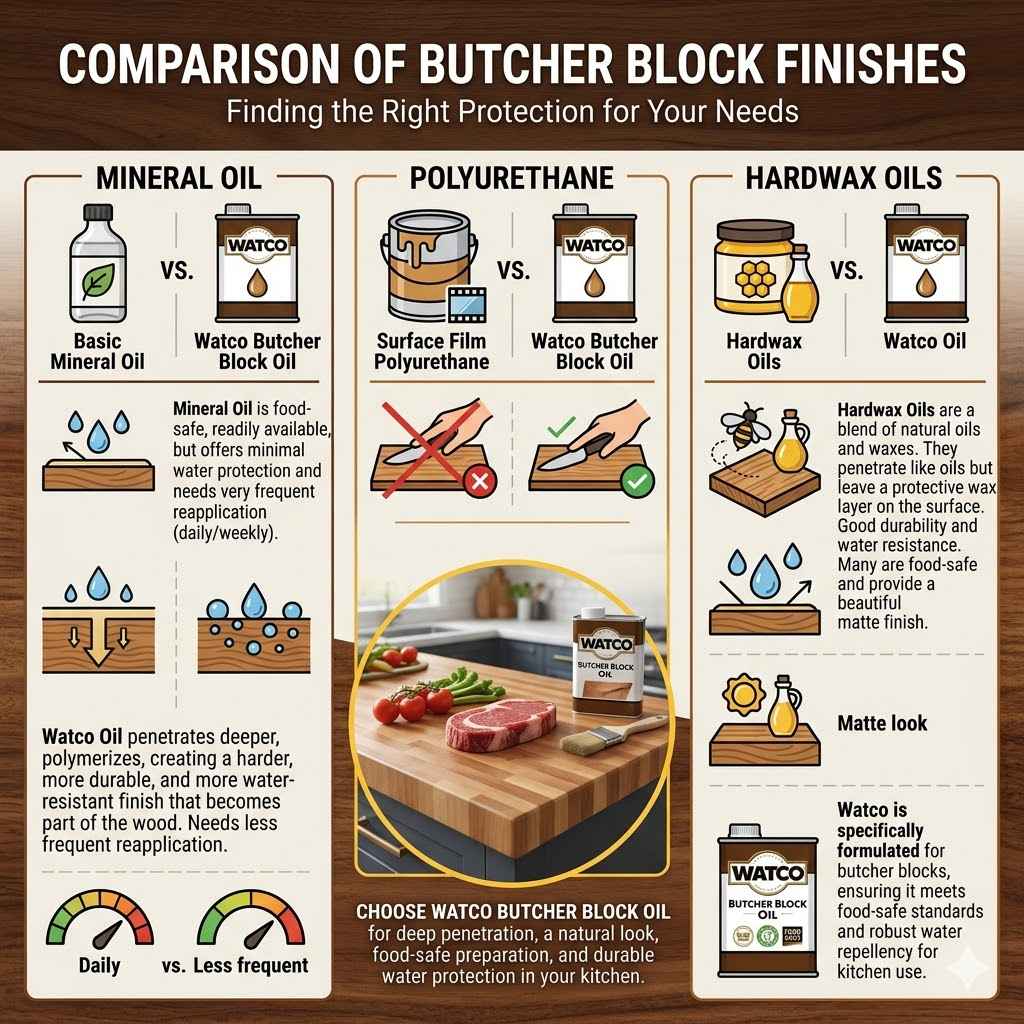
Mineral Oil vs. Watco Oil
Pure mineral oil is a very basic finish for butcher blocks. It’s food-safe and readily available. However, it doesn’t penetrate deeply and offers minimal protection against water.
It needs to be applied very frequently, sometimes daily or weekly, to maintain any level of resistance.
Watco Butcher Block Oil, on the other hand, contains tung oil and other ingredients that allow it to penetrate deeper into the wood and polymerize, creating a harder, more durable, and more water-resistant finish. While mineral oil just sits on the surface, Watco oil becomes part of the wood. This means Watco requires less frequent reapplication compared to pure mineral oil.
Polyurethane vs. Watco Oil
Polyurethane finishes create a hard, protective plastic film on the surface of the wood. They are very durable and highly water-resistant, offering excellent protection against spills and moisture. However, polyurethane is not typically food-safe, meaning you cannot safely cut directly on a polyurethane-finished surface without a cutting board.
Watco Butcher Block Oil provides a more natural look and feel to the wood. It is food-safe, allowing for direct food preparation on the surface. While its water resistance is excellent, it is not as absolute as a well-applied polyurethane.
However, for a functional and food-safe butcher block, Watco oil is often the preferred choice due to its ability to penetrate and condition the wood.
Hardwax Oils vs. Watco Oil
Hardwax oils are another popular category of wood finishes that blend natural oils with waxes. They penetrate the wood like oils but also leave a protective wax layer on the surface, offering good durability and water resistance. Many hardwax oils are also food-safe and provide a beautiful, matte finish.
Watco Butcher Block Oil is essentially a type of oil finish that contains tung oil and other drying oils. It offers a similar balance of penetration, protection, and food safety. The primary difference often lies in the specific formulation and the presence of waxes in hardwax oils.
Watco’s formulation is specifically designed for butcher blocks, ensuring it meets food-safe standards and provides robust water repellency for kitchen use. Both can be excellent choices, but Watco is specifically marketed and formulated for this purpose.
Frequently Asked Questions
Question: Does Watco Butcher Block Oil prevent water damage?
Answer: Yes, Watco Butcher Block Oil makes wood highly water-resistant. It slows down water absorption significantly, preventing common water damage like staining and swelling, though it doesn’t make wood completely waterproof.
Question: How often should I reapply Watco Butcher Block Oil?
Answer: You should reapply Watco Butcher Block Oil every 3-6 months, or when water no longer beads up on the surface and the wood looks dry or dull.
Question: Can I cut directly on a butcher block treated with Watco oil?
Answer: Yes, Watco Butcher Block Oil is food-safe once it has cured properly, allowing you to prepare food directly on the oiled surface.
Question: Will Watco Butcher Block Oil protect against stains?
Answer: The oil provides a good barrier that helps prevent many common stains from penetrating the wood. Prompt cleanup of spills is still recommended for best stain protection.
Question: Is Watco Butcher Block Oil difficult to apply?
Answer: No, applying Watco Butcher Block Oil is quite simple. It involves cleaning, applying the oil, letting it soak, wiping off excess, and allowing it to dry between coats.
Summary
Is Watco Butcher Block Oil waterproof? It offers excellent water resistance, not complete waterproofing. It protects your wood by repelling liquids effectively, keeping them on the surface to be wiped away.
With proper application and regular maintenance, your butcher block will stay beautiful and functional for years. Enjoy your well-protected wood.