Is Wood Burning a Physical Change? Unveiling the Truth
Wood burning is a chemical change because it results in the formation of new substances like ash and carbon dioxide, altering the chemical composition of the wood. The process of burning wood involves a change in the composition of the substance, making it a chemical change.
Wood burning is a fascinating process that has intrigued humans for centuries. Whether it’s the crackling sound of the fire, the warmth it provides, or the mesmerizing dance of the flames, wood burning has a unique appeal. However, have you ever wondered whether wood burning is a physical or chemical change?
Understanding the nature of this transformation can provide valuable insights into the properties of wood and the science behind combustion. When wood burns, it undergoes a chemical reaction that results in the formation of new substances. This process changes the chemical composition of the wood, making it a prime example of a chemical change. By exploring the characteristics of this transformation, we can gain a deeper understanding of the fundamental concepts of chemistry and the behavior of matter. Let’s delve into the intriguing world of wood burning and unravel the scientific principles that govern this captivating phenomenon.
Introduction To Wood Burning
When it comes to wood burning, it is essential to understand the process and the changes it undergoes. The act of burning wood is often associated with physical changes, but it is more complex than it seems. In this section, we will delve into the introduction to wood burning, the process of combustion, and common misconceptions surrounding this phenomenon.
The Process Of Combustion
Wood burning, also known as combustion, is a chemical process that involves the rapid combination of oxygen with the wood’s molecules, resulting in the release of heat and light. This process transforms the chemical composition of the wood, leading to the formation of new substances such as ash, carbon dioxide, and water vapor. The rapid reaction and the release of energy characterize the combustion of wood.
Common Misconceptions
One common misconception about wood burning is that it only entails a physical change. However, it is crucial to recognize that the chemical composition of the wood undergoes a transformation during the combustion process, leading to the formation of new substances. This misconception often arises from the visible changes in the wood, such as the production of ash and the alteration of its physical state.
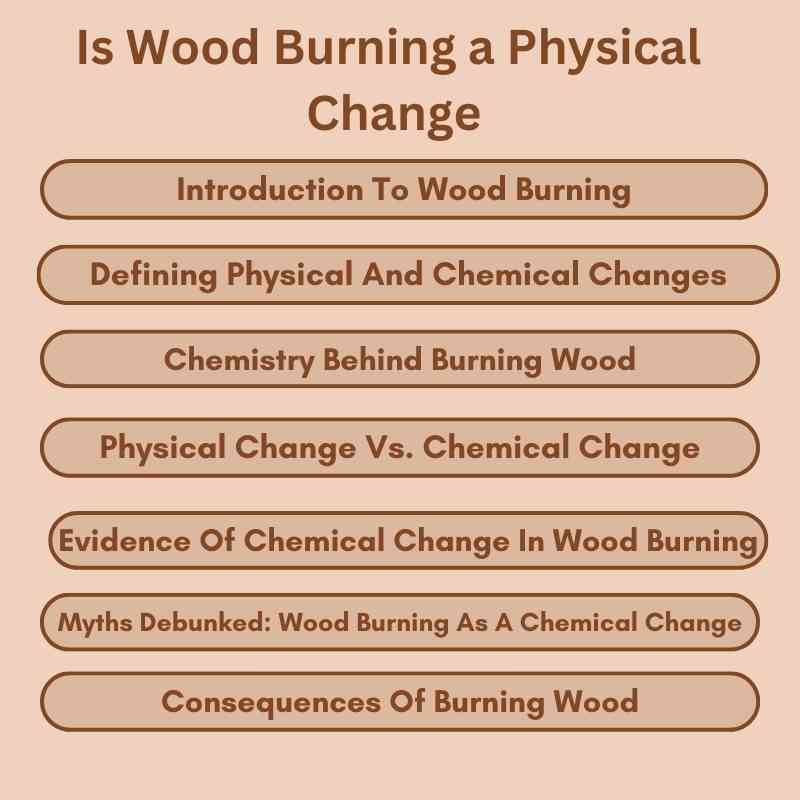
Defining Physical And Chemical Changes
Wood burning is a chemical change because it results in the formation of new substances like ash and carbon dioxide. This process alters the chemical composition of the wood, making it irreversible.
When it comes to understanding the changes that occur in matter, it is important to differentiate between physical and chemical changes. Physical changes involve a rearrangement of molecules, but the composition of the substance remains the same. On the other hand, chemical changes result in the formation of new substances with different properties.
Characteristics of Physical Changes
Physical changes do not alter the composition of the substance, and they are usually reversible. Some of the characteristics of physical changes are:
– A change in the state of matter (solid, liquid, gas)
– A change in shape or size
– A change in density
– A change in color or appearance
– No new substances are formed
Examples of physical changes include melting ice, boiling water, and crushing a can.
Characteristics of Chemical Changes
Chemical changes result in the formation of new substances with different properties, and they are usually irreversible. Some of the characteristics of chemical changes are:
– A change in color or odor
– The formation of a gas or solid
– A release or absorption of energy
– The formation of new substances
Examples of chemical changes include burning wood, rusting iron, and digesting food.
Is Wood Burning a Physical Change?
Burning wood is a chemical change because it involves the transformation of the wood into new substances such as gas, ash, and heat. During this process, the composition of the wood changes, and new substances are formed. Heat and light are produced during wood burning, which are evidences of a chemical change. Therefore, burning wood is not a physical change.
In conclusion, understanding the difference between physical and chemical changes is important in science and everyday life. By examining the characteristics of each type of change, we can identify and explain the changes that occur in matter.
Chemistry Behind Burning Wood
Burning wood involves a chemical change as it transforms wood into ash, carbon dioxide, and water, altering its chemical composition. This process is irreversible, distinguishing it as a chemical change.
Burning wood is not just a simple physical change; it involves complex chemical reactions that transform the composition of the wood. Understanding the chemistry behind the process can give us insights into why wood burning is considered a chemical change.
Chemical Reactions Involved
During the combustion of wood, several chemical reactions take place. The primary reaction is known as combustion or oxidation. It involves the reaction of wood molecules with oxygen from the air. This reaction releases energy in the form of heat and light.
The chemical equation for the combustion of wood can be represented as follows:
Wood + Oxygen -> Carbon Dioxide + Water + Heat
In this reaction, the carbon in the wood combines with oxygen to produce carbon dioxide, while the hydrogen in the wood combines with oxygen to produce water vapor. The release of heat is a result of the exothermic nature of the combustion reaction.
Products Of Wood Combustion
The combustion of wood produces various products, including carbon dioxide, water vapor, and ash. Carbon dioxide is a greenhouse gas that contributes to climate change. Water vapor is a byproduct of the combustion process and is released into the atmosphere.
Ash is the residue left behind after the combustion process. It consists of minerals and non-combustible components of wood. Ash can be used as a valuable source of nutrients for plants when used as a fertilizer.
In conclusion, the chemistry behind burning wood involves complex chemical reactions, resulting in the transformation of wood molecules and the production of carbon dioxide, water vapor, and ash. Understanding these chemical processes can help us appreciate the significance of wood burning as a chemical change.
Physical Change Vs. Chemical Change
Burning wood is considered a chemical change because it involves a transformation in the composition of the wood. During the burning process, the wood is turned into ash, gas, and heat, which have different chemical properties from the original wood.
This is different from a physical change, where the composition of the substance remains the same but its properties may be altered.
When it comes to understanding the changes that occur in matter, it’s important to differentiate between physical changes and chemical changes. Both types of changes can alter the properties of a substance, but they differ in their underlying processes and outcomes.
Identifying Physical Changes
Physical changes refer to alterations in the physical characteristics of a substance without changing its chemical composition. In other words, the molecules of the substance are rearranged, but the substance itself remains the same.
Some common examples of physical changes include changes in state (such as melting ice or boiling water), changes in shape or size (like cutting a piece of paper or crushing a can), or changes in appearance (such as painting a wall or dyeing fabric).
Physical changes are generally reversible, meaning that the substance can be returned to its original state without any chemical reactions taking place.
Identifying Chemical Changes
On the other hand, chemical changes involve the formation of new substances with different chemical compositions. During a chemical change, the bonds between atoms are broken and new bonds are formed, resulting in a complete transformation of the original substance.
One example of a chemical change is the burning of wood. When wood burns, it undergoes a chemical reaction that releases heat and light, while converting the wood into ash and carbon substances. This transformation cannot be reversed, and the resulting ash and carbon substances are entirely different from the original wood.
Other examples of chemical changes include rusting of iron, digestion of food, or the fermentation of grapes into wine.
It’s important to note that chemical changes often involve the release or absorption of energy, and they can be identified by the formation of new substances, changes in color, production of gas, or the release of heat or light.
In conclusion, understanding the distinction between physical changes and chemical changes is essential in comprehending the various transformations that occur in matter. Physical changes involve alterations in physical characteristics without changing the chemical composition, while chemical changes involve the formation of new substances with different chemical compositions.
Evidence Of Chemical Change In Wood Burning
Burning wood is considered a chemical change because it involves a transformation in the composition of the wood. The molecules rearrange, producing new substances such as ash, carbon dioxide, and water. This change is irreversible and can be identified by the release of heat and light.
When it comes to burning wood, it is important to understand the nature of the change that is taking place. Is wood burning a physical change or a chemical change? The answer is clear: burning wood is a chemical change. This is because when wood burns, it undergoes an irreversible transformation, resulting in the production of new substances. In this section, we will focus on the evidence of chemical change in wood burning, including heat and light production and irreversible transformation.
Heat and Light Production
One of the most obvious pieces of evidence that wood burning is a chemical change is the production of heat and light. When wood is burned, energy is released in the form of heat and light. This is due to the chemical reactions that are taking place between the wood and oxygen in the air. As the wood burns, it is breaking down into new substances, including carbon dioxide, water vapor, and ash. The energy that is released during this process is what produces the heat and light that we associate with a fire.
Irreversible Transformation
Another piece of evidence that wood burning is a chemical change is the fact that it is an irreversible transformation. Once wood has been burned, it cannot be converted back into its original form. This is because the chemical reactions that took place during the burning process resulted in the formation of new substances. These new substances have different properties than the original wood, which means that it is impossible to reverse the process.
In conclusion, the evidence of chemical change in wood burning is clear. The production of heat and light, as well as the irreversible transformation of the wood into new substances, are both clear indications that wood burning is a chemical change. It is important to understand this distinction in order to appreciate the science behind this common and important process.
Myths Debunked: Wood Burning As A Chemical Change
Wood burning is a chemical change rather than a physical change. During the process of burning, the composition of the wood is altered, resulting in the formation of new substances such as ash, carbon dioxide, and water vapor. This transformation is irreversible and demonstrates the characteristics of a chemical change.
Breaking Down The Myths
Is wood burning just a physical change? Let’s debunk this common myth and explore the science behind it.
Scientific Explanations
When wood burns, new substances like carbon dioxide and ashes are formed, indicating a chemical change.
Consequences Of Burning Wood
Burning wood is a chemical change, as it involves the transformation of wood into gas, ash, and heat, which alters the composition of the substance and is often irreversible. This is different from a physical change, where the composition of the substance remains constant, such as breaking wood into smaller pieces without changing its chemical properties.
Environmental Impact
Burning wood releases carbon dioxide, a greenhouse gas that contributes to global warming.
Deforestation is a direct consequence of burning wood for fuel.
Wood burning also releases harmful pollutants into the air, impacting air quality.
Health Implications
Inhaling smoke from burning wood can lead to respiratory issues.
Wood smoke contains fine particles that can penetrate deep into the lungs.
Exposure to wood smoke is linked to asthma, bronchitis, and other respiratory diseases.
Frequently Asked Questions
Is Fire Burning A Physical Or Chemical Change?
Burning wood is a chemical change because it alters the composition of the wood.
Is Burning A Wooden Match A Physical Or Chemical Change?
Burning a wooden match is a chemical change because it involves a change in the composition of the wood. The wood is transformed into ash, carbon dioxide, and heat. This change is usually irreversible.
What Type Of Chemical Reaction Is Burning Wood?
Burning wood is a chemical reaction, changing the composition of the wood and producing new substances.
Is Burning Wood An Irreversible Change?
Burning wood is a chemical change as it alters the composition and is often irreversible.
Conclusion
The burning of wood is a chemical change, resulting in the formation of new substances like ash and carbon dioxide. This transformation alters the composition of the wood, making it irreversible and demonstrating a clear example of a chemical change.
Understanding this difference is crucial in scientific contexts.