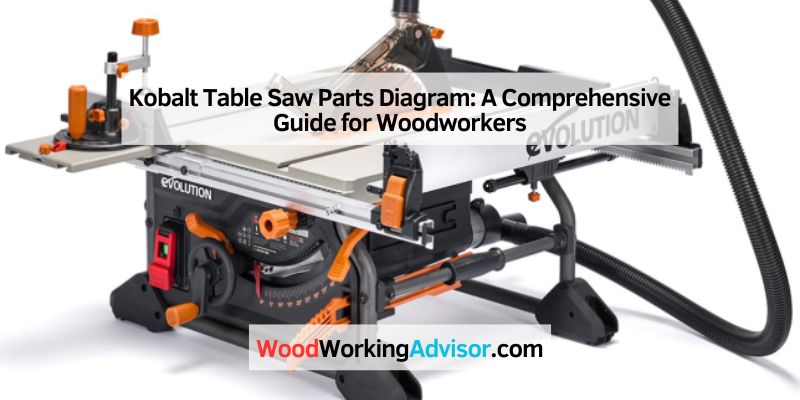
Kobalt Table Saw Parts Diagram: A Comprehensive Guide for Woodworkers
Hey there, fellow woodworker! If you’re like me, your Kobalt table saw is probably the heart of your workshop. It’s a reliable tool that helps turn raw lumber into beautiful projects. But let’s be honest—when something goes wrong, or you need to replace a part, it can feel like you’re trying to solve a puzzle without all the pieces. That’s where a Kobalt table saw parts diagram comes in handy. I’ve spent countless hours tinkering with my Kobalt saw, figuring out its ins and outs, and I’m excited to share everything I’ve learned with you. Whether you’re a DIY enthusiast or a seasoned carpenter, this guide will help you understand the parts of your Kobalt table saw, how to maintain it, and where to find replacement parts. Let’s dive in!
Why a Kobalt Table Saw Parts Diagram Matters
Picture this: you’re in the middle of a project, the saw’s humming along, and suddenly, something feels off. Maybe the blade isn’t cutting smoothly, or the fence is wobbly. You know you need to fix it, but where do you start? A parts diagram is like a roadmap for your table saw. It shows you every component, from the blade to the motor, and helps you pinpoint exactly what’s wrong. I remember the first time I had to replace a worn-out blade guard on my Kobalt KT1015. Without a diagram, I was lost, guessing which screw went where. Once I found the right diagram, it was like someone turned on the lights in a dark room.
A parts diagram isn’t just for repairs. It’s also a great way to understand how your saw works. Knowing the role of each part helps you maintain your tool better and even improves your woodworking skills. Plus, if you ever need to order a replacement part, the diagram gives you the exact part number and name, saving you from ordering the wrong thing.
Understanding the Key Components of a Kobalt Table Saw
Let’s break down the main parts of a Kobalt table saw. I’ll explain each one as if we’re standing in my workshop, looking at my KT10152. These are the components you’ll find in most Kobalt table saw models, like the KT1015 or KT10152, and they’re typically labeled clearly in a parts diagram.
The Tabletop
The tabletop is the flat surface where all the magic happens. On my Kobalt saw, it’s made of cast iron, which I love because it’s sturdy and reduces vibration. The tabletop is where you place your wood for cutting, so it needs to be flat and smooth. Some models, like jobsite saws, might have aluminum or steel extensions to save weight, but cast iron is the gold standard for precision.
The Blade
The blade is the star of the show. Most Kobalt table saws, like my KT10152, use a 10-inch carbide-tipped blade. This size is perfect for cutting through hardwood, plywood, or even cement board if you’re careful. The blade is mounted on an arbor, which is a shaft connected to the motor. If your cuts aren’t clean, it might be time to sharpen or replace the blade. I learned this the hard way when I tried to push through oak with a dull blade—trust me, it’s not fun.
The Rip Fence
The rip fence is your best friend for making straight cuts. It’s a metal guide that runs parallel to the blade, and you can slide it to adjust the width of your cut. On my Kobalt saw, the fence locks with a single latch, which is a huge improvement over older models with double latches that were tricky to square. A good fence stays perfectly aligned, so your cuts are consistent every time.
The Miter Gauge
The miter gauge is what you use for crosscuts or angled cuts. It slides into slots machined into the tabletop, called miter slots, which are parallel to the blade. I often attach a piece of plywood to my miter gauge to make it more stable for larger pieces. You can adjust the gauge for angles up to 45 degrees, which is great for picture frames or furniture joints.
The Blade Guard
Safety first, right? The blade guard covers the spinning blade to protect your fingers. It’s usually made of plastic or metal and lifts automatically when you feed wood into the saw. My Kobalt KT1015 came with a guard that includes anti-kickback pawls and a riving knife, which help prevent the wood from pinching the blade and kicking back. If your guard is damaged, replace it immediately—don’t skip this part.
The Motor
The motor is the powerhouse of your saw. Kobalt table saws typically have a 15-amp motor, which is strong enough for most woodworking tasks. It’s connected to the blade via a belt or gears, and it’s what gives your saw the muscle to cut through tough materials. I’ve found that keeping the motor clean and checking the belts regularly keeps my saw running smoothly.
The Throat Plate
The throat plate is a small insert that surrounds the blade in the tabletop. It’s usually made of aluminum or phenolic resin to avoid damaging the blade’s carbide teeth. A zero-clearance throat plate, which has a narrow slot for the blade, is a game-changer for reducing tear-out on delicate cuts. I made my own for my KT10152, and it’s made a big difference in the quality of my cuts.
The On/Off Switch
The on/off switch is simple but crucial. Kobalt saws often have a safety key system, which I appreciate because it prevents accidental startups. If your switch is acting up, it’s an easy fix with a replacement part, but always unplug the saw before working on it.
How to Read a Kobalt Table Saw Parts Diagram
Now that we’ve covered the main parts, let’s talk about how to actually use a parts diagram. When I first got my Kobalt saw, I was intimidated by the diagram in the manual. It looked like a technical drawing from an engineering class! But once I figured it out, it was straightforward.
A parts diagram is usually a detailed illustration of your table saw, with each component labeled and numbered. For example, the blade guard might be labeled “Part A” with a part number like “101501.” The diagram is paired with a parts list that tells you the name, number, and sometimes a brief description of each part. Here’s how I approach it:
- Identify the Problem: If something’s wrong, like a loose fence or a cracked throat plate, figure out which part is affected.
- Find the Diagram: Check your user manual or go online to sites like thekobaltstools.com or ereplacementparts.com. Kobalt’s official site often has manuals for models like the KT1015 or KT10152.
- Locate the Part: Look for the part in the diagram. The labels make it easy to spot what you need.
- Match the Part Number: Use the part number to order a replacement. This ensures you get the exact component for your model.
- Double-Check Compatibility: Kobalt saws vary slightly between models, so make sure the part matches your saw’s model number.
I once ordered a rip fence for my KT1015 without checking the model number, and it didn’t fit. Lesson learned—always double-check!
Common Kobalt Table Saw Parts That Need Replacement
Over the years, I’ve had to replace a few parts on my Kobalt saw. Some components wear out faster than others, especially if you’re using your saw a lot. Here’s a table of the most common parts that might need replacing, based on my experience:
| Part | Why It Needs Replacing | Estimated Lifespan | Replacement Tips |
|---|---|---|---|
| Blade | Dull or chipped teeth reduce cut quality | 6–12 months | Use a carbide-tipped blade for durability |
| Blade Guard | Cracks or damage compromise safety | 1–3 years | Ensure it includes anti-kickback pawls |
| Rip Fence | Wears out or becomes misaligned | 2–5 years | Check for single-latch design for easier use |
| Throat Plate | Cracks or widens, causing tear-out | 1–3 years | Consider a zero-clearance plate for fine cuts |
| Motor Belt | Wears out, causing power loss | 2–5 years | Inspect regularly for cracks or fraying |
| On/Off Switch | Fails to turn on/off reliably | 3–5 years | Replace with a safety key system if possible |
These lifespans depend on how often you use your saw and the types of materials you cut. For example, cutting plastics, like I did once for a custom project, can create static-charged dust that clogs up the motor or gears faster than wood dust.
Where to Find Kobalt Table Saw Parts
Finding replacement parts for your Kobalt table saw can feel like a treasure hunt, but I’ve got some go-to spots that make it easier. Here are my favorite places to look:
- Kobalt’s Official Website: Thekobaltstools.com has a section for replacement parts. You can find manuals and parts lists for models like the KT1015 or KT10152. They also have a customer service line (1-888-3KOBALT) for help.
- eReplacementParts.com: This site is a lifesaver. They stock genuine Kobalt parts and provide detailed diagrams. I’ve ordered blade guards and rip fences from them with no issues.
- Lowe’s: Since Kobalt is a Lowe’s brand, their stores or website often carry parts. If you’re near a Lowe’s, you can check in-store or order online.
- ManualsOnline or ManualsLib: These sites have free PDFs of Kobalt manuals, which include parts diagrams. I downloaded the KT1015 manual from ManualsLib when I misplaced my paper copy.
- Amazon or eBay: These are hit-or-miss, but you can sometimes find Kobalt parts at a discount. Just be careful to verify the part number and seller reputation.
One tip: always buy genuine Kobalt parts. I tried a generic rip fence once, and it was a nightmare to align. Stick with OEM parts to avoid headaches.
Maintaining Your Kobalt Table Saw for Longevity
I’ve learned that a little maintenance goes a long way in keeping my Kobalt saw in top shape. Here are some tips I swear by:
- Clean Regularly: Sawdust builds up fast, especially around the motor and gears. I use a shop vac and a dry sponge to clean the bars and tabletop after every big project.
- Lubricate Moving Parts: The elevation and tilt mechanisms can get sticky. I apply a light coat of bar and chain oil to the gears and bars every few months.
- Check Alignment: A misaligned fence or blade can ruin your cuts. I check the fence and blade alignment with a square every few weeks.
- Inspect the Blade: A dull blade is dangerous and makes rough cuts. I sharpen mine every six months or replace it if it’s too worn.
- Store Properly: If you have a jobsite saw like the KT10152, use the folding stand to store it in a dry place. Moisture is the enemy of cast iron tabletops.
I once neglected my saw for a few months, and the gears started jamming. A quick cleaning and some lube brought it back to life, but it was a reminder to stay on top of maintenance.
Troubleshooting Common Issues with Kobalt Table Saws
Even the best tools have hiccups. Here are some common problems I’ve faced with my Kobalt saw and how I fixed them:
- Excess Vibration: If your saw shakes too much, check if the blade is balanced or if the legs are loose. Tightening the bolts or replacing a warped blade usually solves it.
- Jamming Elevation Mechanism: Dust and debris can clog the gears. I had this issue when cutting MDF, which creates fine dust. Blowing out the dust and lubricating the gears fixed it.
- Fence Misalignment: If your cuts aren’t straight, the fence might be off. Use the yellow pins on newer models like the KT10152 to square it up.
- Blade Guard Issues: If the guard doesn’t lift smoothly, check for debris or a bent riving knife. A replacement guard is cheap and worth it for safety.
If you’re stuck, the Kobalt manual has a troubleshooting section, and their customer service is pretty responsive. I called them once when my switch was acting up, and they walked me through the fix.
Upgrading Your Kobalt Table Saw with Accessories
One thing I love about my Kobalt saw is how easy it is to upgrade. Here are a few accessories I’ve added to make my cuts even better:
- Zero-Clearance Throat Plate: This reduces tear-out on delicate woods like plywood. I made one from MDF, but you can buy them too.
- Aftermarket Miter Gauge: The stock miter gauge is fine, but an aftermarket one with more precise angle settings is great for complex projects.
- Thin Rip Jig: This is perfect for cutting narrow strips safely. I use one for making veneer or trim pieces.
- Dust Collection System: Kobalt saws have a dust chute, but adding a shop vac or dust collector keeps your workspace cleaner.
These upgrades don’t break the bank but make a big difference. I added a zero-clearance throat plate last year, and my plywood cuts have never looked better.
Why Choose Kobalt Table Saws?
I’ve used a few table saws over the years, but I keep coming back to Kobalt. They’re affordable, reliable, and designed with both pros and hobbyists in mind. The KT10152, for example, has a 15-amp motor and a 30-inch rip capacity, which is impressive for a jobsite saw. Plus, being a Lowe’s brand, parts and support are easy to find. I’ve heard some folks say Kobalt saws are just rebranded Delta models, and while there’s some truth to that, I think Kobalt offers great value for the price.
Conclusion
There you have it—a complete guide to understanding and using a Kobalt table saw parts diagram. Whether you’re fixing a wobbly fence, replacing a dull blade, or just trying to get to know your saw better, a parts diagram is your best friend. I’ve been through the ups and downs of maintaining my Kobalt saw, and I can tell you that taking the time to learn its components pays off in cleaner cuts and a longer-lasting tool. Keep your saw clean, use genuine parts, and don’t be afraid to upgrade with accessories that suit your projects. Now, go fire up that saw and make something amazing! If you have any questions or need a specific part number, drop a comment on my blog, and I’ll do my best to help.
Frequently Asked Questions
What is a Kobalt table saw parts diagram?
A Kobalt table saw parts diagram is a detailed illustration that shows all the components of a Kobalt table saw, like the blade, fence, and motor. Each part is labeled with a name and number, making it easy to identify and order replacements. It’s usually found in the user manual or online.
Where can I find a parts diagram for my Kobalt table saw?
You can find parts diagrams in the user manual that came with your saw or on websites like thekobaltstools.com, ManualsLib, or eReplacementParts.com. Just make sure to check your model number, like KT1015 or KT10152, to get the right diagram.
How do I know if I need to replace a part on my Kobalt table saw?
If your saw vibrates excessively, cuts poorly, or has parts that are visibly damaged, like a cracked blade guard or wobbly fence, it’s time to replace something. Use the parts diagram to identify the faulty component and order the correct replacement.
Can I use generic parts for my Kobalt table saw?
I don’t recommend using generic parts. They might not fit properly or could cause safety issues. Stick with genuine Kobalt parts, which you can find through Lowe’s, eReplacementParts.com, or Kobalt’s official site for the best performance.
How often should I maintain my Kobalt table saw?
Clean your saw after every major project to remove sawdust. Lubricate moving parts like gears every few months. Check the blade, fence, and alignment every few weeks if you use it regularly. Regular maintenance keeps your saw running smoothly and extends its life.