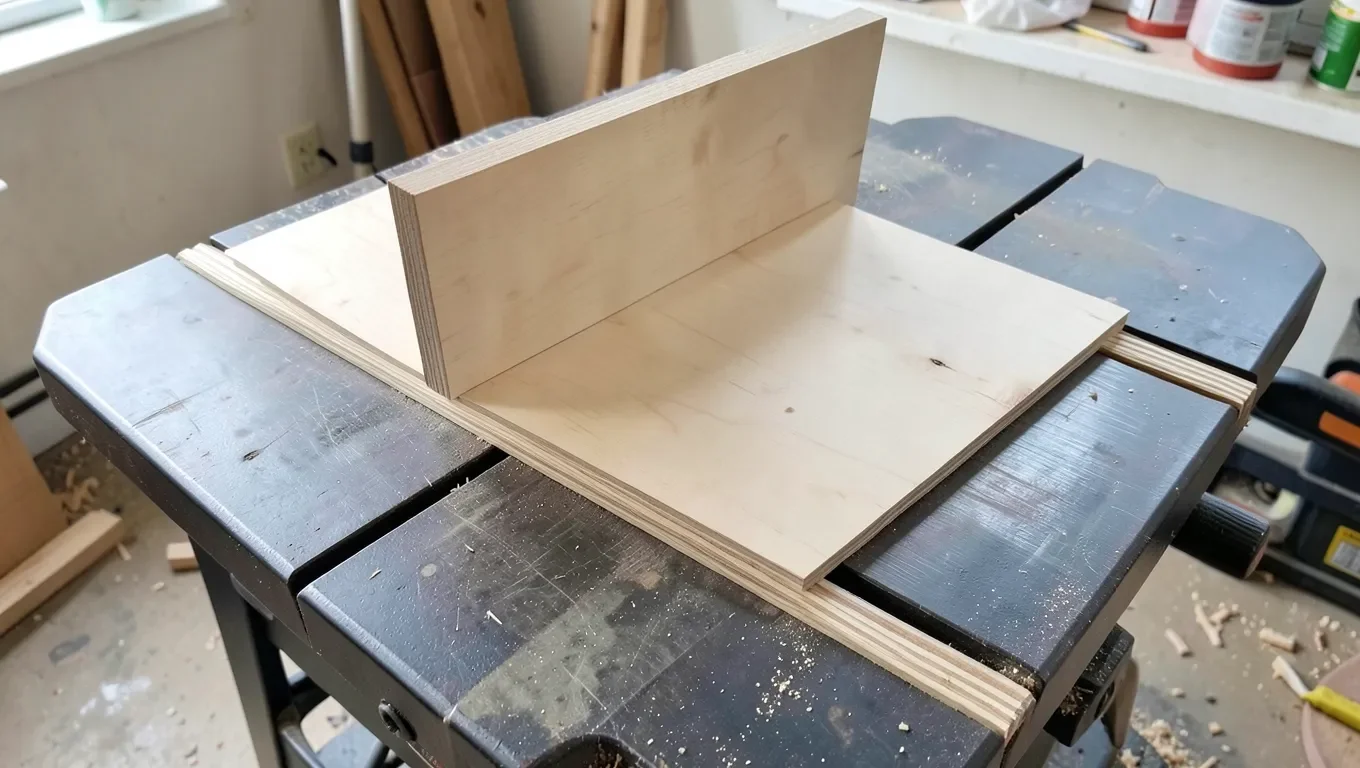
Sled for a DeWalt Table Saw: Get the Miter Slot Fit Right
DeWalt’s compact jobsite table saws do not all share the same miter slot as full-size cabinet saws, and that mismatch is the single biggest reason a store-bought crosscut sled refuses to fit.
If you have bolted a new crosscut sled onto a DeWalt jobsite table saw only to find the runners binding halfway through the cut, you are not imagining it. DeWalt’s compact saws, including the DWE7480, DWE7490, DWE7491, DWE7492, DW745, and DWE7499, use a miter slot that does not match the 3/4-inch by 3/8-inch T-slot found on most cabinet and contractor saws. A sled built for that standard slot can look like a perfect fit in the listing photos and still refuse to slide smoothly once it is actually on your saw.
This guide covers why that mismatch happens, how to check your own saw’s slot before you buy or build anything, and what actually works, whether you would rather buy pre-fit hardware or build a sled from scratch.
Why a "Universal" Crosscut Sled Does Not Always Fit a DeWalt
Most crosscut sled kits sold online, including well-reviewed options like the POWERTEC 71403, are built and marketed specifically for cabinet and full-size contractor-grade saws with a 3/8-inch deep by 3/4-inch wide T-slot. That is the industry-standard shape, and it is what the vast majority of aftermarket miter bars and sled hardware assume you have. DeWalt’s benchtop and jobsite saws are a different animal: owners who have measured their own DWE7480 have reported slot widths close to 19.5mm, not quite the 3/4-inch (19.05mm) standard, and the channel profile itself is shaped differently from a true T-slot. The result is a bar that is either too tight to slide, too loose to control, or physically will not seat in the slot at all.
Best Fit for DeWalt Jobsite Saws
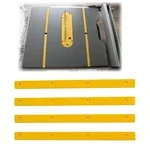 |
VivaElara DeWalt-Fit Miter Bar Set (4-Pack) – $28.00 Machined to DeWalt’s own jobsite-saw slot dimensions instead of the generic 3/4-inch standard, so you skip the trial-and-error of forcing a cabinet-saw bar into a slot it was never designed for.
|
That is why sled and bar listings built specifically for these DeWalt models, rather than the generic 3/4-inch standard, save you the trial-and-error of finding that out the hard way.
Standard Vs. DeWalt: What Is Actually Different
The standard cabinet-saw miter slot is a genuine T-slot: 3/4 inch wide at the table surface, 3/8 inch deep, with a wider channel beneath that lets a mushroom-head bolt or a shop-made T-bar lock in place. DeWalt’s jobsite saws use a shallower, narrower channel that is closer to a straight U-shape than a true T, and the fit is not identical across every model. The DW745 and the newer DWE7491RS do not share a single spec sheet, so "a DeWalt-compatible bar" still means checking your specific saw rather than assuming every DeWalt is built the same.
If you look at replacement miter bar listings built for these saws, most name the models individually, such as DWE7480, DWE7490, DWE7491, DWE7492, DW745, and DWE7499, rather than claiming universal DeWalt compatibility. That is a good sign the manufacturer has done the same slot-by-slot homework you are about to do, instead of assuming one bar fits every DeWalt ever made.
How To Check Your Own Miter Slot Before You Buy Or Build
Before ordering a sled kit or cutting your own runners, measure your saw’s actual slot in three places: near the front edge, at the middle of the table, and near the back. Jobsite saw tables are stamped sheet metal rather than machined solid cast iron, so the slot width can vary by a few hundredths of an inch along its length, tighter in one spot and looser in another. A dial or digital caliper gives you a repeatable number; a tape measure will not catch the difference between 0.75 inch and 0.77 inch, and that small a difference is enough to bind a fixed-width bar.
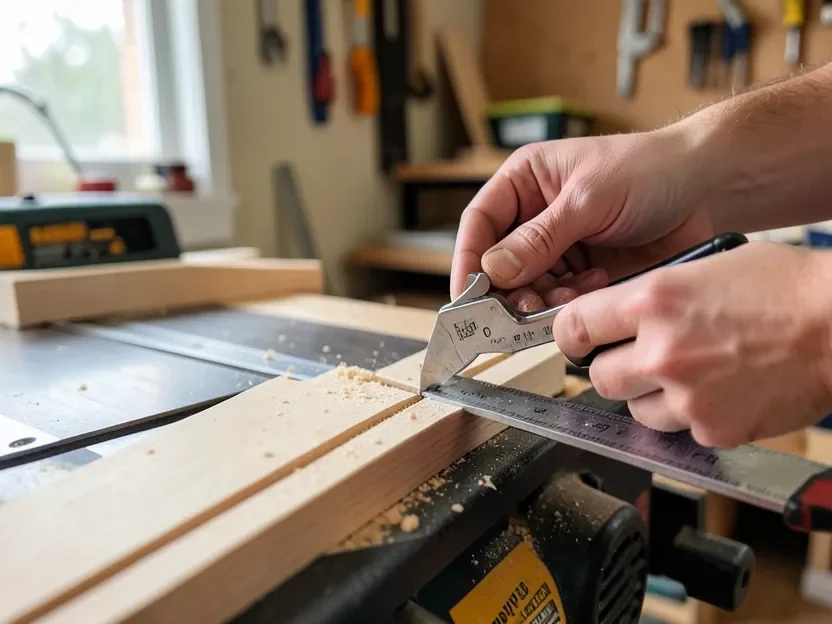
Once you have real measurements, compare them against the packaging or listing for any bar or sled kit you are considering. A listing that says it fits a "standard 3/4-inch by 3/8-inch T-slot" is telling you it was not designed with a DeWalt jobsite saw in mind, even if the seller’s photos show a similar-looking saw in the background. Listing photos are not always taken on the exact model being sold, so the printed specs matter more than the picture.
Buying Pre-Fit Hardware Vs. Building Your Own
If you would rather skip the trial-and-error fitting, hardware made for the specific DeWalt models rather than the generic 3/4-inch standard removes most of the guesswork, which is the option shown above. If you are building a sled from scratch instead, 3/4-inch Baltic birch plywood or MDF makes a stable, flat base and fence. Choose bars with a screw-adjustable width rather than a fixed dimension where possible, since that lets you fine-tune the fit after the sled is assembled instead of committing to an exact number before you have cut anything.
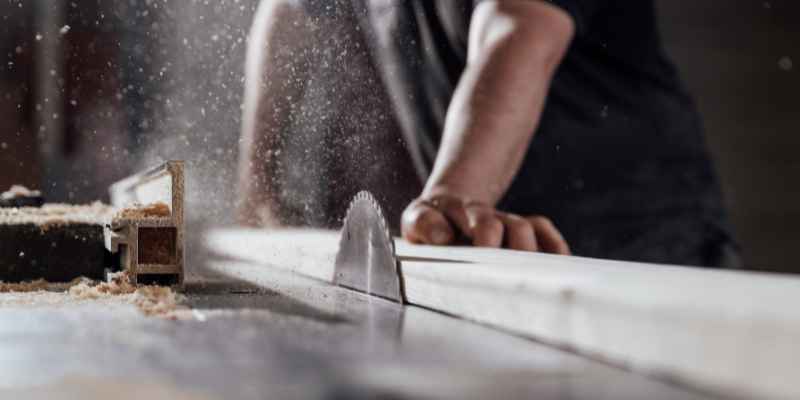
Test-fit the bars in the slot before attaching them permanently. They should slide the full length of the table with light, even resistance and no side-to-side wobble. If a bar binds in one spot but not another, that is the taper mentioned earlier, and it usually means sanding or filing a few thousandths off the tight section rather than forcing it through.
Setting Up And Squaring Your Sled
Once the runners fit snugly without excess play, square the fence to the blade using the five-cut method: cut a piece of scrap on all four sides, flip the offcut end for end, and measure the difference between the last two edges. Divide that difference in half and adjust the fence by that amount, then repeat the cuts until the last two measurements are within a few thousandths of an inch of each other. This catches small alignment errors that a framing square alone will miss, and it works on any sled, not just a DeWalt-specific build.
Recheck the squareness after the first few uses. Plywood and MDF both move slightly as they acclimate to shop humidity, and a sled that was dead-on the day you built it can drift a little over the following weeks.
Safety Practices Specific To A Sled On A Benchtop Saw
A sled covers the blade for most of the cut, which is a safety benefit, but it also means the blade guard and riving knife on your DeWalt are usually removed or retracted while the sled is in use. Keep both hands on the sled itself, never on the workpiece as it passes the blade, and build a rear blade-guard box into the back fence so the spinning blade is never exposed once it exits the back of the cut. Jobsite saw tables are narrower than a cabinet saw’s, so give the sled a clear, unobstructed path the full length of your cut before you start the saw, and keep the sled fully retracted toward you between cuts rather than leaving it sitting mid-table.
Wear safety glasses and hearing protection every time, and clear sawdust from the miter slot before each session. A slot packed with dust and small chips changes how the bar rides in the channel, which can reintroduce the same play or binding you worked to eliminate when you fitted the bars.
Keeping The Sled Running True Over Time
A light coat of paste wax on the runners and the underside of the sled base keeps it sliding smoothly and helps prevent the plywood from picking up moisture. Wipe the miter slots themselves with a dry cloth rather than blowing dust into the saw’s internals with compressed air. Check the runner fit every few months, since aluminum and UHMW bars can wear slightly with heavy use, and a bar that once fit snugly may develop a little play over hundreds of cuts. Re-run the five-cut test any time you notice cuts drifting out of square, rather than assuming the sled is still accurate just because it looks the same as the day you built it.
Frequently Asked Questions
Will a standard crosscut sled fit a DeWalt jobsite table saw?
Not reliably. Most off-the-shelf sled kits are built for the 3/4-inch by 3/8-inch T-slot standard on cabinet and contractor saws. DeWalt’s benchtop and jobsite models, including the DWE7480, DWE7490, DWE7491, DWE7492, DW745, and DWE7499, use a narrower, differently shaped slot, so a bar sized for the standard slot often binds or will not seat at all.
How do I check if a sled will fit my table saw?
Measure your miter slot’s width and depth with a caliper at three points along its length, then compare those numbers to the fit specifications listed for the sled or bar you are considering, not just the product photos, since stock images do not always match the exact saw pictured.
Can I build my own sled for a DeWalt table saw?
Yes. Use 3/4-inch plywood or MDF for the base and fence, and choose adjustable aftermarket miter bars sized for your specific DeWalt model rather than a fixed 3/4-inch bar, so you can fine-tune the fit after test-fitting the runners in your actual slot.
What is the difference between a standard miter slot and DeWalt’s jobsite saw slot?
A standard slot is a true T-shape: 3/4 inch wide at the surface and 3/8 inch deep, with a wider channel underneath. DeWalt’s compact jobsite saws use a shallower, narrower channel that does not match that spec, which is why hardware made for cabinet saws frequently does not fit without modification.
Conclusion
A crosscut sled only works as well as its fit in the miter slot, and DeWalt’s compact jobsite saws are exactly the models most likely to expose a sled built for the generic 3/4-inch standard. Measure your own slot before you buy or build, choose hardware sized for your specific DeWalt model when you can, and square the fence with the five-cut method once it is installed. Get the fit right at the start, and the rest of the build, and every cut afterward, goes a lot smoother.
Sponsored / affiliate links. As an Amazon Associate I earn from qualifying purchases. I may earn additional commission from eligible campaigns.