How to Square a Table Saw Fence to the Blade (Step by Step)
A table saw fence is square when it’s parallel to the blade within 0.001 to 0.005 inch of toe-out over its length — cabinet saws hold the tight end of that range, jobsite saws the loose end. Anything past about 1/32 inch (0.030 inch) risks burning, binding, or kickback. This guide covers the combination-square and dial-indicator methods, the tolerance chart for your saw type, and the exact adjustment screws to turn.
What You Need to Check a Table Saw Fence for Square
Best Table Saw Fence Alignment Pick
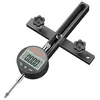
BOBOVAV Table Saw Alignment Gauge (0.0005" Digital Dial Indicator)
Purpose-built for this exact job — the rod rides the miter slot and the digital dial reads toe-in/toe-out directly, with no feeler-gauge subtraction needed.
- Best for: getting a repeatable thousandths-level reading without a separate dial indicator kit
- Why we picked it: the rod is sized for the standard 3/4-inch miter slot referenced throughout this guide
- Main drawback: the digital readout needs a coin-cell battery and won’t survive being dropped on a concrete floor
Compare more fence-squaring tools
 Option 1 PEC Tools 12" Machinist Combination Square
|
 Option 2 Neoteck 0-1" Digital Dial Indicator Gauge
|
 Option 3 GEARWRENCH 32-Blade Feeler Gauge Set
|
As an Amazon Associate we earn from qualifying purchases.
Want all eight gauges lined up by resolution, base type and price? See the full table saw alignment gauge comparison.
Four tools cover every method in this guide, and you probably already own at least two of them. None require a factory service visit or a specialty machinist background — just a flat reference surface and a way to measure a gap in thousandths of an inch.
- Combination square (12-inch, machinist grade): the primary reference tool — a loose or worn head introduces the same 1–2 thousandths of error you’re trying to remove.
- Dial or digital indicator with magnetic base: reads toe-in/toe-out directly in thousandths without doing subtraction by hand — faster and more repeatable than a square alone.
- Feeler gauge set: measures the gap between the fence and a reference block when you don’t have a dial indicator.
- Two 3/4-inch reference blocks or a squared scrap runner: sits in the miter slot as the true reference line, since the miter slot — not the blade’s carbide teeth — is what every saw is actually built around.
How to Square a Table Saw Fence to the Blade
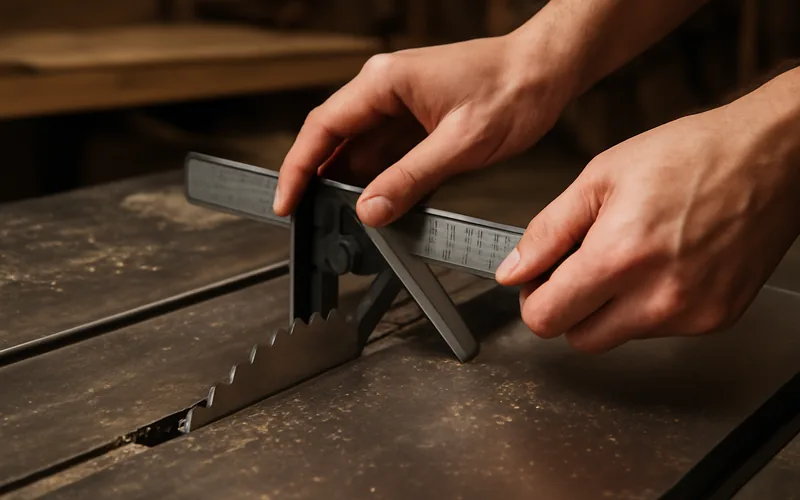
This is the combination-square-and-feeler-gauge method — the version that needs no dial indicator, just tools most shops already own. It references the miter slot, not the blade body, since the slot is the fixed geometry every other part of the saw is aligned to.
- Unplug the saw and raise the blade to full height. A fully raised blade gives the square more flat surface to reference and keeps hands well clear of the teeth.
- Set the combination square in the miter slot nearest the fence. Rest its body against the slot wall so the steel blade extends across the table toward the fence.
- Reference off a flat-ground section of the blade body, never a carbide tooth. Individual teeth can vary a couple of thousandths from each other, which will throw off the reading before you even reach the fence.
- Clamp two 3/4-inch reference blocks in the miter slot, one near the front of the table and one near the back. These become the fixed points you’ll measure the fence against.
- Bring the fence down until it just touches both blocks, then lock it. Don’t force it — you want light contact, not the blocks flexing the fence rail.
- Slide a feeler gauge between the fence and each block. The back gap should read 0.001 to 0.005 inch larger than the front gap — a slight, intentional toe-out. If the back gap is smaller than the front (toe-in), the fence needs adjusting.
- Loosen the fence head’s adjustment screws and shift it in small increments. Most fences use two Allen-head screws on the fence head or clamp block; an eighth-turn at a time is usually enough.
- Re-torque the screws evenly, then re-measure both gaps with the feeler gauge. Clamping pressure alone can shift the setting by a thousandth or two, so the final check has to happen with the fence locked exactly as you’ll use it.
- Confirm with a test rip cut on scrap at least 12 inches long. Inspect the cut edge for burn marks or witness lines from the back of the blade — either one means there’s still toe-in to dial out.
Squaring It Faster With a Dial Indicator
A magnetic-base dial or digital indicator skips the feeler-gauge subtraction entirely. Clamp the base to the miter slot or the blade arbor flange, zero the dial against the fence at the infeed end, then slide the indicator to the outfeed end and read the difference directly — a positive number is toe-out, negative is toe-in. It’s the same measurement as the feeler-gauge method above, just read in one pass instead of two.
Table Saw Fence Alignment Tolerance Chart
There’s no single “correct” number — acceptable toe-out scales with how rigid the fence hardware is. A featherweight jobsite fence that’s held to cabinet-saw tolerances will drift right back out within a week of moving it.
| Saw Type | Acceptable Toe-Out | Why |
|---|---|---|
| Cabinet / precision saw | 0.001” – 0.002” | Heavy, rigid fence rails hold a tight setting; glue-line rip quality needs this range |
| Contractor saw | 0.003” – 0.005” | Typical open-stand fence hardware; the range most published spec sheets target |
| Jobsite / benchtop saw | 0.005” – 0.015” | Lighter fence heads flex slightly; expect to recheck more often than a cabinet saw |
| Any saw — danger threshold | 0.030” (1/32”) or more | Considered a real kickback risk regardless of saw class — stop and readjust |
“Grizzly Industrial’s published fence-alignment specification calls for flatness within 0.010 inch, toe-out of 0.002 to 0.005 inch, and repeatability within ±0.003 inch — the same range independent woodworking forums converge on for a fence that won’t burn or bind.”
Why a Table Saw Fence Goes Out of Square
Vibration from normal cutting slowly walks the adjustment screws off their setting, especially on saws that get rolled around a shop or job site. Removing and reinstalling the fence for a dado stack or a wide rip almost always changes the setting, since it rarely lands in the exact same spot twice. Worn miter slots on saws over eight to ten years old can also throw off a slot-referenced check — if a fresh section of the miter bar reads differently than a well-used section, the slot itself has worn unevenly.
Signs Your Table Saw Fence Is Out of Square
A skewed fence pinches the workpiece against the back of the blade, which is where most of the trouble starts.
- Burning on the cut edge nearest the fence — usually means the fence is toed in, crowding the wood into the rear teeth.
- The board binds or the cut wanders — the edge running the fence isn’t staying parallel to the blade path.
- Kickback on rip cuts — the most dangerous symptom; a misaligned fence is one of the most common causes cited in table saw safety guidance.
- Inconsistent cut widths across a run — the fence isn’t holding its setting from the front of the table to the back.
📊 A fence toed in even a few thousandths of an inch is enough to burn softwood and bind hardwood on a rip cut. Source: Rockler and Woodcraft table saw alignment guidance
In the shop, the fastest tell that a fence has drifted usually isn’t the tape measure — it’s a faint burn line creeping up the offcut side of a pine rip, visible before any gauge confirms the discrepancy.
Common Mistakes When Squaring a Table Saw Fence
- Referencing the blade’s carbide teeth instead of the miter slot. Individual teeth vary by a thousandth or two from each other; the miter slot is the fixed geometry the whole saw is built around.
- Using a loose or uncalibrated combination square. A sloppy square head reintroduces the same 1–2 thousandths of error the whole process is meant to remove.
- Taking the final reading before fully re-torquing the fence. Clamping pressure can shift the setting after you measure, so always confirm with the fence locked exactly as it will be used.
- Ignoring miter slot wear on an older saw. On saws over eight to ten years old, check a fresh section of miter bar against a well-used section — a worn slot throws off every slot-referenced method.
- Skipping the test cut. A gauge reading can look perfect and still miss a clamp-shift error that only shows up as a burn mark on an actual rip.
Frequently Asked Questions About Table Saw Fence Squaring
How do you know if a table saw fence is out of square?
Slide a combination square along the miter slot with its blade against the fence — any daylight between the square and the fence at the front or back means it’s out of square. Burn marks on rip cuts and inconsistent cut widths are reliable field signs even without a tool in hand.
What tolerance is acceptable for a table saw fence?
Cabinet saws should hold 0.001 to 0.002 inch of toe-out over the fence’s length; contractor saws are typically fine at 0.003 to 0.005 inch, and jobsite saws up to about 0.015 inch. Anything beyond 1/32 inch (0.030 inch) is considered a kickback risk and needs correcting immediately.
Should a table saw fence toe in or toe out?
A slight toe-out — the back of the fence sitting a hair farther from the blade than the front, by roughly 0.001 to 0.005 inch — is the target. Toe-in pinches the workpiece against the back of the blade and causes burning, binding, and kickback.
Can you square a table saw fence without a dial indicator?
Yes. A combination square referenced off the miter slot, combined with a feeler gauge and two reference blocks, measures the same toe-in/toe-out gap a dial indicator reads — it just adds one extra step of comparing two feeler-gauge readings by hand instead of reading a single dial.
How often should you check table saw fence alignment?
Check it after removing and reinstalling the fence, after transporting the saw, and at least once a month with regular shop use. Vibration and repeated clamping gradually walk the adjustment screws out of position even when nothing was intentionally changed.
Final Thoughts
A square table saw fence comes down to one measurement repeated carefully: the gap between the fence and a fixed miter-slot reference, checked at both ends and held inside the tolerance for your saw type. Whether that measurement comes from a $9 feeler gauge or a dedicated dial-indicator gauge, the target number is the same — a hair of toe-out, never toe-in, and never past 1/32 inch.
For calibrating the miter gauge that rides in the same slot, see how to calibrate a table saw miter gauge. If the fence hardware itself is worn out rather than just misadjusted, compare options in the table saw fence replacement guide. If you do not have a fence to square yet, see how to make a table saw fence from wood or aluminum angle iron.
Sponsored / affiliate links. As an Amazon Associate I earn from qualifying purchases. I may earn additional commission from eligible campaigns.