Maple Wood vs Ash Wood Pros and Cons Explained
Choosing the right wood can feel tricky, especially when you first start looking into woodworking or furniture making. You’ll often hear about Maple Wood vs Ash Wood: Pros and Cons, and it can be hard to know where to begin. This guide will make it simple for you.
We will walk through everything step-by-step so you can easily pick the best wood for your project. Get ready to learn about these two popular woods and what makes them special.
Understanding Maple Wood and Ash Wood
This section helps you get to know maple and ash woods better. We will talk about what they are like and why people use them so much. Think of this as your first step to becoming a wood expert.
We will cover their basic looks and general feel. This will set the stage for a deeper look at their advantages and disadvantages.
What is Maple Wood
Maple wood comes from maple trees. There are many types of maple trees, but the most common ones used for wood are hard maple and soft maple. Hard maple, also known as sugar maple, is super strong and dense.
Soft maple is a bit lighter and easier to work with. Maple often has a smooth, fine grain.
Its color can range from creamy white to light brown, sometimes with a reddish tint. You might also find figured maple, which has beautiful wavy or curly patterns. This makes it a top choice for furniture, flooring, and musical instruments.
Many people love maple for its clean, classic look.
What is Ash Wood
Ash wood comes from ash trees. Like maple, there are different kinds of ash. White ash is very common and known for its strength and flexibility.
It’s a hardwood, but it’s generally a bit less dense than hard maple. Ash wood often has a prominent grain pattern.
Its color is typically light, ranging from pale white to light brown, often with grey or brown streaks. The grain can be straight or irregular, and sometimes it has a natural shimmer. Ash is a favorite for sports equipment, tool handles, and furniture because it can absorb shock well.
It’s also good for things that need to be strong but not too heavy.
Comparing General Characteristics
When we talk about Maple Wood vs Ash Wood: Pros and Cons, looking at their general traits is key. Both are hardwoods, meaning they are strong and durable. However, they feel and look a bit different.
Maple is known for its smooth texture and fine, often subtle grain. It feels very solid and polished.
Ash, on the other hand, usually has a more open grain. This means you can see the lines in the wood more clearly. This grain can give it a more rustic or classic look depending on how it’s finished.
While both are tough, ash is often praised for its toughness and ability to bend without breaking easily. This makes them suitable for different uses.

Maple Wood: Advantages and Disadvantages
Maple wood is a popular choice for many woodworkers and homeowners alike. Its beauty, durability, and versatility make it a go-to material for a wide range of projects. However, like any material, it has its own set of advantages and disadvantages that are important to consider.
Understanding these will help you decide if maple is the right fit for what you want to create. This section will break down why maple is so well-loved and where it might fall short for some applications.
Advantages of Maple Wood
Durability and Hardness
Maple is a very hard and dense wood. This means it can withstand a lot of wear and tear. It’s great for places that get a lot of use, like kitchen cabinets or flooring.
The Janka hardness scale, which measures how much force it takes to dent wood, shows that hard maple scores very high. For instance, sugar maple can score over 1,400 pounds-force. This makes it resistant to scratches and dents, keeping your projects looking good for a long time.
This hardness also means it’s not easily damaged by everyday bumps or heavy objects. If you are building furniture that needs to last for generations, maple is a strong contender. Its resistance to damage helps maintain its aesthetic appeal and structural integrity over many years of use.
Aesthetic Appeal
Maple wood offers a clean, elegant look that appeals to many. Its fine grain is subtle and smooth, giving it a refined appearance. The color is typically light, ranging from creamy white to a pale tan, which can brighten up a room.
This light color makes it a fantastic canvas for stains or finishes.
It takes finishes very well, allowing for a smooth, polished surface. You can stain it to mimic darker woods or leave it natural for a bright, airy feel. Some varieties of maple, like curly or bird’s-eye maple, have unique patterns that add a touch of luxury and visual interest, making each piece one-of-a-kind.
Workability
While maple is hard, it is still generally considered to be quite workable. Tools can cut it cleanly, especially when the wood is sharp. It holds screws and nails well without splitting easily, which is a big plus when assembling projects.
For projects that require intricate details or smooth finishes, maple’s fine grain is a big advantage. It doesn’t tend to splinter or fuzz up when cut or sanded, leading to a more polished final product. This makes it a joy to work with for both beginners and experienced woodworkers.
Staining and Finishing
Maple is known for its ability to accept stains and finishes beautifully. Because its grain is so fine and uniform, stains spread evenly, creating a smooth, consistent color. This means you can easily achieve various looks.
Whether you want a dark, rich walnut color or a light, natural tone, maple can take it well.
When it comes to clear coats or varnishes, maple’s smooth surface becomes exceptionally polished and sleek. This allows the natural beauty of the wood, or the applied stain, to shine through with a glass-like finish. It’s this adaptability in finishing that makes maple a favorite for custom designs.
Resistance to Warping and Twisting
Due to its density and stable structure, maple wood is less prone to warping, twisting, or shrinking compared to softer woods. This stability is vital for applications like flooring and furniture. A floor made of maple is likely to stay flat, and a table made of maple will maintain its shape over time, even with changes in humidity.
This resistance to environmental changes means that projects made from maple often require less maintenance related to structural integrity. You can trust that your maple creations will maintain their form and function through the years, providing lasting beauty and reliability.
Disadvantages of Maple Wood
Cost
Maple wood, especially hard maple, can be more expensive than some other common hardwoods. Its popularity and the effort required to harvest and process it contribute to its higher price point. This can make it less accessible for very large projects or for those on a tight budget.
For example, a board of hard maple might cost 20-30% more than a similar board of oak or pine. This price difference can add up quickly, so it’s important to factor it into your project planning. If cost is a major concern, you might need to look for alternative woods or use maple only for accent pieces.
Difficulty with Staining (Unevenness)
While maple takes stains well in general, its density can sometimes lead to blotchiness. This is because the stain might not penetrate evenly into the hard, fine grain. This can result in darker patches or streaks where the stain has absorbed more.
To avoid this, woodworkers often use a pre-stain conditioner. This helps the wood absorb the stain more uniformly. Without this step, achieving a perfectly even color can be challenging, especially for beginners.
Careful application and preparation are key to getting the desired look.
Weight
Maple is a dense and heavy wood. This makes it very strong and durable, but it also means that projects made from maple can be quite heavy. Moving large maple furniture or handling large maple planks can require more effort and possibly more than one person.
A solid maple table, for example, can weigh significantly more than a table made from pine or ash. This weight can be a disadvantage if you need to move furniture frequently or if you are building something that needs to be lightweight.
Can Be Difficult to Work with Hand Tools
Because maple is so hard, it can be more challenging to work with using only hand tools. Cutting, shaping, and sanding can require more physical effort and sharper tools. Power tools often make working with maple much easier and more efficient.
For someone who prefers working with hand tools or does not have access to power tools, maple might present a steeper learning curve and require more physical exertion. This is why it’s often favored by those with well-equipped workshops.
Ash Wood: Advantages and Disadvantages
Ash wood is another fantastic hardwood that’s popular for its strength, flexibility, and distinctive grain. It’s often compared to oak but offers its own unique set of benefits and drawbacks. Understanding these will help you make an informed decision for your next woodworking project, whether it’s for furniture, tool handles, or sports equipment.
Let’s explore what makes ash a great material and where it might not be the best choice.
Advantages of Ash Wood
Strength and Toughness
Ash wood is renowned for its exceptional strength and toughness. It has a high shock resistance, meaning it can absorb impacts without breaking or denting easily. This makes it ideal for items that undergo a lot of stress, like baseball bats, tool handles, and even bows.
The resilience of ash means it can withstand repeated force. For example, a hammer handle made of ash is less likely to splinter or crack after heavy use compared to some other woods. This makes it a reliable material for demanding applications.
Flexibility
One of ash’s standout qualities is its flexibility. It can bend quite a bit without snapping, which is why it’s used for items that need to flex, like furniture frames or some types of sporting goods. This ability to bend under pressure makes it a preferred choice for applications where slight movement is expected.
For instance, in furniture design, ash can be steam-bent into curves and shapes that are difficult to achieve with other woods. This characteristic opens up a lot of creative possibilities for designers and craftspeople.
Distinctive Grain Pattern
Ash wood typically has a pronounced and attractive grain pattern. It often features straight, bold lines, but can also have wavy or irregular patterns. This visible grain adds character and visual interest to any project, giving it a classic and natural look.
This grain is particularly noticeable when the wood is finished. It can create a striking visual effect, making pieces stand out. If you appreciate wood with visible texture and character, ash is an excellent choice.
Good for Shock Absorption
Related to its toughness, ash is excellent at absorbing shock. This is why it has been a traditional material for tool handles, baseball bats, and even bowling pins. It can absorb the impact of hitting something without transferring all the force back to the user or breaking.
This quality makes it a safe and reliable choice for items that are meant to withstand repeated impacts. A drill handle made of ash, for example, will feel more comfortable in your hand because it absorbs some of the vibration.
Cost-Effectiveness (Generally)
Compared to some other hardwoods like walnut or cherry, ash is often more budget-friendly. Its availability and widespread use make it a more economical option for projects where a strong, attractive hardwood is desired but cost is a consideration.
On average, ash can be 10-20% less expensive than comparable grades of oak or maple. This makes it a smart choice for larger projects or for those looking to get the most value from their material without compromising too much on quality or appearance.
Stains Well
Ash wood takes stains very well, allowing for a wide variety of finishes. While its grain is more prominent than maple’s, stains can highlight this grain beautifully, creating depth and contrast. It can be stained to mimic the look of darker, more expensive woods or to achieve vibrant, custom colors.
The open grain of ash means stains can penetrate more easily than in very dense woods, leading to rich and consistent color. This makes it easier to achieve the desired aesthetic without the blotchiness that can sometimes occur with maple.
Disadvantages of Ash Wood
Susceptibility to Rot and Insects
Ash wood is not as resistant to moisture, rot, or insect infestation as some other hardwoods. If used outdoors or in damp environments, it will require proper sealing and finishing to prevent decay. Untreated ash can degrade more quickly when exposed to the elements.
For example, outdoor furniture made from ash needs regular maintenance, including sealing and refinishing, to protect it from water damage and pests. This can be a significant drawback if you need a low-maintenance material for outdoor use.
Grain Can Be Less Uniform
While the prominent grain of ash is often seen as an advantage, it can also be a disadvantage for certain applications. The grain is typically more open and less uniform than maple’s fine grain. This can sometimes lead to a rougher surface if not sanded properly, and it can make achieving a perfectly smooth, glass-like finish more challenging.
For projects where a very smooth, subtle surface is desired, like certain types of cabinetry or fine art, the prominent grain of ash might not be the ideal choice. It’s best suited for applications where its natural texture is appreciated.
Can Be Prone to Splintering
Due to its fibrous nature and open grain, ash can be prone to splintering, especially when cut or worked with dull tools. This means that care must be taken during the cutting and shaping process to avoid creating sharp splinters or rough edges.
Sharper tools and slower cutting speeds can help minimize splintering. However, even with careful work, you might find yourself dealing with more splinters than you would with a wood like maple, which has a much finer grain structure.
Not As Hard As Hard Maple
While ash is a strong hardwood, it is generally not as hard or as dense as hard maple. The Janka hardness for white ash is typically around 1,300-1,350 pounds-force, whereas hard maple can reach over 1,400 pounds-force. This means ash might be slightly more susceptible to dents and scratches over time.
For applications requiring extreme durability and resistance to heavy impacts, like high-traffic flooring or workbenches that take a lot of abuse, hard maple might be a better option. Ash is still very durable, but it doesn’t quite reach the same hardness levels as its maple counterpart.
Maple Wood vs Ash Wood: Key Differences and Similarities
Now that we’ve explored the individual strengths and weaknesses of maple and ash, it’s time to put them head-to-head. Understanding their key differences and similarities will empower you to choose the right wood for your specific needs. This comparison will highlight where they excel and where they might not be the best fit, guiding your decision-making process.
We will look at factors like hardness, appearance, workability, and cost to provide a clear picture.
Hardness and Durability Comparison
When it comes to hardness, hard maple generally comes out on top. Its Janka hardness rating is typically higher than that of ash. For example, hard maple can score around 1,450 lbf, while white ash usually scores around 1,320 lbf.
This means maple is more resistant to dents and scratches.
| Wood Type | Average Janka Hardness (lbf) | Durability Notes |
|---|---|---|
| Hard Maple | 1450 | Excellent resistance to dents and scratches, very durable. |
| Ash (White) | 1320 | Good toughness and shock resistance, but slightly less resistant to dents than maple. |
Both woods are considered hardwoods and are very durable for furniture and flooring. However, if you need the absolute hardest wood for a high-traffic area or a workbench that sees a lot of abuse, hard maple might be the better choice. Ash is still incredibly tough and its shock resistance is a major advantage for other uses.
Appearance and Grain Texture
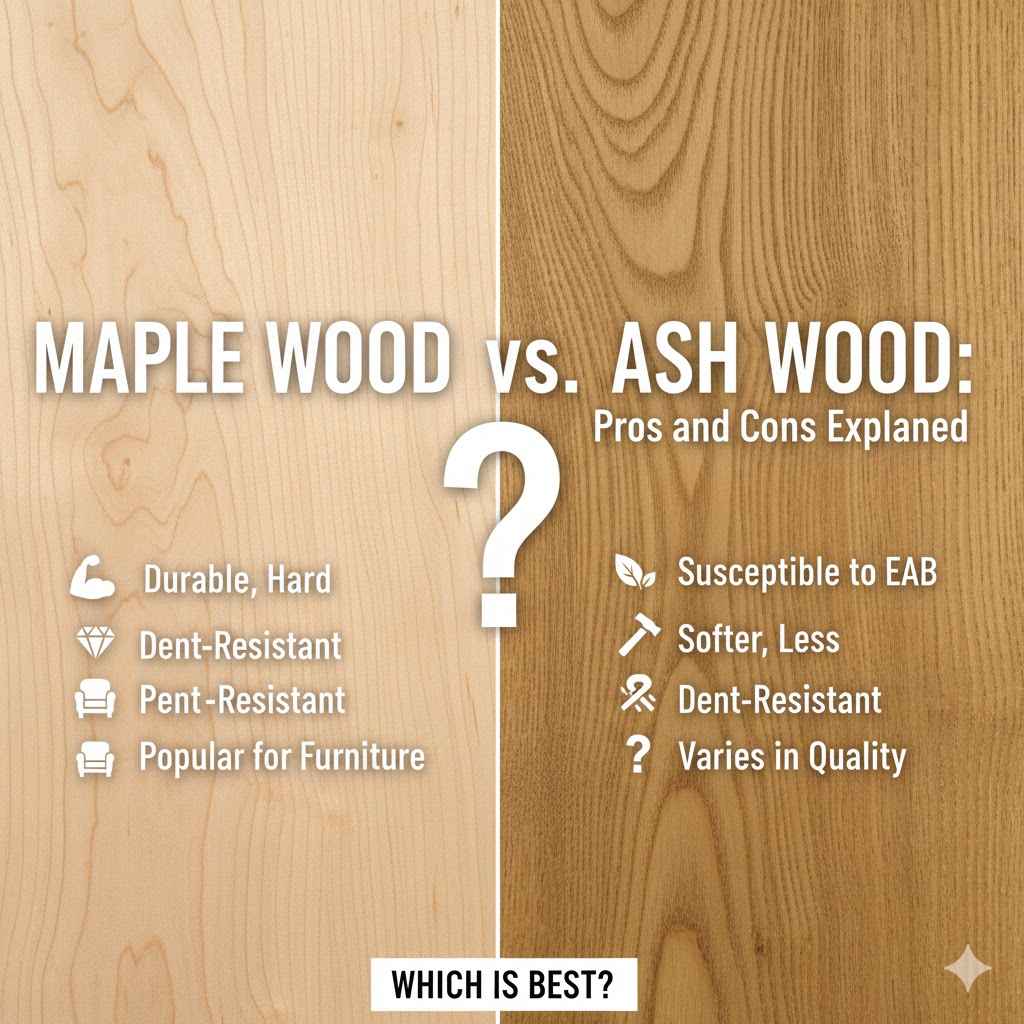
The visual difference between maple and ash is quite distinct. Maple typically has a very fine, even grain that gives it a smooth, subtle texture. Its color is usually light and uniform, ranging from white to pale cream.
This makes it look clean and modern.
Ash, on the other hand, often has a more pronounced, open grain. This means the lines in the wood are more visible, giving it a bolder, sometimes rustic, look. The color can range from pale white to light brown, often with darker streaks that highlight the grain.
Here is a quick look at their typical appearances:
- Maple: Fine, subtle grain; smooth texture; light, uniform color (white to pale cream).
- Ash: Open, pronounced grain; visible texture; light color with potential for brown or grey streaks.
The choice between them often comes down to personal preference for texture and grain visibility. If you want a clean, minimalist look, maple is great. If you prefer a wood with more character and visible grain, ash might be ideal.
Workability and Machining
Both maple and ash are hardwoods, but their workability can differ. Maple, being very dense and hard, can be more challenging to cut and shape, especially with hand tools. However, its fine grain usually results in clean cuts and less tear-out when using sharp power tools.
Ash is also hard, but its more open grain can sometimes lead to splintering, particularly if the tools are not sharp. It generally machines well, but the prominent grain might require more attention during sanding to achieve a perfectly smooth finish.
Consider these points for working with each wood:
- Maple: Requires sharp tools; can be more effort with hand tools; produces clean cuts with power tools; minimal tear-out.
- Ash: Can splinter if not careful; machines well but grain needs attention; good for steam bending.
For beginners, ash might be slightly more forgiving in some ways due to its slightly less dense structure, but maple’s fine grain offers a cleaner finish with power tools.
Staining and Finishing
The way these woods take stains and finishes is a key difference. Maple’s fine, dense grain can sometimes absorb stain unevenly, leading to blotchiness if not pre-conditioned. However, when done correctly, it provides a very smooth, even finish.
Ash has a more open grain which often accepts stains more readily and uniformly. The stain tends to highlight the grain, adding depth and contrast to the wood’s natural color. This makes it easier to achieve rich, even colors.
Here’s a breakdown of their finishing characteristics:
- Maple: May require pre-stain conditioner to prevent blotchiness; accepts clear coats very smoothly for a polished look.
- Ash: Stains evenly and accentuates grain; easier to achieve rich, deep colors.
If you want to stain your wood a specific color, ash might be easier to work with. If you’re aiming for a natural, light look or a very smooth, polished finish without much grain distraction, maple is an excellent choice.
Cost and Availability
Both maple and ash are widely available hardwoods. Generally, ash tends to be more affordable than hard maple. For instance, ash might cost 10-20% less per board foot than hard maple.
This price difference can be a significant factor for larger projects.
Availability can vary by region, but both are common in lumberyards and home improvement stores. If budget is a primary concern, ash often provides a more cost-effective option while still offering excellent hardwood qualities.
In summary, ash is usually the more budget-friendly option, while hard maple commands a slightly higher price due to its exceptional hardness and fine grain.
Common Applications
Their differing strengths lead them to specific popular uses. Maple’s hardness, smooth finish, and light color make it ideal for:
- Kitchen cabinets and countertops
- Hardwood flooring in high-traffic areas
- Furniture with clean, modern designs
- Musical instruments (like guitars and drums)
- Cutting boards
Ash, with its strength, shock resistance, and flexibility, is often chosen for:
- Tool handles (hammers, axes, shovels)
- Sports equipment (baseball bats, oars)
- Furniture frames and chairs that may need to flex
- Cabinetry and furniture with a more traditional or rustic look
- Bows and other sporting goods requiring flexibility
These applications highlight how the specific properties of Maple Wood vs Ash Wood: Pros and Cons dictate their best uses.
Choosing the Right Wood for Your Project
Deciding between maple and ash for your project doesn’t have to be complicated. It really comes down to what you want your finished piece to do and look like. Think about its main purpose, how it will be used, and the aesthetic you’re aiming for.
This section will help you weigh the pros and cons for your specific situation. We will consider practical needs and design goals.
Consider Your Project’s Purpose
The intended use of your project is the most important factor. If you are building something that will get a lot of direct impact, like a workbench top, a cutting board, or high-traffic flooring, you need maximum hardness and dent resistance. In this case, hard maple is often the superior choice because of its exceptional density.
However, if your project needs to withstand shock without breaking, like tool handles or sporting equipment, ash’s toughness and shock absorption are key. For furniture that might see some knocks but doesn’t require extreme hardness, both can work, but ash’s flexibility can be a bonus for certain designs.
Think About the Desired Aesthetic
Aesthetics play a huge role in woodworking. Do you prefer a smooth, clean, and subtle look, or do you like wood with more visible grain and character? Maple’s fine grain and uniform color lend themselves to modern, minimalist designs.
It’s perfect when you want a sleek finish or plan to paint or stain it to a solid color without the grain showing through too much.
Ash’s more prominent grain offers a classic or rustic feel. It’s a great choice if you want the natural beauty of the wood to be a focal point. The way the grain shows can add warmth and texture to furniture, cabinetry, or decorative items.
Evaluate Your Budget
Cost is always a factor in any project. Ash is generally more affordable than hard maple. If you are working on a large project and need to keep costs down, ash can be a more economical choice that still delivers excellent hardwood performance.
Maple, especially hard maple, will likely cost more. If your budget allows and you require the utmost hardness or a very specific smooth aesthetic, the extra cost might be justified. Always compare prices at your local lumber yard to get the most accurate idea for your area.
Assess Your Tools and Skill Level
Your tools and experience can influence which wood is easier to work with. Maple’s hardness means it can be challenging to cut and shape with basic hand tools, though it finishes very cleanly with good power tools.
Ash is also hard but might be slightly more forgiving for some tasks. However, its tendency to splinter can be a concern if you’re not used to working with woods that require careful handling. If you have sharp power tools, both are manageable, but if you primarily use hand tools, ash might present fewer challenges.
Sample Scenarios
Let’s look at a couple of common project types to help illustrate the choice:
- Scenario 1: Building Kitchen Cabinets
For kitchen cabinets, durability and a smooth finish are key. You want something that can withstand daily use and look good for years. Both maple and ash can work.Maple offers a very smooth, clean surface that is excellent for painting or staining. Its hardness also means it resists dents from everyday bumps. Ash, with its more visible grain, can also be beautiful for cabinets, offering a warmer, more textured look.If budget is a concern, ash is a good choice. If you want the smoothest, most durable surface for a modern kitchen, maple might edge it out.
- Scenario 2: Making a Wooden Baseball Bat
A baseball bat needs to be strong, durable, and able to absorb the shock of hitting a ball without breaking. Ash has traditionally been the preferred wood for baseball bats due to its exceptional toughness and shock resistance. It can flex slightly upon impact, which helps absorb some of the force.
While maple is harder and more dent-resistant, ash’s flexibility and shock absorption make it the classic choice for this specific application.
When Maple is Likely the Better Choice
Maple is probably your best bet if you are:
- Building furniture or cabinets that need a very smooth, clean surface.
- Creating flooring for high-traffic areas where dent resistance is paramount.
- Aiming for a modern, minimalist aesthetic.
- Working on musical instruments that benefit from density and clarity.
- Planning to paint or stain the wood a solid color.
When Ash is Likely the Better Choice
Ash is probably your best bet if you are:
- Making tool handles or sporting equipment that needs to withstand impact and flex.
- Looking for a more budget-friendly hardwood option.
- Preferring a wood with a more pronounced, visible grain pattern.
- Designing furniture that requires some flexibility or steam-bending.
- Wanting a wood that stains evenly to rich colors.

Frequently Asked Questions
Question: Is maple or ash better for flooring?
Answer: For flooring, hard maple is generally considered better due to its superior hardness and resistance to dents and scratches. This makes it ideal for high-traffic areas.
Question: Which wood is easier to stain evenly?
Answer: Ash is often easier to stain evenly because its more open grain absorbs stain more readily. Maple can sometimes be blotchy and may require a pre-stain conditioner.
Question: Is ash wood suitable for outdoor furniture?
Answer: Ash wood is not naturally resistant to rot and insects. If used outdoors, it requires thorough sealing and regular maintenance to protect it from the elements.
Question: Which wood is more expensive?
Answer: Hard maple is typically more expensive than ash wood. Ash is usually a more budget-friendly hardwood option.
Question: Can I use both maple and ash in the same furniture piece?
Answer: Yes, you can use both maple and ash in the same furniture piece if their different properties and appearances complement your design goals. For example, you might use ash for structural components and maple for decorative accents.
Conclusion
Final Thoughts
Deciding between Maple Wood vs Ash Wood: Pros and Cons comes down to your project’s specific needs. Maple offers superior hardness and a smooth, clean finish, making it great for cabinets and flooring. Ash provides excellent toughness, flexibility, and a beautiful grain at a more accessible price.
Consider durability, appearance, budget, and how the wood will be used to make the best choice. Both are fantastic hardwoods that can create beautiful, long-lasting projects when selected wisely for their unique strengths.