How to Clean Wood Cabinets Without Damaging the Finish
Wood kitchen cabinets clean up safely with a barely damp microfiber cloth, warm water, and a few drops of mild dish soap — never a soaked rag or a cleaner sprayed straight onto the wood. Ammonia, bleach, and steel wool strip lacquer and polyurethane finishes in a single pass, exposing bare wood to grease and moisture. This guide covers safe cleaning solutions, the grain-direction wiping technique, removing baked-on grease, and the mistakes that dull a finish fastest.
As an Amazon Associate, we earn from qualifying purchases linked in this article.
Choosing the Right Cleaning Products
Best Wood Cabinet Cleaner Pick
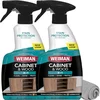
Weiman Cabinet & Wood Clean & Shine Spray (2-Pack + Microfiber Towel) – $21.98
A 2-in-1 wood cleaner and microfiber towel bundle — matches the “spray the cloth, not the wood” technique this guide recommends and leaves no oily residue behind.
- Best for: everyday cleaning plus a spare cloth already on hand
- Why we picked it: no-residue formula matches the spray-the-cloth method above and includes the exact microfiber towel this guide recommends
- Main drawback: almond scent is noticeable right after use
Compare more wood cabinet cleaner options
 Option 1 Murphy Oil Multi-Use Wood Cleaner Spray – $13.70
|
 Option 2 Goddard’s Cabinet & Wood Cleaning Spray (Beeswax) – $14.59
|
 Option 3 Guardsman Deep Cleaning Wood Cleaner Aerosol – $5.10
|
As an Amazon Associate we earn from qualifying purchases.
Stick to products made for finished wood as part of a broader wood care and maintenance routine, not general household cleaners. A 50/50 mix of vinegar and warm water cuts light grease, but vinegar is acidic and can dull a finish if used often — save it for occasional deep cleans, not a weekly wipe-down. Mild dish soap diluted in warm water is the safer everyday option.
For built-up grime, a dedicated wood cleaner such as Murphy Oil Soap is formulated to lift grease without leaving a residue. Grease shows up fastest on white or light-finished cabinets, so a weekly wipe-down matters even more there. Whatever you use, spray it onto the cloth, never directly onto the cabinet, and skip ammonia, bleach, and abrasive pads entirely — all three break down the finish layer that protects the wood underneath.
| Cleaner | How to Use It | Best For |
|---|---|---|
| Mild dish soap + warm water | A few drops per cup of water, damp cloth only | Everyday wipe-downs |
| Vinegar + water (1:1) | Dampen a cloth, wipe with the grain, dry right away | Occasional deep cleans only |
| Commercial wood cleaner (e.g. Murphy Oil Soap) | Spray on the cloth, follow label dilution | Built-up grime, monthly cleaning |
| Ammonia, bleach, steel wool | Never use on finished wood | Avoid entirely — strips the finish |
How to Clean Wood Cabinets Step by Step
These steps are for solid wood and wood-veneer cabinets. If you’re not sure whether yours are MDF or an engineered wood panel, check first — MDF swells if it takes on too much moisture, so keep cloths even drier on those surfaces.
- Clear and dust first: Empty the cabinets and wipe shelves with a dry microfiber cloth, or a vacuum’s brush attachment, to remove loose dust before adding any moisture.
- Start with the upper cabinets: Clean top cabinets before lower ones, so drips or dust land on doors you haven’t cleaned yet instead of ones you just finished.
- Mix a mild cleaning solution: Combine warm water with a few drops of dish soap, or dilute a dedicated wood cleaner per the label.
- Wipe with the grain, not against it: Dampen a soft cloth — never spray the wood directly — and wipe in the same direction as the grain to avoid streaking.
- Lift stuck-on grease with a baking soda paste: Mix about ½ cup baking soda with 3 tablespoons water, apply to the grime, let it sit briefly, then scrub gently in small circles.
- Rinse, dry, and protect: Wipe away soap residue with a clean damp cloth, dry immediately with a soft towel, and apply a wood-safe conditioner every few months to renew the finish.
“Use warm or hot water to cut through and break up grease.”
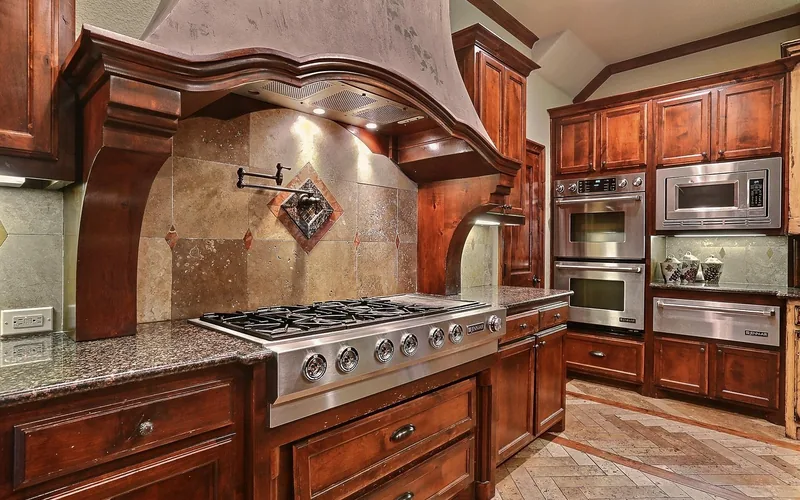
📊 A baking soda paste of about ½ cup baking soda to 3 tablespoons water lifts stuck-on grease without scratching a finished surface — Source: Lowe’s, How to Clean Wood Cabinets
Common Mistakes to Avoid
- Spraying cleaner directly onto the wood. Pooled liquid seeps into seams and joints and can cause swelling. Spray the cloth instead.
- Over-wetting the cloth. A soaked rag pushes moisture past the finish; wring it out until it’s just damp.
- Skipping the dry-off step. Leftover moisture causes water spots and, over time, warping. Dry with a soft towel right after wiping.
- Using steel wool or scouring pads. These scratch through the finish layer, not just the grime sitting on top of it.
- Reaching for ammonia or bleach on tough stains. Both degrade lacquer and polyurethane, causing discoloration that no amount of polish fixes.
How Often Should You Clean Wood Cabinets?
A quick wipe with a soft, damp cloth every week keeps dust and light grease from building up. Plan on a deeper clean with soap or a dedicated wood cleaner about once a month, more often near the stove where cooking grease settles fastest. Installing a range hood or exhaust fan cuts down how often heavy grease buildup happens in the first place.
Frequently Asked Questions
How do I clean greasy wood cabinets?
Wipe with a solution of warm water and a few drops of mild dish soap, using a barely damp cloth. For stuck-on grease, follow with a baking soda paste (½ cup baking soda to 3 tablespoons water), then rinse with a clean damp cloth and dry immediately to protect the finish.
Can vinegar damage wood cabinet finish?
Yes, if used too often. Vinegar is acidic and can dull a finish over repeated use. Dilute it 1:1 with water, use it only for occasional deep cleans rather than weekly wipe-downs, and always dry the surface right after.
What is the best cleaner for wood cabinets?
Mild dish soap diluted in warm water handles everyday grime safely. For monthly deep cleaning, a dedicated wood cleaner such as Murphy Oil Soap lifts grease without leaving residue — spray it onto the cloth, not the cabinet.
How often should I clean wood kitchen cabinets?
Dust or wipe weekly, and do a deeper clean with soap or a wood cleaner monthly. Cabinets near the stove need attention more often since cooking grease settles on them fastest.
Is Murphy Oil Soap safe for wood cabinets?
Yes, for most sealed, finished wood cabinets. It’s not meant for unsealed, waxed, or unfinished wood, so spot-test a hidden area first if you’re unsure how your cabinets were finished.
Conclusion
Cleaning wood kitchen cabinets without damaging the finish comes down to three habits: use a barely damp cloth instead of a soaked one, wipe with the grain, and dry the surface immediately after. Save vinegar for occasional deep cleans, skip ammonia and bleach entirely, and reach for a dedicated wood cleaner when weekly wipe-downs aren’t cutting through grease anymore. Stay consistent and the finish will keep its shine for years.
Sponsored / affiliate links. As an Amazon Associate I earn from qualifying purchases. I may earn additional commission from eligible campaigns.