Mud Tubes on Wall: Uncovering Termite Infestation Signs
Mud tubes on walls can be a concerning sight. They often indicate the presence of termites.
Have you noticed strange, thin lines of mud on your walls? These mud tubes are more than just unsightly. They are a clear sign of termite activity. Termites build these tubes as protective tunnels between their colony and food sources.
Understanding what these mud tubes mean, and how to deal with them, is crucial. In this post, we will explore the reasons behind the formation of mud tubes, the damage termites can cause, and the steps you can take to protect your home. Stay informed and keep your home safe from these destructive pests.
What Are Mud Tubes?
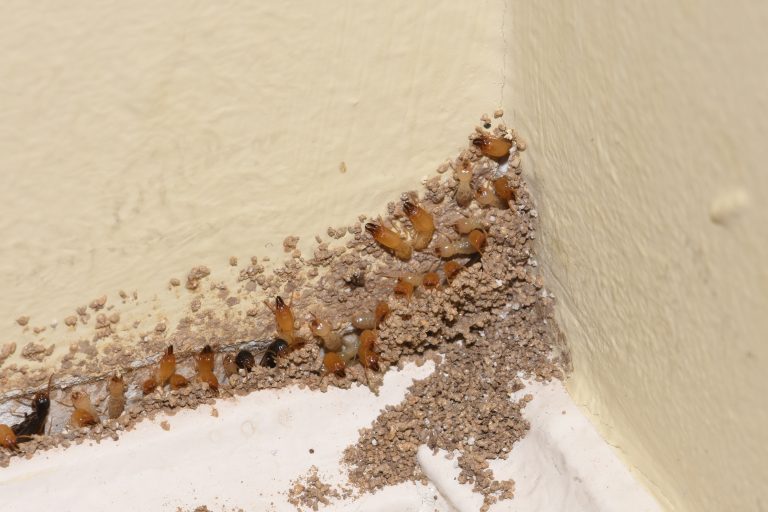
Mud tubes on walls are small tunnels made by termites. They protect termites as they travel between their nest and food sources. These tubes are usually brown and can damage structures over time.
Mud tubes are small tunnels created by termites. These tubes are essential for their survival. Termites use them to travel from their colony to their food source. These tubes protect termites from predators and dry conditions.
Appearance
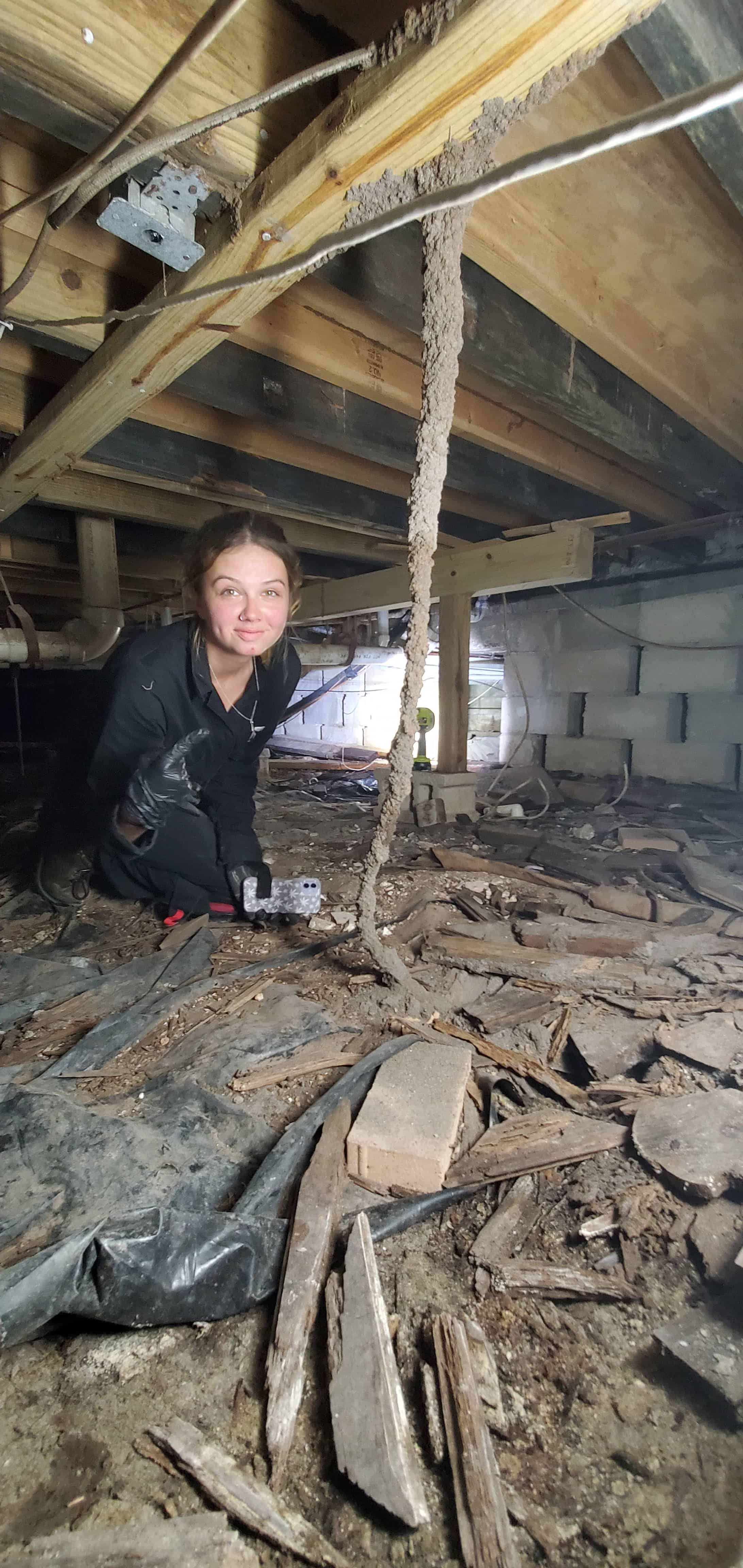
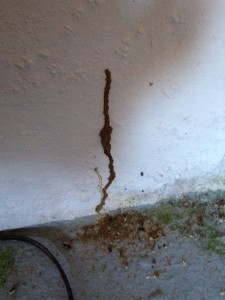
Mud tubes look like long, thin tunnels. They are usually brown or tan. These tubes are made of soil, wood, and termite saliva. They can be found on walls, foundations, and other surfaces. Mud tubes are often about the width of a pencil.
Function
Mud tubes provide a safe path for termites. They connect the colony to food sources. This includes wood in your home. The tubes keep termites moist and safe from the sun. Termites need moisture to survive. Mud tubes also protect them from predators. These tubes are vital for a termite colony’s survival.

Causes Of Mud Tubes
Hey friends, today we’re going to talk about mud tubes on walls. You might have seen these tiny, muddy tunnels running up your house walls. They look strange, right? But why are they there? Let’s dive into the causes of mud tubes. We’ll cover the main reasons behind their formation under two key headings: Termite Activity and Environmental Factors.
Termite Activity
One of the biggest reasons you see mud tubes is because of termites. These pesky insects build mud tubes to protect themselves. Why? Because they are sensitive to light and dry air. The mud tubes give them the darkness and moisture they need. Think of it as their safe highway to travel between their nest and food source.
Termites usually feed on wood. So, if your walls have wood, they might be the target. Mud tubes help them stay hidden while they munch away. Here are a few signs you might have termites:
- Small, muddy trails on your walls
- Wood that sounds hollow when tapped
- Discarded wings near windows or doors
Sounds creepy, right? But knowing these signs can help you act fast.
Environmental Factors
Besides termites, other environmental factors can also lead to mud tubes. Let’s break it down:
- Humidity: Termites love moisture. High humidity levels make your walls an ideal spot for them to build their tubes.
- Temperature: Warm temperatures are perfect for termites to thrive. They are more active in warmer climates.
- Proximity to Soil: If your house is close to the ground or has a lot of soil around, it becomes easier for termites to build their mud tubes.
My own house had mud tubes a few years ago. I noticed them after a heavy rainy season when the humidity was high. I quickly called a pest control service. The good news? They got rid of the termites and the mud tubes.
So, always keep an eye out for these signs. If you spot mud tubes, it’s time to take action. Early detection can save you a lot of trouble.
Types Of Termites
Hey friends, today we will explore the different types of termites that might be causing those pesky mud tubes on your walls. Understanding the types can help you take the right steps to get rid of them. Let’s break it down into two main types: Subterranean Termites and Drywood Termites.
Subterranean Termites
Subterranean termites are the most common type. These little critters live in the soil and build their colonies underground. They need moisture to survive, so they create mud tubes to travel from their nest to the wood in your home. Think of these tubes as highways for termites.
- Habitat: Soil and underground
- Nesting: Build large colonies
- Damage: Often cause significant structural damage
I remember once finding mud tubes along the foundation of my own house. It was a wake-up call! We had to act fast to prevent further damage.
Drywood Termites
Drywood termites, on the other hand, do not need soil to survive. They live inside the wood they consume, which means they can be harder to detect. These termites often infest dry wood above the ground, like in your furniture, doors, and window frames.
- Habitat: Dry wood
- Nesting: Smaller colonies inside wood
- Damage: Can infest furniture and other wooden structures
One of my friends had a beautiful antique chair that fell victim to drywood termites. They had to treat the entire piece to save it. So, if you spot tiny holes or sawdust, it might be these sneaky termites.
Understanding the type of termite you’re dealing with is crucial. It helps in choosing the right treatment method and ensures you can protect your home effectively. Stay alert and keep an eye on those mud tubes!
Signs Of Termite Infestation
Termite infestations can cause significant damage to your home. Recognizing the signs early can save you from expensive repairs. Mud tubes on walls are a common indicator of termite activity. These tubes are used by termites to travel and protect themselves from predators and dry environments.
Visible Damage
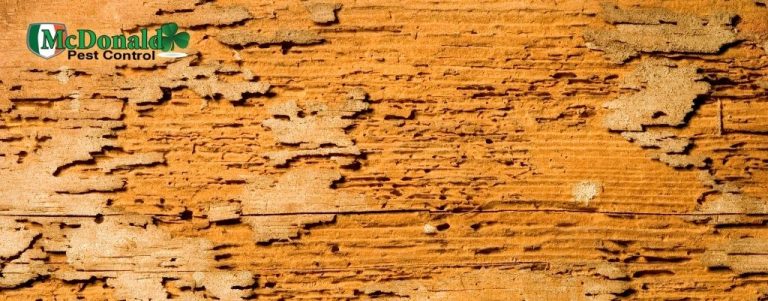
One of the most obvious signs of termites is visible damage. Look for wood that sounds hollow when tapped. Termites eat wood from the inside out, leaving a thin outer layer. This makes the wood weak and easy to break. Also, check for small piles of wood dust around wooden structures. This is often a sign of termite activity.
Discarded Wings
Termites shed their wings after swarming. Finding discarded wings near windows or doors is a strong sign of termites. These wings are small and often found in piles. If you see them, it’s time to take action. Contact a pest control professional for an inspection.
Inspection Techniques
Mud tubes on walls are a sign of termite activity. These tubes serve as protective tunnels for termites, keeping them safe from predators and maintaining moisture. Identifying these tubes early can help prevent extensive damage. Here are some inspection techniques to identify mud tubes on your walls.
Professional Inspection
A professional inspection ensures thorough examination. Experts use specialized tools to detect hidden mud tubes. They check for signs of termite activity in hard-to-reach areas. Professionals can also identify other signs of infestation, such as damaged wood. Their trained eyes and equipment make detection more accurate.
DIY Inspection
You can also inspect for mud tubes yourself. Start by examining the base of your walls. Look for thin, mud-like lines running up the wall. Check areas near water sources, like bathrooms and kitchens. Use a flashlight to inspect dark corners and crevices. Tap on wooden structures; a hollow sound may indicate termite damage. Regular DIY inspections can catch early signs of infestation.
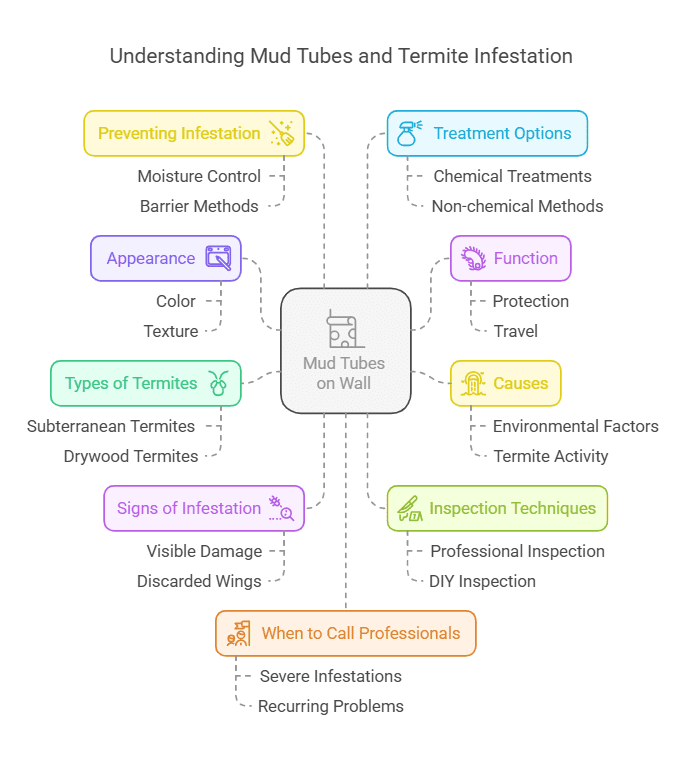
Preventing Termite Infestation
Hey friends, today we’re diving into a topic that might make you a little uneasy – mud tubes on walls. These tubes are a sign of termite activity. But don’t worry, I’m here to help you understand how to prevent a termite infestation. It’s simpler than you think. Let’s get started with some easy tips!
Moisture Control
Termites love moisture. So, keeping your home dry is key to preventing them. Here are some simple steps you can take:
- Fix leaks: Check your plumbing. A small leak can create a big problem.
- Ventilate: Ensure your home has good ventilation. Use fans in damp areas like bathrooms.
- Gutters and downspouts: Keep them clean. Make sure they direct water away from your home.
I once had a persistent leak under my kitchen sink. It seemed minor, but it attracted termites. Fixing it quickly saved me a lot of trouble.
Barrier Methods
Creating barriers can stop termites from getting into your home. Think of it like setting up a fence to keep pests out. Here are some effective barriers:
- Physical barriers: Use metal or sand barriers during construction. These make it tough for termites to enter.
- Chemical barriers: Apply termite-resistant chemicals around your home. This can deter termites from crossing into your space.
- Regular inspections: Check your home regularly. Spotting the signs early can prevent a full-blown infestation.
After putting up a sand barrier around my house, I noticed a significant drop in termite activity. It was a game-changer.
Preventing termite infestation doesn’t have to be a headache. With these simple tips, you can keep your home safe and termite-free. Until next time, happy home protecting!
Treatment Options
Hey friends, today we’ll talk about how to treat mud tubes on your walls. These tubes might look small, but they can cause big problems if left untreated. Don’t worry, there are different ways to get rid of them. Let’s dive into some easy treatment options.
Chemical Treatments
Chemical treatments are a common way to deal with mud tubes. These methods use special chemicals to kill the pests causing the problem. Here are some options:
- Liquid Termiticides: These are chemicals you spray around your home. They create a barrier that pests can’t cross.
- Bait Stations: These are small containers with poison inside. Pests take the poison back to their nests, killing the whole colony.
- Wood Treatments: Special chemicals that you apply directly to wooden parts of your home. They protect the wood from pests.
These methods are effective but need to be used carefully. Always follow the instructions on the label.
Non-chemical Methods
Not a fan of chemicals? No problem. There are other ways to treat mud tubes that don’t involve any chemicals. Here are some options:
- Heat Treatment: You can use heat to kill pests. This involves heating the affected area to a high temperature, which pests cannot survive.
- Cold Treatment: Similar to heat, but with cold. Freezing temperatures can also kill pests.
- Physical Barriers: You can block pests from entering your home. Use things like metal shields or screens to keep them out.
These methods are safe and natural, but they might take more time to work. They are a good option if you have pets or small children.
Both chemical and non-chemical methods have their pros and cons. The best choice depends on your situation. If you are unsure, it’s always a good idea to consult a professional. They can help you decide the best way to treat the mud tubes on your walls.
Credit: www.pctonline.com
When To Call Professionals
Spotting mud tubes on your wall? It’s likely a sign of termites. Call professionals to prevent damage.
Finding mud tubes on your wall is a serious issue. These tubes indicate termite activity. Sometimes, calling a professional becomes necessary.
Severe Infestations
If you see many mud tubes, it means a big termite problem. Large infestations can cause serious damage. Professionals have the right tools and knowledge. They can handle large infestations safely.
Recurring Problems
If mud tubes keep appearing, it’s a sign of a persistent problem. Regular treatments might not be enough. Professionals can find and fix the root cause. They ensure termites don’t come back.
Professional help saves time and prevents further damage. It gives peace of mind. Always consider expert advice for serious or recurring termite problems
Credit: envirocarepestcontrol.net
Frequently Asked Questions
What Are The Mud Tubes In My Walls?
Mud tubes in your walls are tunnels built by termites. They protect termites as they travel between their colony and food sources.
What Insects Leave Mud Tubes?
Termites and mud dauber wasps leave mud tubes. These tubes protect them and provide a controlled environment.
Should I Remove Termite Mud Tubes?
Yes, remove termite mud tubes. This helps identify active infestations and allows for treatment. Consult a pest control expert.
What Are The Mud Tubes Hanging From The Ceiling?
Mud tubes hanging from the ceiling are signs of termite infestations. Termites build these tubes to travel and protect themselves. These structures indicate active termites and potential damage to wooden structures. Consult a pest control professional immediately.
Conclusion
Mud tubes on walls indicate termite presence. Addressing them quickly is crucial. Regular inspections help prevent termite damage. Look for signs like mud tubes and wood damage. Professional pest control ensures effective treatment. Protect your home by staying vigilant. Simple steps can save costly repairs.
Stay informed and proactive for a termite-free home.