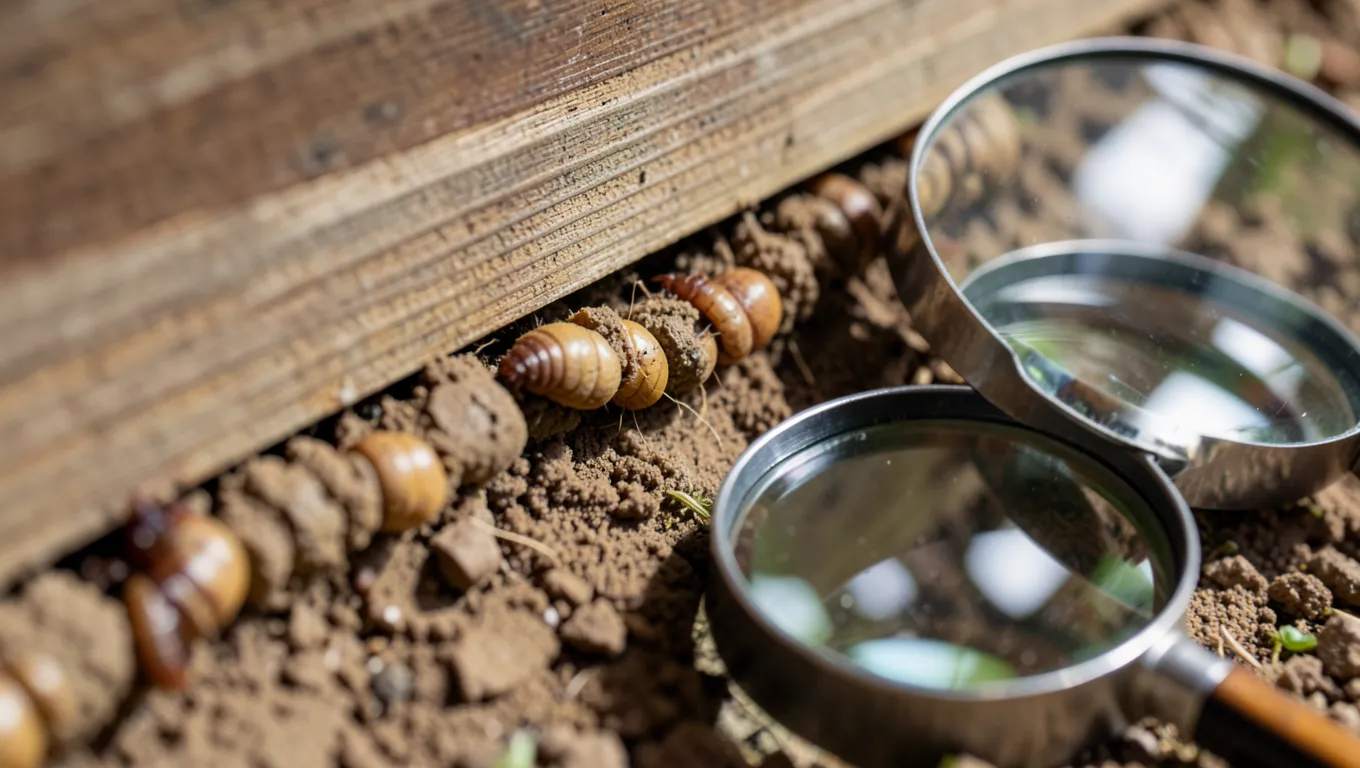
How to Identify Signs of Termite Damage in Wood Before It Gets Worse
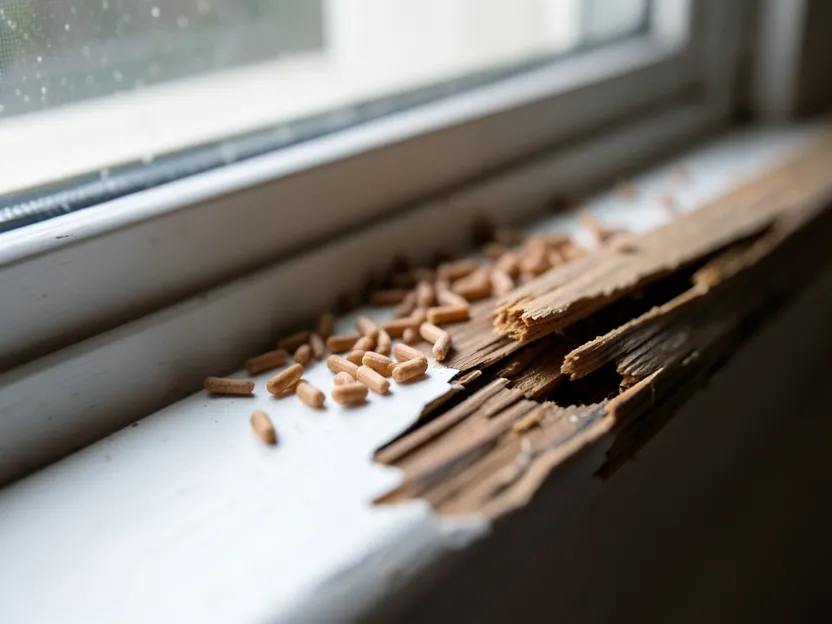
The clearest signs of termite damage in wood are hollow-sounding wood when tapped, mud tubes running along walls or foundations, small piles of discarded wings near windows or doors, and frass (termite droppings that look like tiny wood-colored pellets or sawdust).
Because termites eat wood from the inside out, damage is often invisible until it’s already extensive – the surface can look completely normal while the wood underneath is a hollowed-out shell. Knowing exactly what to look and listen for is what catches an infestation early enough to matter.
The Signs That Actually Matter
Best Tool to Confirm What You’re Seeing
 |
General Tools MM8 Pinless Moisture Meter – $44.99 Termites need moisture, so an unexplained high reading in suspect wood backs up what your eyes and ears are already telling you.
|
Mud Tubes
Mud tubes are pencil-width tunnels built from soil, wood particles, and termite saliva, running along foundations, walls, or wooden beams. Subterranean termites build these to travel between the soil and their food source while staying protected from open air and predators. Break one open – if you find live termites inside, you have an active infestation, not an old, abandoned tube.
Discarded Wings
Reproductive termites (“swarmers”) shed their wings right after leaving the colony to start a new one, so small piles of identical, translucent wings near windowsills, doors, or other entry points are a strong sign a colony nearby has matured enough to spread.
Frass (Termite Droppings)
Drywood termites push their droppings out of small exit holes, leaving little mounds of what looks like fine sawdust or pepper-like pellets below the infested wood. Unlike sawdust from actual wood-boring beetles, frass pellets are uniform in shape and slightly ridged – a magnifying glass makes the difference obvious.
Hollow-Sounding Wood
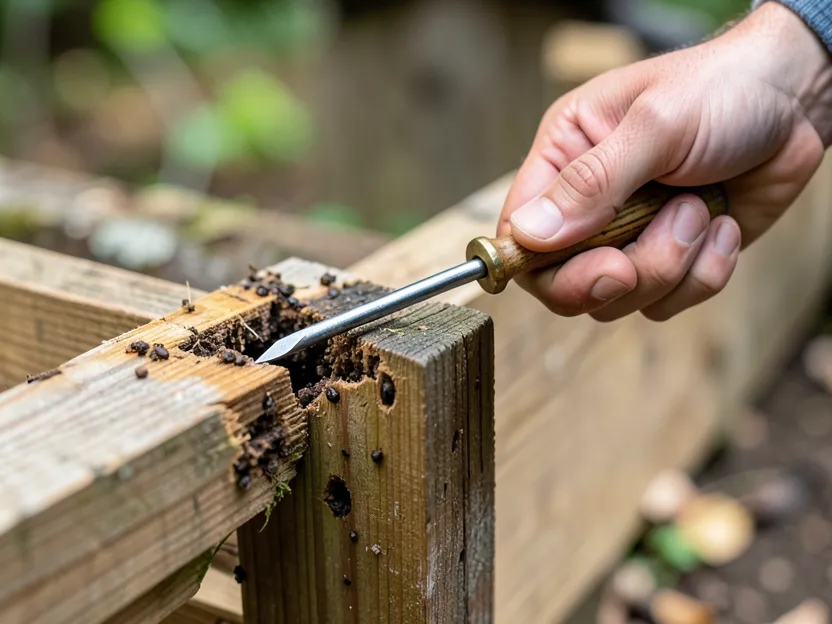
Tap the wood with a screwdriver handle or knuckle. Solid wood gives a solid thud; wood that’s been hollowed out from the inside gives a papery, hollow sound. This is one of the fastest field tests and works on framing, trim, and furniture alike.
Warped Floors and Blistering Paint
Floors that feel bouncy or look subtly wavy, and paint that blisters or bubbles without a plumbing leak nearby, both trace back to the same cause: termites introduce moisture as they feed, and that trapped moisture warps the wood and lifts the paint film above it.
Which Type of Termite Are You Dealing With?
Subterranean Termites
The most common and most destructive type in the U.S. They live in soil and need contact with it (via mud tubes) to survive, which is why they’re most often found near foundations and ground-level framing.
Drywood Termites
These live entirely inside dry wood with no soil contact at all, which makes them harder to catch early – furniture, framing, and even picture frames can host a colony with no outside sign except frass and small exit holes.
Dampwood Termites
These target wood that’s already moist from a leak or ground contact, so a soft, spongy spot in a fence post, deck, or a wall near old plumbing is the giveaway, often alongside visible water damage.
How to Actually Check
Combine a visual check (mud tubes, blistered paint, frass piles) with the tap test (a hollow sound means investigate further) and, for a more objective read, a moisture meter – termites need moisture, so an unexplained high moisture reading in wood that isn’t near plumbing or a known leak is worth a closer look.
Treatment Options Once You’ve Confirmed an Infestation
Liquid Termiticides and Wood Treatments
Liquid termiticide applied around the foundation creates a barrier that kills termites on contact; borate-based wood treatments applied directly to lumber both kill existing termites and make the wood resistant to future infestation.
Bait Systems
Bait stations placed around the property use a slow-acting substance termites carry back to the colony, eventually eliminating the whole colony rather than just the termites you can see. Slower than liquid treatment, but effective against the source rather than just the symptoms.
Heat Treatment
A chemical-free option: infested wood or an entire structure is heated to a temperature lethal to termites. It requires professional equipment and leaves no chemical residue, but isn’t always practical for every structure type.
For anything beyond a very small, isolated spot, a licensed pest control inspection is worth the cost – they can confirm the termite species, locate the colony (not just the visible damage), and recommend the treatment that actually matches your situation.
Preventing Future Damage
Fix leaks and improve drainage so gutters and grading direct water away from the foundation – moisture is the single biggest draw for every termite type. Seal foundation cracks and gaps around windows and doors. And keep firewood, dead stumps, and old wooden structures at least 20 feet from the house, since wood debris close to the foundation is effectively a standing invitation.
Frequently Asked Questions
How to tell if wood has termites?
Check for hollow-sounding wood, visible tunnels, discarded wings, frass (termite droppings), or mud tubes on nearby surfaces. Any one of these on its own is worth a closer inspection.
Is it bad to live in a house with termites?
Yes. Left untreated, termites cause ongoing structural damage that gets more expensive to repair the longer it continues, and severely damaged framing or flooring can eventually become a real safety issue, not just a cosmetic one.
How do you check for termites in a house?
Inspect wood structures for mud tubes, discarded wings, and frass. Tap suspect wood to check for a hollow sound, and use a flashlight to spot droppings or live termites in dark corners. For a thorough check, a professional termite inspection covers areas a visual check alone will miss.
How do you kill termites already in wood?
Liquid termiticides, termite bait systems, and borate wood treatments are the main options, along with professional heat treatment for larger infestations. For anything beyond a small, isolated spot, a licensed exterminator can confirm the species and treat the actual colony, not just the visible damage.
Conclusion
Termite damage stays hidden by nature, so catching it early comes down to actively checking for the signs, not waiting for obvious damage to appear: mud tubes, discarded wings, frass, a hollow sound when you tap the wood, and warped floors or blistering paint. Any one of these is reason enough to inspect further before the damage gets more expensive to fix.
Not sure the damage you’re looking at is even termites? Wood rot from a moisture problem causes very similar-looking damage but needs a completely different fix – see our termites vs. wood rot comparison guide for the side-by-side signs that tell them apart.
Sponsored / affiliate links. As an Amazon Associate I earn from qualifying purchases. I may earn additional commission from eligible campaigns.