Termite Damage vs Wood Rot: 7 Signs to Tell Them Apart
Termite damage and wood rot both leave wood weak, but they are different problems: termites hollow wood along the grain and leave soil or tiny pellets, while rot needs damp wood and leaves it soft, crumbly and musty. A screwdriver probe cannot tell them apart, since both give way. This guide covers 7 side-by-side signs, a moisture threshold, and when to call a pro.
Start With a Moisture Reading: Rot Needs Water
Best Moisture Meter for Rot Checks
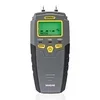 |
General Tools MMD4E Pin-Type Moisture Meter (about $40)
|
Wood-decay fungi cannot grow in dry wood. USDA Forest Products Laboratory research puts the minimum moisture content for decay fungi at roughly 24 to 31 percent, and serious decay generally starts above the fiber saturation point of about 30 percent. Fully air-dried wood, usually 20 percent or lower, has a reasonable margin of safety against fungal damage (USDA Forest Products Laboratory).
That gives you a useful first test. If soft, crumbly wood reads under about 20 percent on a moisture meter, fungal rot is unlikely to be what is going on right now, and an insect is the better suspect. If it reads well above 25 percent, you have a moisture problem that will rot the wood whether or not termites are present. A reading is a clue, not a verdict: old rot can dry out, and termites are often found in damp wood too.
One myth worth correcting: “dry rot” is not rot that happens in dry wood. The fungus still needs a moisture source. The wood may look and feel dry when you find it because the leak stopped, so a dry-feeling, crumbling board still means you should look for the water source.
Termite Damage vs Wood Rot: 7 Signs Side by Side
| Sign | Termite damage | Wood rot |
|---|---|---|
| Inside the wood | Hollowed galleries that follow the grain, often lined with bits of dried soil | Soft, spongy or crumbly through the affected area, no tunnels |
| Surface | Often looks fine, with a thin layer left over hollow wood | Visibly darkened, cracked, shrunken or sunken |
| Sound when tapped | Hollow or papery | Dull and mushy |
| Evidence outside the wood | Pencil-width mud tubes, discarded wings, or piles of 1 mm pellets | Musty odor, fungal growth, stained surface |
| Moisture needed | Not always: drywood termites live in sound, dry wood | Yes: above roughly 24 to 31 percent moisture content |
| Where it shows up | Foundation walls, sill plates, joists, attics, furniture | Where water sits: window sills, deck ledger boards, wood touching soil |
| Spread pattern | Follows the colony, can be in several places at once | Follows the water, stays where the wood stays wet |
No single row is proof. Look for two or three together, and remember that both problems can occupy the same board.
What Termite Damage Looks Like
Subterranean termites: soil is the giveaway
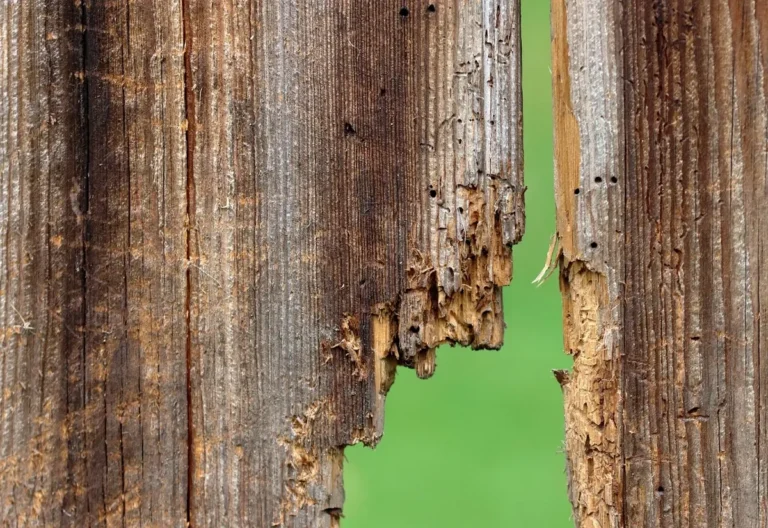
The University of Kentucky Entomology Extension describes termite-damaged wood as hollowed out along the grain, with bits of dried mud or soil lining the feeding galleries. Wood damaged by moisture or by other insects such as carpenter ants does not have that look. Subterranean termites also build mud tubes, typically about the diameter of a pencil, that give them a protected path between their underground colony and the structure (University of Kentucky Entomology). An empty tube may be an old one, so look for more evidence before deciding.
For a closer look at what a termite hole itself looks like, see our guide to termite holes in wood, and for the full list of warning signs, read signs of termites in wood.
Drywood termites: pellets, not mud
Drywood termites live entirely inside the wood, so there are no mud tubes. Their tell is the fecal pellets they push out through tiny kick-out holes, roughly 1 to 2 mm across. The pellets are about 1 mm long, six-sided, and look like coffee grounds or coarse ground pepper (UC Statewide IPM Program). Small piles of what looks like fine sawdust that keep reappearing in the same spot are worth investigating.
Swarmers versus flying ants
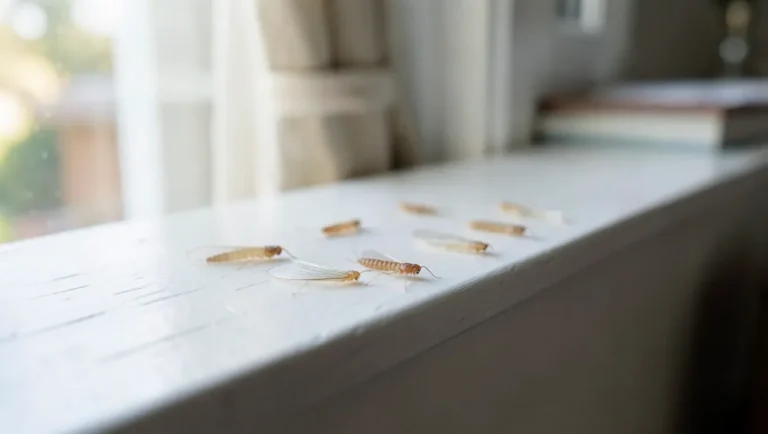
Winged insects near a window or light can be termite swarmers or flying ants. The Kentucky extension notes that termites have straight antennae, a uniformly thick waist and wings of equal size, while ants have elbowed antennae, a pinched waist and forewings longer than the hind wings. Discarded wings on a sill point to a swarm that has already come and gone. Our article on flying termites covers the swarm stage in more detail.
What Wood Rot Looks Like
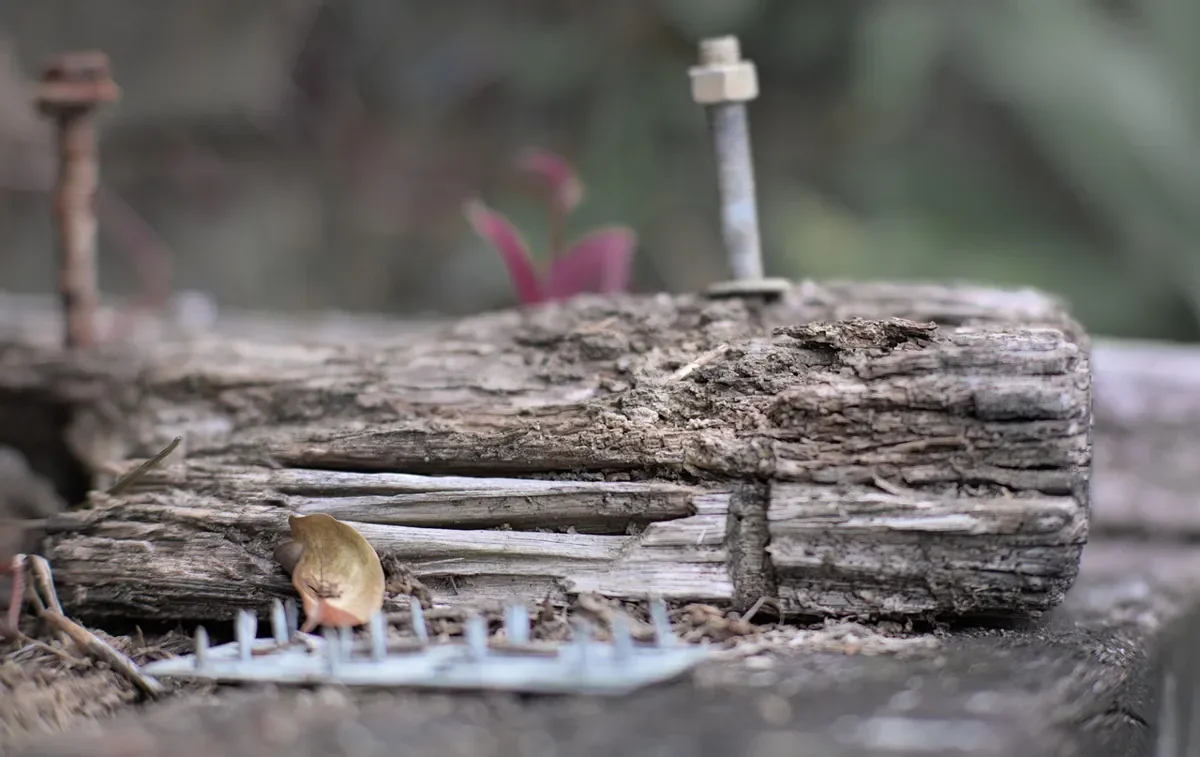
Rot is fungal decay, and it shows in the wood itself instead of around it. Rotted wood is discolored, often darker or bleached, and it can shrink and crack across the grain. It feels soft or spongy, crumbles in your fingers, and often carries a damp, earthy smell. You may also see fungal growth on the surface.
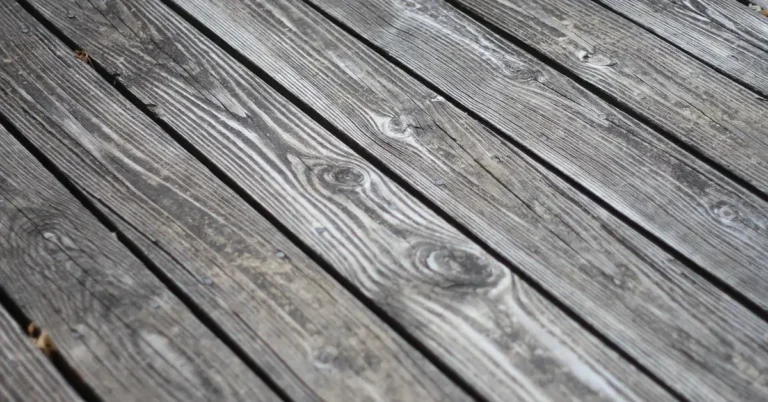
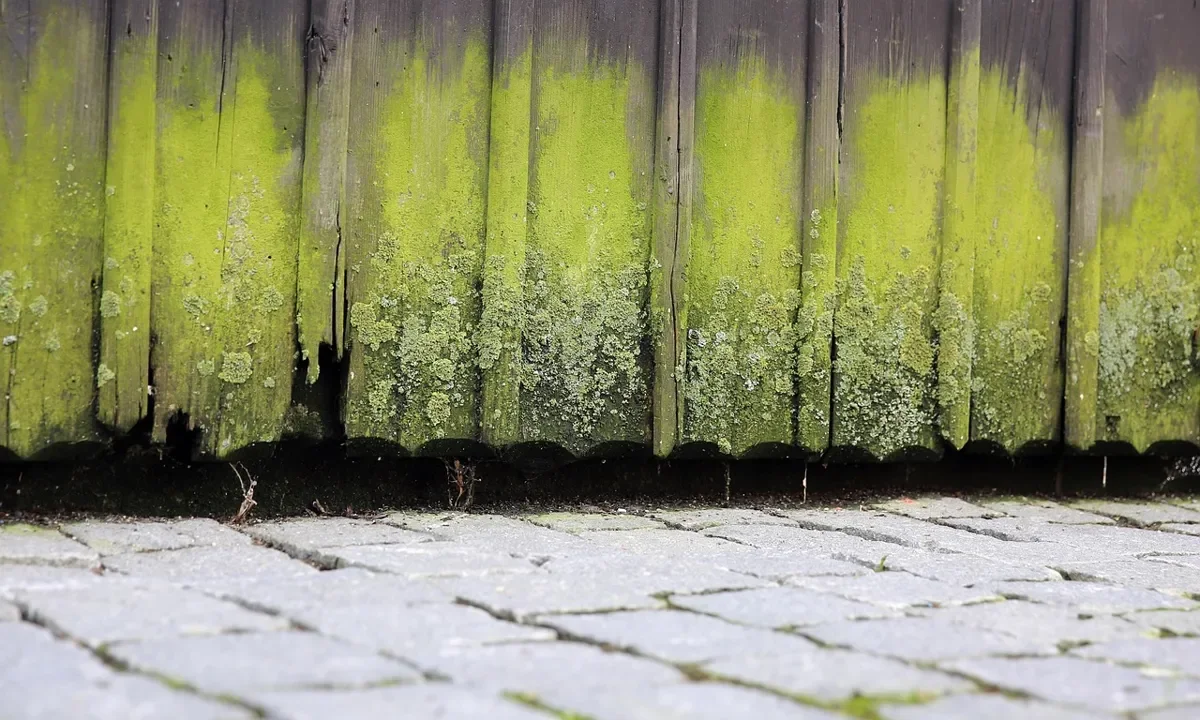
Rot follows water, so start where water collects: the bottom rail of exterior doors, window sills, deck posts and ledger boards, fence posts at the soil line, and anywhere a gutter or flashing has failed. The photo below shows the usual pattern of dampness and algae climbing boards from the ground.
Carpenter Ants: The Third Suspect
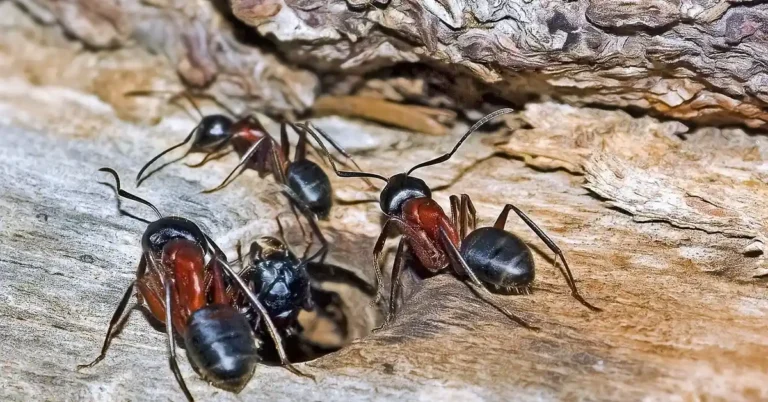
Carpenter ants are often mistaken for termites, and the damage is confusing because they hollow out wood without eating it. The difference is in the galleries and the debris. Extension sources describe carpenter ant galleries as free of soil, with sawdust-like frass, often mixed with insect parts, pushed out through slit-like openings. Drywood termite galleries are instead packed with hard, six-sided pellets, and subterranean termite galleries carry soil.
- Soil or mud in the tunnels: termites, not carpenter ants
- Hard six-sided pellets: drywood termites
- Wood shavings and insect parts below a slit: carpenter ants
- Soft, tunnel-free crumbling with a damp reading: rot
Whichever it is, fix the moisture: damp wood is a problem on its own and makes every one of these easier to miss.
How to Check a Suspect Board: 5 Steps
- Look first. Photograph the area, then check for mud tubes, pellets, sawdust piles, discarded wings and staining.
- Take a moisture reading. Press the meter pins along the grain at several spots and note anything above about 20 percent.
- Tap. Use the handle of a screwdriver. A hollow, papery sound suggests galleries; a dull, mushy thud suggests rot.
- Probe gently. Push a screwdriver into a non-structural spot. Rot lets it sink in and comes out with damp, crumbly wood. Termite-hollowed wood can break through a thin outer layer into an empty gallery.
- Stop at structural members. Do not keep probing or cutting into beams, joists, sill plates or posts that carry load. Record what you find and get an inspection.
When to Call a Professional
Call a licensed pest professional if you find mud tubes, pellets or hollow-sounding structural wood. The Kentucky extension advises against DIY treatment of a termite infestation in a home, because eradicating termites takes special skills, equipment and knowledge of building construction, and it suggests getting more than one estimate since prices vary widely.
If the damage looks like rot in a load-bearing beam, sill plate, floor joist or deck ledger, have a contractor or structural professional assess it before you rely on the wood. Rot limited to trim, a window sill or a fence board is a reasonable DIY repair once the water source is fixed. For repairs, see our guides on repairing wood rot with epoxy, sealing rotted wood and stopping rot on a deck. If termites are confirmed and you want to understand the process, read how to get termites out of wood first.
Prevent Both Problems
- Keep wood off the soil, and keep mulch and soil away from siding and foundation wood.
- Fix leaks, clogged gutters and failed caulk quickly, since water is the fuel for rot.
- Seal or paint all faces of exterior wood, including end grain.
- Ventilate crawl spaces and attics so framing stays in the dry range.
- Inspect the foundation perimeter, crawl space and attic once a year, and re-check wood after any leak.
Frequently Asked Questions
How can I tell if it is termites or wood rot?
Check for soil-lined galleries, mud tubes or six-sided pellets, which point to termites. Soft, crumbly, damp wood with a musty smell and no tunnels points to rot. A moisture reading above about 25 percent supports rot, and a reading under 20 percent makes fungal rot unlikely.
Can termites and wood rot happen in the same wood?
Yes. Damp wood can host both, and termite activity can be hidden inside wood that is also rotting. That is why a moisture problem should be fixed even after termites are treated.
What do drywood termite droppings look like?
They are hard, six-sided pellets about 1 mm long that resemble coffee grounds or coarse pepper, pushed out of small kick-out holes.
Does dry rot happen in dry wood?
No. The fungus still needs moisture. Wood can look and feel dry after a leak has stopped, but the decay needed water to start.
Should I call a professional?
Yes for any suspected termite activity in a home and for damaged structural wood. Minor rot on trim, sills or fence boards is usually a DIY repair once the moisture source is fixed.
Bottom Line
Rot follows water and leaves soft, crumbly wood; termites follow food and leave soil, tubes or pellets and hollow galleries. Take a moisture reading, look for evidence outside the wood, and stop probing at structural members. When the signs point to termites or the damage is structural, get a professional inspection before you repair anything.
Sponsored / affiliate links. As an Amazon Associate I earn from qualifying purchases. I may earn additional commission from eligible campaigns.