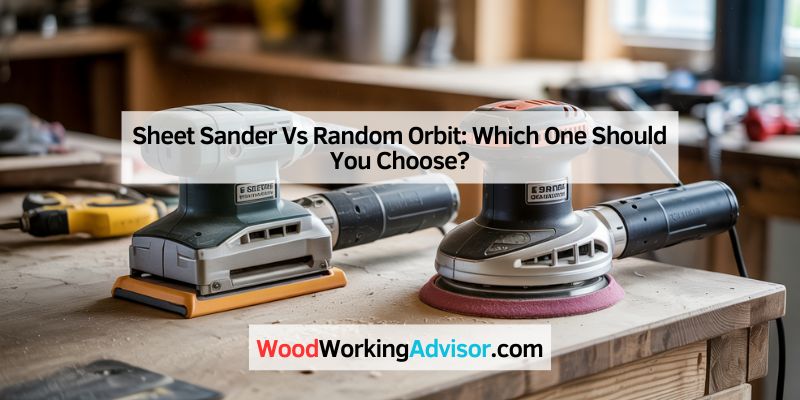
Sheet Sander Vs Random Orbit: Which One Should You Choose?
Choosing between a sheet sander and a random orbit sander can be tricky. Both tools have their unique features and benefits.
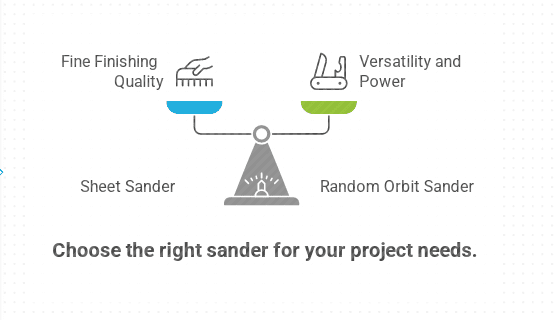
Understanding the difference between these sanders is key for any DIY enthusiast or professional. A sheet sander is ideal for fine finishing, while a random orbit sander offers versatility and power. This comparison helps you decide which tool suits your needs best.
Whether you’re sanding wood, metal, or other materials, knowing the pros and cons of each sander can save you time and effort. Let’s dive into the details to help you make an informed choice.

Credit: www.youtube.com
Introduction To Sanders
Sanders are important tools in woodworking. They help make wood surfaces smooth. This makes the wood look nice and feel good to the touch. Smooth wood is also easier to paint or stain. Sanders save time and effort. They help woodworkers create beautiful and professional projects.
Sanders can make a big difference in woodworking. They help remove rough spots and old finishes. This prepares the wood for new paint or stain. Sanders also help shape wood. They can make edges smooth and rounded. Using a sander can improve the quality of a woodworking project. It makes the final product look and feel better.
There are many types of sanders. Each one has a special use. Here are a few common types:
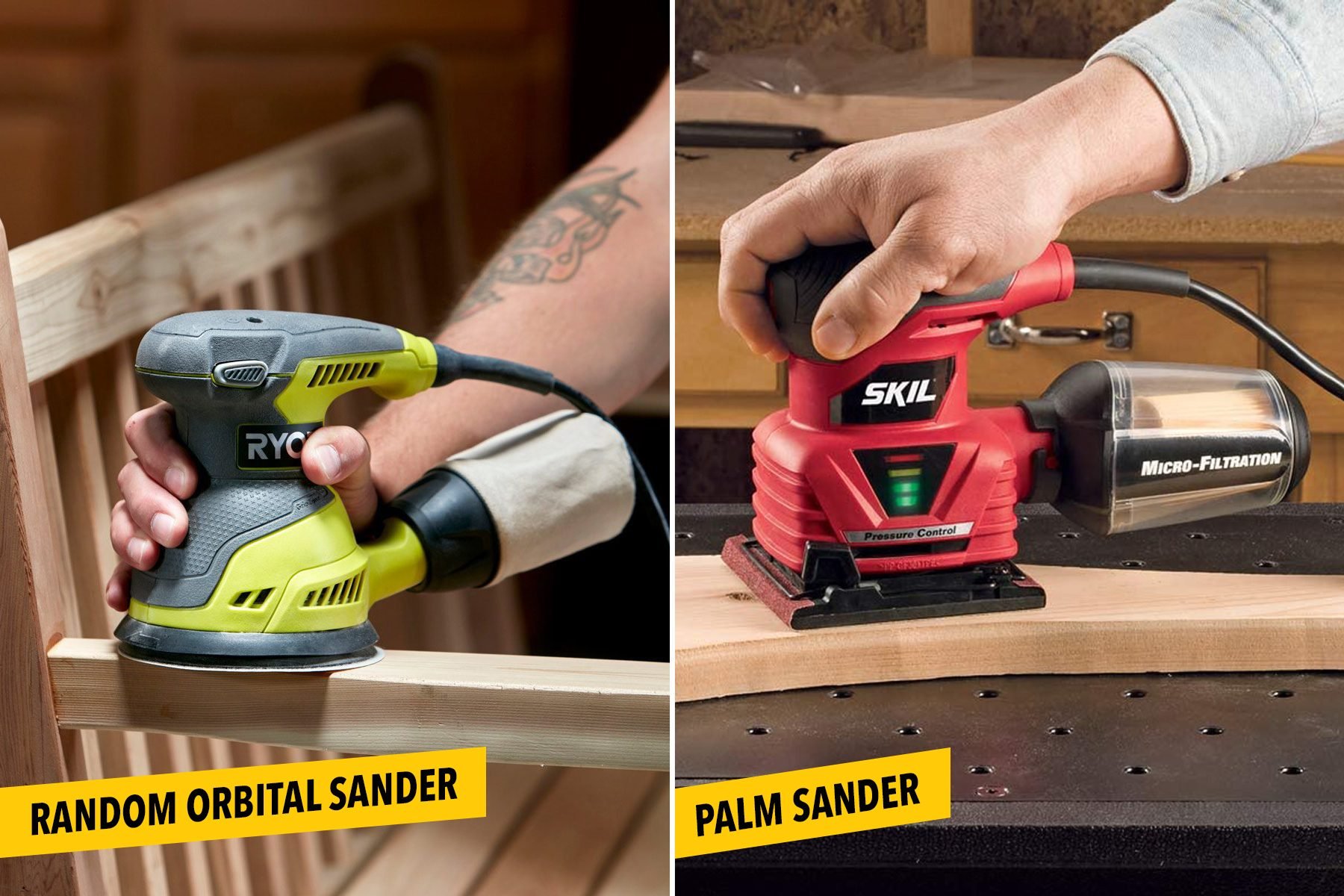
- Sheet Sander: Uses a rectangular piece of sandpaper. Good for finishing work.
- Random Orbit Sander: Uses a round piece of sandpaper. Good for both rough and fine sanding.
- Belt Sander: Uses a loop of sandpaper. Good for removing a lot of material quickly.
- Detail Sander: Uses a small, pointed piece of sandpaper. Good for tight spaces and corners.
Each type of sander has its own strengths. Choosing the right one depends on the project.
Credit: www.familyhandyman.com
Sheet Sander Overview
A sheet sander uses a square sanding pad. It moves in small, circular motions. This tool is good for sanding corners. It is also good for sanding edges. Changing sandpaper sheets is easy. Sheets are cut from standard sandpaper. The sander is lightweight. It is easy to control.
A sheet sander is best for finishing tasks. It is great for smoothing wood surfaces. Use it for removing paint. It works well on flat surfaces. It is also good for small projects. This tool is perfect for fine sanding. It can handle delicate tasks. Great for detailed work.
Random Orbit Sander Overview
The random orbit sander has a spinning disc. This disc also moves in small orbits. This two-way motion makes it very effective. It sands surfaces smoothly and quickly.
The sanding pad is round. It uses hook-and-loop sandpaper. This design helps in easy changing of sandpaper. It is simple to use. It works on wood, metal, and plastic.
The random orbit sander is great for fine finishing. It works well on large surfaces. It can be used on furniture, floors, and walls. It is very versatile.
It removes old paint and varnish. It is also good for shaping wood. This sander is ideal for many projects. It is a must-have tool.
:max_bytes(150000):strip_icc()/102152229-8ba187db6fe949d49d53fe99c409b2ac.jpg)
Credit: www.woodmagazine.com
Performance Comparison
Sheet sanders are great for smooth, even surfaces. They work well on large flat areas. Random orbit sanders are faster. They can handle different shapes and curves better. They cover more area in less time. Both tools have their uses. Choose based on your needs.
Sheet sanders produce a consistent finish. They are less likely to leave marks. Random orbit sanders give a high-quality finish. They make fewer swirl marks. Both tools can make surfaces look great. Practice helps you get better results.
Ease Of Use
Sheet sanders offer straightforward operation, ideal for beginners. Random orbit sanders provide smoother finishes with less effort. Both tools are user-friendly, depending on the task.
Handling And Control
Sheet sanders are light and easy to handle. They are great for small projects. The flat base provides good control. Random orbit sanders can be heavier. They need more strength to control. They use circular motion, which can be tricky at first. Both tools offer good results with practice.
Dust Collection Systems
Both sanders come with dust bags. These help keep your workspace clean. Sheet sanders have simple dust bags. They can fill up fast. Random orbit sanders often have better dust systems. They collect more dust. This keeps the air cleaner and reduces mess.
Durability And Maintenance
Random orbit sanders often last longer. They have fewer parts that wear out. Sheet sanders may need more frequent repairs. This is due to their simpler design.
Clean your tools after every use. Dust can harm the motor. Check and replace the sandpaper often. Store in a dry place to prevent rust. Always unplug before cleaning. Regular care ensures longer life.
Cost Considerations
Choosing between a sheet sander and a random orbit sander often depends on budget. Sheet sanders are generally cheaper. Random orbit sanders, while more expensive, offer greater versatility.
Initial Investment
Sheet sanders are usually cheaper. You can find one for $20 to $50. Random orbit sanders cost more, often between $50 and $150. The price varies based on brand and features. For hobby use, a sheet sander might be enough. Professionals might prefer the random orbit for better results.
Long-term Value
Random orbit sanders can last longer. They also provide smoother finishes. This can save time on projects. Sheet sanders require more frequent paper changes. Paper for sheet sanders is cheaper, but it wears out faster. Random orbit sandpaper costs more but lasts longer. Over time, the random orbit sander may be a better value.
Choosing The Right Sander
Think about your project needs. A sheet sander is great for fine finishing. It helps with detailed work. A random orbit sander removes material quickly. It leaves fewer swirl marks. Both tools have their place. Your project will guide your choice.
Consider your comfort with each tool. Some people find the sheet sander easier to control. Random orbit sanders can be heavier. They may tire your hand faster. Try both if you can. Pick what feels right to you.
Frequently Asked Questions
Is An Orbital Sander Better Than A Sheet Sander?
An orbital sander is more versatile and easier to control. Sheet sanders are better for detailed, flat surfaces. Choose based on your project needs.
What Is The Disadvantage Of A Random Orbital Sander?
A random orbital sander can leave swirl marks on the surface. It may also struggle with fine detailing. Dust collection can be inefficient.
What Is The Benefit Of A Sheet Sander?
A sheet sander provides smooth, even finishes on wood surfaces. It’s perfect for detailed work and hard-to-reach areas.
What Is The Most Effective Type Of Sander?
The random orbital sander is the most effective type of sander. It offers versatility, speed, and a smooth finish. Ideal for various surfaces, it reduces swirl marks.
Conclusion
Choosing between a sheet sander and a random orbit sander depends on your needs. Sheet sanders are great for small, flat surfaces. They are simple and easy to control. Random orbit sanders offer versatility for various projects. They handle curves and edges well.
Both tools have their own strengths. Understand your project requirements. Then, pick the tool that matches those needs. Happy sanding!