Corner Sander vs Orbital Sander: OPM, Price, and Best Uses
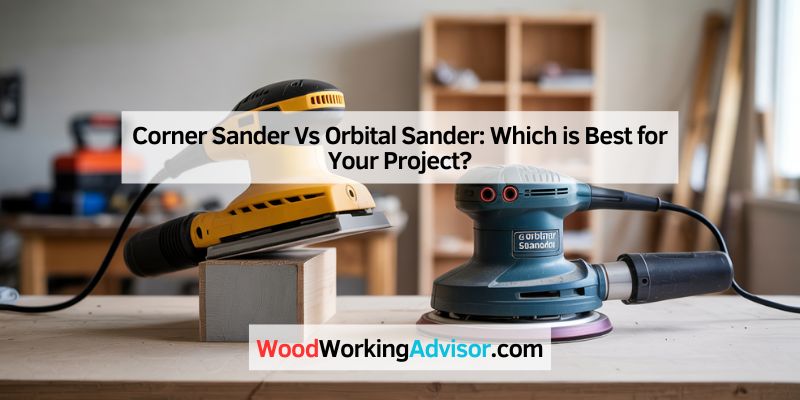
A corner (detail) sander uses a small triangular pad to reach tight corners and edges a random orbital sander cannot, but the orbital sander covers flat surfaces faster and leaves a smoother, swirl-free finish. Detail sanders run $20-$45; 5-inch orbital sanders run $60-$90. Most woodworkers eventually own both. This guide compares OPM, dust collection, cost, and which one to buy first.
Introduction To Sanders
Best Orbital Sander Pick
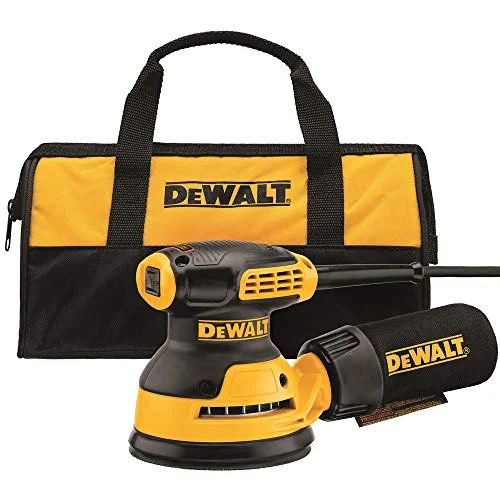 |
DEWALT 5-Inch Random Orbital Sander Kit (DWE6421K) – $78.15 Runs 12,000 OPM with a 3-amp motor and a dust-sealed switch — the flat-surface speed this guide recommends pairing with a smaller detail sander for corners.
|
A sander smooths surfaces and strips old paint or finish faster than sanding by hand. Different shapes suit different jobs: a small triangular pad fits into corners a round or square pad cannot reach, while a larger pad covers open surfaces in fewer passes. Match the sander to the surface before you start, since neither tool does both jobs equally well.
Corner Sander Overview
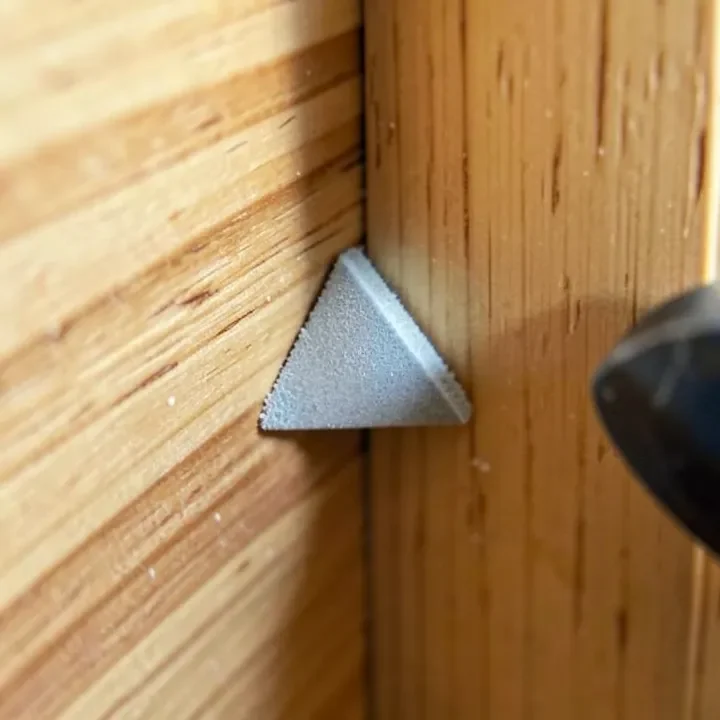
A corner sander’s defining feature is its triangular pad, which tapers to a point so it can reach into corners a round or square pad cannot. It is lightweight, runs 14,000-16,000 OPM, and most models have adjustable speed for finer control on detail work.
Typical uses include furniture restoration, window frame corners, stair spindles, and other craft or automotive projects where precision matters more than speed.
Orbital Sander Overview
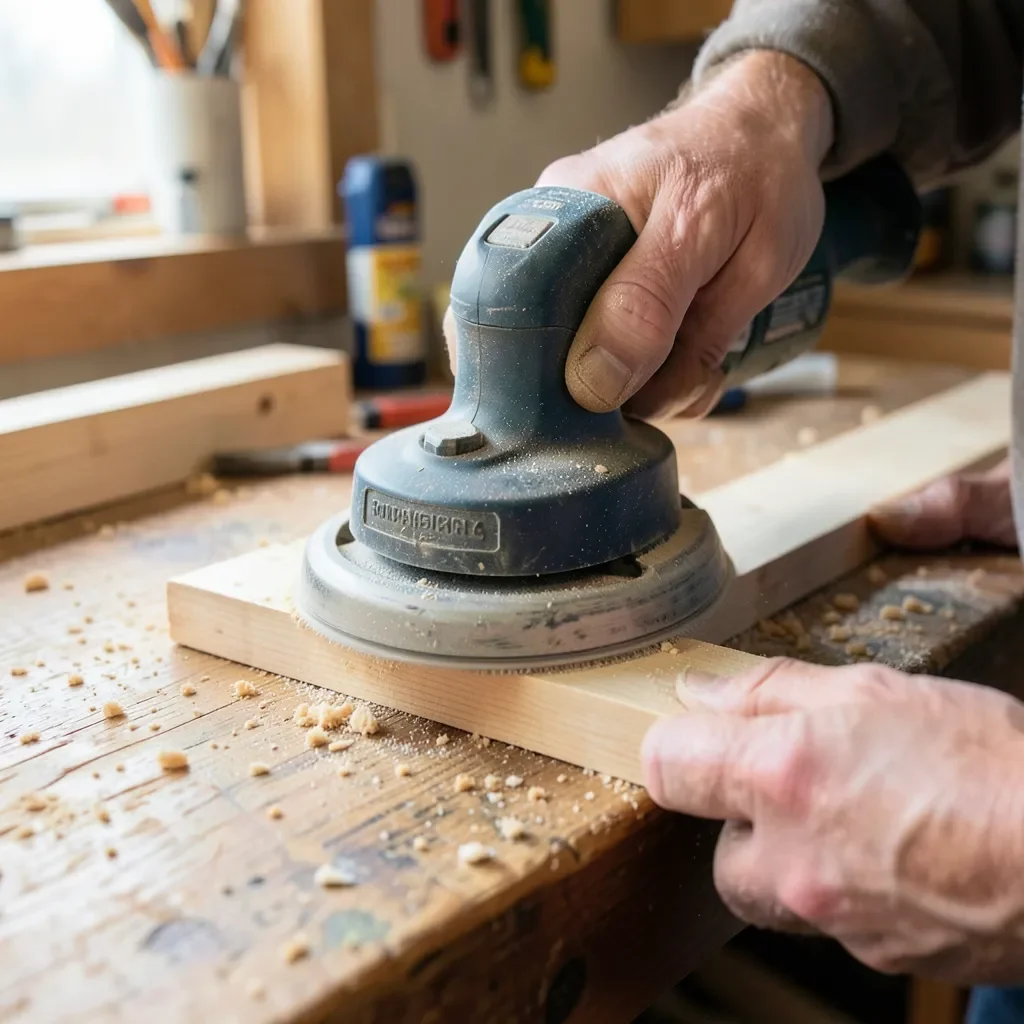
An orbital sander uses a round or square pad that moves in small orbits rather than a straight line, which is what prevents the visible swirl marks a straight-line sander leaves. It accepts hook-and-loop sandpaper discs, runs quieter than most detail sanders, and most models include a dust port or built-in collection bag.
It is the better choice for furniture, doors, cabinets, and paint removal on wide surfaces, but its round pad cannot get into tight corners the way a detail sander can.
Performance Comparison
| Spec | Corner (Detail) Sander | Random Orbital Sander |
|---|---|---|
| Speed | 14,000-16,000 OPM | 10,000-12,000 OPM |
| Typical price | $20-$45 | $60-$90 (5-inch) |
| Pad shape | Triangular | Round |
| Best surface | Corners, edges, carved detail | Flat panels, tabletops, doors |
📊 A random-orbit sander’s dual circular-and-back-and-forth motion produces a less patterned scratch mark than a straight-line detail sander, making it the better choice for a finish coat on a wide panel. — Source: Do it Best
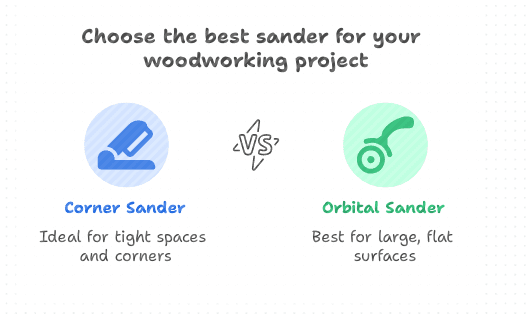
The higher OPM on a detail sander does not mean it removes material faster overall — its small pad simply covers far less surface area per pass, which is why it excels in corners but is impractical for a whole tabletop.
Ease Of Use
Both tools are light enough for one-handed control, but a detail sander’s small triangular pad is easier to guide precisely into a corner, while an orbital sander’s larger round pad is easier to keep flat and even across a wide panel. After each use, clean dust from the pad, check the hook-and-loop or clamp mechanism for wear, and replace sandpaper once it stops cutting efficiently rather than waiting for it to visibly tear.
Project Suitability
A corner sander is the right call for furniture restoration, window frames, stair spindles, and any project with more corners and curves than open flat area. An orbital sander is the right call for tabletops, doors, cabinet panels, and floors — anywhere a wide, mostly flat surface needs even coverage quickly.
Cost Considerations
A corner/detail sander typically costs $20 to $45 — the BLACK+DECKER BDEMS600 (16,000 OPM, 1.2 amp) runs about $42. A 5-inch random orbital sander runs $60 to $90 for a quality corded model like the DEWALT DWE6421K above. Cordless versions of either tool cost more upfront but skip the cord.
Detail sander sandpaper (die-cut triangular sheets) costs more per sheet than the round hook-and-loop discs used on orbital sanders, since triangular sheets are a less standardized size across brands. Factor that into ongoing cost if you will be using the detail sander heavily.
Final Recommendations
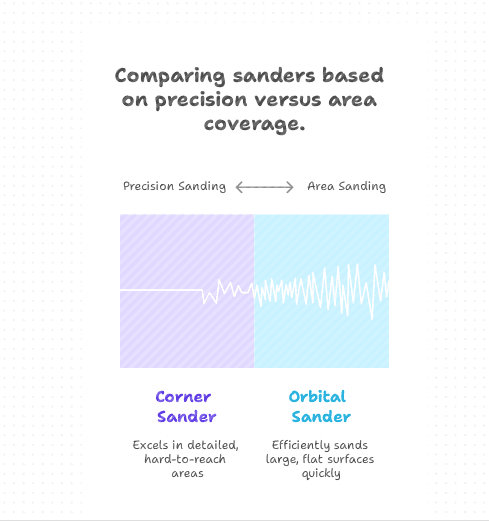
Choosing between a corner sander and an orbital sander depends on your project’s needs. Corner sanders excel at precision in tight spaces, while orbital sanders offer versatility for larger surfaces. Both tools have their unique advantages, so pick based on your specific tasks.
Which One Should You Buy First?
If you only buy one tool, get the random orbital sander — it covers more of the average project (tabletops, doors, flat panels) and its round pads are cheaper and easier to find than triangular detail-sander sheets. Add a corner/detail sander later specifically for tight corners, carved details, or furniture restoration work the orbital sander cannot reach.
Frequently Asked Questions
What Is The Difference Between A Sander And An Orbital Sander?
A sander smooths surfaces using sandpaper. An orbital sander moves in a circular motion, providing a finer finish.
What Sander Is Used For Corners?
A detail sander is best for corners. Its small, pointed design reaches tight spaces easily, ensuring smooth finishes.
What Is The Most Effective Type Of Sander?
The most effective type of sander is a random orbital sander. It combines speed and aggressiveness for smooth results.
Is A Sheet Sander Better Than An Orbital Sander For Cabinets?
A sheet sander is better for cabinets due to its ability to reach corners and edges effectively — see our full sheet sander vs random orbit sander comparison for specs and pricing.
Is A Detail Sander The Same As A Corner Sander?
Yes, “corner sander” and “detail sander” refer to the same tool — a small sander with a pointed triangular pad, sometimes called a “mouse sander” because of its shape. It runs 14,000-16,000 OPM and typically costs $20-$45.
Conclusion
Choosing between a corner sander and an orbital sander depends on your task. Corner sanders excel in tight spots. Orbital sanders offer smooth finishes on larger surfaces. Both have unique strengths. Consider your project’s needs. Evaluate the surfaces you work on most.
Right tool makes a difference. Efficient sanding saves time and effort. Better results come with the right choice. Happy sanding!
Sponsored / affiliate links. As an Amazon Associate I earn from qualifying purchases. I may earn additional commission from eligible campaigns.
 6" Random Orbit Air Sander, Air Palm Random Orbital Sander, Professional Pneumatic Palm Sander, Speed Adjustable Pneumatic Sander for Rust Removal, Sanding and Fine Polishing, Lightweight Low Noise
 5-Inch Orbital Sander Discs, 8-Hole Pattern, 50-Pack, Hook and Loop Sandpaper for DA Sanders, Paint and Wood Finishing (600 Grit-100 PCS)