Handheld Planer vs Benchtop Planer: Which Should You Buy?
A handheld planer and a benchtop planer both shave wood, but they solve different problems, and buying the wrong one is an expensive way to find that out. A handheld planer is a 3 1/4 inch wide power tool you push across a board to trim, fit and shape. A benchtop planer, also called a thickness planer, pulls whole boards through a fixed cutterhead to make them one uniform thickness.
This guide compares the two on the things that decide the purchase: what each tool references, how many passes a real board takes, how much they cost, and the lumber you buy. It also covers a widely repeated mix-up, that a handheld planer is just a cheaper, smaller version of a thickness planer. It is not, and the reason matters. For the related question of a power planer versus a manual bench plane, see our electric planer vs hand planer comparison.
Handheld Planer vs Benchtop Planer: The Short Answer
Best Budget Benchtop Planer for Rough Lumber
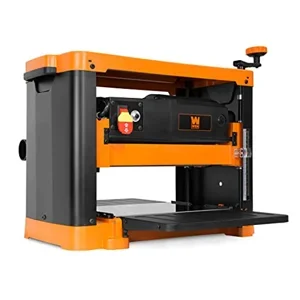 |
WEN PL1252 15-Amp 12.5-Inch Two-Blade Benchtop Thickness Planer, about $296 If you are weighing a handheld planer against a benchtop, this is the entry-level benchtop that makes the comparison concrete: it takes boards up to 12.5 inches wide, which no handheld can do in a single pass.
|
Buy a benchtop planer if you buy rough, reclaimed or unevenly milled lumber and need boards to come out at one thickness. Buy a handheld planer if you mostly trim, fit and shape: shaving a sticking door, easing an edge, cutting a rabbet, or fixing one high spot on an installed piece. If you buy lumber that is already surfaced on four sides (see what S4S means), you may not need either one, and our guide to whether you need a wood planer at all walks through that decision.
The box above shows a budget benchtop model because that is the tool most people actually mean when they say they want to “plane boards to thickness.” A handheld planer is a different kind of purchase, closer to a large sander than to a small thickness planer.
What Each Planer Actually Does
How a handheld planer works
An electric handheld planer has a spinning cutterhead set between two soles. The front sole is adjustable and controls how much wood comes off, usually up to roughly 1/16 to 1/8 inch per pass on popular models, and the rear sole rides on the freshly cut surface. Most 3 1/4 inch models also have a V-groove for chamfers and a fence or depth stop for rabbets, which a benchtop planer cannot do at all.
The key point is that both soles sit on the same face of the board. The planer follows whatever shape that face already has. If the board is twisted, a handheld planer takes shavings from the high spots first and gradually flattens the surface, but it never makes the far face parallel to it. Parallel faces require a machine that references the opposite side.
How a benchtop planer works
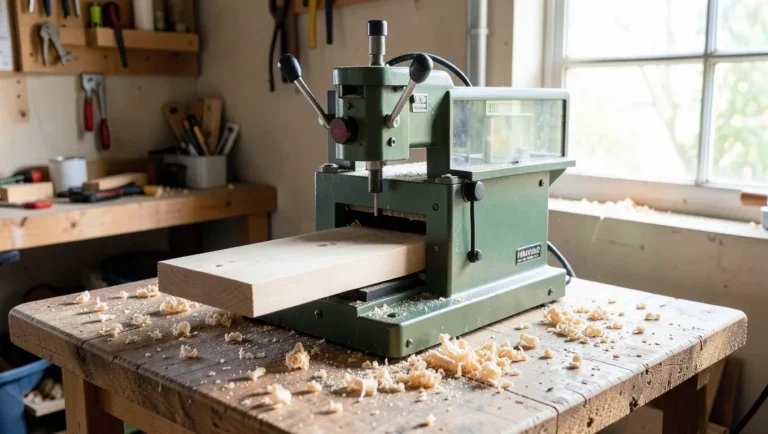
A benchtop planer holds the cutterhead above a flat bed. Feed rollers pull the board across the bed, and the head shaves the top face down to the height you dial in. Because the bed is the reference, the top face comes out parallel to the bottom face and every board you run at the same setting comes out the same thickness. Most models handle boards around 12 to 13 inches wide and about 6 inches thick.
The rollers also flatten a bowed board as it enters and then let it spring back after the cut, which is why a planer alone cannot turn a warped plank into a flat one. That surprises many buyers, and it is covered in our belt sander vs planer guide, which explains why a planer mirrors whatever is underneath it.
Side-by-Side Comparison
| Factor | Handheld (electric) planer | Benchtop thickness planer |
|---|---|---|
| Typical cutting width | About 3 1/4 inches | 12 to 13 inches |
| What it references | The face of the board it rides on | The bed beneath the board, so the top face ends up parallel to the bottom |
| Cut depth per pass | Up to about 1/16 to 1/8 inch, model dependent | Up to about 1/8 inch, less on hard or wide stock |
| Best job | Trimming doors, fitting, rabbets, chamfers, on-site work | Milling rough lumber to one consistent thickness |
| Repeatability | Depends on your hand | Set the thickness once and repeat it |
| Typical price range | Roughly $60 to $210 for common models | Roughly $300 to $700 for common models |
| Storage | Fits on a shelf | Roughly 60 to 90 pounds, needs a bench or stand |
| Main annoyance | Ridges and tracks if the pass overlap is sloppy | Snipe at the ends and a lot of noise |
Prices and specs vary by brand and change often, so treat the ranges above as typical rather than exact and confirm the figures on the specific model before you buy.
Capacity and Speed: The Math on a 12-Inch Board
The width difference is the whole story once you count passes. Say you have a 12 inch wide board that needs 1/8 inch removed from the top face. A benchtop planer takes that in a single pass at a 1/8 inch setting, or two passes at 1/16 inch if you are being gentle on hardwood.
A handheld planer with a 3 1/4 inch path needs at least four side-by-side strips to cover 12 inches, and about five once you allow overlap. Set at 1/16 inch per pass, you would need two layers, which is roughly ten passes along the board, and each one has to be steady and level. Over a stack of ten boards that is around a hundred passes, and each is a chance to leave a ridge.
So the handheld tool is fast for small jobs and slow for wide, long or numerous boards. It also runs out of headroom quickly on hardwood, where you have to reduce the cut depth or the motor bogs down.
Finish Quality, Snipe and Consistency
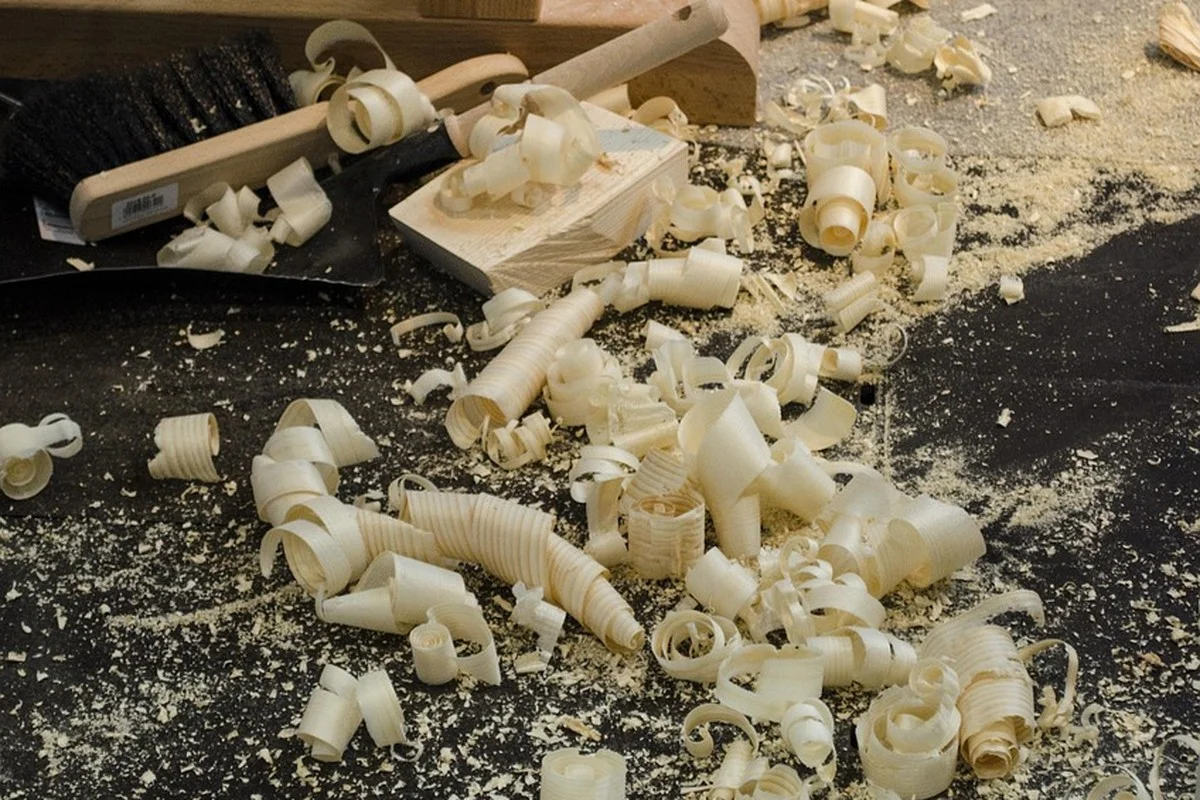
A benchtop planer leaves a uniform finish across the whole width when the knives are sharp. Two problems show up in practice. The first is snipe, a slightly deeper cut in the first and last few inches of a board. Support the board with the infeed and outfeed tables, and feed boards end to end so the cut stays continuous. Our guide to preventing snipe on a planer covers the fixes in detail. The second is ridges or lines, which usually point to a nicked knife, covered in why a planer leaves lines.
A handheld planer leaves a finish that depends on your technique. Long overlapping strokes with even pressure, ending each pass with the rear sole still flat, give a surprisingly clean surface. Lift or rock the tool at the end of a stroke and you leave a dip, which is the handheld version of snipe. Finish both with a sander or scraper if a smooth surface matters.
Cutterhead type matters too. Straight-knife heads are cheaper and can be resharpened or flipped, while spiral or helical heads take smaller, shearing cuts and tear out less in figured or interlocked grain. See spiral vs straight planer and helical vs spiral cutter heads for the trade-offs.
Cost, Space and Dust
At the time of writing, popular corded handheld planers sit roughly between $60 and $210, and bare-tool cordless versions can be cheaper if you already own the batteries. Common benchtop planers cost about $300 to $700. The handheld tool also stores on a shelf, whereas a benchtop planer weighs roughly 60 to 90 pounds and wants a bench or a rolling stand.
Plan for dust either way. A planer throws a surprising volume of chips, and a benchtop model produces them much faster because it is cutting a full board width. Use the dust port and a shop vacuum or dust collector, wear hearing protection because benchtop planers are loud, and check your circuit, since many benchtop models draw 15 amps and will trip a breaker shared with a vacuum.
Who Should Buy Which
Choose a handheld planer if you
- trim doors, fit cabinets or adjust installed pieces on site
- need rabbets, chamfers or quick edge work
- work on boards too big or awkward to bring to a machine
- have limited space and buy surfaced lumber
Choose a benchtop planer if you
- buy rough-sawn or reclaimed lumber to save money
- need several boards at exactly the same thickness for tabletops, drawer parts or panels
- reduce thick stock to fit a project
- are ready to add a jointer, a planer sled or a router jig for flattening the first face
If you cannot decide
Look at your lumber before your tools. If you have never bought rough lumber, hold off on the benchtop planer and buy a handheld one when a specific job calls for it. If you already own a pile of rough boards, or expect to, the benchtop planer pays for itself quickly in the difference between rough and surfaced board prices. If you lack the space for a jointer, our guide on making wood flat without a planer and the jointer vs joiner comparison cover alternatives for the flattening step.
Safety and Setup Tips
- Clamp the workpiece so both hands stay on the handheld planer, and let the cutterhead reach full speed before it touches the wood.
- Never set a handheld planer down while the cutterhead is still spinning, and keep the cord behind you and away from the cut.
- Check boards for nails, staples and grit before planing, since reclaimed lumber is the usual cause of nicked knives.
- On a benchtop planer, never reach into the feed path, and stand to the side rather than directly behind the board in case of kickback.
- Very short boards can be thrown or trapped, so read how to plane short pieces of wood before you try.
- Unplug the tool before changing knives or clearing a jam.
Frequently Asked Questions
Is a handheld planer or a benchtop planer better for a beginner?
It depends on the lumber you buy, not on your skill level. If you buy pre-surfaced boards and mostly need to trim doors, ease edges or fit parts, a handheld planer is the cheaper and simpler tool. If you buy rough or reclaimed lumber and need boards of a uniform thickness, a benchtop planer is the tool that actually does that job, and it is easier to use accurately than a handheld.
Can a handheld planer replace a benchtop thickness planer?
Not for thicknessing. A handheld planer only removes wood from the face it rides on, so it cannot make the opposite face parallel to it, and its 3 1/4 inch path means a wide board takes many overlapping passes. It can flatten a small part or knock down a high spot, but it will not give you a stack of boards with identical thickness.
Can a benchtop planer flatten a warped board?
No, not on its own. The feed rollers press a cupped or twisted board flat as it enters, the knives cut it, and when the pressure releases the board springs back toward its original shape. To get a flat face you need to flatten one side first with a jointer, a planer sled or hand planing, then plane the second face parallel to it.
How wide and thick a board can a benchtop planer handle?
Most benchtop models take boards about 12 to 13 inches wide and around 6 inches thick, with a minimum thickness in the range of roughly 1/8 to 3/16 inch depending on the model. Check the specification sheet for the exact planer you are considering, because very thin stock can chatter or break on some machines.
Is a handheld planer safe for a beginner?
It is safe when used with basic discipline. Wait for the cutterhead to reach full speed before touching the wood, keep the cord behind you, set the planer down only after the drum has stopped, and clamp the workpiece so both hands stay on the tool. The exposed cutterhead behind the front shoe is the main hazard, so never rest the planer on its sole while it is still spinning.
Conclusion
The handheld planer is a shaping and fitting tool, and the benchtop planer is a milling tool. If you are deciding between them, the deciding factor is not budget or skill level but whether you turn rough boards into uniform stock. If you do, buy the benchtop planer and plan how you will flatten the first face. If you do not, a handheld planer covers doors, edges and rabbets for far less money and shelf space.
Sponsored / affiliate links. As an Amazon Associate I earn from qualifying purchases. I may earn additional commission from eligible campaigns.