Best Blade for Makita Track Saw: Match Teeth to the Cut (2026)
A Makita track saw is only as precise as the blade bolted to it. The rail keeps your cut dead straight, but it’s the blade’s tooth count — not the saw, and not the brand — that decides whether a crosscut through veneered plywood comes out clean or chipped, and whether a rip through solid lumber is fast or a slog. There’s no single "best" blade: fewer, larger teeth rip solid wood quickly, while a lot more teeth deliver the splinter-free crosscuts track saws are actually known for.
Match the Blade to the Cut, Not the Brand
Best Fine-Finish Upgrade Blade
 |
Makita B-57342 6-1/2" 56T Carbide-Tipped Plunge Saw Blade – $49 The same 165mm diameter and 20mm bore as your saw’s stock blade, but with 8 more teeth than the factory 48T for the splinter-free crosscuts veneered plywood and melamine demand.
|
Every Makita track saw — the corded SP6000J or a cordless model — takes a 165mm (6-1/2 inch) blade with a 20mm bore. That part is fixed. What should change from job to job is tooth count, and it comes down to two things: what material you’re cutting, and whether you’re cutting with the grain or across it.
Low Tooth Count (24-40T): Fast Rips in Solid Wood
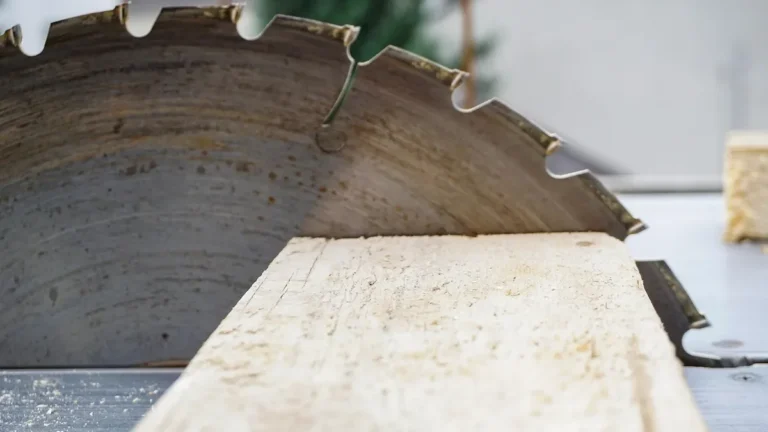
Ripping means cutting parallel to the wood grain, and solid lumber rips fastest with a blade in the 24-40 tooth range. Fewer teeth means bigger gullets between them, so each tooth clears a larger chip before the next one engages. That’s less resistance on the motor and a faster cut — useful when you’re breaking down rough stock and don’t need a glass-smooth edge yet. The tradeoff is a rougher finish and more tear-out risk on anything with a delicate face, which is exactly why this isn’t the blade to leave on for crosscuts or sheet goods.
High Tooth Count (56-60T+): Clean Crosscuts, Melamine, and Veneered Plywood
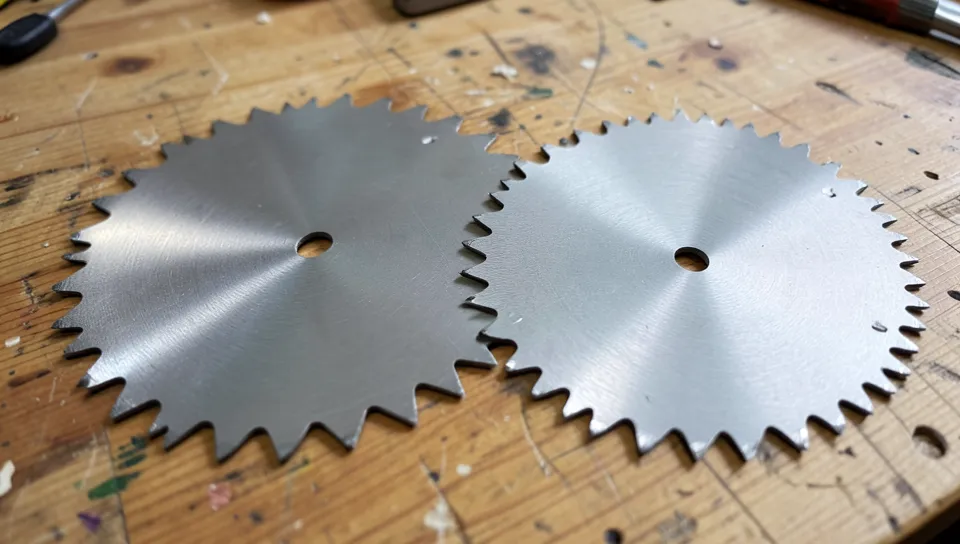
Crosscutting — cutting across the grain, or through the face of a sheet good — is a different problem. Each tooth has to shear through fibers running perpendicular to the cut instead of splitting along them, and on a brittle face like melamine or hardwood veneer, a low-tooth-count blade tears through that face instead of slicing it, leaving chipped edges. A 56-60 tooth (or higher) blade spreads that same cut across many more, smaller bites, so each tooth removes a sliver instead of a chunk. The SP6000J ships with a 48-tooth general-purpose blade (Makita’s stock replacement is the B-07353), which is a fine all-rounder, but it’s a compromise — not the blade you want for a kitchen countertop laminate or veneered cabinet plywood where a chipped edge ruins the piece.
Why Track Saws Are Prized for Splinter-Free Cuts
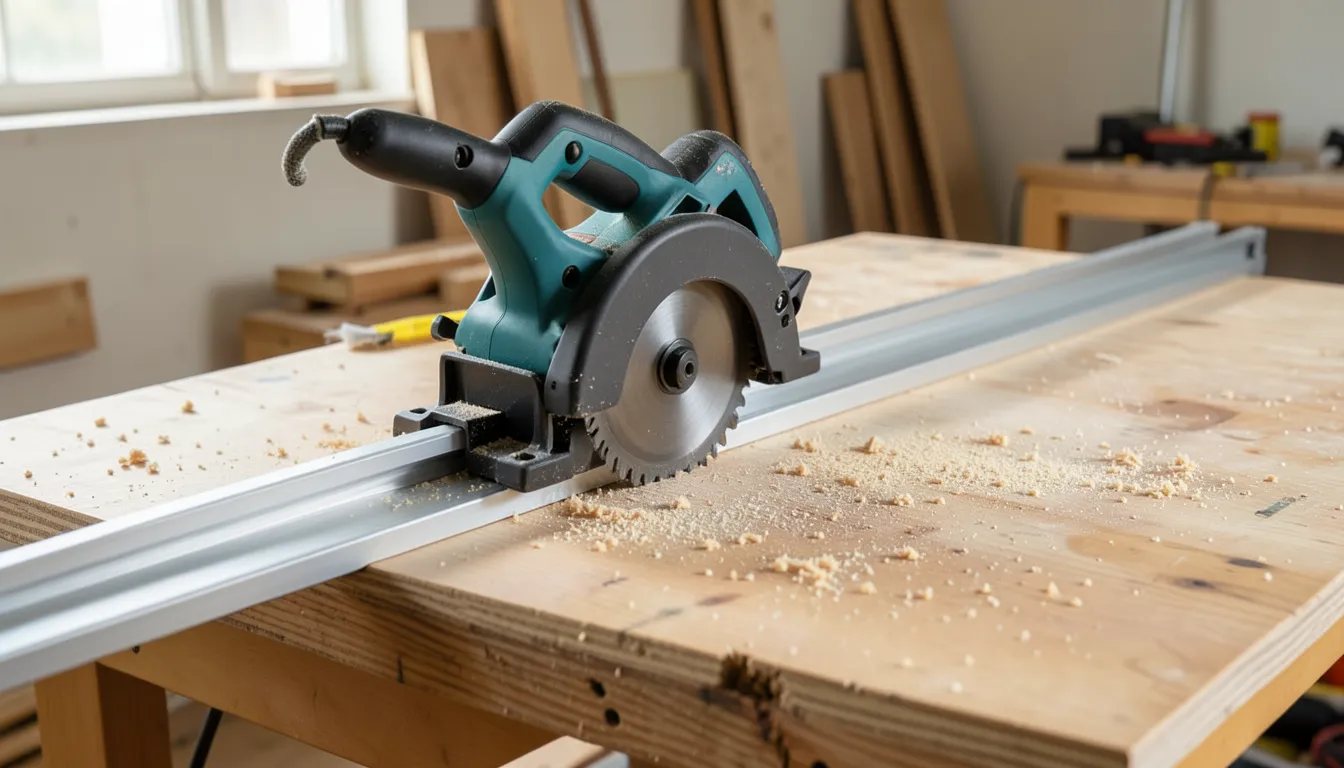
This is the part most blade guides skip: a track saw’s reputation for splinter-free cuts isn’t only about the blade, and it isn’t only about the rail — it’s what happens when the two work together. The track’s rubber splinter guard sits directly on the cut line, and the first pass of the blade scores through it, so the material is fully supported right up to the edge of the kerf. A handheld circular saw can’t do this because its baseplate can’t register that close to the line. Pair that support with a high-tooth-count blade and you get an edge that a standard circular saw, or even a table saw running a worn or low-tooth blade, can’t reliably match. Neither piece does it alone — a fine blade on an unsupported edge, or a supported edge cut with a coarse blade, still chips.
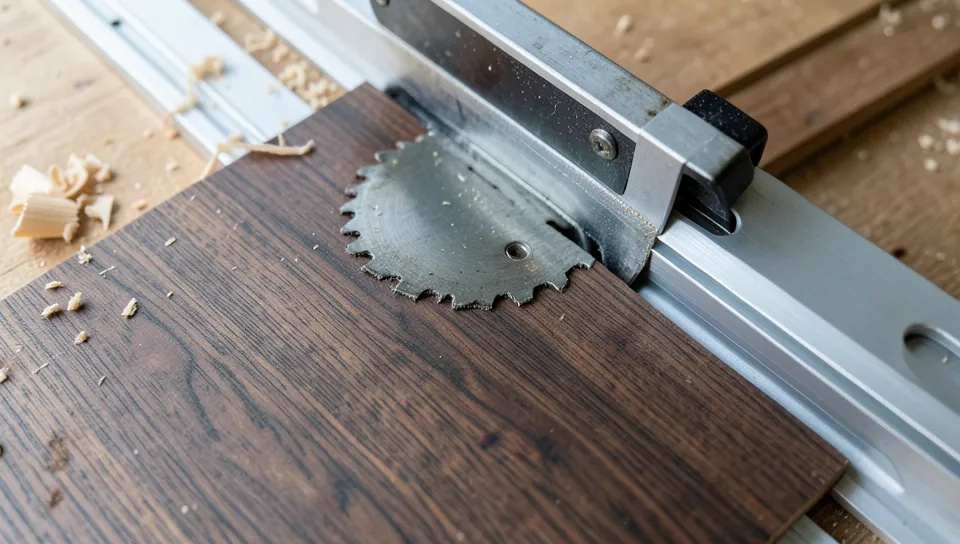
Makita SP6000J Blade Specs to Match
Before buying any replacement blade, confirm it matches these specs — getting even one wrong means it won’t fit or won’t cut to full depth:
- Blade diameter: 165mm (6-1/2 inch)
- Arbor/bore: 20mm
- Max cutting depth: 56mm at 90°, 40mm at 45°
- Bevel range: -1° to 48°
- Stock blade: 48-tooth carbide, ATB grind, general purpose
Kerf Width: Why Thin Kerf Matters More on Cordless Models
Standard-kerf blades remove more material per pass and stay more rigid in thick or dense stock, but they ask more of the motor. Thin-kerf blades cut a narrower slot, which means less resistance, less dust, and — on a battery-powered track saw — more cuts per charge. On the corded SP6000J it’s a smaller difference since the 12-amp motor has power to spare, but on any cordless Makita track saw, a thin-kerf blade is the easy way to stretch battery life without touching your cutting technique.
Tooth Grind: ATB, Hi-ATB, and FTG
Tooth count tells you how many bites the blade takes; grind shape tells you how each tooth cuts. Alternate Top Bevel (ATB) teeth alternate a beveled edge side to side, shearing fibers cleanly on crosscuts — it’s the most common general-purpose grind. High-ATB (Hi-ATB) uses a steeper bevel angle for an even cleaner finish, which is why fine-finish and melamine blades usually pair a high tooth count with this grind. Flat Top Grind (FTG) teeth are square-profiled and built for aggressive, fast material removal — you’ll find this grind on ripping blades rather than finish blades, matching the low-tooth-count use case above.
Keeping Your Track Saw Blade Cutting Clean
A well-matched blade still degrades if it’s ignored. Resin and sawdust buildup on the plate increases friction and heat, which is often mistaken for a dull blade. Clean carbide-tipped blades with a stiff brush and a blade-specific degreaser (or mineral spirits for stubborn pitch) with the blade removed from the saw and fully cool — never with the blade mounted or spinning. Store blades separately, in their case or a blade rack, so the carbide tips don’t knock against other tools; chipped carbide is the single most common reason a blade needs replacing before it’s actually dull. Keep them dry to prevent surface rust on the plate.
Watch for three signs it’s time to sharpen or replace: you’re pushing harder than usual to feed the saw, cuts are splintering more than they used to, or you’re seeing burn marks on the wood. Carbide-tipped blades can typically be professionally sharpened a few times before the tips are too small to regrind safely — at that point, replace rather than risk a tooth breaking off mid-cut.
Frequently Asked Questions
What size blade does a Makita track saw actually take?
Every Makita track saw in the SP6000J line takes a 165mm (6-1/2 inch) blade with a 20mm bore. That’s true whether you’re running the corded SP6000J or a cordless model, so any 165mm/20mm blade will physically bolt on, regardless of brand.
Should I use a thin-kerf blade on my Makita track saw?
Yes, especially on cordless models. A thin-kerf blade removes less material per pass, which draws less power from the battery and cuts faster with less strain on the motor. On corded saws it still helps, just less critically.
How many teeth do I need to cut melamine or veneered plywood without chipping?
Use a blade with 56 to 60 teeth or more. The thin veneer or melamine face sheet chips when a low-tooth-count blade tears through it instead of shearing it; a high tooth count spreads the cutting load across more, smaller bites.
Can one blade handle both ripping and crosscutting well?
A 40-50 tooth general-purpose blade, like the 48T blade Makita ships stock on the SP6000J, is a workable compromise for mixed cutting. But if you do a lot of one or the other, a dedicated 24-40T rip blade or 56-60T+ finish blade will outperform it in that specific cut.
How often should I sharpen a track saw blade?
There’s no fixed interval — sharpen when you notice increased pushing effort, more splintering than usual, or burn marks on the wood. Carbide-tipped blades used on plywood and hardwood typically go through dozens to a few hundred cuts before needing attention, depending on the material.
Bottom Line
Don’t hunt for one universal blade — match tooth count to the cut. Keep a 24-40T blade on hand for ripping solid lumber quickly, and switch to a 56-60T+ blade like the B-57342 above for crosscuts, melamine, and veneered plywood where a chipped edge isn’t an option. The stock 48T blade on your SP6000J splits the difference reasonably well, but it’s a compromise, not a specialist — and specialists are where a track saw’s precision actually pays off.
Sponsored / affiliate links. As an Amazon Associate I earn from qualifying purchases. I may earn additional commission from eligible campaigns.