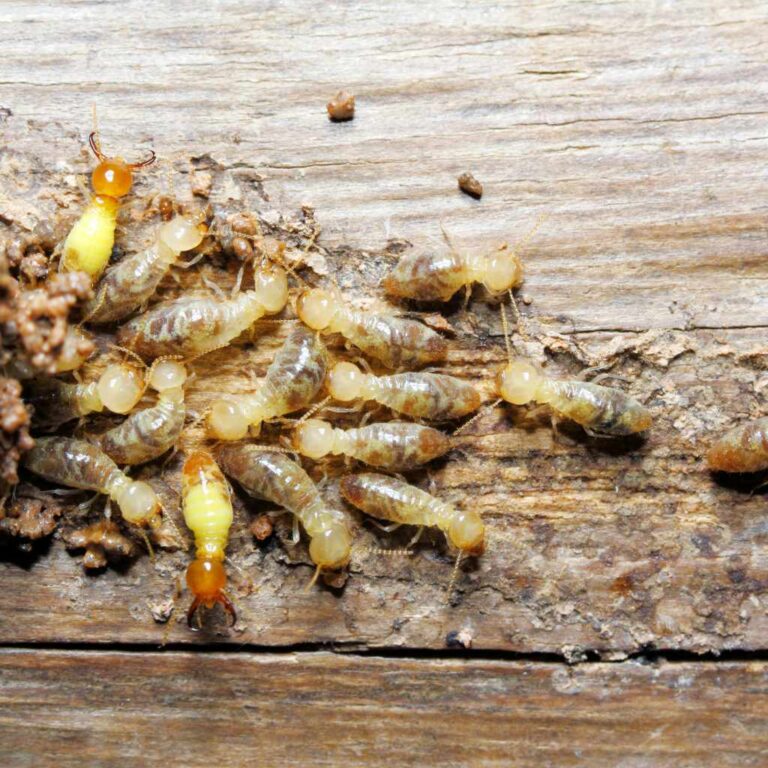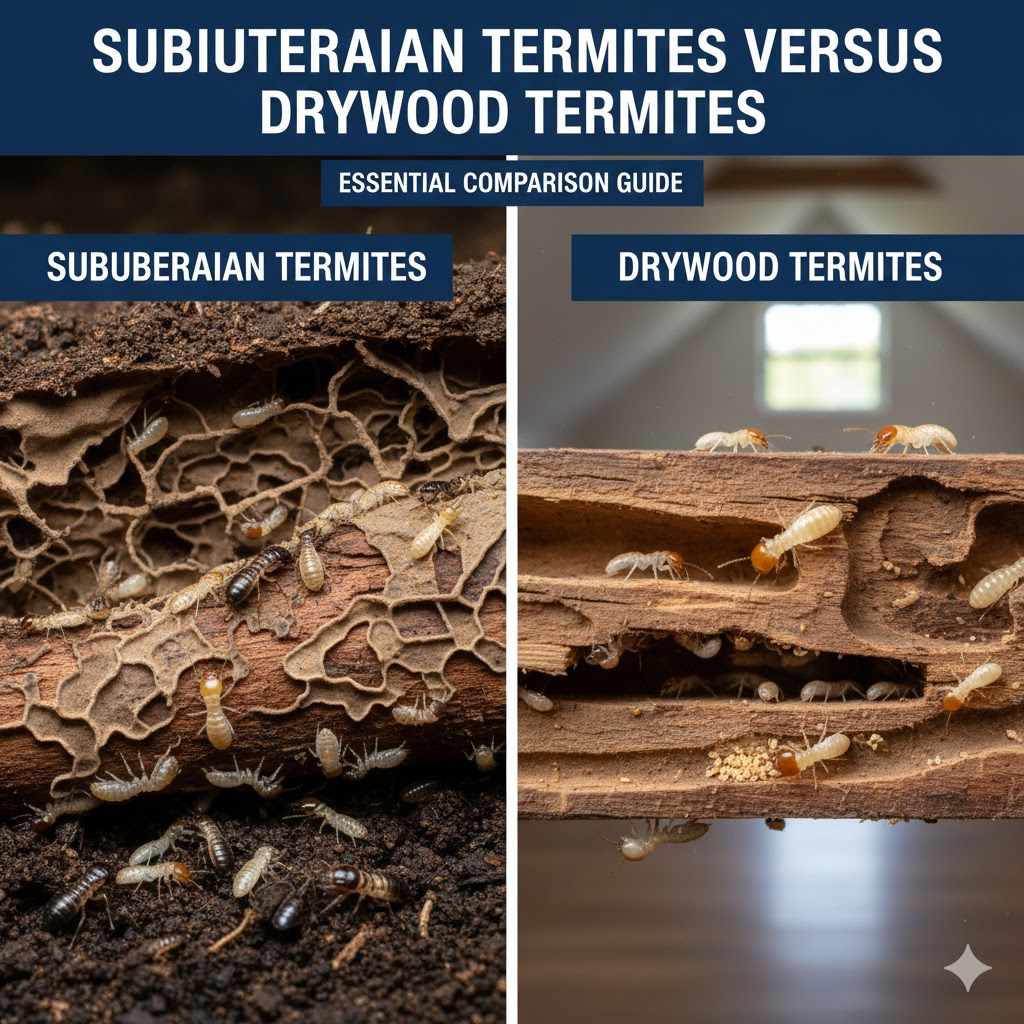
Subterranean Termites versus Drywood Termites
Figuring out the difference between Subterranean Termites vs Drywood Termites Explained can seem tricky at first. Many people get confused because these pests both eat wood and can cause big problems for homes. But don’t worry! We’ll break down the key differences in a way that’s easy to grasp. We’ll explore their habits, the damage they cause, and how to spot them. Get ready to learn about these common wood-destroying insects step-by-step.
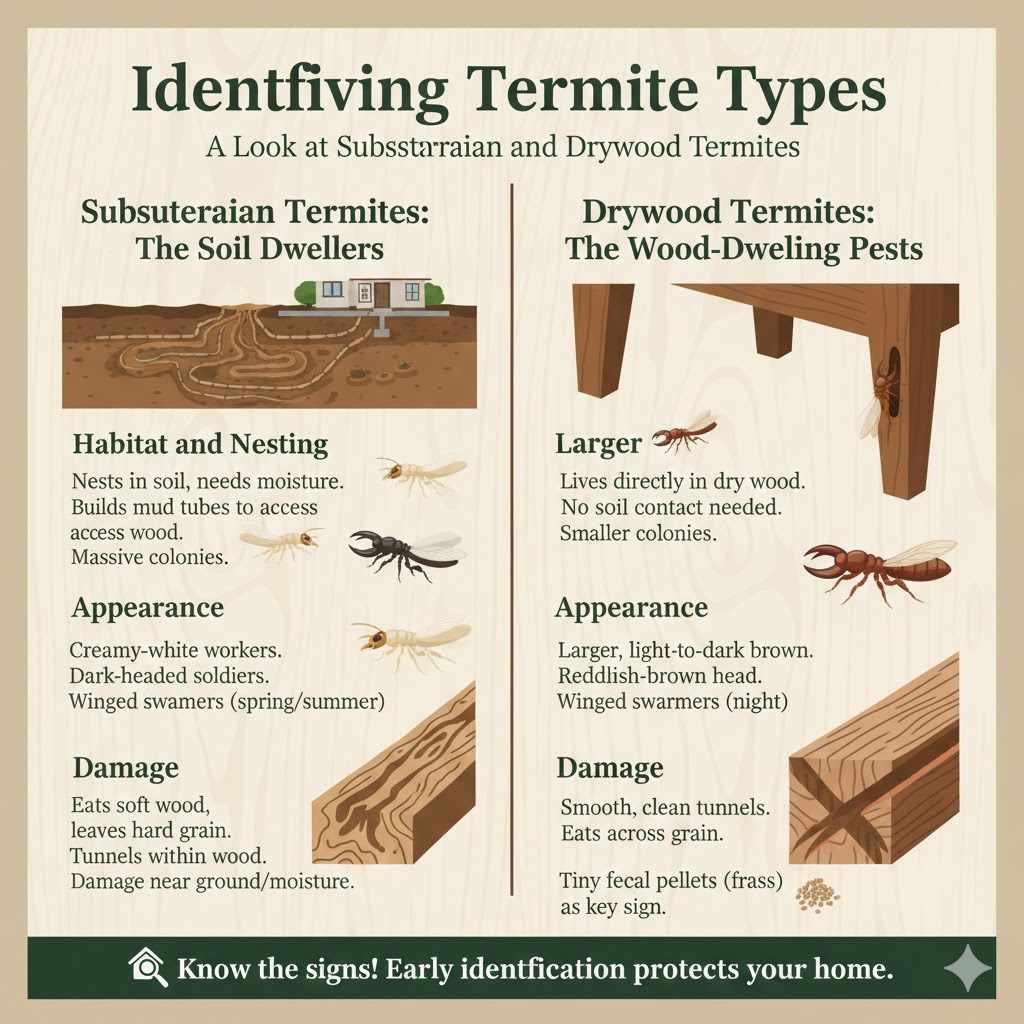
Identifying Termite Types: A Look at Subterranean and Drywood Termites
Knowing the type of termite you’re facing is important for effective control. Subterranean and drywood termites have different behaviors and preferences, so the treatments vary. Subterranean termites are the most common and often build nests in the soil, while drywood termites live directly within wood structures. Identifying their unique signs, such as where they create their waste or how they access wood, helps you know which type you’re dealing with.
Subterranean Termites: The Soil Dwellers
Subterranean termites are named for their primary habitat: underground. They need contact with soil to survive, as it provides moisture. They build extensive colonies and forage for food. They build mud tubes that serve as passageways from their underground nests to wood sources, like your home. These tubes are easy to spot and are often found along foundations, walls, and wooden structures in contact with the ground.
Habitat and Nesting: Subterranean termites construct nests in the soil, typically near a moisture source. They can build massive colonies, sometimes with millions of individuals. Their colonies are complex, with different castes such as workers, soldiers, and reproductives (kings and queens).
Subterranean termites thrive in humid environments. The queens can lay thousands of eggs a year. Their colonies can span hundreds of square feet. This extensive network means these termites can cause significant damage quickly if left unchecked.
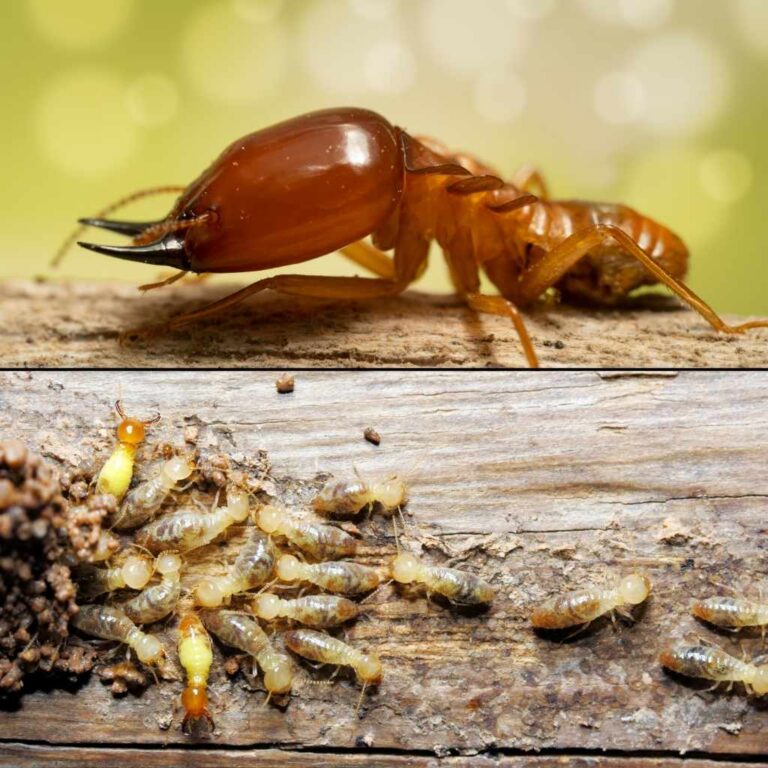
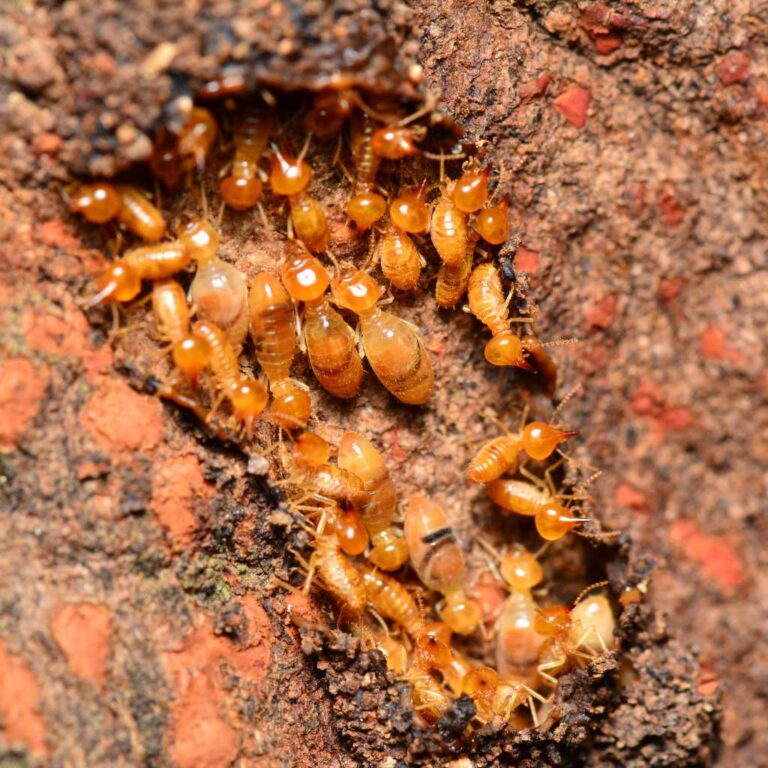
Appearance: Subterranean termite workers are typically creamy white, soft-bodied insects. Soldiers have darker heads and strong mandibles for defense. They are smaller, around 1/8 to 3/8 inch long.
You can sometimes see these termites when they swarm, leaving their nests to start new colonies. These swarms usually happen in the spring or early summer. When swarming, they have long, narrow bodies and two pairs of equal-length wings.
Damage: Subterranean termites eat the soft parts of wood, leaving the harder grain intact. This type of damage can weaken wooden structures. They often create tunnels within the wood. Damage is usually worse near the ground, where the termites have access to moisture and the soil.
The damage they cause is often hidden, making early detection difficult. Regular inspections are key to preventing large-scale structural damage. Their constant feeding can weaken wooden structures over time. Repair costs can be significant, especially if the infestation goes undetected.
Drywood Termites: The Wood-Dwelling Pests
Unlike subterranean termites, drywood termites don’t need contact with the soil. They get all the moisture they need from the wood they eat. They live entirely within the wood structures, creating nests inside. They are typically found in warmer climates, where conditions are favorable for survival. They can cause damage to furniture, wooden framing, and other wooden objects within your home.
Habitat and Nesting: Drywood termites live directly inside dry wood. They don’t need a connection to the soil. They infest wooden structures, furniture, and other wood items. Their colonies are typically smaller than those of subterranean termites.
Drywood termites are often found in coastal regions and areas with warm climates. They are brought into homes in infested wood or furniture. The colonies can establish themselves in attics, walls, and wooden beams.
Appearance: Drywood termite soldiers have large mandibles and a reddish-brown head. They are generally larger than subterranean termite workers. Their bodies are light to dark brown. They can be about 1/2 inch in length, including their wings.
Swarming also occurs with drywood termites, usually at night. This is often the first sign of an infestation. The swarmer termites are larger, with prominent wings. The swarming termites look for new wood to colonize, starting new infestations.
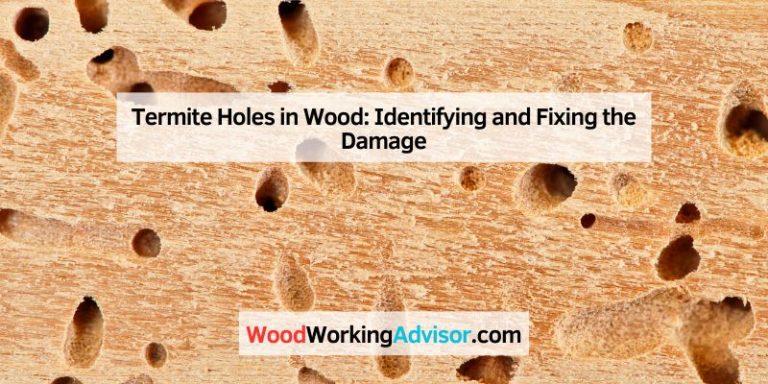
Damage: Drywood termites create smooth, clean tunnels within the wood, eating across the grain. They don’t leave mud tubes. They create small holes in the wood to remove their droppings, which look like tiny pellets.
These droppings are often the first sign of a drywood termite infestation. These pellets can be found near infested wood or on the floor. The damage occurs slowly but can be extensive over time. Regular inspections help catch infestations early.
Comparing Habits: Subterranean vs Drywood Termite Behavior
The differences in behavior greatly affect how these termites impact homes and property. Subterranean termites are driven by the need for moisture. They must constantly return to the soil. Drywood termites, on the other hand, build their homes inside the wood. Their behavior directly affects how they cause damage and what steps are needed for effective treatment. Their lifestyles significantly impact the speed and nature of the damage. Understanding these differences can aid in both detection and removal.
Feeding Patterns and Wood Preference
Both types of termites feed on wood. But their approach differs. Subterranean termites eat the soft grain of wood. This leaves the harder parts behind, creating a honeycomb-like appearance. Drywood termites consume the wood evenly, often following the wood grain. They also create cleaner tunnels. Their feeding habits also contribute to the different damage patterns observed.
Subterranean Termites: These termites feed on the softer parts of wood. They often consume wood from the inside out, causing significant structural damage. They prefer wood in contact with soil, but can also consume wood above ground.
They can also damage paper products or cardboard if wood isn’t accessible. They create irregular tunnels in wood. Their preference for moist environments can lead to more rapid damage in areas with moisture problems.
Drywood Termites: Drywood termites consume wood across the grain, creating smooth galleries. They often leave a characteristic frass (droppings) near infested wood. They typically infest dry wood, such as attics, walls, and wooden furniture.
They are less picky about the wood’s condition compared to subterranean termites. They will infest dry wood even if there is no contact with the soil. The evidence they leave, like their droppings, is often the first clue of their presence.
Nesting and Colony Structure
The nests and colony structures highlight the differing approaches these termites use. Subterranean termites are social insects. They have complex colonies, with different castes performing various tasks. Drywood termites’ colonies are smaller and simpler. This means that drywood termite infestations might be less extensive than those of subterranean termites. Their nest structure indicates how they manage their colonies.
Subterranean Termites: These termites have complex social structures with queens, kings, workers, and soldiers. They build nests in the soil and can have very large colonies. The colonies can have millions of termites. They often build satellite colonies near a food source.
The colonies are connected by underground tunnels. Their colony structure affects their foraging behavior and damage patterns. They depend on continuous access to moisture and the soil. They expand their colonies through swarming and reproduction.
Drywood Termites: Drywood termites typically have smaller colonies, with fewer castes. They nest inside dry wood. They don’t need contact with the ground. Their nests are simpler than those of subterranean termites.
They don’t have as many workers and soldiers as subterranean termites. Their colonies grow slowly. Their ability to nest in wood allows them to easily spread within a home. Their social structure is less complex, with fewer individuals in each colony.
Identifying and Preventing Infestations: Signs and Solutions
Early detection is a key step to protecting your home. Both types of termites leave telltale signs of their presence. Regular inspections are also essential. If you know what to look for, you can catch infestations early. Taking preventative measures can help you avoid costly repairs. There are various ways to reduce your risk. These steps can limit the chance of a termite invasion.
Warning Signs of Termite Activity
Being able to spot the signs of termites is essential for early detection. The clues they leave behind can reveal their presence. Mud tubes, frass, and swarms can indicate an infestation. Different signs are associated with each type of termite. Recognizing these signs helps you take action quickly. Inspections should become a habit for home maintenance.
Subterranean Termites: Look for mud tubes on foundations or walls. These are their tunnels, used to reach wood sources. Check for damaged wood that appears to have been eaten from the inside. They often create a honeycomb pattern. Observe swarms, especially in the spring, as a sign of activity.
If you tap on the wood, it may sound hollow. Watch for evidence of moisture, which is key to termite survival. Their presence is usually found near the ground. Inspect any wooden structure regularly for changes.
Drywood Termites: Look for small, pellet-like droppings (frass) near wooden structures. These droppings are often found in piles. Watch for swarms, especially in the evening. Check for damage in wood, such as tunnels that go across the grain.
Examine wooden furniture or fixtures for small entry holes. The damage from drywood termites may not be as obvious as that from subterranean termites. But regular checks are vital. Look for discarded wings from swarmer termites, another sign of activity.
Prevention and Control Strategies
There are multiple ways to protect your home. Some measures focus on preventing termites from entering. Other methods involve controlling any existing infestations. Professional help is often needed, but you can take many steps. Regular home maintenance is important. The right approach can limit the risk of these wood-destroying pests.
Professional Inspections: Get your home inspected regularly by a pest control expert. These professionals can identify signs of termites that you might miss. They use specialized tools to detect infestations. They also provide effective treatment recommendations.
These inspections should be done at least once a year. They’re very effective at spotting any termite presence early. Preventative inspections help you manage any potential issues before damage occurs. These experts can also identify conducive conditions that encourage termite activity.
Preventative Measures: Remove wood debris from around your home. Keep wood piles away from the foundation. Ensure good drainage to prevent water accumulation near your house. Consider using treated wood for any new construction.
Seal any cracks and openings in the foundation. Make sure vents are clear and functioning correctly. Reduce soil-to-wood contact, which termites use to reach wood. Regularly check your home for conditions that attract these pests.
Treatment Options: Termite control often involves chemical treatments. Your pest control expert can create a barrier in the soil to prevent subterranean termites. They may apply treatments directly to infested wood. Baiting systems are another option.
Fumigation may be necessary for severe drywood termite infestations. This is often used for entire structures. Always use a professional pest control service. Treatment methods will vary depending on the type and severity of the infestation.
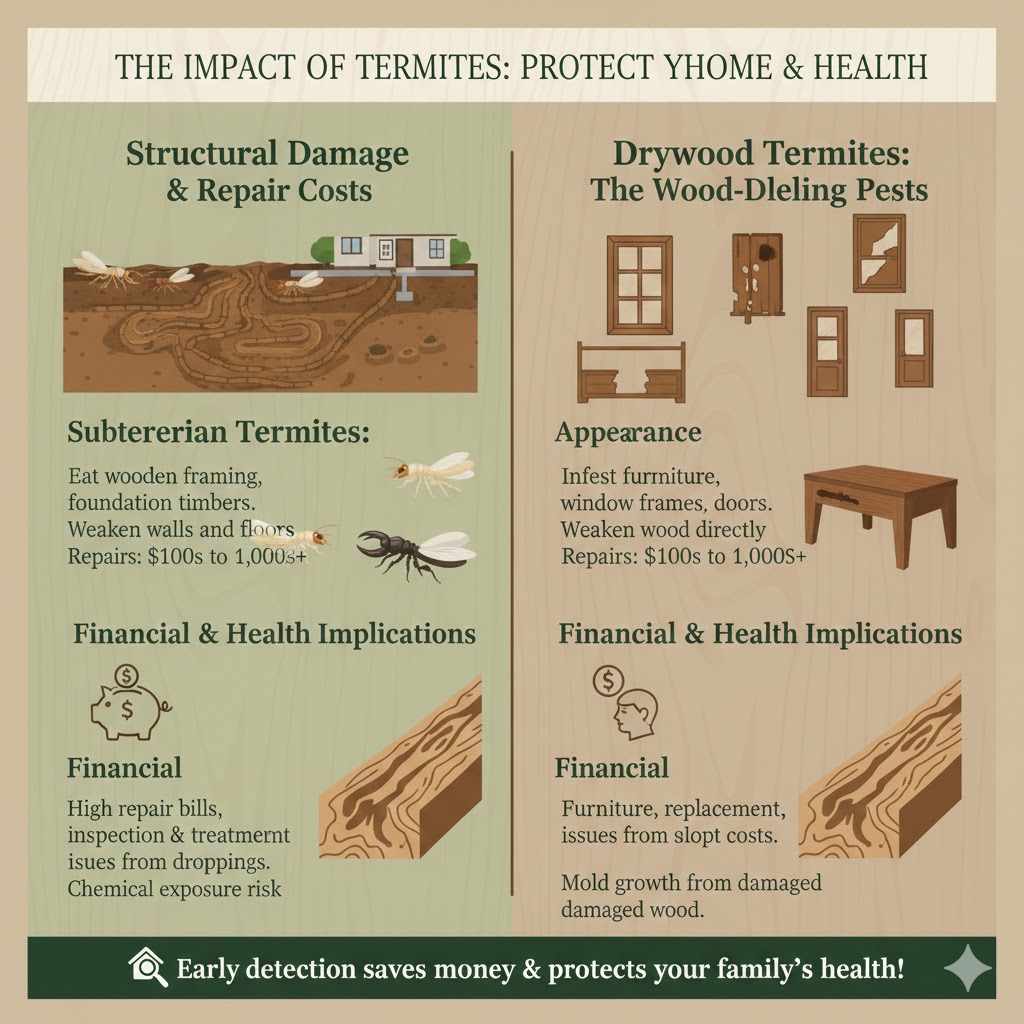
The Impact of Subterranean Termites and Drywood Termites
Termites can bring destruction to your home. Their feeding habits have a significant impact on structural integrity. Both subterranean and drywood termites can cause damage. The costs associated with termite infestations include repairs and treatments. It’s crucial to take the necessary steps to protect your property. Regular checks and prompt action are key to managing any problems.
Structural Damage and Repair Costs
The damage caused by termites can weaken your home’s structure. Subterranean termites can damage foundation timbers and support beams. Drywood termites can attack wooden furniture, window frames, and doors. The severity of the damage increases with time. The longer the infestation goes undetected, the more extensive and costly the repairs become. The costs can range from minor repairs to large-scale renovations.
Subterranean Termites: They often eat the wooden framing in the house. This can lead to issues with walls. The foundation of your house is at risk. Support beams and floor joists can also be severely affected.
The cost of repairs can be quite high, from hundreds to thousands of dollars. The longer the infestation continues, the more extensive the damage will be. Replacing damaged wood is a costly process. The home’s stability can also be affected by their damage.
Drywood Termites: These termites damage the wood directly. They attack wooden furniture and interior features. They can weaken doors and window frames. The structural damage may not be as obvious as that of subterranean termites.
Drywood termites can infest attics and other areas out of sight. Repair costs can include the replacement of damaged wood items. The price of repairs may vary. You may also need treatments to eliminate the termite colony.
Financial and Health Implications
Termite infestations affect your finances. They can also affect your health. The costs include repairs, treatments, and inspection fees. Allergies and respiratory problems can be triggered. These problems can be connected to termite droppings or the chemicals used in treatment. It’s important to be aware of the financial and health aspects. Take steps to address and prevent termite issues.
Financial Costs: Include repair bills to fix termite-related damage. Consider the cost of professional inspections. The price of termite treatment, such as chemical barriers, adds up. The overall cost includes both immediate and long-term expenses.
Preventative actions, like regular inspections, can help save money in the long run. The expenses will increase if you delay addressing an infestation. It’s best to handle these problems quickly.
Health Concerns: Some people may experience allergic reactions to termite droppings (frass). The chemicals in some termite treatments can also cause health problems. The damage that termites cause can also lead to mold growth.
Always follow safety instructions when working with pest control products. Make sure to ventilate treated areas. If you have any health concerns, consult a medical professional. If a termite problem occurs, prioritize both treatment and your health.
Frequently Asked Questions
Question: How can I tell if I have termites?
Answer: Look for signs like mud tubes (subterranean), frass (drywood), damaged wood, and swarms of winged termites.
Question: Are subterranean termites and drywood termites found in the same areas?
Answer: No, subterranean termites are common in most areas, while drywood termites thrive in warmer coastal climates.
Question: Can I treat termites myself?
Answer: While some DIY products are available, professional treatment is typically more effective and safer.
Question: How often should I get my home inspected for termites?
Answer: It’s best to have your home inspected for termites at least once a year by a pest control expert.
Question: What do termite droppings look like?
Answer: Termite droppings, called frass, look like tiny, hard pellets. They are often the same color as the wood the termites are eating.
Final Thoughts
Knowing the difference between Subterranean Termites vs Drywood Termites Explained helps you protect your home. Subterranean termites live in the soil. They build mud tubes to reach wood. Drywood termites live right inside the wood. They don’t need contact with the ground. Both kinds of termites eat wood, and this can lead to expensive damage. Finding them early is crucial. Look for clues like mud tubes, frass, and swarmers. Regular inspections and preventative actions are very helpful. By knowing the signs and taking action, you can help keep your home safe from these pests. This will help keep your house strong for years.