Termite Damage vs Wood Rot: Uncovering the Differences
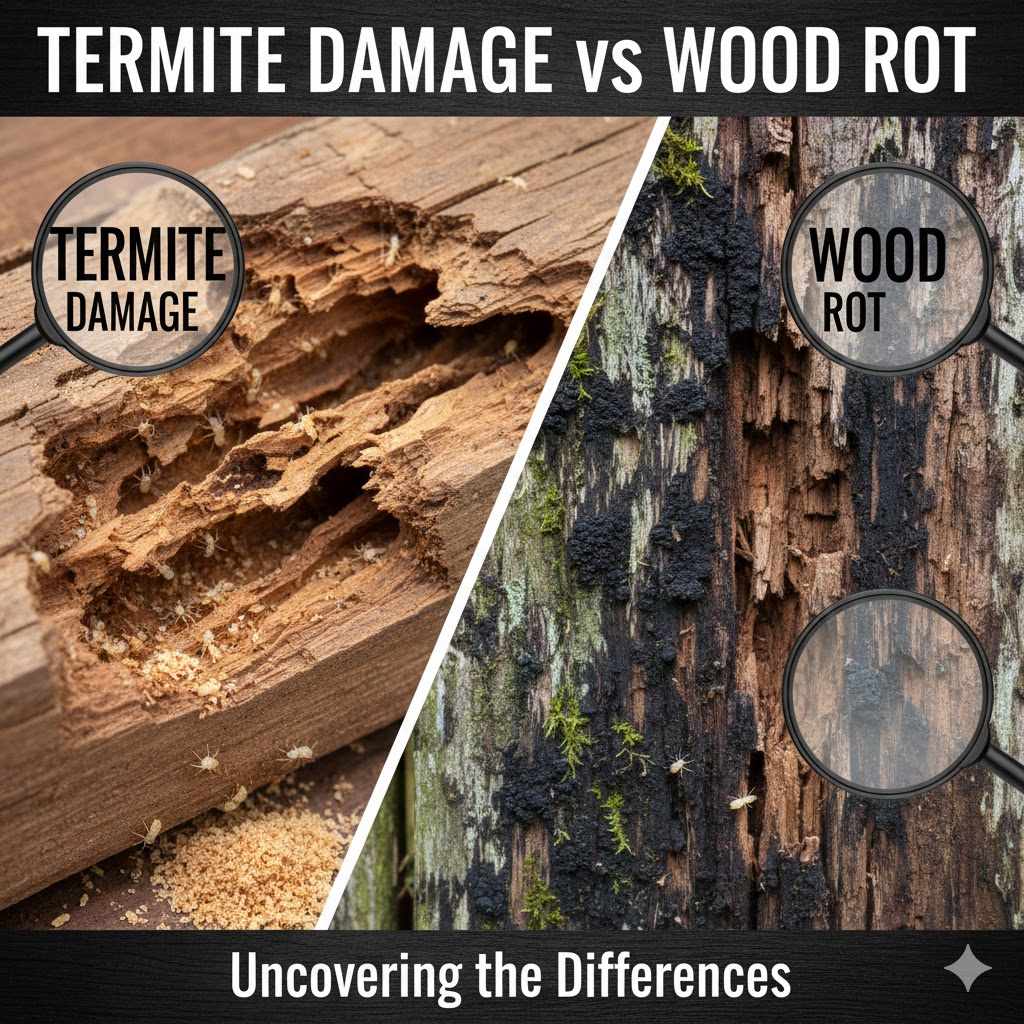
Figuring out the difference between Termite Damage vs Wood Rot: Spot the Difference can be tricky for a lot of people, especially if you’re just starting out. Both can cause serious problems for your home! Don’t worry, though. This isn’t as hard as it seems. We’re going to break it down step-by-step so you can easily spot the signs. Get ready to explore what to look for, so you can protect your house. We’ll start with the basics.
Recognizing Problems: Wood’s Hidden Enemies
Wood rot and termites are serious threats to homes, often causing similar issues that can be hard to identify. Both can weaken the structural integrity of a building, leading to expensive repairs if left untreated. Recognizing the early signs is critical in preventing extensive damage. It’s important to know the differences in how they attack wood, what their signs look like, and how they behave.
Both wood rot and termites thrive in certain conditions, like dampness and warm temperatures, which makes understanding their preferences key to spotting them early. Being able to spot the differences between Termite Damage vs Wood Rot: Spot the Difference can save you money and protect your home.
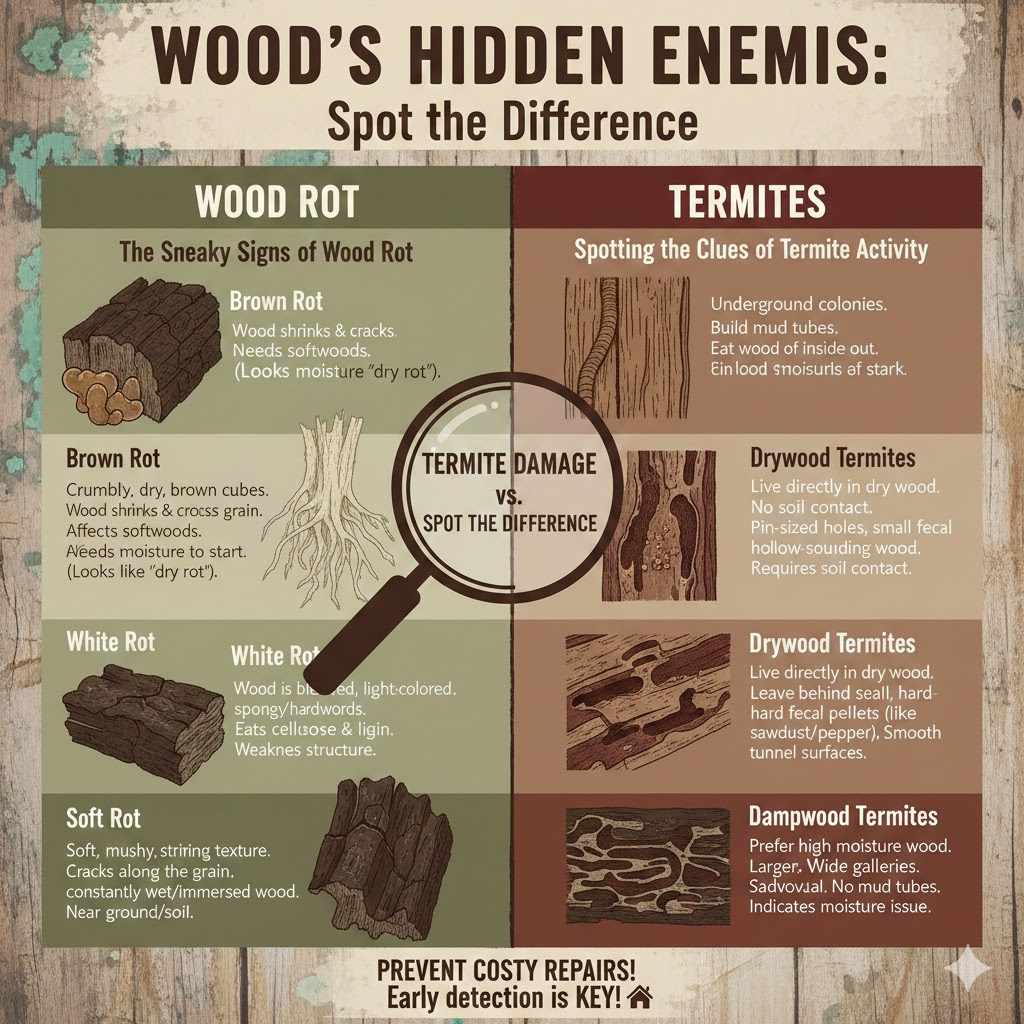
The Sneaky Signs of Wood Rot
Wood rot is caused by fungi that feast on the wood fibers, leading to decay. This usually happens when the wood is constantly wet or damp. There are different types of wood rot, each with its own characteristics. The most common types include brown rot, white rot, and soft rot. Each type affects wood differently, producing varying appearances and textures.
Brown Rot: This is a common type that attacks the cellulose in wood, causing it to crumble into a brown, dry, and powdery substance. It’s often referred to as “dry rot,” but it needs moisture to begin the process. Brown rot typically affects softwood like pine and fir.
Brown rot can spread quite quickly, leaving the wood looking like it has been broken apart into small, dry cubes. You might notice the wood shrinking and cracking across the grain. This type of rot is especially dangerous because it can severely weaken wooden structures. The fungi responsible for brown rot can also produce enzymes that break down the wood fibers, making the wood brittle and easily damaged.
White Rot: White rot decays wood by consuming both cellulose and lignin, which is a key component of wood. This type of rot is often found in hardwood trees. It can make the wood appear bleached or light-colored, and it often becomes stringy or spongy.
In the early stages, white rot might not be very obvious. As it advances, the wood will lose its strength and color, becoming soft and fibrous. Often, white rot doesn’t completely destroy the wood; instead, it leaves behind a pale, almost bleached appearance. The fungi break down the lignin, making the wood lighter but also significantly weaker. This kind of rot is dangerous because it can affect the overall structure and load-bearing capacity of the wood.
Soft Rot: This type of rot typically occurs in wood that is constantly wet or immersed in water. It primarily affects wood near the ground or in contact with soil. The wood becomes soft, stringy, and tends to crack along the grain.
Soft rot mainly attacks the cellulose in the wood’s cell walls, making the wood soft and mushy. Unlike brown rot, soft rot does not typically crumble the wood into dry, cubical pieces. The wood often retains some of its original shape, but it’s much weaker. The appearance of soft rot can vary; it might look like the wood has been softened from exposure to water. This type of rot can be particularly problematic in decks, fences, and any wooden structures near the ground.
Spotting the Clues of Termite Activity
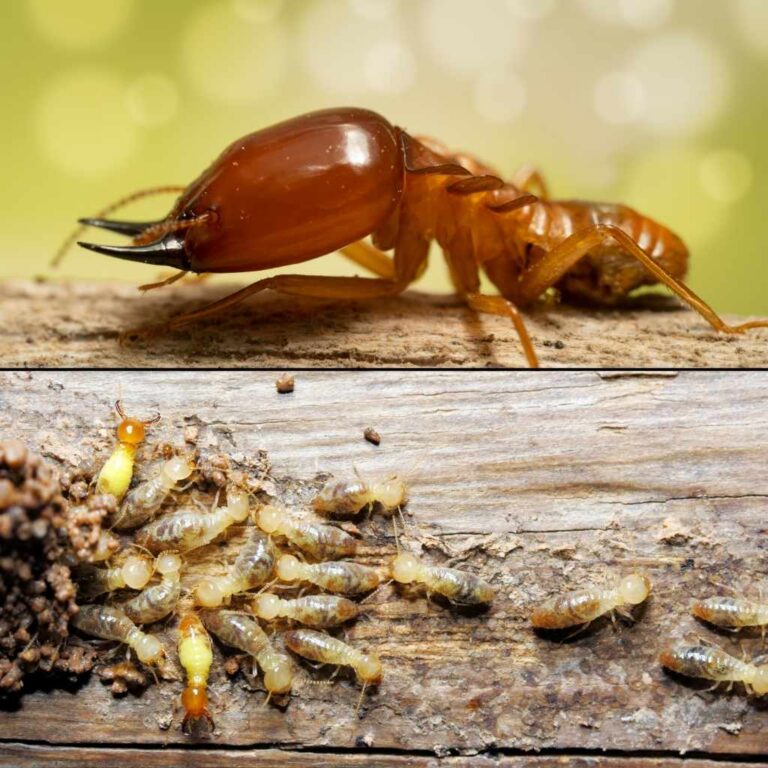
Termites are small, often pale insects that live in colonies and eat wood. They are a significant threat to wooden structures, causing extensive damage that can be difficult to see at first. Termites feed on the cellulose in wood, which is their main food source. There are several types of termites, including subterranean, drywood, and dampwood termites, each with different habits and signs.
Subterranean Termites: These are the most common type and live in underground colonies. They build mud tubes to travel from the ground to the wood, usually hidden inside walls or under flooring.
Subterranean termites can cause serious structural damage, often going undetected for years. Their primary sign is the presence of mud tubes. They often eat wood from the inside out, leaving a thin outer layer. This can lead to significant structural problems before the damage is noticed. You might see small, pin-sized holes in the wood or see tunnels within the wood itself.
Drywood Termites: Drywood termites live directly in the wood, without needing contact with the soil. They are often found in warmer, coastal regions. They create galleries within the wood and produce fecal pellets, which can be a key sign of their presence.
Drywood termites are more difficult to detect than subterranean termites because they don’t leave any visible mud tubes. Instead, they leave behind small, hard pellets that look like pepper or fine sawdust. They make galleries in the wood, often eating across the grain, which creates a smooth surface instead of the rough, cubical pattern caused by brown rot. These termites can be found in furniture, wooden fixtures, and other dry wood items.
Dampwood Termites: Dampwood termites prefer to live in wood with high moisture content. They are larger than other types of termites and often nest in decaying wood, especially in areas with a lot of moisture. They are less common than subterranean termites.
Dampwood termites will often create galleries within the wood that are noticeably wider than those created by drywood termites. They can also leave behind a sawdust-like material. They prefer areas that are always wet, like decaying wood that is in contact with soil. Unlike subterranean termites, they don’t build mud tubes, but they do require a constant source of moisture. The presence of dampwood termites suggests that there’s also an underlying moisture issue that needs to be addressed.
The Damage Details: How Each Affects Wood
The damage caused by wood rot and termites differs significantly. Recognizing these differences is crucial for effective treatment. Wood rot’s impact comes from the fungi consuming the wood’s structure, causing it to weaken and crumble. Termites, on the other hand, eat the wood, creating tunnels and galleries that diminish its strength. Understanding how each affects the wood allows you to identify the problem and determine the best solution.
How Wood Rot Eats Away
Wood rot works by breaking down the wood fibers, changing its appearance and strength. It’s caused by fungi that thrive in moist environments. The specific type of rot determines how the wood degrades. The appearance of wood affected by rot changes from its normal color and texture. Soft rot turns the wood soft and spongy, brown rot makes the wood dry and crumbly, and white rot can make the wood stringy or bleached. The structural integrity is compromised, leading to potential safety hazards.
Color Changes: Healthy wood usually has a consistent color and appearance. Wood rot often causes discoloration. White rot might make the wood appear lighter or bleached. Brown rot turns it darker, and soft rot can make it look water-stained.
Color changes are often the first visible signs of wood rot. The color change itself indicates the fungi are starting to break down the wood’s internal structure. Sometimes, you may also see dark, irregular patterns on the surface of the wood. The color differences can help identify the type of rot present.
Texture Variations: The texture of wood affected by rot becomes different. Brown rot makes the wood dry and crumbly, with a characteristic cube-like appearance. White rot often results in a stringy or spongy texture, while soft rot makes the wood soft and mushy.
The changes in texture indicate the degree to which the wood fibers have been destroyed. A change in texture signals the wood has lost some of its strength. In advanced stages, the wood can be easily broken apart by hand, and it may feel light and hollow. You’ll notice the normal, smooth texture of healthy wood is lost, often replaced by a coarse or fragile feel.
Structural Weakening: Rot weakens the wood’s structural capacity. The wood might lose its ability to support weight or withstand stress, making it unsafe. This can lead to collapses or failures in affected structures.
The structural weakening caused by wood rot can be very dangerous. The wood will lose its strength, making it vulnerable to breaking. This loss of strength is dangerous, because it threatens the stability of a structure. In critical parts of a building, such as beams or supports, this weakening can lead to serious hazards.
What Termites Do to Wood
Termites consume the wood from the inside, leaving the outer layer intact. This makes their presence harder to spot. Termites chew through the wood, creating tunnels and galleries. The most apparent signs of termite damage are often the hollowed-out sections or the thin surface layers that remain after termite activity. This process can significantly reduce the structural integrity of the wood, which causes it to become weak and potentially lead to collapses. The specific damage patterns vary by termite species.
Tunnels and Galleries: Termites create tunnels and galleries within the wood. Subterranean termites leave behind a mud-like material as they eat. Drywood termites create smooth galleries.
The tunnels and galleries within the wood weaken the structural integrity. The tunnels disrupt the wood grain, making it less able to bear loads. The pattern of these tunnels can also provide clues about the type of termite. In contrast to wood rot, termite damage often leaves the outer surface of the wood relatively intact, making it harder to spot at first.
Frass or Fecal Pellets: Drywood termites leave behind fecal pellets, known as frass. These small, dry pellets are a tell-tale sign of their activity. Subterranean termites use mud to build tunnels.
Frass is one of the clearest signs of a drywood termite infestation. The presence of frass indicates that termites are actively eating and digesting the wood. These pellets look like small, hard grains and can accumulate near the infested wood. Their presence shows the activity of termites in the wood. Mud tubes are another visual indicator, providing a path from the ground to the wood for subterranean termites.
Surface Damage: The surface of wood damaged by termites can look different depending on the species. Often, the wood surface might appear blistered or have small pinholes. These can be the exit points for drywood termite frass.
Surface damage from termites is often subtle, but it’s important to look for. Blisters may indicate damage beneath the surface. Pinholes indicate the termites’ entry and exit points. When the damage is severe, the outer surface can appear thin and easily broken. In contrast to wood rot, termite damage can preserve the outer shape of the wood, making it appear normal from the outside.
How to Tell Them Apart: Inspecting for Problems
Spotting the difference between Termite Damage vs Wood Rot: Spot the Difference can be done by using your senses. Paying close attention to the visual signs, the presence of specific materials, and the overall conditions of your home can make a big difference in preventing serious problems. Thorough and regular inspections can help to identify issues early, and taking action quickly can protect your home.
Visual Clues to Look For
A careful visual inspection is crucial when trying to differentiate between wood rot and termite damage. Look for the common signs of damage, and the presence of indicators like mud tubes, frass, or changes in wood appearance. Also, think about the specific conditions of your home.
Mud Tubes: These are a sure sign of subterranean termites. They appear as small, earthen tubes that extend from the soil up to the wood.
Mud tubes are a definite sign of subterranean termites. They provide a protective tunnel for the termites to travel between their underground colonies and the wood they feed on. These tubes often appear on foundation walls, piers, or inside crawl spaces. Finding mud tubes is a definite sign of a subterranean termite infestation and the need for immediate action.
Frass and Pellets: Frass, the fecal pellets of drywood termites, are a key indicator. Look for small, hard pellets, often near holes in the wood.
Frass is a clear indicator of drywood termite activity. The presence of frass shows that termites are active and eating the wood. These pellets can often be found beneath infested wood, or in small piles near exit holes. These pellets are dry and look similar to sawdust or ground pepper. Finding frass helps confirm a drywood termite infestation.
Wood Appearance: The appearance of the wood itself provides important clues. Wood rot often shows discoloration, while termite damage may appear hollowed out or have pinholes.
Examine the wood’s color, texture, and structural integrity. The wood’s appearance can give insight into the type and extent of damage. Wood rot will often change the color and texture, making the wood look soft, crumbly, or stringy. In contrast, termite damage often leaves the outer surface of the wood relatively intact, with only small holes or hollowed-out areas evident. Careful evaluation of the wood can distinguish between these two different problems.
Examining for Materials and Conditions
Beyond visual inspection, paying attention to the materials present and the conditions around your home can also help you determine the kind of damage you’re facing. Humidity levels, the presence of moisture, and the type of wood are all key factors. These things create ideal conditions for wood rot and termites to thrive.
Moisture Levels: Damp environments are an ideal spot for wood rot. Examine areas with high moisture exposure, like leaky pipes or poor drainage. Termites, on the other hand, also favor damp environments but aren’t dependent on them as directly as wood rot.
High moisture levels accelerate the growth of wood rot. Wood rot thrives in damp conditions. Check for any leaks and the way water is drained. Termites can also be attracted to damp areas, but they also infest dry wood. The presence of moisture is a key factor to determine the type and extent of the damage.
Wood Type: Different types of wood are more vulnerable to certain types of damage. Softwoods are often more prone to brown rot, while hardwoods can be more susceptible to white rot. Termites will eat any wood type, but they may favor some over others based on the availability of nutrients and the wood’s composition.
Understanding wood type helps you anticipate potential problems. The type of wood affects the type and extent of damage. For example, softwoods often suffer from brown rot, and hardwoods are more likely to be damaged by white rot. Termites are less selective, but knowing the species of wood can help pinpoint where they may choose to feed.
Structural Elements: Check all structural elements in contact with the ground or moisture sources. These include foundations, decks, and crawl spaces. These are common spots for both wood rot and termite damage.
Inspecting structural elements where moisture accumulates is important. They are often the first to be affected by rot and termites. These areas can include decks, foundations, and crawl spaces. Pay attention to any areas that are consistently wet or that are close to the ground, as these are the most vulnerable. Early detection of any damage can prevent bigger, costlier problems.
Utilizing Tools and Tests
Besides visual inspections, you can also use tools and tests to pinpoint the problem. Using a screwdriver or probe can reveal how severe the damage is. Moisture meters help assess moisture levels, and professional inspections can give you a better overview. Using tools and tests will help you make a more accurate diagnosis.
Screwdriver Test: Use a screwdriver to probe suspect wood. If the wood is soft and crumbles easily, it’s likely wood rot. Termite-damaged wood may appear hollow.
The screwdriver test is a simple but effective method to check the extent of wood damage. Use a screwdriver to push into the wood, especially in areas where you suspect rot or termite damage. If the screwdriver easily penetrates the wood, it shows that the wood has become weak. For wood rot, the wood often crumbles or falls apart. For termite damage, the surface may appear fine, but the wood underneath will be hollow.
Moisture Meter: Moisture meters detect high moisture levels in wood, which are key for wood rot. These meters will not directly find termites.
Moisture meters help determine if conditions are conducive to wood rot. Wood rot thrives in damp environments, so high moisture readings suggest a problem. While moisture meters don’t detect termites directly, high moisture levels can indicate conditions that termites will find appealing. Monitoring moisture levels can help identify potential areas for future damage. Moisture readings will help to rule out any potential damage in your home.
Professional Inspection: A professional inspector can identify wood rot and termites, and provide a comprehensive report and treatment recommendations. They have special tools and expertise.
Professional inspections offer the most comprehensive way to assess and treat problems. A professional inspector can identify both wood rot and termites. Professionals are trained to find signs of hidden damage. They can also use specialized tools. A professional inspection gives you a complete overview of the damage and helps to come up with the right treatment plan to deal with any issues.
Battling the Bugs and Fungus: Effective Solutions
Managing wood rot and termites requires different approaches. Controlling moisture is key in preventing wood rot, along with using rot-resistant materials. For termites, prevention methods focus on barrier treatments and regular inspections. Different situations need different solutions to effectively protect your home. Learning about prevention is key to keeping your home healthy.
Stopping Wood Rot in Its Tracks
Preventing and treating wood rot focuses on removing the moisture that the fungi need to survive. Implementing these strategies will prevent wood rot from forming, or prevent existing damage from getting worse. Controlling moisture, using rot-resistant materials, and regularly maintaining your property are key.
Moisture Management: Fix any leaks, improve drainage, and ensure proper ventilation in crawl spaces and attics. Reducing moisture is critical for stopping wood rot.
Managing moisture is the most important step in controlling wood rot. The fungi causing wood rot need moisture to survive. You must fix any leaks promptly, improve drainage, and make sure that there is proper ventilation in areas that are often damp. Ensuring proper ventilation can prevent moisture from building up. By controlling moisture, you will remove the conditions that allow wood rot to spread.
Rot-Resistant Materials: Use wood that is naturally resistant to rot, such as redwood or cedar. Also, consider using treated lumber in areas that are prone to moisture exposure.
Using rot-resistant materials helps prevent the growth of wood rot. Some types of wood, like redwood and cedar, are naturally resistant to decay. In areas that are constantly wet, such as decks, consider using pressure-treated lumber. Choosing the right materials makes your home more resistant to wood rot and cuts down on future issues. Properly treating these materials can greatly extend their lifespan.
Proper Maintenance: Regularly inspect your home for signs of moisture or damage. Repair or replace any damaged wood. Applying wood preservatives will help.
Keeping up with regular maintenance will help stop wood rot from becoming a major issue. Regular inspections are critical for spotting any early signs of moisture damage. Repair any damaged wood promptly. Apply wood preservatives to existing wood to help prevent rot. Regular maintenance ensures any problems can be handled quickly. This will protect your home and prevent costly repairs down the road.
Defeating Termites: Methods and Strategies
Controlling termites involves a mix of prevention, monitoring, and professional treatments. These are the main strategies for protecting your home. Preventing termites begins with physical barriers, regular inspections, and professional treatments when needed. These strategies will help keep termites away from your home.
Chemical Barriers: Install chemical barriers around your home. Termiticides are used to create a protective barrier in the soil.
Chemical barriers can be a strong defense against termites. Chemical barriers are applied to the soil. They are applied around the foundation of your home. The treatment will kill termites that try to cross these barriers. These barriers can protect your home for many years. Make sure to consult with a professional pest control service for the best option for your home.
Physical Barriers: Use physical barriers, like mesh screens or metal flashing, to stop termites from entering. Keep wood away from the soil.
Physical barriers offer a non-chemical way to protect your home. Screens can prevent termites from getting inside. These barriers are applied to the foundation. This will also stop termites from entering your home. Proper use of physical barriers also involves removing any wood that is in direct contact with the ground. By using physical barriers, you can greatly reduce the risk of a termite infestation.
Professional Treatments: If an infestation is found, it’s best to call a pest control professional. They can use baiting systems and spot treatments to eliminate the colony.
Professional treatments are usually needed to eliminate a termite infestation. Pest control professionals are trained to identify and eliminate termite colonies efficiently. They use baiting systems, which the termites take back to their colony. Professionals may also use spot treatments to eliminate termites. Because termite problems can be hard to spot and manage, professional help is important to successfully remove any existing infestations.
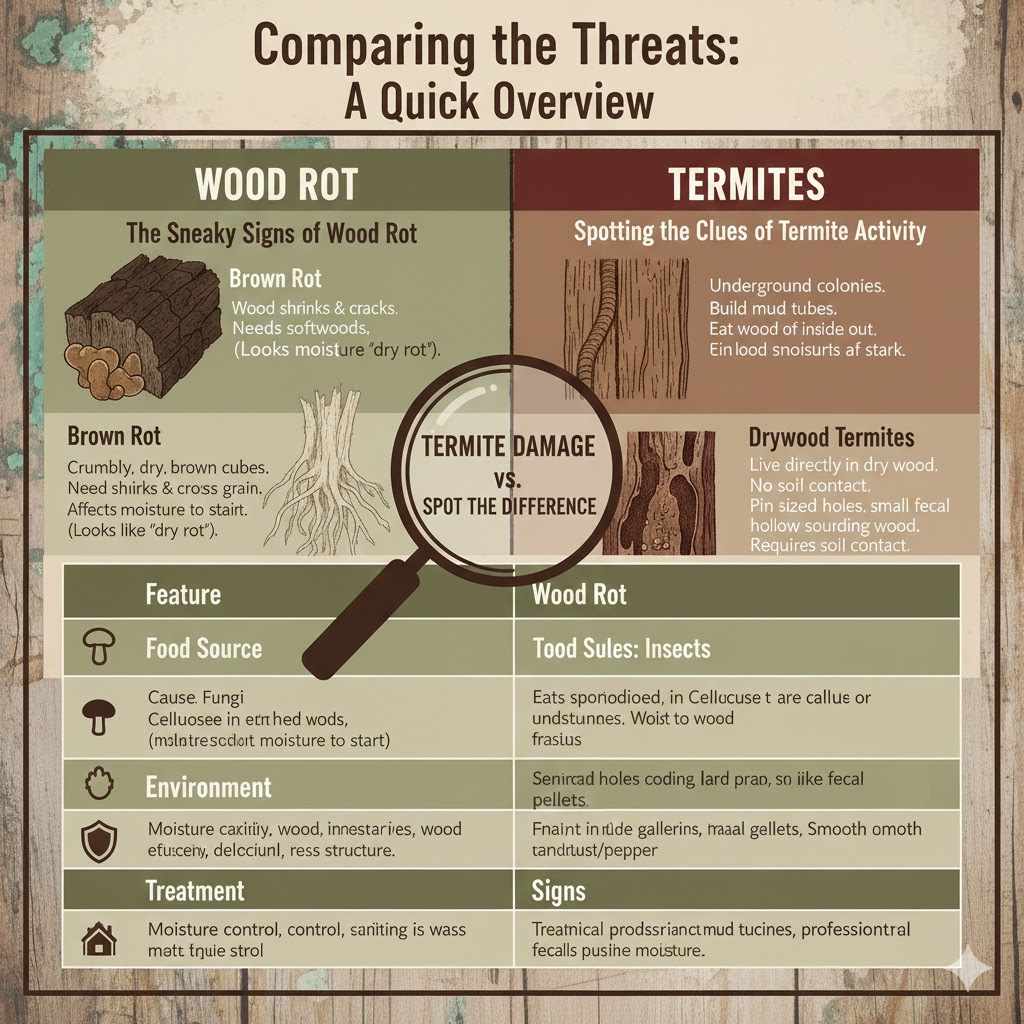
Comparing the Threats: A Quick Overview
The differences between Termite Damage vs Wood Rot: Spot the Difference can be summarized with a quick comparison to highlight key distinctions. Recognizing these differences will improve your home’s protection. The table will provide a clear overview to help you understand the core differences between the two threats. The ability to spot and identify these problems will help you prevent costly damage and ensure your home’s long-term health.
| Feature | Wood Rot | Termites |
|---|---|---|
| Cause | Fungi | Insects |
| Food Source | Cellulose in wood | Cellulose in wood |
| Environment | Moist conditions | Variable; may require moisture |
| Damage Pattern | Discoloration, crumbly, or stringy wood | Tunnels, galleries, frass (fecal pellets) |
| Signs | Soft, spongy texture; color changes; structural weakness | Mud tubes; small holes; hollowed-out wood; frass |
| Treatment | Moisture control, wood preservatives | Chemical barriers, professional pest control |
Frequently Asked Questions
Question: What is the most common sign of termite infestation?
Answer: The most common sign of a termite infestation is the presence of mud tubes, especially for subterranean termites. These tubes serve as pathways from the soil to the wood, providing termites with access to their food source.
Question: How can I tell if I have wood rot?
Answer: Wood rot is often indicated by discoloration, a change in texture (such as softness or crumbling), and structural weakening. You might also notice a musty smell in affected areas.
Question: Can wood rot and termites occur at the same time?
Answer: Yes, it is definitely possible for both wood rot and termites to occur in the same location at the same time. These two types of damage often create or accelerate conditions that are favorable to the other. High moisture levels, a key enabler for wood rot, can also attract termites. Also, wood rot creates softer wood, making it easier for termites to infest.
Question: What is the difference between drywood and subterranean termites?
Answer: Drywood termites live directly in wood, without needing to make contact with the soil. They leave behind small, hard fecal pellets (frass). Subterranean termites, however, live in underground colonies and need access to soil to survive. They build mud tubes to reach wood. They also damage from the inside out.
Question: How often should I inspect my home for wood rot and termites?
Answer: It’s a good idea to inspect your home at least once a year, preferably in the spring or fall when the weather is mild. If you live in an area with a lot of moisture or termite activity, consider inspecting twice a year.
Final Thoughts
Knowing the difference between Termite Damage vs Wood Rot: Spot the Difference is crucial to protecting your home. Both can cause serious structural problems, and knowing how to tell them apart is the first step in addressing the issue. Remember to look for key signs like mud tubes and frass, which indicate termite activity, and discoloration and texture changes that suggest wood rot.
Regular inspections, moisture control, and the right treatment plans can save you time and money. Don’t wait until damage becomes severe. Inspect your home regularly, and address any concerns early. Taking quick action will protect your home.