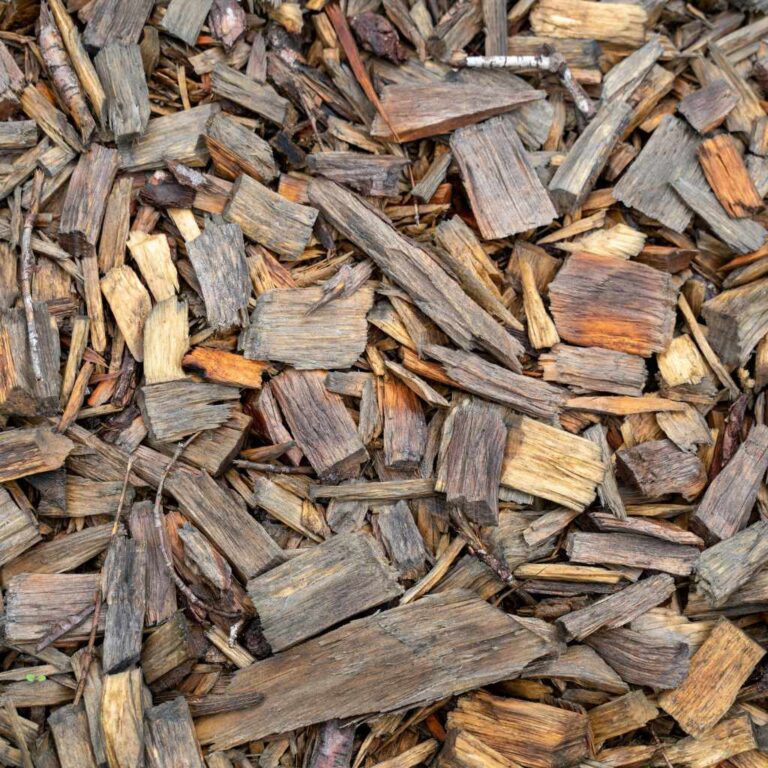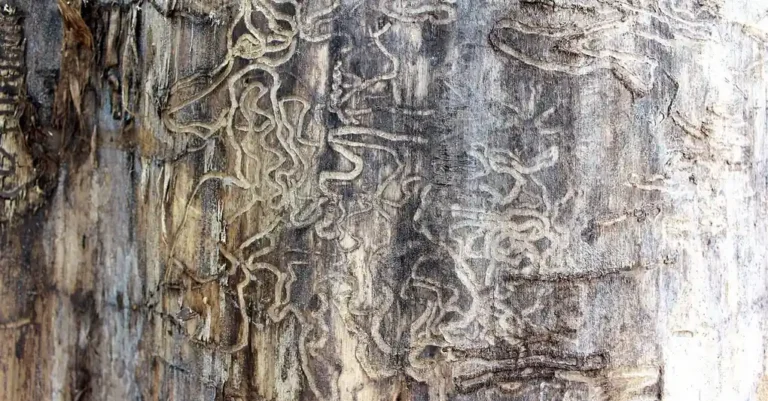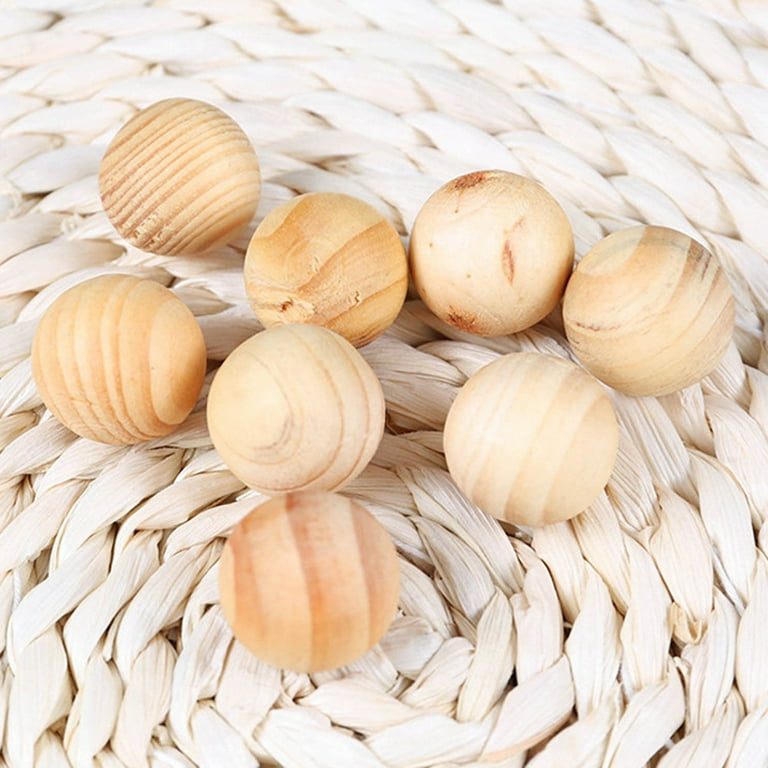
Does Camphor Wood Repel Roaches?
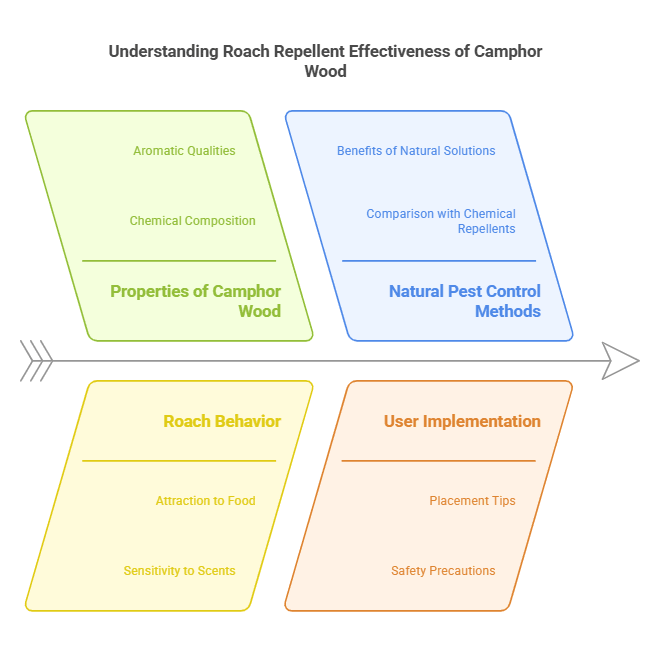
Camphor wood repels roaches by releasing camphor oil, a volatile compound that disrupts the insect’s olfactory receptors and triggers avoidance behavior — but it repels rather than exterminates, making it most effective as a preventive barrier in low-to-moderate pressure situations. Relying on camphor alone during a heavy infestation leaves harborage areas untreated. This guide covers exactly how camphor works against roaches, the best placement spots in your home, how long the scent stays active, and the safety rules for homes with pets.
Quick Answer
Camphor wood repels roaches through naturally occurring camphor oil, a volatile compound that overwhelms the insect’s sense of smell. Place small wood blocks or chips in kitchen cabinets, under sinks, and near entry points. Fresh camphor wood retains active repellent properties for 2 to 3 months before needing replacement. It deters roaches — it does not kill them.
How Camphor Wood Repels Roaches
Best Natural Wood Roach Repellent Pick
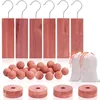
Homode Cedar Blocks for Clothes Storage (40 Pack)
Natural aromatic cedar wood chips and balls in one pack — the same volatile oil principle as camphor wood, ready to use in cabinets, drawers, and closets.
- Best for: Kitchen cabinets and bathroom drawers where roaches commonly harbor near moisture
- Why we picked it: 40-piece variety pack gives full-home coverage; 100% natural cedar without chemical additives
- Main drawback: Loose chips can scatter; use a small mesh bag for neater drawer placement
Compare more natural wood roach repellent options
 Option 1 Woodever Cedar Blocks (56 Pcs)
|
 Option 2 Professor Killamoth Cedar Chips + Lavender Sachets (20 Pack)
|
 Option 3 Dr. Killigan’s Cedarwood Planks
|
As an Amazon Associate we earn from qualifying purchases.
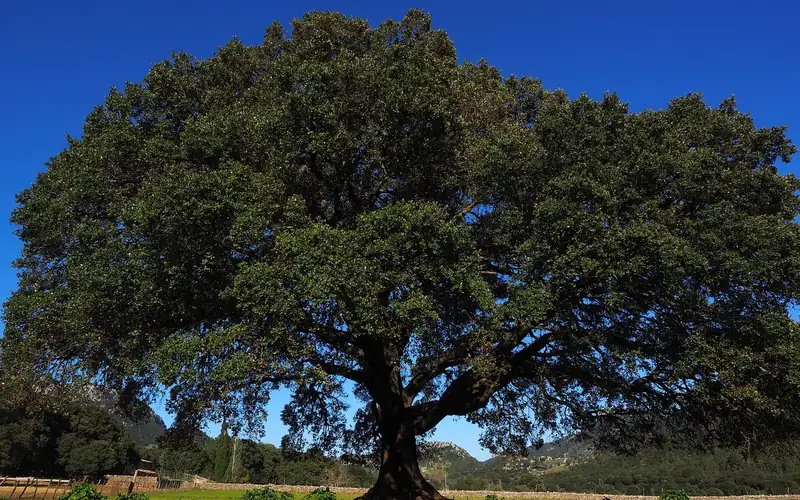
Camphor wood comes from the camphor laurel tree (Cinnamomum camphora), native to China and Japan. The wood’s repellent properties come from its naturally high concentration of camphor oil — a ketone-class volatile organic compound (VOC) that evaporates at room temperature and delivers a sharp, distinctive scent.
The Active Compound: Camphor Oil
Camphor oil is a terpene-derived compound concentrated in the wood and bark of Cinnamomum camphora that functions as a natural insect deterrent. It repels roaches by interfering with their olfactory receptors, not by killing them on contact. Effectiveness diminishes gradually as the wood dries out and volatile compounds dissipate into the surrounding air.
When camphor wood is placed in an enclosed space, the oil sublimates slowly into the air, creating a scent zone that roaches and other insects actively avoid. The compound disrupts the insect’s chemoreceptors — the sensory organs they use to detect food sources, mates, and environmental cues. Research on camphor as an insect repellent confirms significant repellency against multiple insect species, with cockroaches showing avoidance behavior within minutes of scent exposure.
How Roaches React to the Scent
Cockroaches detect camphor through their antennal chemoreceptors and respond by moving away from the treated zone. Unlike chemical pesticides that kill on contact, camphor creates a sensory barrier that roaches choose to cross only when no other food source or harborage is available. This means camphor works best as a preventive measure against wood roaches — before roaches establish nesting sites — rather than as a cure for an active infestation. If roaches are already nesting in wall voids or under appliances, camphor wood alone will not eliminate the colony.
Where to Place Camphor Wood in Your Home
Strategic placement is the difference between effective repellent coverage and a pleasant-smelling cabinet that does nothing useful. Focus on the spots where roaches commonly enter, harbor, and forage.
| Location | Why It Matters | How to Place |
|---|---|---|
| Kitchen cabinets | Common roach harborage near food sources | Wood chips in corners of each cabinet shelf |
| Under bathroom and kitchen sinks | Roaches enter through drain gaps and pipe penetrations | One to two blocks near the drain entry point |
| Near entry doors and window sills | Primary entry points for roaches moving indoors | Block tucked at the corner of the door or window frame |
| Closets and drawers | Preferred hiding spots in warm, enclosed spaces | Sachets placed in corners |
| Behind refrigerators and stoves | Warm, dark, hidden spaces roaches prefer | Small block behind or beneath the appliance |
Do not place camphor wood directly on clothing or fabric — the oil can transfer and cause skin irritation in sensitive individuals. Use a small mesh or muslin bag to contain the wood when placing it near stored items.
How Long Does Camphor Wood Last as a Repellent?
How long camphor remains effective depends on the form you use and the conditions in the space. Volatile compounds dissipate faster in warm, ventilated areas and much slower in cool, enclosed spaces like drawers and sealed storage containers.
| Form | Effective Duration | Best Environment |
|---|---|---|
| Solid camphor wood blocks | 2 to 3 months | Cabinets, closets, sealed spaces |
| Camphor wood chips in sachets | 4 to 6 weeks | Small drawer inserts, enclosed bins |
| Camphor essential oil spray (DIY) | 1 to 2 weeks | Entry points, cracks, open areas |
| Commercial camphor tablets | 3 to 6 months | Sealed storage containers (away from pets) |
The sign that camphor wood has lost effectiveness is simple: the scent fades to the point where you cannot detect it at arm’s length. Replace the wood before that point to maintain consistent coverage. Lightly sanding the surface of a block exposes fresh wood and temporarily restores scent release — a useful trick to extend effectiveness by another two to four weeks before full replacement.
Camphor Wood vs. Camphor Tablets — Which Works Better?
Both camphor wood and camphor tablets release the same active compound, but they differ in concentration, duration, and safety profile. Choosing the wrong form for the wrong location can leave the wrong people or pets at risk.
| Feature | Camphor Wood | Camphor Tablets |
|---|---|---|
| Active compound | Natural camphor oil in wood matrix | Concentrated refined camphor |
| Scent strength | Mild to moderate | Strong to very strong |
| Duration | 2 to 3 months | 3 to 6 months |
| Child and pet safety | Safer when placed out of reach | Toxic if ingested; ventilation required |
| Surface compatibility | Safe on wood and fabric | Can damage varnished or lacquered surfaces |
| Best application | Drawers, cabinets, closets | Sealed storage containers |
Camphor wood is the safer choice for areas where children or pets might access the space. Camphor tablets contain a higher concentration of camphor and are toxic if a pet or child chews on them. For sealed storage containers where access is controlled, tablets offer longer-lasting protection per unit.
How to Make DIY Camphor Wood Repellents
Two practical DIY methods let you use camphor wood in different parts of your home: sachets for enclosed spaces and an oil spray for open surfaces and entry points.
Camphor Wood Sachets
- Get camphor wood chips by purchasing them from an Asian grocery store or woodworking supplier, or by shaving them from a block with a coarse rasp or file.
- Fill a small muslin or cotton bag (3 to 4 inches) about halfway with the chips — do not overfill, as airflow through the bag helps release the scent.
- Tie or seal the bag tightly so chips do not escape.
- Place in cabinet corners, drawer backs, and closet shelves where roaches commonly hide.
- Replace the chips when the scent fades — typically every 4 to 6 weeks in warm spaces, and up to 2 to 3 months in cool, enclosed drawers.
Camphor-Infused Spray
A camphor spray lets you treat cracks, baseboards, and entry points where solid blocks cannot fit.
- Add 10 to 15 drops of camphor essential oil to 1 cup of water in a spray bottle.
- Shake well before each use — oil and water separate quickly.
- Spray around entry points, drain areas, and wall crevices where roaches travel.
- Reapply every 1 to 2 weeks — camphor oil evaporates significantly faster in open air than it does from solid wood.
Do not spray camphor oil directly on wood furniture with lacquer or varnish finishes — concentrated camphor oil can cloud or soften some coatings.
Is Camphor Wood Safe for Pets and Children?
Natural does not automatically mean safe in all situations. Camphor has a documented toxicity profile, and understanding the limits matters before placing it throughout your home.
For children: Camphor wood in solid block form is generally safe when placed in cabinets and drawers that children cannot access. The camphor oil concentration released by solid wood into ambient air is low enough that normal air exposure poses minimal risk for healthy adults and older children. However, keep all camphor products — blocks, chips, and especially tablets — away from young children who might put them in their mouths. Ingesting camphor, even from wood shavings, can cause seizures and central nervous system effects at sufficient doses.
For pets: Camphor is listed as toxic to both dogs and cats by the ASPCA Animal Poison Control Center. Dogs or cats that chew on camphor wood or ingest camphor oil can experience vomiting, disorientation, tremors, and in severe cases, respiratory distress. Place camphor products only in spaces your pets genuinely cannot access — locked cabinets, high shelves, or storage areas with closed doors. If you suspect your pet has chewed or ingested camphor, contact your veterinarian immediately and bring the product packaging if possible.
Ventilation rule: Always ensure adequate air circulation in any room where camphor wood is placed. Prolonged human exposure to high concentrations of camphor vapor in poorly ventilated spaces can cause headaches, dizziness, or nausea. A cabinet or drawer is well-ventilated enough; an unventilated sealed room with large quantities of camphor is not.
Frequently Asked Questions
Does camphor wood kill roaches or just repel them?
Camphor wood primarily repels roaches rather than killing them. Research has confirmed that roaches exposed to camphor move away from the treated area. While very high concentrations of camphor can be toxic to cockroaches with extended exposure, the amounts released by solid wood placed in a home cabinet are far below that threshold. At practical household placement levels, the effect is repellent rather than lethal.
How long does camphor wood last as a repellent?
Camphor wood blocks typically retain active repellent properties for 2 to 3 months in normal indoor conditions. Chips and shavings in sachets last 4 to 6 weeks. Effectiveness fades faster in warm, ventilated areas and slower in cool, sealed spaces like drawers or storage cabinets. Replace camphor wood when you can no longer detect the scent at arm’s length — or sand the surface lightly to expose fresh wood and extend the scent by a few more weeks.
Is camphor wood safe for cats and dogs?
Camphor is classified as toxic to both cats and dogs. Animals that chew or ingest camphor wood can experience vomiting, tremors, and in severe cases, seizures. Place camphor blocks only in areas genuinely inaccessible to pets — locked cabinets or high shelves. The ASPCA Animal Poison Control Center lists camphor as a substance that requires immediate veterinary attention if ingested by a pet.
What other insects does camphor wood repel?
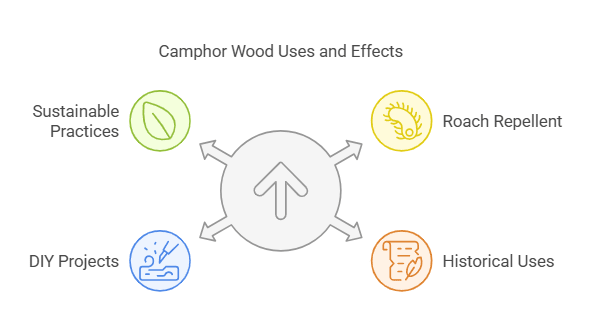
Beyond roaches, camphor wood is effective against moths, silverfish, mosquitoes, and some species of ants. The volatile compounds that disrupt roach chemoreceptors affect a broad range of insects that rely on olfactory signals. This explains the long history of camphor wood use in East Asian furniture — storage chests made from camphor laurel protected stored clothing and documents from multiple insect types simultaneously.
Can I use camphor wood and cedar together?
Yes. Camphor wood and cedar are both effective natural roach repellents that can be used together without any harmful interaction. Cedar contains cedrene and cedrol, different volatile compounds that also repel roaches and insects. Using both in different areas of your home extends your natural coverage without risk. Many commercially available natural repellent products combine multiple aromatic wood extracts for exactly this reason.
Conclusion
Camphor wood is a practical, low-chemical option for deterring roaches in cabinets, closets, and entry-point areas — most effective when used before roaches establish nesting sites rather than after an infestation is underway. Solid blocks work best in cool, enclosed spaces and last 2 to 3 months before needing replacement. Keep all camphor products away from pets and young children, maintain adequate ventilation, and combine camphor placement with good sanitation habits for the best long-term results. For related natural approaches, also see what repels wood roaches and which tree woods naturally repel roaches.
Sponsored / affiliate links. As an Amazon Associate I earn from qualifying purchases. I may earn additional commission from eligible campaigns.