What Keeps Furniture from Sliding on Hardwood Floors: Solutions
Imagine this: you’ve just set up your living room perfectly. The couch is in the ideal spot, the coffee table looks stunning, and everything seems just right.
But then, with the slightest nudge, your furniture starts to slide across your beautiful hardwood floors. Frustrating, isn’t it? If you’ve ever faced this problem, you’re not alone. Many homeowners struggle with the same issue, and it can be more than just an inconvenience.
It can lead to scratches on your floors and disrupt the harmony of your space. But don’t worry. There’s a solution, and you’re about to discover it. We’ll explore what keeps furniture from sliding on hardwood floors, ensuring your home stays as beautiful as you’ve envisioned. Keep reading to find out how you can protect your floors and keep your furniture exactly where it belongs.
Credit: ducttapeanddenim.com
Causes Of Furniture Sliding
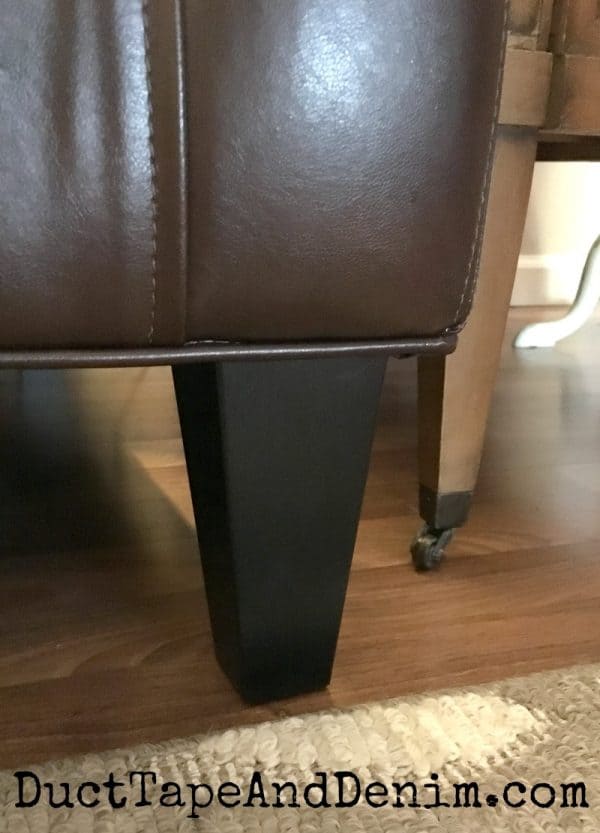
Hardwood floors are very smooth. This makes furniture slide easily. The lack of friction is a big cause. Wooden surfacesare polished. They do not grip well. Furniture legsoften have smooth bottoms. This adds to the problem.
Light furniture moves more easily. Heavy items are more stable. But they still can slide. Moving furniture causes it to shift. Even small movements lead to sliding. Frequent adjustmentsmake the problem worse.
Non-slip Pads And Grippers
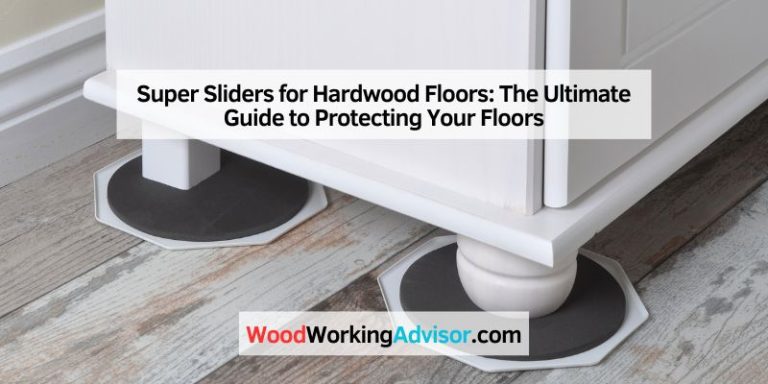
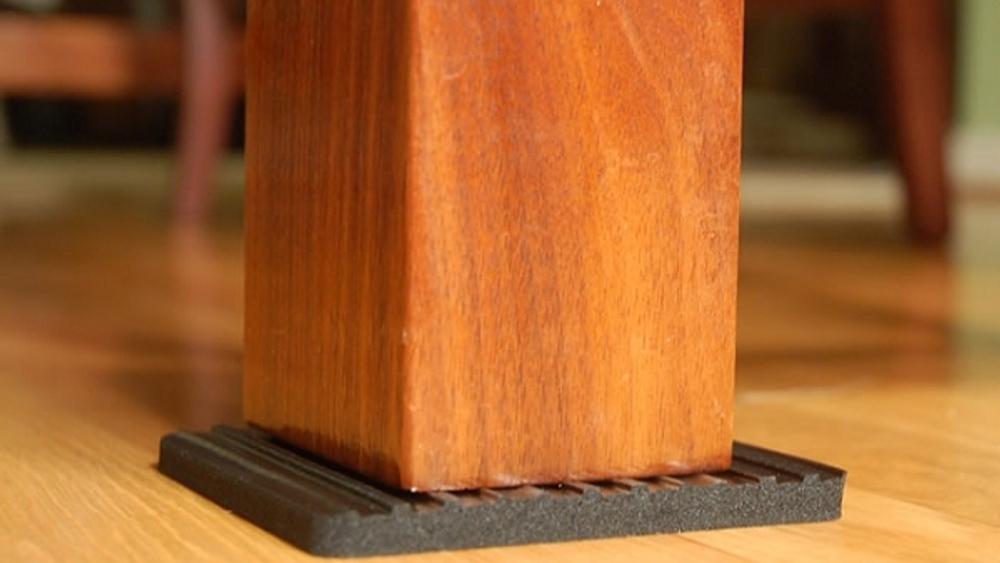
Non-slip pads come in different materials. Rubber, felt, and silicone are popular. Rubber grips floors well. Felt is soft and gentle. Silicone is sticky and holds tight. Each material has its benefits. Choose the best one for your needs.
Clean the floor before installing pads. Dirt makes pads less sticky. Place pads under each furniture leg. Press down firmly to secure. Check pads often. Replace worn pads to keep furniture from sliding. Simple steps for a safer home.
Rugs And Carpets
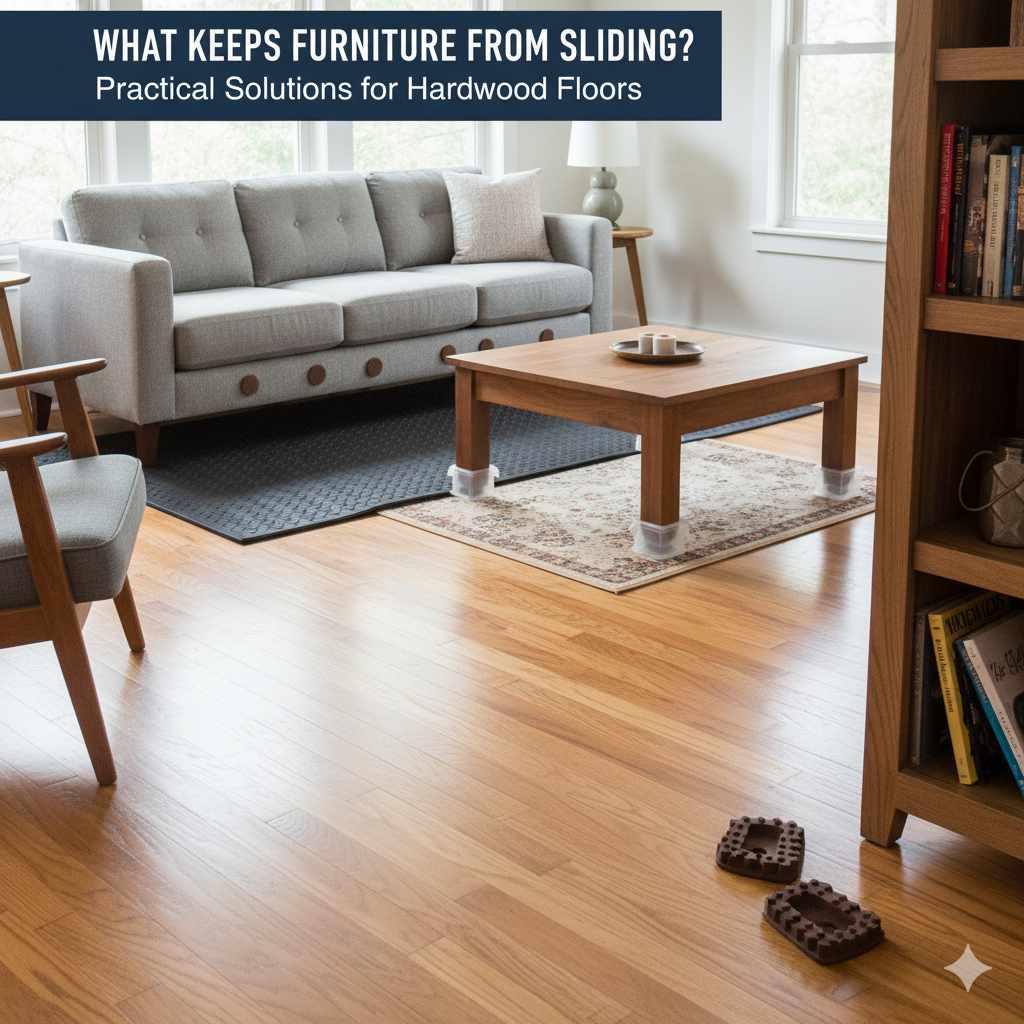
Rugs can help keep furniture in place. Choose rugs with a non-slip backing. The backing stops sliding. Consider the size of the rug. Bigger rugs cover more floor space. They offer better grip. Thickness matters too. Thick rugs are best for heavy furniture. They offer more support. Patterns and colors can add style. But focus on function first. Ensure the rug fits your room’s theme.
Place rugs under furniture legs. This prevents movement. Furniture stays put. Make sure the rug covers the entire area. No gaps between rug and floor. Secure rugs with furniture pads. Pads stick to the bottom of furniture. They add extra grip. Check placement often. Adjust rugs if they move. Keep the room tidy. This ensures rugs stay in place.
Credit: nydreeflooring.com
Furniture Arrangement Strategies
Sliding furniture on hardwood floors can be a nuisance. Non-slip pads and rubber grips provide effective solutions. Rearrange furniture strategically to create natural barriers.
Balancing Weight
Place heavy furniture pieces at the edges of the room. This keeps them steady. Mix large items with smaller ones. This creates balance. Even weight helps furniture stay in place. Use rugs under tables to add friction. Rugs prevent sliding. Choose the right size rug. Too small won’t help. Too big might overlap edges.
Optimal Layouts
Arrange furniture in a way that makes sense. Keep walkways clear. This avoids bumping into furniture. Spread out pieces evenly. This stops wobbling. Ensure furniture is not crowded. Crowding leads to sliding. Use furniture pads under legs. Pads grip the floor. They keep things stable.
Using Furniture Weights
Furniture weights help keep chairs and tables in place. They come in different types. Sandbagsare common. They are heavy and easy to use. Steel weightsare another option. They are durable and strong. Some people use lead weights. They are very heavy but not easy to handle.
It is important to use the right weight. Too heavy can damage floors. Too light won’t hold the furniture. Consider the size of your furniture. Big sofas need heavier weights. Small chairs need lighter ones. Choose wisely for best results.
DIY Solutions
Custom grippers are easy to make. Cut rubber pads to fit furniture legs. Glue pads to the bottom of each leg. This stops furniture from sliding. Make sure pads are thick. This helps them grip the floor better. Use strong glue for better hold.
Padding can be made with old towels or rags. Cut them into small pieces. Place under furniture legs. This adds friction to stop sliding. Towels must be thick. Thin towels will not work. Make sure padding is secure. This prevents it from moving.
Importance Of Maintenance
Regular checks are key to keeping furniture steady. Look at your floors often. Check for dust and dirt. These can make surfaces slippery. Clean floors help stop furniture from sliding. Make sure furniture legs are clean too. Dirty legs can slip more easily.
Floors need gentle care. Use soft brooms or vacuums. Hard tools can scratch the floor. Scratches make sliding easier. Check your floor polish. A good polish can add grip. It helps keep furniture in place. Polished floors look nice and safe.

Credit: www.amazon.com
Frequently Asked Questions
How Do I Stop Furniture From Sliding On Wood Floors?
Use non-slip pads under furniture legs. Consider using area rugs with rug pads for added grip. Opt for rubber furniture cups or grippers. Regularly clean the floor to reduce sliding. These solutions help keep furniture in place on wood floors.
How To Stop Bed From Sliding On Wood Floor Diy?
Place rubber pads or grippers under bed legs to prevent sliding. Use non-slip rug pads for extra stability. Attach adhesive furniture pads for added grip. Consider using a bed frame with locking wheels or rubber stoppers. Ensure the floor is clean and dry to enhance effectiveness.
How To Slide Heavy Furniture On Hardwood?
Use furniture sliders or pads to protect hardwood floors. Lift slightly and place sliders under each corner. Push gently to move furniture. Avoid dragging directly to prevent scratches. Consider using a towel or blanket under legs for easy sliding. Ensure the floor is clean to avoid debris causing damage.
What Can I Put On The Feet Of My Couch To Keep It From Sliding?
Use rubber pads or furniture grippers under your couch feet. These prevent sliding on smooth floors. Alternatively, place a non-slip rug underneath the couch. These solutions provide stability and protect your flooring.
Conclusion
Stopping furniture from sliding is simple and effective. Use non-slip pads. They grip surfaces well. Rugs also help. They add style and prevent movement. Furniture grippers are another solution. Easy to apply and reliable. Try rearranging furniture for better stability.
It sometimes solves the problem. Always choose solutions that match your floor type. This ensures protection and longevity. Keep your hardwood floors beautiful and furniture secure. Enjoy a safer, more comfortable home environment. With these tips, you can maintain peace of mind.
No more unexpected furniture shifts. Your floors and furniture will thank you.