Where Does Teak Wood Come From? A Simple Guide
Figuring out Where Does Teak Wood Come From? Explained Simply can seem a little tricky at first. There are lots of places that grow this awesome wood, and it might feel like a lot to learn. But don’t worry! We’ll break it all down step-by-step so it’s easy to grasp. You’ll soon know the main spots where this special wood grows. Let’s get started and explore!
Origins of Teak: The Teak Tree and Its Habitat
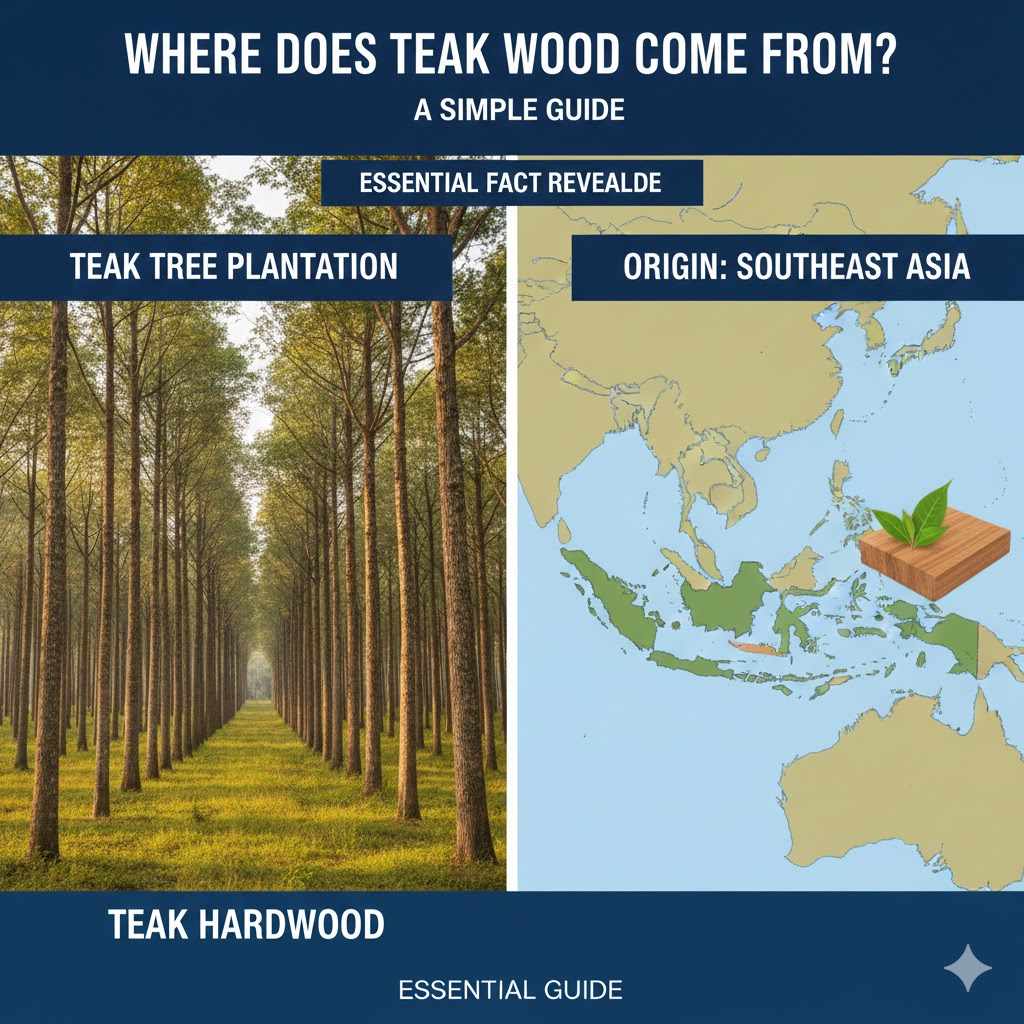
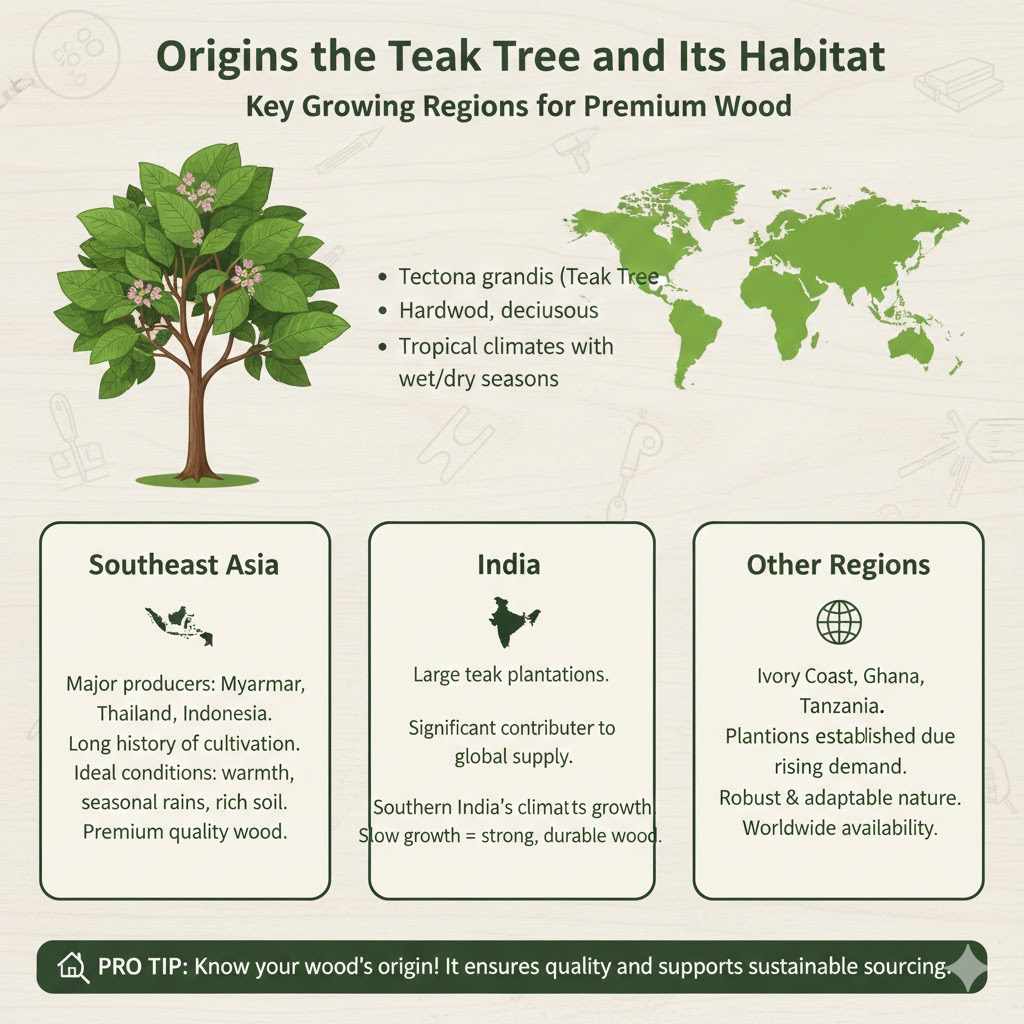
Teak wood, renowned for its durability and beautiful grain, comes from the teak tree, scientifically known as Tectona grandis. This hardwood is a deciduous tree, meaning it sheds its leaves annually. It thrives in tropical climates, particularly in areas with distinct wet and dry seasons. The teak tree’s natural habitat dictates the quality and characteristics of the wood it produces. The places the trees grow give the wood its unique properties.
Key Growing Regions for Teak
The majority of commercially available teak originates from specific regions around the globe. These areas possess the ideal environmental conditions that allow teak trees to flourish. Understanding these regions provides crucial context for appreciating the sourcing of this valuable timber.
- Southeast Asia: Myanmar (Burma), Thailand, Laos, and Indonesia are major producers. These countries have long histories of teak cultivation and forestry management. Their climates support rapid teak growth, producing wood with desirable qualities.The natural environmental conditions of Southeast Asia – consistent warmth, seasonal rains, and rich soil – give teak trees the perfect surroundings to thrive. This creates the optimal conditions for developing high-quality wood. Because of that, the wood from these areas is often seen as premium teak.
- India: India also has large teak plantations. Although not as widely known for teak as its Southeast Asian neighbors, India contributes significantly to global teak supply. This includes parts of southern India, where the climate supports teak growth.India’s teak trees, like those in Southeast Asia, grow slowly. The slow growth helps make the wood strong and resistant to damage. This slow growth makes the wood very useful for long-lasting things like furniture and boat building.
- Other Regions: Teak is also cultivated in smaller amounts in countries like Ivory Coast, Ghana, and Tanzania, particularly on plantations established to meet rising global demand. The establishment of these farms shows the growing interest in using teak in different places.Teak’s wide geographic adaptability reflects its robust nature. It is able to grow in various climates. This makes it a great choice for farmers and woodworkers. This adaptability helps explain why you can see teak products from so many different parts of the planet.
The Growing Conditions of Teak and Their Impact
The conditions where teak trees grow greatly affect the type of wood they produce. These conditions play a vital role in the wood’s durability, color, and texture. Knowing these factors helps people understand the differences between different teak products.
Climate Requirements
Teak trees need specific climates to grow well. This includes warm weather and well-defined wet and dry seasons. These requirements help explain why teak grows mainly in tropical and subtropical areas. These climate features help teak gain its special properties.
- Temperature: Teak trees need a lot of warmth. They grow best in places where the average yearly temperature is between 22°C and 27°C (72°F and 81°F). This warm climate promotes fast growth and the production of quality wood.Warm temperatures help teak trees grow fast. They also assist in the development of the wood’s structure. The wood needs warmth to develop its high oil content, which is key to its weather resistance.
- Rainfall: Teak trees require a good amount of rain. They usually need between 1,200mm and 2,500mm (47 to 98 inches) of rain per year. This rainfall is very important for the tree’s health and growth.Adequate rainfall ensures that the trees have enough water to thrive. The water helps them soak up nutrients from the soil. That makes the wood strong and healthy. It’s especially useful for products like furniture that are used outside.
- Sunlight: Plenty of sunlight is also important for teak trees. They need full sunlight to grow well and produce high-quality wood. Sunlight supports photosynthesis, the process that provides energy for the tree.Sunlight helps the teak trees grow well and develop strong, dense wood. This strong, dense wood is famous for its resistance to rot and pests. These qualities are a main reason that teak is loved by builders.
Soil Composition Matters
The type of soil where teak trees grow also affects the wood. Soil characteristics such as nutrient content, drainage, and composition impact the quality of the teak. Properly managing the soil is key for getting the best wood.
- Well-Drained Soil: Teak trees need soil that drains well. This prevents water from sitting around the roots, which can cause rot. Well-drained soil helps the trees grow straight and strong.Well-drained soil prevents the trees from getting waterlogged. This helps prevent diseases and promotes healthy root development. Good drainage also enables the roots to get oxygen. That oxygen is needed for the trees to grow.
- Nutrient Rich Soil: Soil that is rich in nutrients is key for teak trees to grow well. Nutrients like phosphorus, nitrogen, and potassium help the trees grow strong and produce good-quality wood. Soil with the right nutrients provides what the trees need.Rich soil provides the essential elements that teak trees need to stay healthy. These nutrients also affect the wood’s density and color. That is why the soil composition is very important to get good wood.
- Slightly Alkaline Soil: Teak trees generally like soil that has a slightly alkaline pH. This environment helps the trees absorb the nutrients they need to grow. The right pH means the trees can use their resources effectively.The right pH level of the soil helps the trees use the nutrients. This, in turn, helps the trees grow better and produce high-quality wood. The soil’s pH is key for growing strong and durable teak.
Teak Forestry and Sustainable Practices
The practices used to manage teak forests are very important. Doing things the right way ensures that we can use teak wood without damaging the environment. Sustainable forestry practices help keep the teak forests healthy and preserve them for the future.
Sustainable Forestry Techniques
Sustainable forestry helps to take care of teak forests and their resources. These techniques focus on careful planning and management to ensure that teak can be used without damaging the environment or causing harm.
- Selective Harvesting: Instead of cutting down all the trees, selective harvesting only removes mature trees. This leaves younger trees to keep growing. The technique is helpful for keeping the forest healthy and supporting natural regeneration.Selective harvesting makes sure there are enough trees left to grow. It also helps to keep the forest’s ecosystem in balance. This helps maintain the forest’s structure. That leads to a lasting supply of teak.
- Reforestation and Afforestation: These practices focus on planting trees. Reforestation restores forests that have been cut down. Afforestation establishes forests in areas where trees did not grow before. Planting new trees is a key part of sustainable forestry.Reforestation and afforestation help to keep teak available for future use. Planting trees helps offset the effects of harvesting. These efforts are important for environmental protection and economic stability.
- Forest Management Plans: These plans include rules for cutting, planting, and protecting forests. These plans help in the conservation of forests. They help to make sure that the forest’s resources are used responsibly.Forest management plans help to manage how teak is harvested. These plans aim to preserve the environment and keep the industry running. They are designed to prevent over-harvesting and promote a balanced use of resources.
Protecting Biodiversity in Teak Forests
Protecting the many plants and animals in teak forests is important. These forests are homes to a lot of different species. Good forest management helps to keep them healthy. They make sure the forests stay diverse.
- Conservation Areas: Creating protected areas within forests helps to preserve different species. These zones are set aside to protect the animals and plants. This makes sure that these species can live safely.Conservation areas help to protect animals and plants from harm. These areas are essential to preserve the many species in the ecosystem. This also ensures that the ecosystem is balanced.
- Ecosystem Management: Managing forests in a way that respects the ecosystem is important. This means taking care of the entire forest, not just the teak trees. It considers the connections between plants, animals, and the environment.Ecosystem management takes a broad approach to forestry. This considers the environment’s health, biodiversity, and ecosystem services. The management creates a healthy and balanced ecosystem.
- Community Involvement: Involving local communities in forest protection efforts is important. Local people often know the forests very well. When they participate, they feel responsible for taking care of the forests.Community involvement helps people care about the forests. It encourages them to help protect the environment. Local knowledge is important to sustainable forestry.
Uses and Applications of Teak Wood
Teak’s special properties make it a great choice for many uses. It’s famous for its strength, resistance to water, and beautiful appearance. Because of that, it is used in a lot of different industries.
Teak in Boatbuilding
Teak wood has been a favorite in boatbuilding for centuries. Its natural oils protect it against the sea. It’s strong and doesn’t get damaged by water. That makes it perfect for use in marine environments.
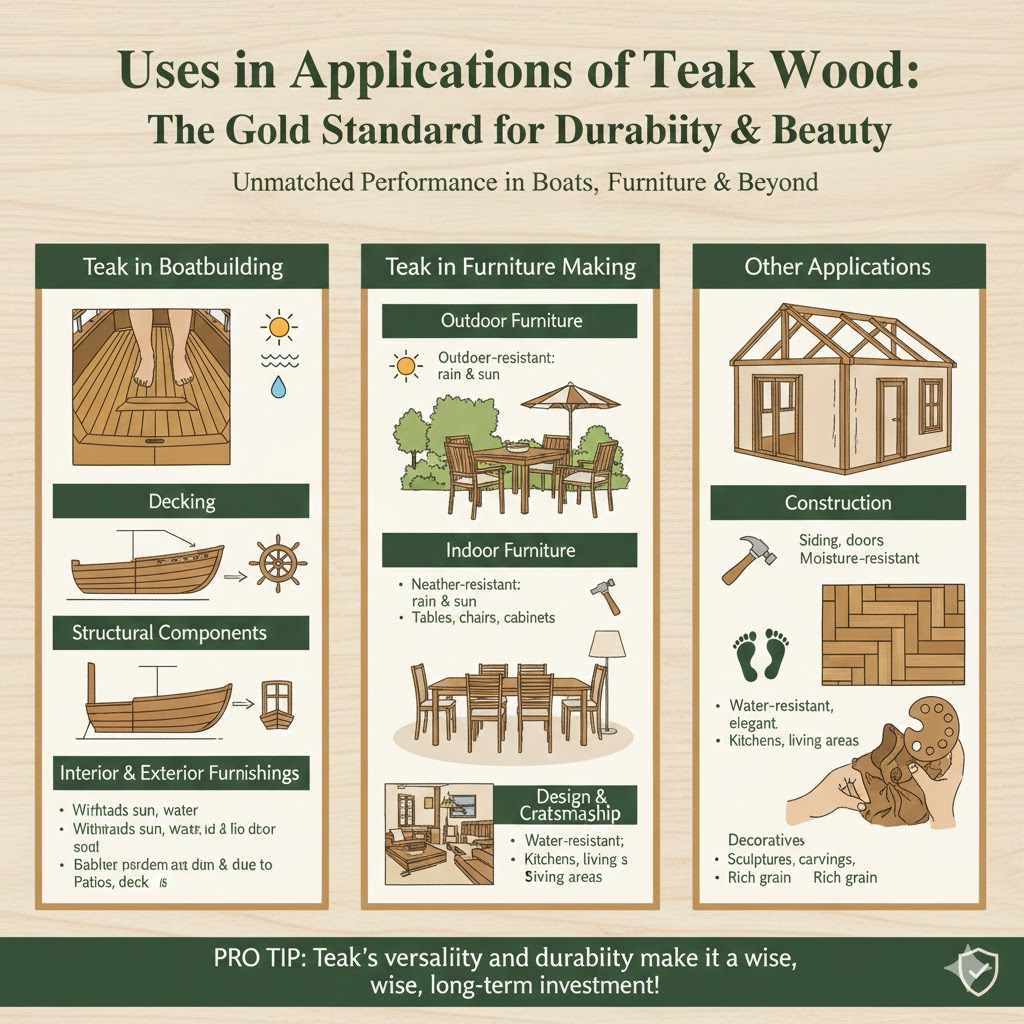
- Decking: Teak is perfect for boat decks. It withstands sun, water, and constant use. Because of that, teak decks are a popular option. They don’t warp, crack, or rot.Teak decking offers a non-slip surface that is safe and comfortable. Teak’s beautiful color adds to the boat’s look. It’s a favorite for both sailing yachts and motorboats.
- Structural Components: Teak is used for different parts of boats. That includes hulls, frames, and cabins. Its durability and water resistance make it last for years.Teak’s ability to resist weather and wear makes it ideal for the boat’s frame and hull. Teak components also provide a sense of luxury and performance. This makes boats safer and more attractive.
- Interior and Exterior Furnishings: Teak is used for both inside and outside boat furniture. It’s great for seats, tables, and storage. That gives the boats a beautiful and practical design.Teak furnishings make boats more attractive. They are resistant to harsh conditions. The furniture lasts a long time and keeps its beauty even when exposed to water and sun.
Teak in Furniture Making
Teak is a great choice for furniture. It is beautiful, strong, and lasts a long time. It is very popular for both indoor and outdoor furniture because of its great qualities.
- Outdoor Furniture: Teak is perfect for outdoor use. It resists weather, including rain and sun. That makes teak outdoor furniture a popular choice. It doesn’t rot or decay easily.Teak outdoor furniture offers style and durability. It withstands weather conditions year after year. That makes it a great choice for gardens, patios, and decks.
- Indoor Furniture: Teak is also used for indoor furniture. That includes tables, chairs, and cabinets. Its natural beauty and durability make it a valued choice.Teak indoor furniture brings warmth and sophistication to any room. Teak’s beautiful grain and color add elegance to the furniture. These pieces often become cherished items.
- Design and Craftsmanship: Teak is a wood that is easy to work with and looks great. Furniture makers love teak because it can be crafted in different ways. They can create unique and beautiful pieces.Teak furniture adds beauty to any home. Its versatility enables designers to create amazing pieces. Teak’s grain gives character and charm.
Other Applications
Besides boats and furniture, teak is used in several other applications. That includes construction, flooring, and decorative elements. The teak’s durability and good looks make it a favorite for many uses.
- Construction: Teak is used for construction. It is great for building houses and other structures. Its natural resistance to pests and decay makes it a valuable material.Teak is often used in places where there is a lot of moisture. That includes window frames, doors, and siding. Its strength and stability mean it lasts for many years.
- Flooring: Teak is used to make beautiful and long-lasting flooring. It’s resistant to water, making it a great choice for many rooms, even kitchens. Its color and grain add a great look to any area.Teak flooring has become very popular because of its beauty and resistance to wear and tear. It lasts a long time and makes homes look classy. With the right care, teak flooring can last a lifetime.
- Decorative Elements: Teak is a popular wood to create decorative items. That includes sculptures, carvings, and other items. Its beauty and workability make it a favorite for artists.Teak’s special look is perfect for decorative pieces. Its color and grain make it an excellent choice for art. The wood’s texture and natural qualities make it a popular material for artists.
Real-Life Examples
- Case Study: Teak Decking on Luxury Yachts: Luxury yachts frequently use teak decking. Its ability to resist wear and tear combined with its beauty, means it is a top choice. Teak decks can last over 20 years with care, a testament to teak’s durability.Yacht owners are ready to pay more for teak decking because of the value and look that it brings. This example reveals how teak is a perfect choice for both looks and function. It lasts a long time and adds value.
- Case Study: Teak Furniture in Tropical Resorts: Many tropical resorts use teak furniture for outdoor settings. Teak’s weather resistance makes it a great option. Even with hot sun and humid weather, the furniture stays beautiful and strong.These resorts get a lot of value from their teak furniture. They don’t have to keep replacing it. The teak furniture helps the resorts to have high-quality, long-lasting furniture. That is a great investment.
| Feature | Teak Wood | Other Woods |
|---|---|---|
| Water Resistance | High | Varies |
| Durability | Excellent | Varies |
| Aesthetics | Beautiful grain and color | Varies |
| Cost | Higher | Varies |
Frequently Asked Questions
Question: Why is teak wood so expensive?
Answer: Teak is expensive because of its rarity, its slow growth, and its outstanding properties. Sustainable harvesting and processing also add to the cost.
Question: How can I tell if a piece of furniture is really made of teak?
Answer: Check for the wood’s distinctive grain and color. Teak also has a slightly oily feel. Look for the “Teak” stamp or label, and be aware of the price point. Cheaper versions may not be genuine.
Question: What is the best way to maintain teak wood?
Answer: Clean your teak furniture often with soap and water to keep it clean. You should also treat it with teak oil to protect it from weather and keep it looking good.
Question: Does teak wood need to be sealed?
Answer: Teak does not always need to be sealed. It is naturally resistant to water. However, applying a sealant can help to protect it and keep it looking good for years.
Question: What is the difference between teak and other types of wood?
Answer: Teak is different because of its natural oils, which make it water-resistant and durable. It also has a beautiful grain pattern. Other woods often lack these qualities, although other woods like Iroko are similar in some ways.
Final Thoughts
So, where does teak wood come from? We’ve learned that teak mainly grows in Southeast Asia, with important contributions from India and plantations in other tropical areas. We explored how the special climate conditions, from warm temperatures to balanced rainfall, are critical for the best teak. The wood from these areas is prized for its high oil content and weather resistance, perfect for a wide range of uses. We looked at how teak is a star in boatbuilding, furniture making, and construction. Remembering these points helps us see why this wood is so valued across different uses.
Next time you see a teak item, whether a piece of furniture or the deck of a boat, you’ll know exactly where this special wood comes from and what makes it so useful. Keep an eye out for sustainable practices, and support companies that follow them. You now know what goes into getting this beautiful and durable wood. You can make knowledgeable choices about using teak. You can help keep teak forests healthy for years to come!