10 Elegant Simple Teak Wood Door Design Ideas for a Timeless Look
Teak is a top choice for entry doors because its natural oils resist rot, warping, and insects better than most hardwoods, so it holds up to weather and daily use with minimal upkeep. That durability pairs with a rich, warm grain that works across styles from a plain flush panel to an ornately carved statement door.
Here are 10 teak wood door design ideas, each with what actually makes it work for a given space, not just how it looks.
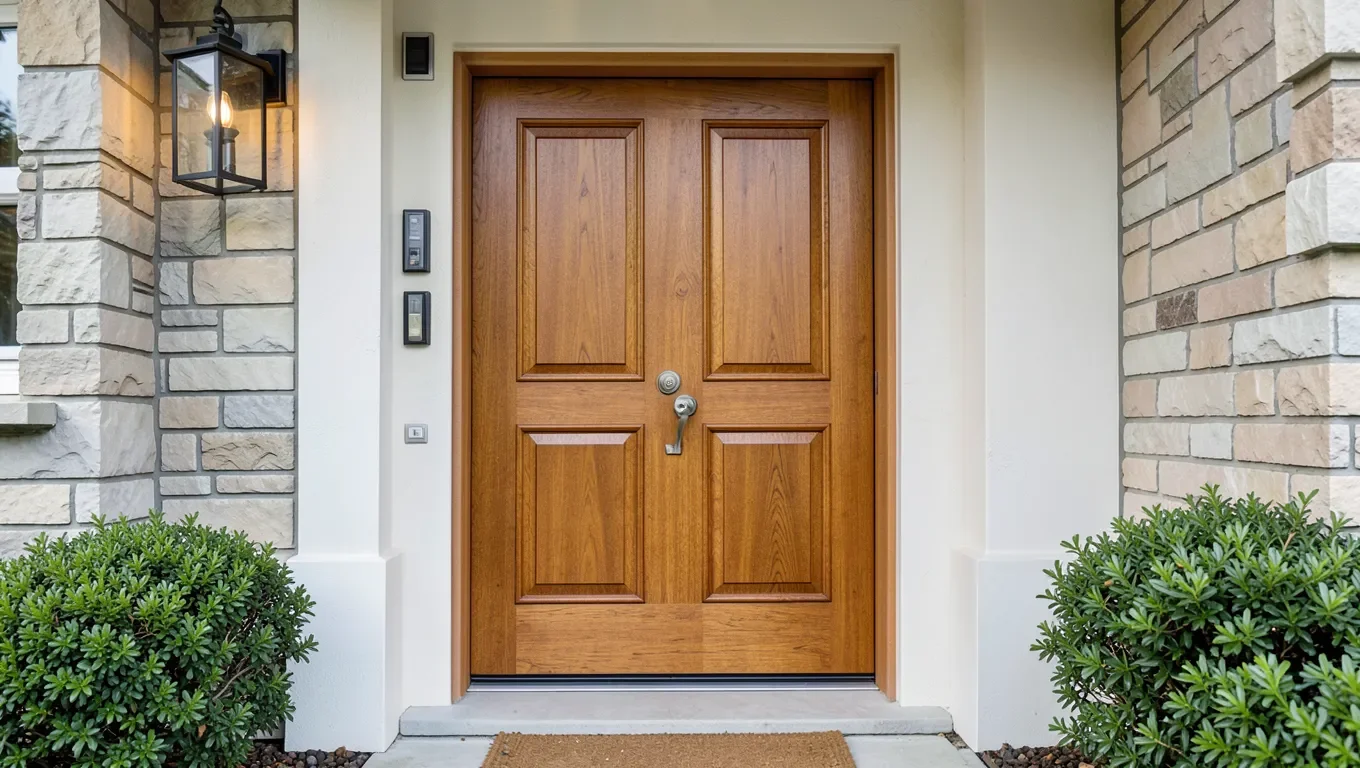
Classic Panel Doors
A panel door is built from a wood frame with recessed or raised panels set inside it, rather than a single flat slab. This construction actually helps stability — the panels can expand and contract slightly with humidity without the whole door warping, which is a real advantage over a solid slab in a climate with seasonal humidity swings.
Teak’s rich, warm color and tight, straight grain suit both traditional and transitional homes, and it takes a wide range of finishes well, from a clear oil finish that shows the natural color to a darker stain for a more formal look.
Best For Sliding And Barn-Style Teak Doors
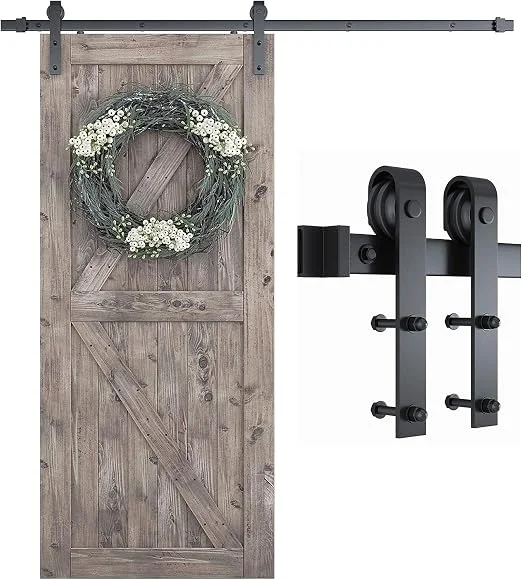 |
SMARTSTANDARD 6.8 FT Barn Door Hardware Kit – $28.99 Everything needed to hang a sliding or barn-style teak door, sized for panels up to 40 inches wide.
|
Minimalist Flush Doors
A flush door is a completely flat, smooth slab with no panels or moldings, giving it a clean, modern look that works well in minimalist or contemporary interiors. Teak’s natural grain pattern still shows through a clear finish, so the door reads as warm and textured rather than plain, even without any applied detail.
Because there’s no raised trim to catch dust or damage, flush doors are also genuinely easier to clean and maintain than a paneled door — a real, practical reason to choose this style beyond the look.
Carved Teak Doors
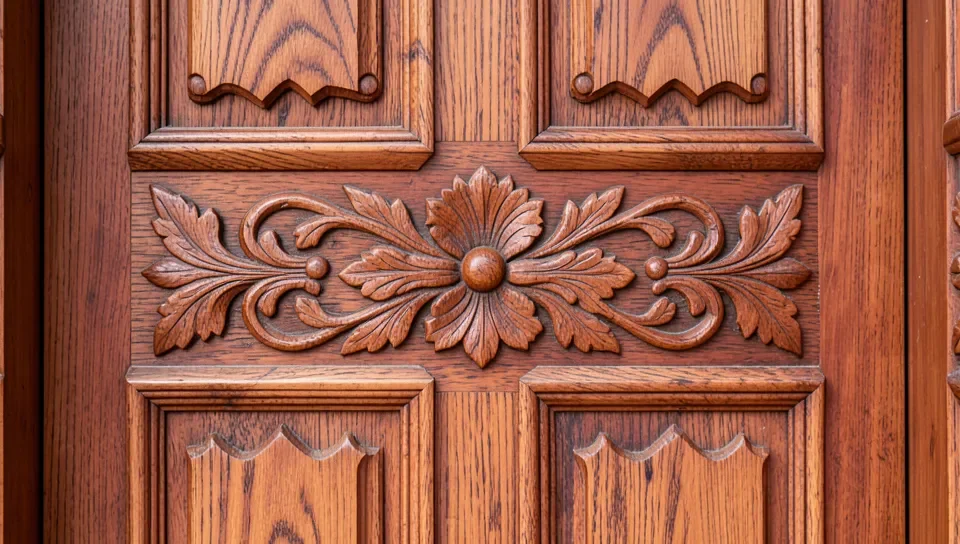
Carved teak doors use hand or machine-routed relief patterns — florals, geometric motifs, or regional traditional designs — cut directly into the door face. Teak is a good candidate for this because it’s dense enough to hold fine detail crisply without the carving chipping out over time, unlike softer woods.
A carved door works best as a genuine focal point — a front entry or a formal interior door — rather than an interior utility door, both because of the cost of the carving work and because the detail is most appreciated where people actually stop and look at it.
Louvered Teak Doors
Ventilation Benefits
Louvered doors use angled wooden slats instead of a solid panel, which is the actual functional reason to choose one — the slats let air pass through while still blocking direct sightlines, which is genuinely useful for closets, laundry rooms, and pantries where airflow matters (preventing musty smells and mildew) but full visibility isn’t wanted.
Rustic Charm
Beyond the ventilation function, the repeating slat pattern reads as a distinct, textured design element on its own, and it pairs particularly well with warm teak flooring or other natural-wood interior finishes for a cohesive look.
French Teak Doors
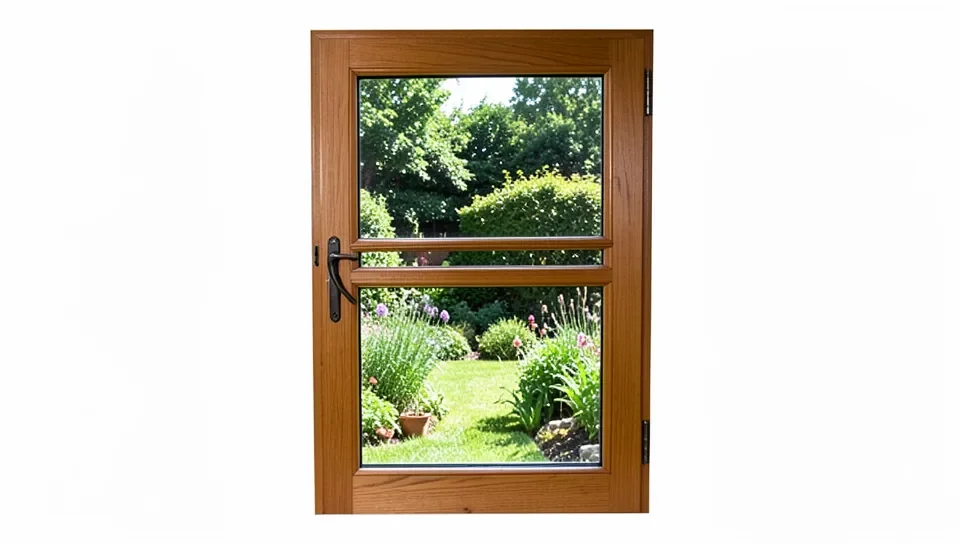
French doors pair two narrow, glass-paneled door leaves, typically hinged to swing open from the center. The glass panels bring real, functional daylight into a room — not just a decorative effect — which is genuinely useful between a living area and a dim hallway or as an entry to a patio.
Maintenance has two separate parts with French doors: clean the glass regularly, and treat the teak frame periodically with oil or sealant the same as any other exterior-facing teak, since the wood portion still needs the same weather protection a solid door would.
Sliding Teak Doors
A sliding door runs on a top-mounted track and moves parallel to the wall rather than swinging into the room, which is the real space-saving advantage — there’s no swing radius to plan around, making sliding doors genuinely useful in small rooms, closets, or tight hallways where a swinging door would block furniture or foot traffic.
A quality track system (see the hardware kit above) is what actually determines whether a sliding door feels smooth and quiet or rattles and sticks — the door slab quality matters less here than the hardware it’s hung on.
Teak Barn Doors
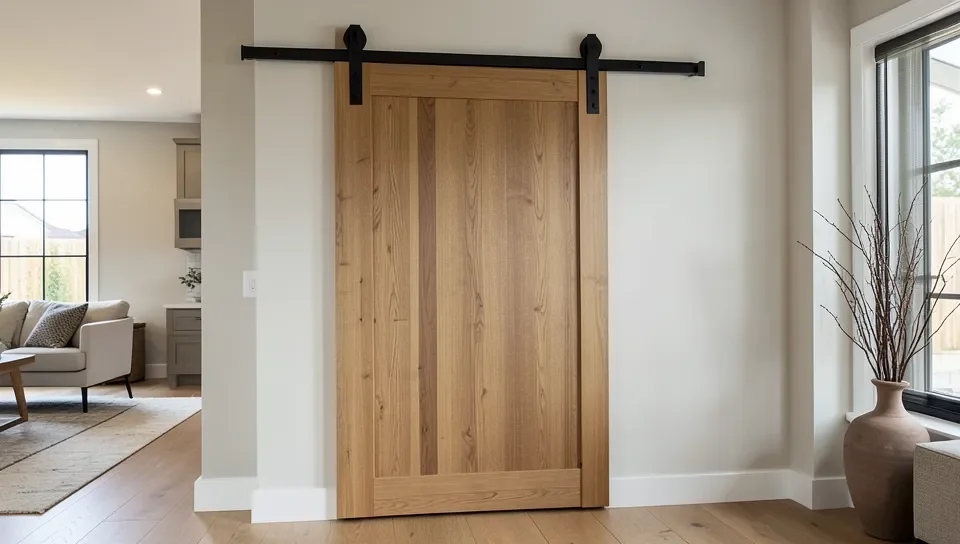
A barn door is a specific style of sliding door that hangs in front of the wall on exposed rail hardware, rather than sliding into a wall pocket. Teak’s rich, visible grain is well-suited to this style since the door itself becomes a visible design feature rather than a hidden panel — the hardware and the wood grain are both meant to be seen.
Barn doors work well for bedrooms, bathrooms, and pantries where privacy is needed but full floor space for a swinging door isn’t available, and they’ve become popular partly because the exposed hardware itself reads as an intentional design choice rather than a compromise.
Teak Double Doors
Double doors use two matching leaves that meet in the center, typically at a main entrance, and the symmetry itself is the functional draw — it creates a wider, more formal opening than a single door can, which matters for moving large furniture in and out as much as it does for visual impact.
For a working double door (versus one leaf fixed shut for decoration), make sure the hardware includes a proper astragal or flush bolt system to keep both leaves aligned and secure when closed — this is a real, common failure point if the hardware is undersized for the door weight.
Teak Pivot Doors
A pivot door hangs on a floor-and-ceiling pivot hinge set near (not at) one edge of the door, rather than side hinges, which lets it swing on a point instead of an edge. This construction can support significantly heavier, thicker slab doors than standard side hinges can carry, which is why pivot doors are common for oversized, statement-piece teak entries.
Because the hinge hardware is a specialized, load-bearing system, pivot doors generally need professional installation to get the alignment and weight distribution right — not a typical DIY door swap.
Teak Dutch Doors
A Dutch door is split horizontally into independent top and bottom halves that can be opened separately. The real functional benefit: you can open the top half for airflow, light, and conversation while keeping the bottom half closed to contain kids, pets, or drafts — genuinely useful for a kitchen, mudroom, or nursery, not just a decorative farmhouse look.
Both halves need their own weatherstripping and latch hardware, and the meeting rail where the two halves join needs a good seal to avoid drafts when both halves are closed together.
Conclusion
Teak’s durability and rich grain make it a strong choice across all of these styles, but the right one comes down to the actual job the door needs to do: airflow (louvered), space-saving (sliding or barn), natural light (French), a statement entrance (carved, pivot, or double doors), or flexible use (Dutch). Pick the function first, then let teak’s warmth and durability handle the rest.
Sponsored / affiliate links. As an Amazon Associate I earn from qualifying purchases. I may earn additional commission from eligible campaigns.
 Yuzzy Wood Panels for Wall and Ceiling - 108 x 11 Inch Wood Slat Acoustic Panels 4 PCS - Modern Sound Absorbing Wall Panels for Interior Wall Decor for Home, Office, Studio - Rustic Oak
 NeatiEase Wood Panels for Wall, 4-Piece 96" x 12.6" Soundproof Wood Slat Wall Panel for Interior Wall Decor Noise Cancelling, Acoustic Wall Panels, Sound Absorbing Panel (Teak)