Wood Burning Stove Canada: Essential Guide
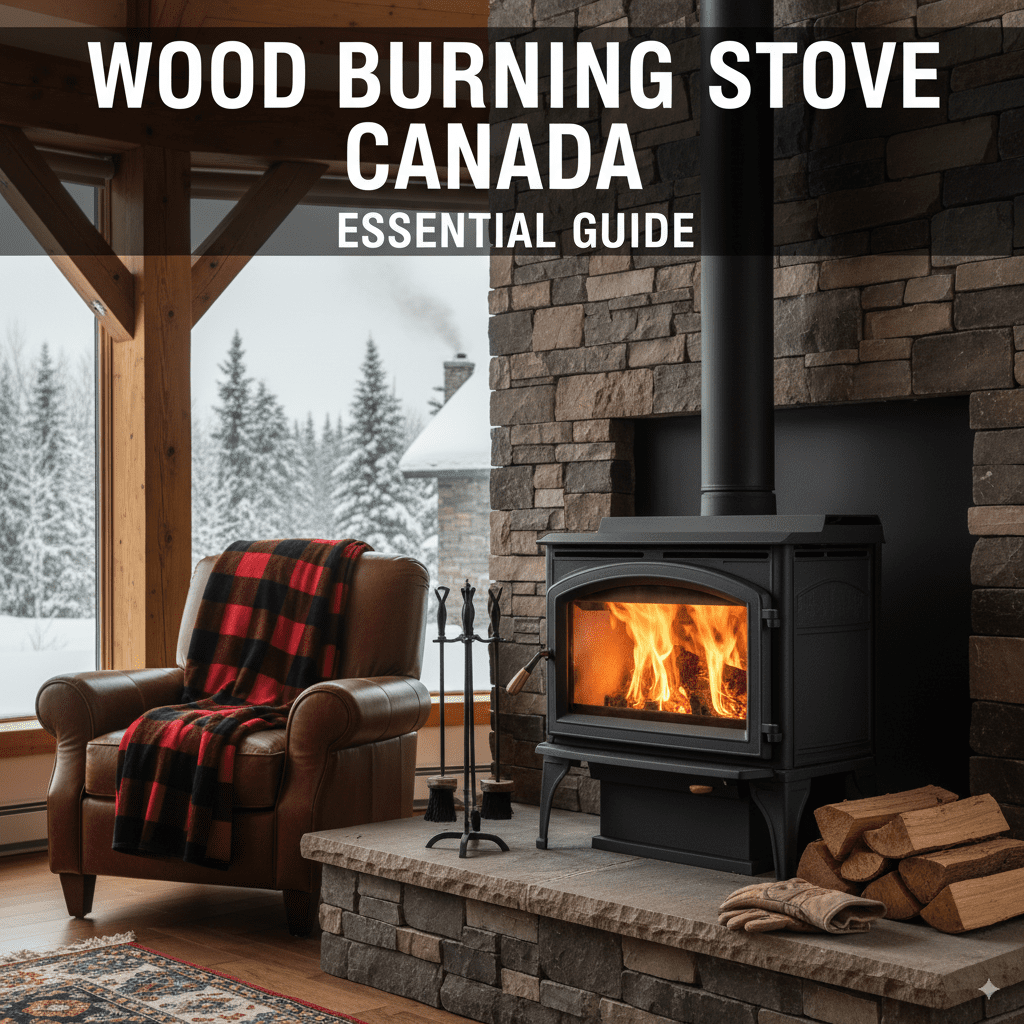
Looking for a reliable, cozy way to heat your Canadian home? A wood burning stove offers charming warmth and efficiency. This guide covers everything beginners need to know about choosing, installing, and safely operating a wood burning stove in Canada, from understanding models to maintaining your new heat source.
Feeling the chill of a Canadian winter and dreaming of that warm, inviting glow? A wood burning stove can bring cozy comfort and a touch of rustic charm to your home. Many Canadians are turning to wood stoves for their efficiency, cost-effectiveness, and the beautiful ambiance they create. But if you’re new to wood heating, the options and requirements can seem a bit overwhelming. Don’t worry! This guide is here to walk you through everything, making the process simple and safe.
We’ll cover how to pick the perfect stove for your space, what you need to know about installation, and how to keep your stove and home safe. By the end, you’ll feel confident about enjoying the warmth and character a wood burning stove brings to your Canadian home.
Why Choose a Wood Burning Stove for Your Canadian Home?
Wood burning stoves are more than just a heat source; they’re a lifestyle choice that resonates deeply with many Canadians. Let’s dive into why they’re such a popular and practical option for homes across the country.
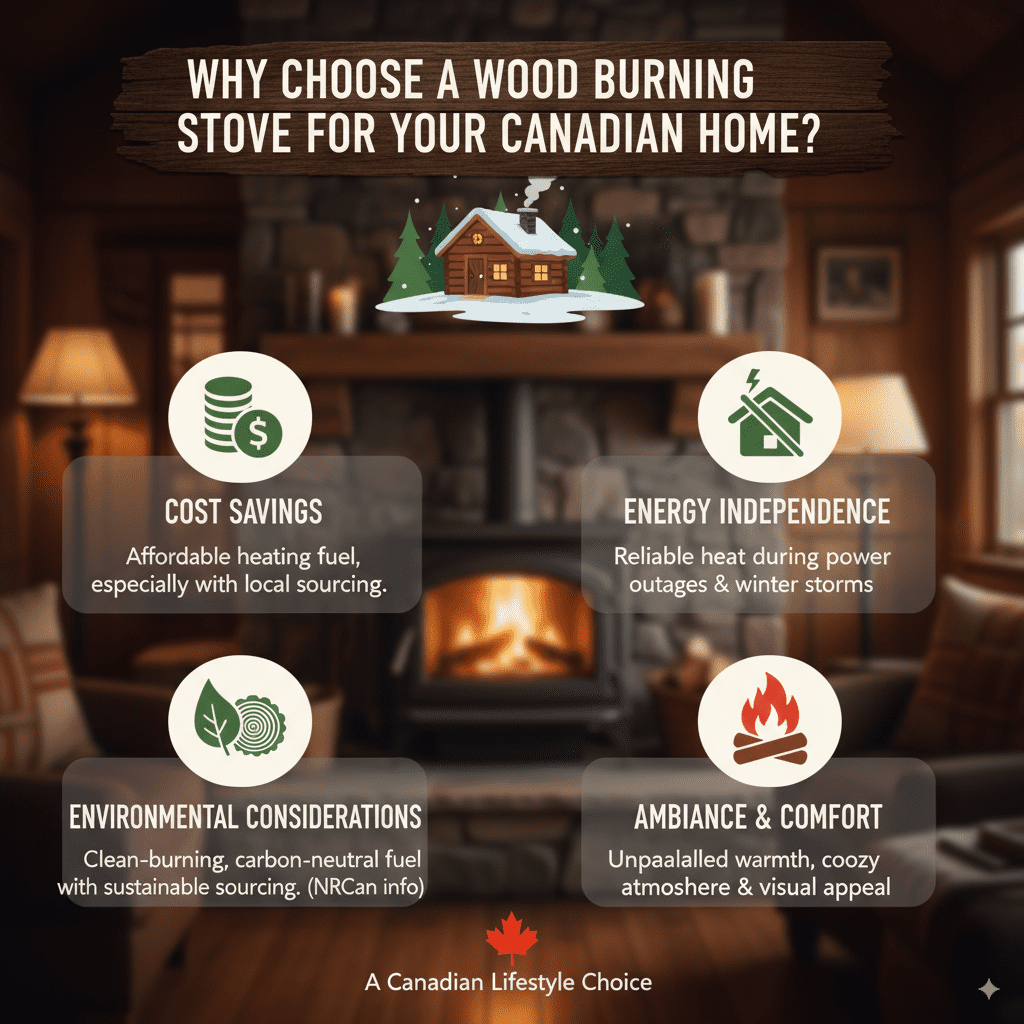
- Cost Savings: In many regions of Canada, firewood can be a more affordable heating fuel compared to electricity or propane, especially if you have access to your own wood lot or can source it locally.
- Energy Independence: Wood stoves offer a reliable heat source even during power outages, a crucial benefit during Canada’s often harsh winter storms.
- Environmental Considerations: Modern wood stoves are designed for efficiency and cleaner burning. When wood is sourced sustainably, it can be a carbon-neutral fuel source, meaning the carbon released when burning is roughly equivalent to the carbon absorbed by the tree during its growth. Organizations like Natural Resources Canada provide valuable insights into sustainable biomass energy.
- Ambiance and Comfort: There’s an unparalleled warmth and visual appeal that comes from a real wood fire. It creates a cozy atmosphere that’s hard to replicate with other heating methods.
Choosing the Right Wood Burning Stove for Canada
Selecting the right wood burning stove is crucial for both performance and safety. Several factors come into play, and understanding them will help you make an informed decision. Think of it like choosing the right tool for a woodworking project – the right fit makes all the difference!
Stove Types: Efficiency and Emission Standards
Canada has specific regulations for wood burning appliances, focusing on emissions and efficiency. Look for stoves that meet these standards. This ensures they burn wood cleanly and effectively.
- EPA-Certified Stoves: While the EPA is a US agency, many Canadian certification bodies recognize or align with EPA standards. These stoves are designed to burn wood more completely, producing fewer emissions and using less fuel.
- CSA Certified Stoves: In Canada, appliances must be certified by a recognized certification body, such as CSA Group (Canadian Standards Association) or ULC (Underwriters Laboratories of Canada). This certification indicates the stove has met stringent safety and performance requirements for the Canadian market.
- Catalytic vs. Non-Catalytic:
- Non-Catalytic Stoves: These use a system of baffles and secondary air tubes to burn smoke and gases at higher temperatures. They are generally simpler to operate.
- Catalytic Stoves: These use a catalytic combustor (like a car’s catalytic converter) to ignite smoke and gases at lower temperatures, leading to very efficient burns and extremely low emissions. They require a bit more maintenance regarding the combustor.
Sizing Your Stove: Heating Capacity
Getting the right size stove is key. An undersized stove won’t adequately heat your space, while an oversized one can overheat your home and burn inefficiently. Stove manufacturers provide heating capacity estimates, usually in square feet.
When estimating, consider:
- Square Footage of Your Home: Measure the main area you intend to heat.
- Insulation Levels: A well-insulated home requires less heating power.
- Climate Zone: Colder regions in Canada will need a more powerful stove.
- Ceiling Height: Higher ceilings mean more air to heat.
A good starting point for calculating your heat output needs can be found on resources like the Government of Canada’s energy efficiency pages.
Understanding BTU Output
BTU (British Thermal Unit) is a measure of heat. A stove’s BTU output indicates how much heat it can produce. For example, a stove with a 10,000 BTU per hour output can heat approximately 500 square feet in a well-insulated home.
Stove Materials and Construction
Most modern wood stoves are made of cast iron or steel. Both are durable and effective at radiating heat.
- Cast Iron: Retains heat well and radiates it slowly over a long period. It can be more prone to cracking if heated too rapidly or cooled too quickly.
- Steel: Heats up faster and can provide more radiant heat quickly. It’s generally more durable and less prone to cracking than cast iron.
Features to Look For
- Glass Doors: Allow you to enjoy the visual appeal of the fire while keeping the door closed for efficient burning.
- Ash Pan: Makes cleanup easier.
- Secondary Combustion: Improves efficiency and reduces emissions.
- Burn Time: How long a stove can burn on a single load of wood. Longer burn times mean less frequent refueling.
Installation Essentials: Safety First!
Installing a wood burning stove is not a DIY project to take lightly. Safety is paramount, and proper installation prevents fire hazards and ensures efficient operation. It’s highly recommended to have a certified professional install your stove and chimney system. They understand the intricate building codes and safety clearances required in Canada.
Clearances: Keeping Distance is Key
Proper clearances are non-negotiable. Your stove and chimney pipe need to be kept a safe distance from combustible materials (like wood framing, drywall, furniture, curtains, etc.). These clearances are specified by the manufacturer and by local building codes.
A typical installation requires specific clearances to:
- Walls
- Ceilings
- Flooring
- Adjacent furniture
A common rule of thumb is to consult the stove’s manual and provincial building codes. For example, the building codes in British Columbia or Ontario will have specific requirements you must follow.
Hearth Protection
Every wood burning stove must be installed on a non-combustible floor protector, often called a hearth pad or heat shield. This protects your floor from radiant heat and potential embers.
Requirements for hearth material and thickness vary depending on the stove’s output and design. Your installer will ensure the hearth meets the standards outlined by the stove manufacturer and local code.
Chimney and Venting
This is arguably the most critical part of installation. A properly functioning chimney system is essential for safely venting smoke and combustion gases out of your home. A faulty system can lead to dangerous carbon monoxide buildup or chimney fires.
Chimney Types:
- Factory-Built Chimneys (Insulated Chimney Pipe): These are the most common and safest choice for new installations. They are designed specifically for wood stoves and have an insulated double or triple wall construction to keep heat contained and prevent creosote buildup. They must extend a specific height above the roofline to ensure proper draft and prevent smoke blowback.
- Masonry Chimneys: If you have an existing masonry chimney, it must be inspected and, if necessary, relined with an appropriate stainless steel liner designed for wood stoves to meet current safety standards.
Key Chimney Considerations:
- Proper Height: The chimney cap must be at least 3 feet above the roof penetration and at least 2 feet higher than any part of the building within 10 feet horizontally.
- Draft: The chimney must create adequate draft to pull smoke upwards and out.
- Maintenance: Regular inspections and cleaning are vital to prevent creosote buildup, a highly flammable substance that can cause chimney fires.
Organizations like the Hearth, Patio & Barbecue Association of Canada (HPBAC) offer resources on safe installation practices.
Carbon Monoxide Detectors
This cannot be stressed enough: Install carbon monoxide detectors on every level of your home, especially near sleeping areas. Ensure they are functioning correctly and test them regularly. Carbon monoxide is an invisible, odorless gas produced by burning fuels, and it can be deadly.
Operating Your Wood Burning Stove Safely
Once your stove is installed, safe operation is key to enjoying its benefits without incident. Think of this as learning the proper technique for any craft – precision and awareness lead to beautiful results.
Choosing and Storing Firewood
The type and condition of your firewood significantly impact your stove’s performance and safety.
- Seasoned Hardwood is Best: For efficient burning and minimal creosote, use well-seasoned hardwood (like oak, maple, birch, or ash). Seasoned means the wood has been split and dried for at least 6-12 months, ideally outdoors in a place with good airflow.
- Avoid Softwoods for Primary Fuel: Softwoods (like pine, fir, or spruce) burn faster and hotter, producing more creosote. They can be useful for starting fires but shouldn’t be your main fuel source.
- Never Burn Treated Wood, Garbage, or Plastics: These release toxic fumes and can damage your stove and chimney and are very hazardous to your health.
- Proper Storage: Store firewood off the ground and in a well-ventilated area, ideally not directly against your house. Keep it covered on top to protect from rain and snow, but allow airflow on the sides and bottom.
Starting a Fire
A good fire starts with good preparation.
- Prepare the Stove: Ensure the damper (if present) is open and the ash pan is clear.
- Kindling and Tinders: Start with dry tinder (like newspaper, cotton balls with petroleum jelly, or commercial fire starters) and small pieces of dry kindling.
- Add Small Wood: Once the tinder is burning well, add small, dry pieces of hardwood.
- Gradually Add Larger Wood: As the fire grows, progressively add larger pieces of seasoned hardwood.
- Establish a Hot Fire: Let the fire burn hot for 15-30 minutes to heat the stove body and chimney. This helps establish a good draft and reduces initial smoke spillage.
- Adjust Air Controls: Once the stove is hot and the wood is burning well, you can adjust the air intake controls to achieve a steady, efficient burn. Consult your stove’s manual for specific air control settings.
Maintaining a Safe Fire
- Avoid Overloading: Don’t stuff the firebox full of wood. Leave space for air to circulate.
- Control the Burn: Adjust air vents to control the burn rate. A roaring fire isn’t always the most efficient or safest. A steady, controlled burn with active flames is ideal.
- Monitor Creosote: Regularly check the stovepipe and chimney for creosote buildup. If you see more than 1/8 inch, it’s time for cleaning.
- Never Leave a Fire Unattended: Especially when going to bed or leaving the house.
Extinguishing a Fire
To extinguish a fire, simply close the air intake vents. This restricts the oxygen supply, and the fire will gradually die down. Ensure all embers are cool before leaving the stove.
Stove Maintenance: Keeping Your Investment Running Smoothly
Regular maintenance is key to prolonging the life of your wood burning stove and ensuring it operates safely and efficiently. It’s like caring for your woodworking tools – a little effort goes a long way.
Regular Cleaning
- Ash Removal: Remove ashes from the firebox regularly. Leave a small layer (about an inch) of ash on the bottom, as this can help insulate the firebed and protect the stove’s base. Dispose of ashes in a metal container with a tight-fitting lid, away from any structures, and let them cool completely for several days before disposal.
- Glass Cleaning: The glass door can become clouded with soot. A common and effective way to clean it is by using a damp cloth or paper towel dipped in the cooled ashes from your stove. This mild abrasive cleans the glass without scratching.
Chimney Sweeping
This is one of the most important maintenance tasks. Creosote, a flammable residue from burning wood, can build up inside your chimney. If this buildup gets too thick, it can ignite and cause a dangerous chimney fire.
How often? It’s generally recommended to have your chimney inspected and swept at least once a year, or more often if you use your stove frequently or notice significant creosote buildup. A professional chimney sweep has the tools and expertise to do this safely and effectively.
Stove and Gasket Inspection
- Door Gaskets: The rope gasket around your stove door creates a seal to control airflow. Over time, this gasket can wear out. A worn gasket will allow in excess air, creating a faster, hotter burn and reducing efficiency. Check the gasket regularly for fraying or hardness. If it’s damaged, it needs to be replaced. You can purchase replacement gasket kits from stove suppliers.
- Firebrick and Baffles: Inspect the firebricks inside the stove for cracks or damage. These protect the stove’s outer shell. Also, check any internal baffles or secondary combustion tubes, as these are essential for efficient burning. Replace damaged parts as needed.
General Inspection
Periodically check the stove and all connections (stovepipe to stove, stovepipe to chimney) for any signs of wear, damage, or corrosion.
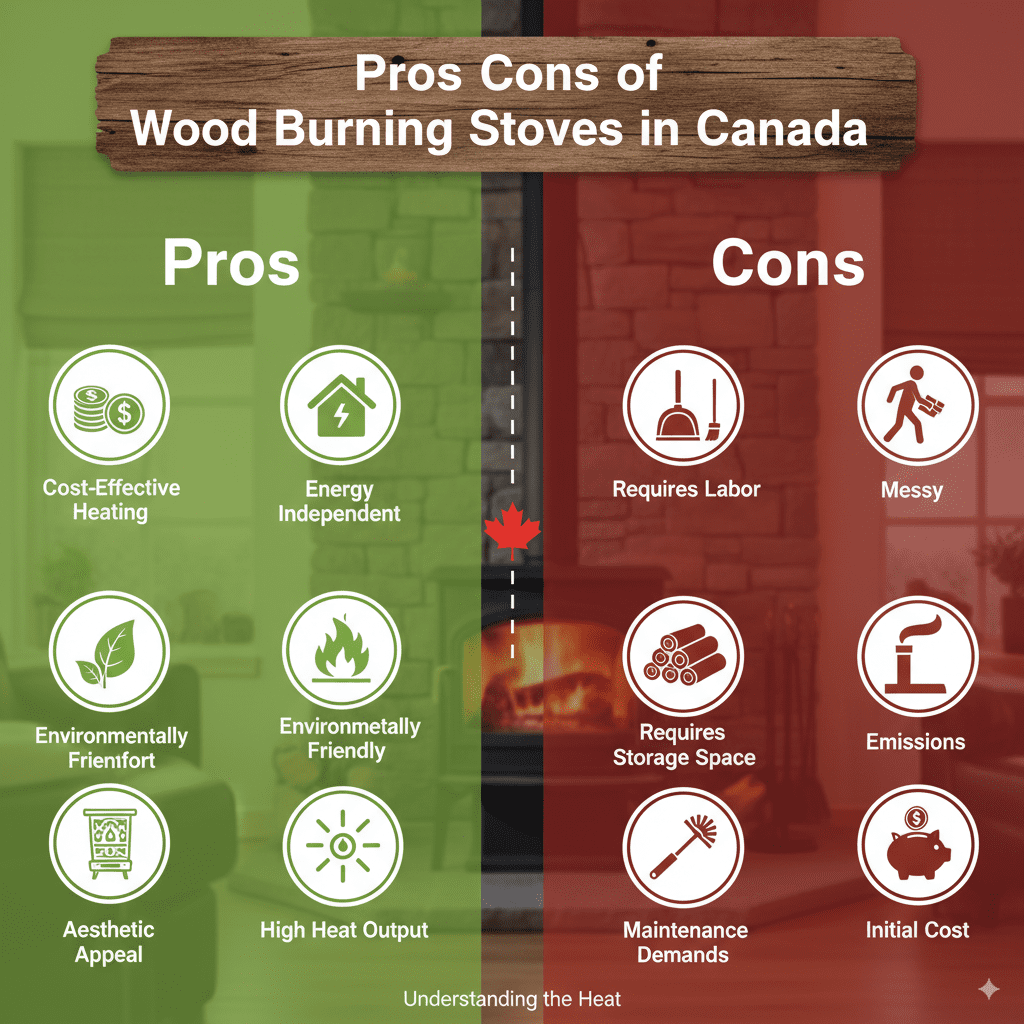
Pros and Cons of Wood Burning Stoves in Canada
Like any heating system, wood stoves have their advantages and disadvantages. Understanding these will help you decide if it’s the right fit for your home and lifestyle.
| Pros | Cons |
|---|---|
| Cost-Effective Heating: Potentially lower fuel costs with readily available firewood in many Canadian regions. | Requires Labor: Cutting, splitting, stacking, and hauling firewood takes significant effort. |
| Energy Independent: Provides heat during power outages. | Messy: Ashes need regular removal, and tracking in sawdust or wood debris is common. |
| Ambiance: Creates a warm, cozy atmosphere unparalleled by other heating types. | Requires Storage Space: You need adequate, dry space to store a winter’s supply of firewood. |
| Environmentally Friendly (when managed properly): Sustainable fuel source with modern, efficient stoves. | Emissions: Older stoves can produce significant air pollution. Modern, certified stoves drastically reduce this. Proper operation is key to minimal emissions. |
| High Heat Output: Can effectively heat large areas or even entire homes, depending on stove size and design. | Maintenance Demands: Regular chimney sweeping and stove upkeep are essential for safety and efficiency. |
| Aesthetic Appeal: A beautiful focal point for any room. | Initial Cost: The stove and professional installation can be a significant upfront investment. |
Frequently Asked Questions (FAQ)
Q1: Are wood burning stoves safe to use in Canada?
Yes, when installed and operated according to manufacturer instructions and local building codes, wood burning stoves are safe. Safety certifications (like CSA) ensure they meet Canadian standards. Proper clearances, a safe chimney system, and carbon monoxide detectors are critical.
Q2: What are the typical installation costs for a wood burning stove in Canada?
Installation costs can vary significantly based on your location, the complexity of the job, and whether you’re installing a new chimney or using an existing one. Expect costs to range from $1,500 to $5,000 or more, covering the stove, chimney components, hearth pad, and professional labor.
Q3: How often do I need to sweep my chimney?
It’s generally recommended to have your chimney inspected and swept at least once a year, or more frequently if you use your stove heavily. Regular inspections by a certified chimney sweep are crucial to prevent dangerous creosote buildup.
Q4: What type of wood is best for burning in my stove?
Well-seasoned hardwood (dried for at least 6-12 months) is best. Examples include oak, maple, ash, and birch. Hardwoods burn longer and produce less creosote than softwoods like pine or spruce.