Wood Veneer Calculator
Estimate veneer sheet needs for furniture, panels, cabinet doors, tabletops, and repair work.
Quick Answer
Wood veneer needs are estimated from surface area, number of faces, sheet size, waste, and matching pattern. Bookmatching, grain direction, and defects can increase material needs.
Wood Veneer Calculator
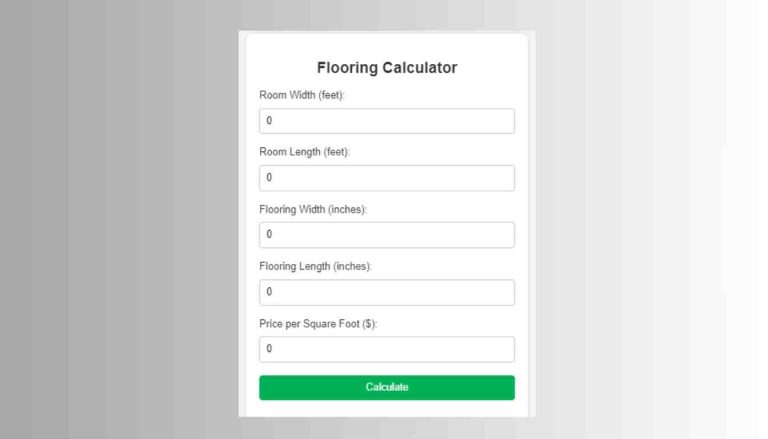
Enter your project values below. The calculator gives a planning estimate, then the guide explains the formula, example calculation, common mistakes, and when to adjust the result.
Enter your values and click calculate.
How to Use This Calculator
Use the same unit shown beside each field and measure the actual project area, board size, stack, or member span.
Select the closest wood species, surface condition, moisture condition, or safety factor for your project.
Most woodworking projects need a waste buffer for cuts, defects, finishing loss, or measurement error.
Use manufacturer labels, product data, local code, and real measurements before final decisions.
Wood Veneer Calculator Formula
Sheets needed = total veneer area × waste buffer ÷ veneer sheet area, rounded up.
Balancing a Panel
Most flat panels need veneer on both faces, even if only one side will be visible, because veneering only one face pulls moisture unevenly and can cause the panel to bow or cup over time. Budget for the same square footage on the back face (often a lower-grade, cheaper veneer) as the show face.
Estimating Veneer for Edge Banding and Small Repairs
This calculator is sized for full panel faces, not the thin strips used for edge banding on plywood or MDF panels. Edge banding is sold by the linear foot in rolls (commonly 25, 50, or 250 feet), sized to match the panel’s edge thickness rather than a square-foot sheet area — measure the total perimeter of exposed edges in linear feet and add 10-15% for waste, corner trimming, and re-dos rather than trying to convert that figure into square feet of sheet veneer. For small repairs, such as patching a chipped corner or damaged section of an existing veneered panel, buy the smallest available offcut or a sample-size sheet that matches species and grain pattern as closely as possible — exact color and grain matching from a different production run is rarely perfect, so patches on visible surfaces are usually more successful when placed in a low-visibility area or disguised with a matching stain.
Reference Table
| Project factor | Planning guidance |
|---|---|
| Plain layout | 15% waste |
| Bookmatch | 20-30% waste |
| Large panels | match grain direction |
| Repair patches | buy matching species and color |
Common Mistakes to Avoid
- Forgetting to veneer both sides of a panel.
- Ignoring grain direction.
- Not buying enough for bookmatching.
- Skipping substrate balancing.
- Buying raw veneer without checking whether it is paper-backed or needs its own backer for stability.
- Underestimating veneer needs for curved or wrapped panels, which use more material than the flat surface area suggests.
When the Estimate May Be Wrong
Calculators are useful for planning, but real woodworking materials vary. Wood species, moisture content, grain direction, defects, product label coverage, board straightness, installation method, and local conditions can all change the final result.
For safety-sensitive projects, structural members, fasteners, load limits, decks, stairs, or code-regulated work, treat this as an educational estimate and verify the result with a qualified professional or official design data.
Wood Veneer Calculator FAQs
Do I need veneer on both sides?
Often yes for panel balance and stability.
How much waste should I add?
Use 15-30%, depending on matching requirements and defects.
Can I use this for edge banding?
Use a separate linear-foot estimate for edge banding.
How many veneer sheets come standard for common panel sizes?
Raw veneer typically ships in sheets around 24-48 inches wide by 8-10 feet long, though sizes vary by species and supplier; always confirm the exact sheet size before calculating.
What’s the difference between raw and paper-backed veneer?
Raw (wood-backed) veneer is thinner, cheaper, and needs a substrate glued to both faces to stay flat; paper-backed veneer is pre-stabilized and easier for beginners, but usually costs more per square foot.
Do I need extra veneer for curved or radius panels?
Yes — curved substrates typically need 10-20% more veneer than the flat panel area to account for the additional wrap length and higher waste from cutting on a curve.
Can I calculate edge banding with this tool?
No — edge banding is priced and sold by the linear foot in rolls, not by square-foot sheets. Measure the total edge perimeter in feet and add 10-15% waste instead of using this square-footage calculator.
What’s the difference between rotary-cut and sliced veneer for coverage?
Rotary-cut veneer is peeled in a continuous sheet and typically comes in wider, more irregular pieces with less consistent grain matching; sliced veneer is cut in narrower, more uniform sheets meant for bookmatching. Sliced veneer generally needs more waste allowance for matching adjacent sheets.
Sources and Methodology
This page is written as an original Woodworking Advisor calculator guide. The calculator combines practical woodworking formulas with conservative planning assumptions, waste buffers, and clear limitations.
- Wood properties, moisture movement, shrinkage, density, and engineering concepts are based on standard wood science references such as the USDA Forest Products Laboratory Wood Handbook.
- Firewood cord calculations use the standard full-cord volume of 128 cubic feet.
- Span, deflection, and structural planning pages use basic beam formulas for educational estimates and should be verified with code-approved span tables or professional design tools.
- Finish and stain calculators use coverage-rate logic from product labels: area multiplied by coats and divided by square feet per gallon, with a waste factor for wood porosity and application method.
Sponsored / affiliate links. As an Amazon Associate I earn from qualifying purchases. I may earn additional commission from eligible campaigns.