Best Wood for Furniture Legs: 8 Species by Janka Hardness
Hard maple, white oak, and ash make the strongest furniture legs — all three score above 1,290 lbf on the Janka hardness scale, the industry test for dent and wear resistance. Softer species like walnut (1,010 lbf) or pine (690 lbf) still work, but only in thicker, untapered profiles; thin taper cuts are where they fail first. This guide ranks eight leg-grade species by hardness, sets safe minimum thicknesses, and flags the taper mistake that breaks legs fastest.
Janka Hardness Comparison for Furniture-Leg Wood
Best Solid Beech Pick
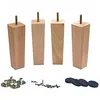
WEICHUAN 4.5″ Tapered Solid Beech Wood Legs (Set of 4)
Solid beech at roughly 1,300 lbf on the Janka scale — hard enough to hold a tapered profile without the flex issues softer replacement legs run into.
- Best for: sofas, chairs, and coffee tables needing a hardwood swap
- Why we picked it: genuine solid beech, not rubberwood, at this hardness range and price
- Main drawback: only 4.5″ height — not tall enough for standalone dining-table use
Compare more replacement leg options
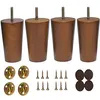 Option 1 Sweet Melodi Round Solid Wood Leg, Walnut Finish
|
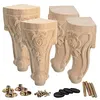 Option 2 La Vane 4″ European-Style Carved Solid Wood Legs
|
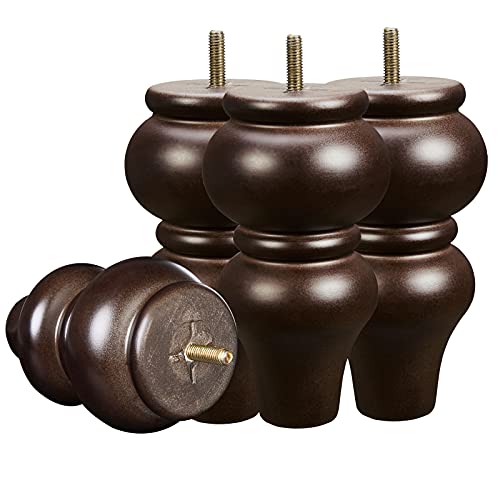
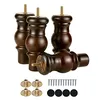 Option 3 Maricome 6″ Turned Wood Bun Feet (Predrilled M8)
|
As an Amazon Associate we earn from qualifying purchases.
The Janka hardness scale measures how much force it takes to press a steel ball halfway into a block of wood — the higher the number, the more resistant the species is to dents, scuffs, and the everyday knocks a leg takes from vacuum cleaners, chair pushes, and shifting furniture. It is the single best predictor of how a leg will look after five years of real use, and it is the number none of the usual buying guides for this topic actually publish.
| Species | Janka Hardness (lbf) | Best Furniture-Leg Use |
|---|---|---|
| Hard Maple | 1,450 | Dining tables, kitchen chairs, daily-use furniture |
| White Oak | 1,350 | Heavy tables, structural legs, high-traffic pieces |
| White Ash | 1,320 | Chairs, bent or curved leg designs |
| American Beech | 1,300 | Turned legs, steam-bent parts |
| Red Oak | 1,290 | General furniture legs, budget hardwood option |
| Black Walnut | 1,010 | Accent furniture, lighter-use tables |
| Black Cherry | 950 | Fine furniture, lighter-use legs |
| Rubberwood (Parawood) | 933 | Budget replacement legs, painted furniture |
| Southern Yellow Pine | 690 | Rustic or casual builds, thick untapered legs only |
Anything above roughly 1,290 lbf holds a tapered profile without babying it. Below that, thickness has to make up for the softer fiber — which is exactly what the sizing section below covers.
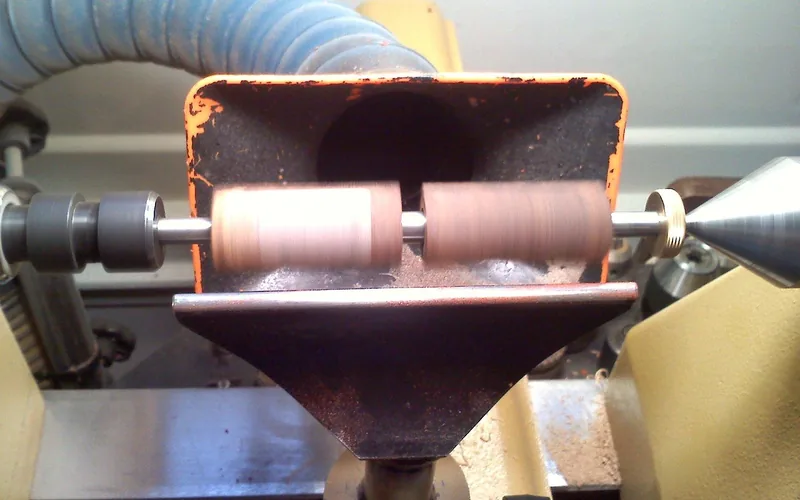
Wood Species Breakdown for Furniture Legs
Hard Maple
Hard maple is a dense, pale hardwood that tops the Janka chart among common leg species at 1,450 lbf. Its tight, closed grain machines cleanly on a lathe, takes stain evenly without blotching (with a pre-stain conditioner), and shrugs off the dents that chair legs and dining-table legs take over decades. The tradeoff is workability — maple is hard enough to dull blades faster and resist hand-tool shaping, so it favors power tools over hand planes. For help telling it apart from soft maple or birch before you buy lumber, see our guide on how to identify maple wood.
White Oak
White oak (1,350 lbf) is the traditional choice for legs that carry real structural load — dining tables, benches, and anything that gets leaned on. Its closed pores make it more moisture-stable than red oak, which matters if the piece lives near an entryway or a kitchen with humidity swings. It is heavier and pricier than red oak, and the open, prominent grain reads more rustic unless you fill it first. If you are choosing between the two oak types for a build, our European oak vs. white oak comparison breaks down the differences further.
White Ash
Ash sits close to oak on the hardness scale (1,320 lbf) but bends without splintering, which is why it shows up in chair legs and curved or bentwood designs more than flat table legs. Its straight, open grain takes finish well and its shock resistance makes it a good pick for chairs that get pushed back from the table hard, day after day.
American Beech
Beech (1,300 lbf) is a workhorse turning wood — fine, even grain that holds crisp detail on a lathe better than oak’s open pores allow, which is why it turns up in turned legs and steam-bent chair parts. It is not naturally rot- or moisture-resistant, so it belongs indoors only. For a deeper look at where beech fits versus other furniture woods, see is beech wood good for furniture.
Red Oak
Red oak (1,290 lbf) is the budget hardwood option — nearly as hard as white oak, widely available, and usually 15-25% cheaper. Its open, porous grain absorbs stain unevenly and is more prone to water staining, so it is a better fit for painted or heavily-finished pieces than for a natural oil finish showing raw grain.
Black Walnut
Walnut (1,010 lbf) is softer than the oaks and maple, but it is still a legitimate furniture hardwood — its rich chocolate-brown color needs no stain, and it machines and finishes beautifully. Because it is softer, walnut legs do better as thicker, moderately-tapered profiles rather than the thin, sharply-tapered look that maple or oak can handle. For grading and sourcing notes, see our walnut vs. black walnut comparison.
Black Cherry
Cherry (950 lbf) is chosen for looks more than raw durability — it darkens to a warm reddish-brown with age and light exposure, and its fine grain finishes to a glass-smooth surface. It dents more easily than the harder species on this list, so it suits lower-traffic furniture — occasional tables, accent chairs — better than a family dining table that takes daily abuse.
Rubberwood (Parawood)
Rubberwood, sold commercially as parawood, comes from Southeast Asian rubber plantations after the trees stop producing latex — making it a genuinely sustainable byproduct wood. At 933 lbf it is softer than the true hardwoods above but cleaner-grained than pine, and it is the wood most pre-made replacement legs on the market are actually built from. It takes paint and stain well and is budget-friendly, which is why it dominates the affordable end of the replacement-leg market.
Southern Yellow Pine
Pine (690 lbf) is the softest wood on this list and the one most likely to dent, but it is cheap, widely available, and fine for rustic or farmhouse-style builds where a few dings add character rather than detract from it. Keep pine legs thick and minimally tapered — a thin turned pine leg under a heavy tabletop is the single most common leg failure we see reported in DIY builds.
How Thick Should Furniture Legs Be?
Leg thickness depends on both the species hardness above and how the leg is shaped. Use this sizing process for a square or turned leg on a table, chair, or cabinet:
- Start at the load-bearing top: for a dining table, begin at 2 to 2.5 inches square at the point where the leg meets the apron — this is where flex is least tolerated and where the joinery lives.
- Match minimum thickness to hardness: hard maple or white oak (1,290+ lbf) can taper down to about 1.25 inches at the floor; softer species like walnut, cherry, or pine need to stay closer to 1.5 to 1.75 inches at the floor to carry the same load without flexing.
- Apply the taper allowance: a common taper ratio is roughly 1:6 — for example, a 2 inch top tapering down to 1.25-1.375 inches over a 28 inch leg length keeps the classic Hepplewhite proportion without weakening the leg.
- Keep joinery mass at the top: mortises, dowel holes, or hanger-bolt holes should sit in the thickest part of the leg, near the apron, never in the tapered lower third where the wood is already thinnest.
For legs attached with threaded inserts rather than traditional joinery — the common method on replacement and pre-made legs — see our guide on how to install hanger bolts in wood for the pilot-hole sizes that keep the bolt from splitting the leg.
Best Ready-Made Wood Furniture Legs to Buy
Building legs from scratch is not always practical — a straight swap for a couch, dresser, or coffee table usually calls for a pre-made replacement set instead of milling your own stock. The options below cover the two most common real-wood choices: solid beech (harder, closer to the 1,300 lbf range above) and walnut-finished or carved hardwood for a warmer look.
Best Wood for Furniture Legs by Furniture Type
The right species changes with how much weight and lateral stress the leg actually carries:
- Dining tables: hard maple or white oak — daily chair contact and the leverage of a full tabletop punish softer woods fastest.
- Dining and kitchen chairs: white ash or hard maple — chairs take repeated shock loading (being pushed back, sat in hard, tipped on two legs) that a stiffer, shock-resistant species handles better than a merely hard one.
- Sofas and couches: rubberwood or beech is genuinely fine here — the load is mostly static vertical weight, spread across four short legs, well within what a 900+ lbf species carries.
- Coffee tables and side tables: cherry or walnut — lower daily abuse means the softer, better-looking hardwoods can shine without the durability tradeoff mattering as much.
- Outdoor-adjacent or basement furniture: avoid cherry and walnut’s sensitivity to humidity swings; white oak’s closed grain resists moisture uptake noticeably better than red oak or ash in the same environment.
Common Mistakes That Crack or Wobble Furniture Legs
Most leg failures trace back to one of these, not to the wood species itself:
- Cutting the taper before the joinery. In the shop, the fastest way to crack a tapered leg is milling the taper first — the thin, tapered stock flexes under a drill press or mortiser and blows out on the far side. Rough the taper last, after every hole and mortise is already cut in the still-square blank.
- Skipping moisture-content checks. Lumber above 12% moisture content will shrink after the piece is built, loosening any friction-fit or glued joint at the top of the leg. Buy kiln-dried stock at 6-8% and let it acclimate in the shop for at least a week before cutting.
- Using pilot holes sized for softwood on hardwood. A hanger bolt pilot hole that is fine in pine will split hard maple or oak — the pilot needs to be sized closer to the bolt’s minor diameter in denser species.
- Ignoring grain direction on tapered cuts. A taper cut against the grain leaves short grain at the narrow end of the leg — the weakest possible point structurally, regardless of species hardness.
Once legs are on and finished, day-to-day care matters more than most people expect — see our guide on how to care for wood furniture for cleaning and moisture habits that keep any of these species looking new for years.
Frequently Asked Questions
What is the strongest wood for furniture legs?
Hard maple is the strongest common choice at 1,450 lbf on the Janka hardness scale, followed closely by white oak at 1,350 lbf. Both resist dents and hold a tapered profile without the wall thickness softer species need to carry the same load.
Is oak or maple better for table legs?
Hard maple is slightly harder (1,450 vs. 1,350 lbf) and machines with a cleaner, more uniform surface, making it the better pick for a modern look. White oak is heavier, more moisture-stable, and shows a bolder open grain, which suits traditional or farmhouse styles better. Both easily meet the strength needed for dining-table legs.
Can pine be used for furniture legs?
Yes, but only in thick, minimally-tapered profiles. Pine’s 690 lbf Janka rating is roughly half that of oak, so a thin turned or sharply tapered pine leg is prone to denting and cracking under normal use. It works fine for rustic, low-traffic, or budget builds where extra thickness is not a design problem.
How thick should a wood furniture leg be?
For a dining table, start at 2 to 2.5 inches square at the apron. Hard species like maple or oak can taper down to about 1.25 inches at the floor; softer species like walnut or pine should stay closer to 1.5-1.75 inches at the floor to carry the same load without flexing.
Is rubberwood (parawood) good for furniture legs?
Yes, for lighter-use furniture. Rubberwood tests at 933 lbf, softer than true hardwoods but harder than pine, and it takes paint and stain well. It is the wood used in most affordable pre-made replacement legs and suits sofas, dressers, and coffee tables better than a heavy daily-use dining table.
Conclusion
For most furniture legs, hard maple or white oak is worth the extra cost — both clear 1,290 lbf on the Janka scale and hold a tapered profile without extra bulk. Walnut and cherry trade some hardness for looks and work well on lower-traffic pieces, while rubberwood and pine are honest budget choices as long as the thickness accounts for their softer fiber. Match the species to the sizing guidance above, cut joinery before tapering, and the legs you build or buy should outlast the furniture around them. For the full picture on species selection beyond legs specifically, see our complete types of wood guide.
Sponsored / affiliate links. As an Amazon Associate I earn from qualifying purchases. I may earn additional commission from eligible campaigns.