Wooden Crate Calculator
Enter a crate’s outside length, width and height to get its volume, the board feet of lumber to buy, its empty weight, the carrier’s dimensional weight and a lumber cost.
Quick Answer
Volume is length x width x height. Lumber comes from the crate’s surface area times slat coverage times board thickness, and empty weight is that wood volume times the species’ density. A 36 x 24 x 24 in pine crate holds 12 cu ft, needs about 22 board feet of 1x lumber and weighs about 39 lb empty.
Wooden Crate Calculator
Enter the crate’s outside dimensions and wood type. The calculator estimates volume, lumber to buy (board feet), empty weight, dimensional weight and cost. The guide below explains each formula and where the estimate can go wrong.
Best Crate Weigh-In Pick
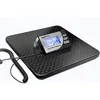 |
Amazon Basics Digital Shipping Postal Scale, 660 lb, $48.29 Weigh the finished crate before you quote freight, so you bill on a real number instead of the calculator’s empty-weight estimate. It reads to 2 oz and has a tare button.
|
As an Amazon Associate we earn from qualifying purchases.
How to Use This Calculator
Wooden Crate Formula
Volume (cu ft) = Length x Width x Height / 1,728
Surface area = 2 x (L x W + L x H + W x H)
Wood in the crate (board feet) = Surface area x coverage x actual thickness / 144
Board feet to buy = Surface area x coverage x nominal thickness / 144
Empty weight (lb) = Wood volume (cu in) / 1,728 x density (lb per cu ft)
Dimensional weight (lb) = L x W x H / 139
Wood Weight Reference Table
| Wood type | Density | Weight per board foot | Best crate use |
|---|---|---|---|
| Pine / SPF softwood | ~28 lb per cu ft | ~2.3 lb | Light, general shipping & storage |
| Plywood | ~34 lb per cu ft | ~2.8 lb | Smooth panels, export crates |
| Hardwood (oak) | ~45 lb per cu ft | ~3.8 lb | Heavy machinery & long-haul freight |
| Solid vs slatted | n/a | Coverage 100% vs 60-75% | Slats cut weight & cost |
Crate Size Examples: Weight, Lumber and Billable Weight
These rows use the same formulas as the calculator: 3/4 in boards, outside dimensions, $3 per nominal board foot. Empty weight depends mostly on coverage and species, while dimensional weight depends only on the crate’s outside size.
| Outside size (in) | Build | Volume (cu ft) | Wood in crate (bd ft) | Lumber to buy (bd ft) | Empty weight | Dim weight | Lumber cost |
|---|---|---|---|---|---|---|---|
| 18 x 12 x 12 | Pine, slatted 70% | 1.5 | 4.2 | 5.6 | 10 lb | 19 lb | $17 |
| 24 x 24 x 24 | Pine, slatted 70% | 8.0 | 12.6 | 16.8 | 29 lb | 99 lb | $50 |
| 36 x 24 x 24 | Pine, slatted 70% | 12.0 | 16.8 | 22.4 | 39 lb | 149 lb | $67 |
| 36 x 24 x 24 | Pine, solid | 12.0 | 24.0 | 32.0 | 56 lb | 149 lb | $96 |
| 36 x 24 x 24 | Oak, slatted 70% | 12.0 | 16.8 | 22.4 | 63 lb | 149 lb | $67 |
| 48 x 40 x 36 | Pine, slatted 70% | 40.0 | 37.1 | 49.5 | 87 lb | 497 lb | $148 |
Nominal vs Actual: Why You Buy More Board Feet Than the Crate Contains
A board foot is 144 cubic inches measured at the lumber’s nominal thickness. A “1x” board is sold as 1 inch but surfaces down to about 3/4 inch, so the wood actually in your crate is roughly a quarter smaller than the board feet on your receipt. For the 36 x 24 x 24 in crate above, that is 16.8 board feet of wood in the crate against 22.4 board feet to buy, a 33% gap.
That is why the calculator reports both numbers: weight uses the actual volume, and cost uses the nominal board feet. If you build from plywood, price it by the sheet instead, since plywood is sold by panel and not by board foot. The nominal lumber size chart lists the actual size behind every nominal label.
Outside vs Inside Dimensions
The calculator treats the numbers you enter as the crate’s outside size, because that is what a carrier measures and what the lumber has to cover. A load needs inside clearance. With 3/4 in walls on both sides, a 36 x 24 x 24 in outside crate has an inside space of only 34.5 x 22.5 x 22.5 in, and a floor or skids reduce the inside height further.
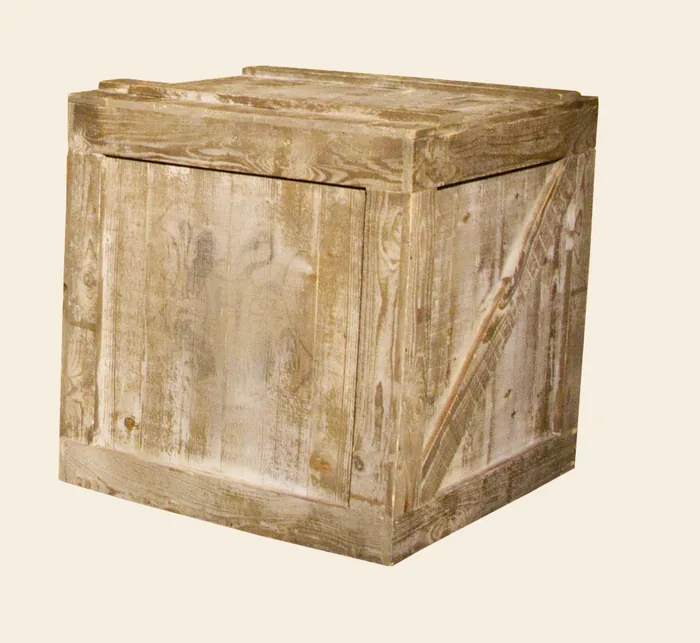
Cleats, corner posts, braces and skids are extra lumber on top of the panels, which is why the how-to steps suggest an allowance before you buy.
Crate Weight vs Billable Weight
Parcel carriers charge on the greater of actual weight and dimensional weight. UPS and FedEx daily domestic rates commonly use a divisor of 139 cubic inches per pound, so the 36 x 24 x 24 in crate has a dimensional weight of 149 lb (20,736 / 139) no matter how little it weighs. Put a 100 lb load in the 39 lb crate and it weighs 139 lb actual, still under 149, so the shipment bills at the dimensional figure. Some rate tables use other divisors, so check your own rate sheet.
Dimensional weight is calculated from outside dimensions, which is another reason to enter outside size. Crates that are large or heavy usually move as freight, which is priced differently, so get a quote from the carrier before you commit to a crate size. To check the load a finished crate can carry on a shelf or rack, see the wood load capacity calculator.
Does Your Crate Need ISPM 15 Heat-Treated Lumber?
Only if it ships internationally. ISPM 15 is the international standard for wood packaging material such as crates, pallets and dunnage. The U.S. Department of Agriculture’s APHIS describes two approved treatments: heat to a minimum wood core temperature of 56 degrees C for at least 30 minutes, or methyl bromide fumigation by certified fumigators. Treated packaging must carry an official mark showing the accredited agency, the facility number, the treatment type (HT or MB), the country code and the IPPC symbol, according to APHIS export guidance.
- Kiln-dried is not the same as treated. Lumber from the store has no ISPM 15 mark, so an untreated crate cannot be marked compliant after the fact. The HT and MB stamp guide explains how to read the marks.
- Plywood is exempt. APHIS lists plywood, oriented strand board, hardboard and laminated veneer lumber among materials it does not regulate as wood packaging, according to its wood packaging import page. That is why many export crates use plywood panels.
- A domestic shipment inside the United States is not international trade, so the receiving company’s own packaging rules are what matter.
The weight table above uses untreated lumber densities. Heat treatment dries the wood, so a treated crate is not meaningfully heavier, but confirm final weight on a scale.
Common Mistakes to Avoid
- Pricing the lumber on actual thickness: a 1x board bills as 1 in, so the board feet you buy are about a third higher than the wood in the crate.
- Entering inside dimensions, which understates both the lumber and the carrier’s dimensional weight.
- Forgetting cleats, corner posts, braces and skids, which add lumber and weight.
- Ignoring dimensional weight, which can cost more than actual weight.
- Assuming all species weigh the same: oak at 45 lb per cu ft is about 60% heavier than pine at 28.
When the Estimate May Be Wrong
Calculators are useful for planning, but real crates vary. Moisture content (green lumber is heavier than kiln-dried), fastener and hardware weight, reinforcement, panel coverage, and wood species all change the final figures. For freight quotes, valuable or heavy loads, or export crates, treat this as a planning estimate: a load that matters needs a structural design from a packaging professional, and the final weight should come from a scale.
Wooden Crate Calculator FAQs
How do you calculate the volume of a wooden crate?
Multiply the crate’s length by its width by its height, then divide by 1,728 to convert cubic inches to cubic feet. For example, a 36 x 24 x 24 inch crate is 20,736 cubic inches, or 12 cubic feet.
How much does a wooden crate weigh?
An empty wooden crate’s weight equals the volume of wood used times the wood’s density. Pine weighs roughly 2.3 lb per board foot, plywood about 2.8 lb and oak about 3.8 lb. A 36 x 24 x 24 inch slatted pine crate with 3/4 inch boards weighs about 39 lb empty.
Is shipping crate weight based on volume?
Parcel carriers bill the greater of actual weight and dimensional weight, which is based on the crate’s outside size. UPS and FedEx daily domestic rates commonly divide cubic inches by 139, so a 36 x 24 x 24 inch crate bills at about 149 lb even if it weighs less. Check your own rate sheet, since divisors vary.
How many board feet are in a wooden crate?
One board foot is 144 cubic inches of lumber at nominal thickness. A 36 x 24 x 24 inch slatted crate holds about 17 board feet of actual 3/4 inch wood, but you would buy about 22 board feet because 1x lumber is priced as 1 inch thick.
What thickness of wood is used for crates?
Light crates commonly use 1/2 to 3/4 inch boards or plywood. Heavier crates add 2×4 framing, skids and cleats, and a heavy or valuable load needs a structural design from a packaging professional rather than a calculator. Thicker boards raise both the board feet and the crate weight.
Do wooden crates need ISPM 15 heat treatment?
Only for international shipments. USDA APHIS describes ISPM 15 treatment as heat to a 56 degree C core temperature for 30 minutes, or methyl bromide fumigation, with an official mark on the wood. Plywood and oriented strand board are exempt, so plywood crates usually avoid the requirement.
Should I use inside or outside dimensions for a crate?
Enter outside dimensions in this calculator, because the lumber must cover them and carriers measure the outside. To fit a load, subtract the walls: with 3/4 inch boards on both sides, outside size is inside size plus 1.5 inches in each direction.
Sources and Methodology
This page is written as an original Woodworking Advisor calculator guide. The calculator combines standard woodworking formulas with conservative planning assumptions and clear limitations.
- Volume and board-foot math use standard units: 1 board foot = 144 cubic inches of nominal-thickness lumber; 1 cubic foot = 1,728 cubic inches.
- Wood weights per board foot are derived from typical dry densities (pine ~28, plywood ~34, oak ~45 lb per cubic foot). Green or wet lumber weighs more.
- Dimensional weight uses a divisor of 139 cubic inches per pound, the figure commonly published for UPS and FedEx daily domestic rates. Confirm the divisor on your own rate sheet.
- ISPM 15 treatment, marking and exemption statements come from USDA APHIS: export guidance and wood packaging material page.
- Every example in the size table was computed with the calculator’s own formulas and checked by hand.
Sponsored / affiliate links. As an Amazon Associate I earn from qualifying purchases. I may earn additional commission from eligible campaigns.