Fence Post Spacing Calculator: 6-8 Ft (+ Wind-Load Chart)
Wood privacy fence posts go 6 to 8 ft apart on-center — 6 ft for fences over 6 ft tall, heavy panels, soft soil, or high-wind areas. Cutting spacing from 10 ft to 8 ft trims wind load per post about 20%; going to 6 ft cuts it nearly 40%. This guide covers spacing by fence type, wind-load math, gate/corner reinforcement, frost-line footing depth, and a formula for counting posts.
Disclosure: This post may contain affiliate links. As an Amazon Associate we earn from qualifying purchases.
Standard Fence Post Spacing by Fence Type
Best Post Hole Digger Pick
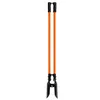
Nohovu Heavy Duty Post Hole Digger, Fiberglass Handle – $53.99
A carbon-steel digger built for the deeper holes this guide’s frost-line section describes — the fiberglass handle holds up better than wood when you’re digging well past 24 inches.
- Best for: Digging fence post footings below the frost line in most soil types
- Why we picked it: Fiberglass handle and carbon steel blades hold up over the deeper holes cold-climate frost depth requires
- Main drawback: Manual digging is slower than a powered auger for a long fence run
Compare more fence-setting tools
 Keep Posts Plumb Adjustable Magnetic Post Level – $13.99
|
 Footing Material Quikrete Concrete Mix, 10 lb Bag – $16.75
|
 Mark Equal Spacing Mason Line String with Post & Pipe Level – $20.88
|
As an Amazon Associate we earn from qualifying purchases.
This calculator page is part of our woodworking calculators hub — if you’re planning the whole build, the deck calculator uses the same length-and-spacing math for deck boards and framing instead of fence posts.
| Fence Type | Standard Post Spacing | Why |
|---|---|---|
| Wood privacy / picket fence | 6–8 ft on-center | 8 ft is typical for a standard 6-ft-tall fence; drop to 6 ft for taller fences, heavier privacy slats, soft soil, or high-wind areas |
| Livestock / agricultural wire fencing | 10–25 ft on-center | Open wire fencing carries far less wind load than solid wood panels, so posts can sit much wider apart — the exact distance depends on the wire type |
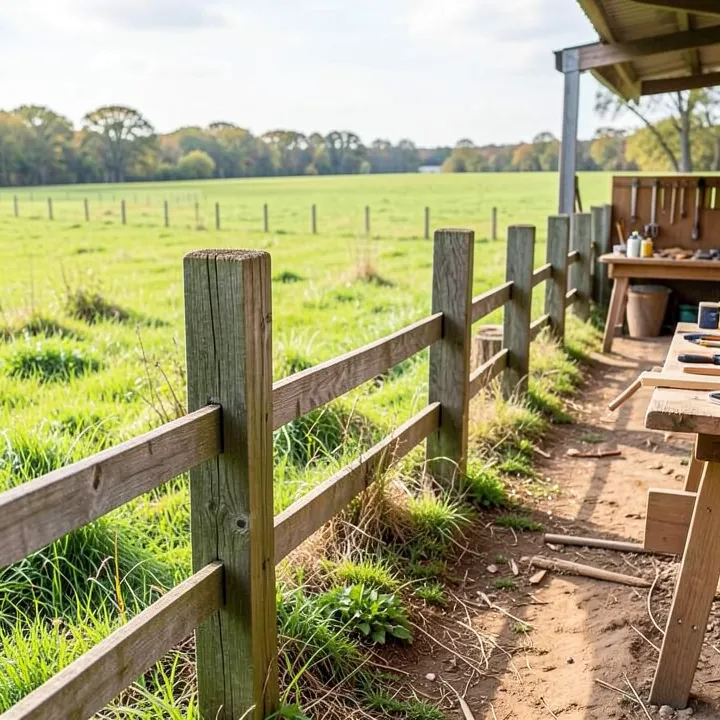
Wood is the fence type with the least room for error: solid panels catch wind like a sail, so 6–8 ft is the range worth defaulting to for any wood privacy or picket fence. Livestock and agricultural wire fencing is a different animal entirely — the open mesh sheds wind, which is why those posts can legitimately sit 10 to 25 ft apart depending on the wire type, according to FenceFast’s fence post spacing guide.
Does Wind Region Change Fence Post Spacing?
Yes. Wind load on a solid fence panel rises with the distance between posts, so every post in a wider-spaced fence absorbs more force per gust than the same fence built with tighter spacing. This is the piece most fence guides skip: the actual percentage difference between spacing choices.
| Post Spacing | Wind Load per Post | Best For |
|---|---|---|
| 10 ft | Baseline (100%) | Open fencing with minimal wind resistance |
| 8 ft | About 20% less | Standard 6-ft wood privacy fences in stable ground |
| 6 ft | About 40% less | Taller fences, heavy privacy slats, soft soil, or high-wind areas |
📊 Reducing fence post spacing from 10 ft to 8 ft cuts wind load per post by roughly 20%; tightening to 6 ft cuts it by roughly 40%. Source: ScoutMyTool, fence post spacing and wind load and Chain Link Fence Manufacturers Institute, wind load guide
Practically, this means a fence in a documented high-wind area (or one that has blown over before) is a strong candidate for 6 ft spacing even if the fence height and panel style would otherwise allow 8 ft. The wind-load math scales with spacing, not the other way around — you’re not just “playing it safe” by tightening up, you’re measurably cutting the force each post has to resist.
How Deep Should Fence Post Holes Be? (Frost Line and Footings)
A footing depth of 24–36 inches is commonly cited for fence posts, but that number means very little on its own — in cold-climate regions, footing depth is driven by frost line, not a fixed measurement. Frost line is the depth to which ground moisture is expected to freeze in winter, and it ranges from 0 inches in Florida and Southern California/Arizona to as much as 100 inches in northern Minnesota, North Dakota, and Alaska. The rule of thumb: set the bottom of the footing at least 6 inches below your local frost line, whatever that number happens to be where you live. Whatever depth you land on, use lumber actually rated for ground contact (UC4A/UC4B), not standard above-ground treated stock.
Because frost depth varies by roughly 100 inches across the country, there’s no single correct hole depth to publish here — look up your own location before digging. Nimble Freelancer’s frost line by zip code table lists frost depths by state and zip range so you can find your own number instead of guessing.
Building code is honestly murkier here than most fence guides let on. IRC Table R301.2(1) covers frost line and climate design criteria by location, and IRC R403.1.4 covers general frost protection for footings — but there isn’t one single, clean “fence post embedment depth” section in the IRC the way there is for deck footings. Requirements genuinely vary by jurisdiction (some fence-specific guidance even cites regional codes like the Texas Windstorm Insurance Association standard rather than the IRC). Always verify the actual requirement with your local building department before digging, rather than trusting any one article’s number as universal.

Does Fence Height Change Post Spacing?
Yes. Fence height is one of the main reasons to move from 8 ft spacing down to 6 ft. Eight feet is treated as the upper limit for standard, 6-ft-tall wood fences in stable ground with proper footings — taller fences carry more panel surface area per post, which means more wind load and more leverage at the base of each post. Six-foot spacing is the recommended default once you go taller than a standard 6-ft fence, add heavier privacy slats, or build on soft soil that gives posts less to grip.
None of this is exact engineering — it’s the range decks.com and SummitFence cite as safe defaults. If your fence is unusually tall, in a documented wind corridor, or carrying a solid panel material heavier than typical cedar or pine pickets, err toward 6 ft rather than 8 ft.
Gate and Corner Posts: Bigger, Not Closer
Gate and corner posts don’t need tighter spacing than line posts — they need to be physically stronger. A gate swinging open and closed, or a corner post absorbing tension from two directions instead of one, puts far more leverage on that single post than any line post along a straight run experiences.
- Step up one post size at gates and corners — for example, a 6×6 post where line posts are 4×4.
- Dig gate and corner post footings 6–12 inches deeper than the line post footings on the same fence.
- Keep the on-center spacing between the gate/corner post and its nearest neighbor the same as the rest of the run — the fix is post strength, not distance.
According to Critterfence’s fence post spacing guide, this is the most commonly missed detail on DIY fence builds — people space every post identically and only reinforce the gate post’s hardware, when the post itself needs to be a size up with a deeper footing to handle the swinging load.

How Many Fence Posts Do You Need? (Manual Formula)
There’s no live calculator embedded on this page — just a formula you can run yourself in under a minute, which is honestly all a fence post count needs: number of posts = (fence length ÷ post spacing) + 1. The “+1” accounts for the extra post at the very end of a straight run — a 3-panel fence needs 4 posts, not 3, because posts sit at both ends and between each panel.
Worked example: a 96 ft straight run of wood privacy fence at 8 ft spacing needs 96 ÷ 8 = 12, plus 1 = 13 posts. The same 96 ft run tightened to 6 ft spacing for a high-wind area needs 96 ÷ 6 = 16, plus 1 = 17 posts — four more posts, footings, and bags of concrete for the tighter spacing.
For a fence with corners, run the same formula separately for each straight segment, then add one post per corner (corners share a single, bigger post rather than doubling up). Gates typically need their own dedicated posts on both sides of the opening, sized per the gate/corner section above rather than the line-post spacing.
Once you know your post count, the next question is budget: post count and fence height are two of the biggest levers on total price. See our wood fence cost guide for a full breakdown by wood species, labor vs. DIY, and gate add-ons.
Frequently Asked Questions
How far apart should fence posts be?
Wood privacy and picket fence posts should sit 6 to 8 ft apart on-center. Eight feet is typical for a standard 6-ft-tall fence on stable ground, while 6 ft is the safer default for taller fences, heavier panels, soft soil, or high-wind areas. Livestock and agricultural wire fencing can go much wider, commonly 10 to 25 ft depending on wire type.
Does a taller fence need closer post spacing?
Yes. A taller fence has more panel surface area per post, which increases wind load and leverage at the base of each post. Eight feet is treated as the upper limit for standard 6-ft-tall fences; anything taller, or built with heavier privacy slats, should move to 6 ft spacing instead.
Does wind affect fence post spacing?
Yes, directly. Reducing post spacing from 10 ft to 8 ft cuts wind load per post by roughly 20%; reducing it to 6 ft cuts wind load by roughly 40%. High-wind regions or fences that have blown over before are strong candidates for 6 ft spacing regardless of fence height.
Do gate and corner posts need special treatment?
Yes, but not closer spacing. Gate and corner posts should be one size up from line posts (for example, 6×6 instead of 4×4) and set 6 to 12 inches deeper than the line post footings on the same fence, because they absorb far more leverage than a straight-run post.
How deep should fence post holes be?
A commonly cited footing depth is 24 to 36 inches, but the real answer is regional: the footing bottom should sit at least 6 inches below your local frost line, which ranges from 0 inches in Florida to about 100 inches in northern Minnesota, North Dakota, and Alaska. Look up your local frost depth and verify requirements with your building department before digging.
How do I calculate how many fence posts I need?
Divide the fence length by the post spacing, then add 1 for the extra end post: number of posts = (fence length ÷ spacing) + 1. A 96 ft fence at 8 ft spacing needs 13 posts; the same fence at 6 ft spacing needs 17. Add extra posts for corners and gates separately.
Start with 6–8 ft spacing for wood privacy fencing, tighten to 6 ft for height, heavy panels, soft soil, or wind exposure, size gate and corner posts up rather than closer together, and dig footings below your actual local frost line rather than a number borrowed from another climate. Once the posts are set at the right spacing, protecting the wood is the next real decision — see our guide on the best fence stain for choosing between clear, semi-transparent, and solid finishes.
Sponsored / affiliate links. As an Amazon Associate I earn from qualifying purchases. I may earn additional commission from eligible campaigns.
 4.21" x 3.94"U Shape Fence Post Holder,1 Pack Concrete Post Base Anchor Bracket,Heavy Duty Wood Post Support for Deck Railing,Fence,Pergola,Mailbox,Ground Mount Pole Construction (1, 4.21" x 3.94")
 4.21" x 3.94U Shape Fence Post Holder,4 Pack Concrete Post Base Anchor Bracket,Heavy Duty Wood Post Support for Deck Railing,Fence,Pergola,Mailbox,Ground Mount Pole Construction (4, 4.21" x 3.94")