How to Make a Wooden Rose: 3 Real Methods (Shavings to Laser)
A wooden rose is a flower shaped from thin curls or carved petals of soft wood — basswood, birch, poplar, or balsa — never a hardwood like oak, which splits instead of curling. Use the wrong wood and petals crack before they dry or hold a curl. This woodworking project covers three real methods: the wood-shaving method (about 20 petals from one board), hand-carving with a knife, and laser-cutting layered petals.
What Wood Should You Use for a Wooden Rose?
The wood you pick decides whether petals curl cleanly or crack. Poplar and basswood are the two most forgiving choices for beginners because their straight, fine grain bends without splintering; birch holds a sharper, cleaner curl but punishes a rushed cut more than the other two.
| Wood | Ease of Curling/Carving | Color | Best Method |
|---|---|---|---|
| Basswood | Easiest — soft, forgiving grain | Creamy white | Hand-carving, shaving |
| Poplar | Easy — lightweight, fine grain | Pale green-white streaks | Shaving, laser-cut |
| Birch | Moderate — needs steady pressure | Light, almost white | Shaving, laser-cut |
| Balsa | Easiest overall, but fragile when dry | Pale cream | Hand-carving, small petals |
Best Craft Wood Pick for Wooden Roses
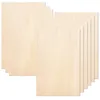 |
MUXGOA 20-Pc Balsa Wood Sheets – $9.99 Pre-cut 100×200mm sheets at roughly 2mm thick — already thin enough to skip the resawing step in the wood-shaving method below, and soft enough to curl by hand once soaked.
|
As an Amazon Associate we earn from qualifying purchases.
Tools and Materials You’ll Need
- A block or offcut of basswood, poplar, birch, or balsa (or pre-cut sheets, see above)
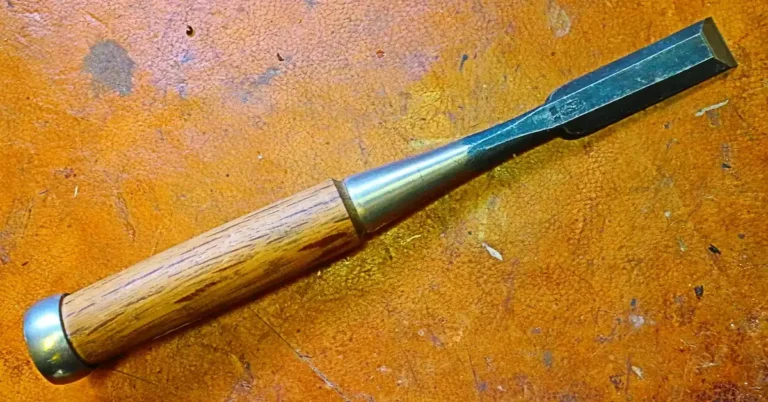
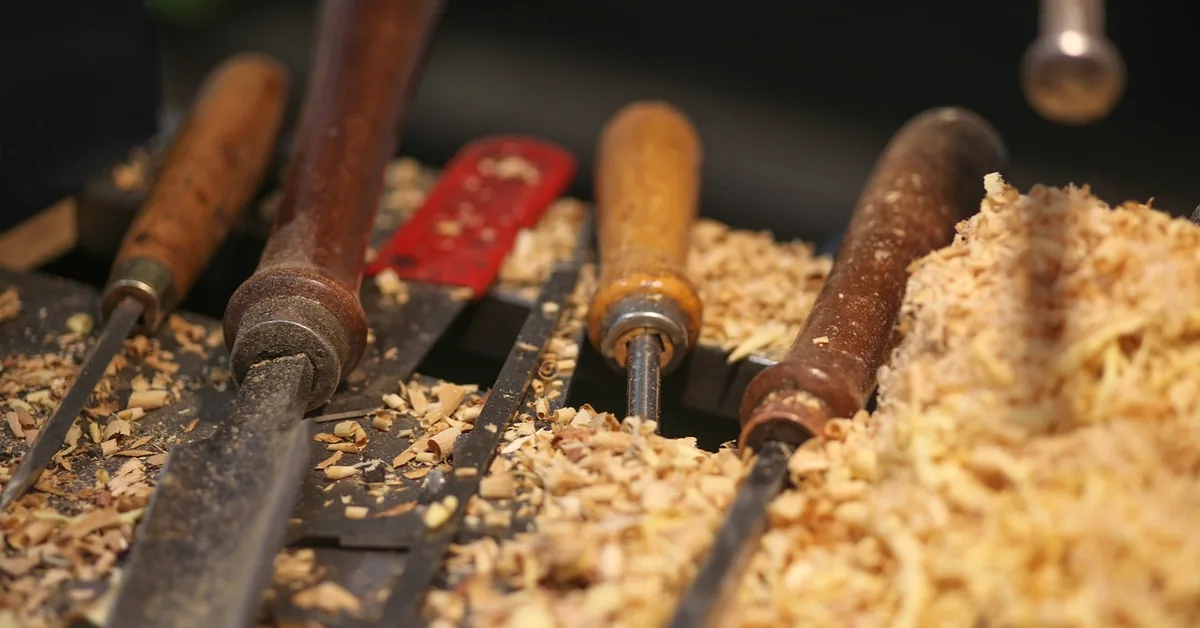
- A craft knife or whittling knife, plus a hand plane if you’re shaving your own strips
- Sandpaper, 150-220 grit
- Wood glue or hot glue and a glue gun
- Floral wire and wire cutters (wood-shaving method)
- A ½-inch wood bead for the center (wood-shaving method)
- Stain or paint, optional
How to Make a Wood Shaving Rose (Most Popular Method)
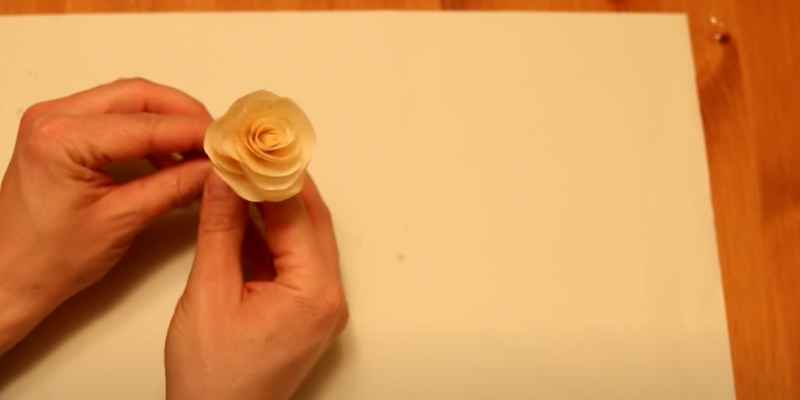
A wood shaving rose needs about 24 inches of birch or basswood shaving roughly 1½ inches wide, cut into 20 petals about 1 inch wide and 1 inch tall, with the top corners rounded and the bottom left slightly wider than the top so petals cup naturally.
- Cut the petals: Cut 20 petals from your shaving using a craft knife or scissors, rounding the top corners of each one.
- Set the center: Wrap floral wire around the circumference of a ½-inch wood bead, then twist the wire tightly against the bead for about ½ inch to anchor it.
- Attach the first petals: Cup the bottom of a petal, add a small dot of hot glue at its center-bottom, and wrap it tightly around the bead and wire.
- Layer outward: Position each new petal at roughly a 45-degree offset from the last one, gluing as you go so petals overlap like a real rose.
- Shape and dry: Fluff the outer petals open with your fingers, then set the rose on scrap paper or cardboard and let the glue cure fully — at least 24 hours — before handling it.
How to Hand-Carve a Wooden Rose (Knife and Chisel Method)
Hand-carving trades speed for control — you carve each petal individually instead of curling a single strip. Hot glue sets faster for quick positioning while you’re still shaping the bloom, though wood glue holds a stronger long-term bond once the rose is fully assembled.
- Trace or freehand a petal outline onto a thin basswood or birch blank, then carve it out with a straight whittling knife.
- Sand every edge with 150-220 grit paper until no burrs catch a fingernail — an unsanded edge is the most common reason a hand-carved petal looks rough compared to a shaved one.
- Carve 5-8 petals per rose, varying the size slightly so the outer petals are larger than the inner ones.
- Glue petals to a small carved or drilled wood center, working from the smallest inner petal outward.
- Stain or leave natural — basswood and poplar both take a light wash of wood stain evenly without blotching.
How to Laser-Cut a Wooden Rose (Fastest, Most Precise)
A laser cutter turns petal-shaping into a repeatable file instead of a hand skill. Cut petals from wood veneer 1-3mm thick, test your power and speed settings on a scrap offcut first to avoid burn marks, then stack 6-10 layers per rose, staggering each layer’s rotation so the finished bloom doesn’t look mechanically uniform.
Glue from the innermost, smallest petal layer outward, letting each layer’s glue tack before adding the next — adding all 6-10 layers at once before any glue sets is the most common reason a laser-cut rose collapses flat instead of holding its shape.
You don’t need to draw petal templates from scratch. Most free vector design tools (including the software bundled with entry-level desktop laser cutters) let you trace a petal outline from a photo or scale a single traced petal into 3-4 sizes for the inner, middle, and outer layers — keeping every layer built from the same base shape is what makes the finished rose look intentional instead of lopsided.
How to Curl Wood Veneer for Rose Petals Without Cracking It
Wood veneer is a thin layer of wood, typically under 3mm, that bends instead of snapping when its fibers are relaxed with moisture or heat first. Dry veneer cracks the instant you try to curl it into a petal shape; soaked or steamed veneer curls cleanly because water softens the lignin holding the wood fibers rigid.
“Steaming and soaking could help curving the wood into different forms.”
Soak a strip in warm water for 15-30 minutes before curling — thinner veneer (under 1mm) needs less soak time, and over-soaking softwoods like balsa can make them mushy rather than pliable, so start at 15 minutes and add time only if the wood still resists bending.
📊 Balsa, basswood, and birch veneer under 2mm thick can all be curled by hand after a warm-water soak, without a steam box. — Source: MUXGOA balsa wood sheet product specifications, 2026
Common Mistakes That Wreck a Wooden Rose
- Cutting against the grain: petals tear instead of slicing cleanly — always cut and carve with the grain direction, not across it.
- Skipping the soak on thicker veneer: anything over 2mm needs a soak before curling, or it cracks at the tightest part of the curl.
- Gluing all petals before the first layer sets: the rose collapses flat because nothing is holding its shape while wet.
- Using a hardwood like oak or maple for shaving: hardwoods resist curling and tend to snap instead of bending — save them for hand-carved petals only, where you’re cutting the curve rather than bending it in.
Frequently Asked Questions
What wood is used to make wooden roses?
Basswood, poplar, birch, and balsa are the four most common choices. All four are soft, straight-grained, and light in color, which makes them easy to cut thin, curl or carve without splitting, and stain or paint evenly.
Can you make a wooden rose without a laser cutter?
Yes. The wood-shaving method and hand-carving method both only need a craft knife or whittling knife, sandpaper, and wood glue — a laser cutter only speeds up cutting identical petal shapes, it isn’t required to make a real wooden rose.
How do you curl wood without it cracking?
Soak the veneer strip in warm water for 15-30 minutes before curling it, starting with less time for thinner strips. The water softens the wood fibers so they bend around a curve instead of snapping at the tightest point.
How long do wooden roses last?
Kept indoors out of direct sun and humidity, a glued wooden rose holds its shape for years since there’s no organic decay the way there is with a real flower — the main risks are a snapped petal from rough handling or fading if it sits in direct sunlight for a long time.
What glue works best for a wood rose?
Hot glue is faster for holding petals in place while you’re still shaping the bloom, since it grabs in seconds instead of minutes. Wood glue takes longer to set but forms a stronger long-term bond, so many woodworkers hot-glue the rose into shape first, then reinforce the base joints with wood glue once the shape is finalized.
Wooden Rose Craft vs. the “Wood Rose” Plant (Don’t Confuse Them)
Searches for “wood rose” also turn up an actual plant — Merremia tuberosa, a tropical vine whose dried seed pods flare open into a papery, rose-shaped husk that’s sold as a dried floral accent. That’s a real botanical specimen you buy or grow, not something you build. Every method on this page makes a carved or shaved wood craft rose from scratch; if you were looking for the dried seed-pod plant instead, that’s a different product entirely, not a woodworking project.
Conclusion
Pick the wood-shaving method for the classic layered look with basic tools, hand-carving if you want full control over petal shape, or laser-cutting if you’re making several roses and want identical petals every time. Whichever method you choose, soak or steam any veneer over 2mm thick before curling it, and let the glue cure fully before handling the finished rose. For more beginner-friendly builds, see our simple woodworking projects guide.
Sponsored / affiliate links. As an Amazon Associate I earn from qualifying purchases. I may earn additional commission from eligible campaigns.