1 2 Inch Vs 1 4 Inch Drill Driver: Essential Choice
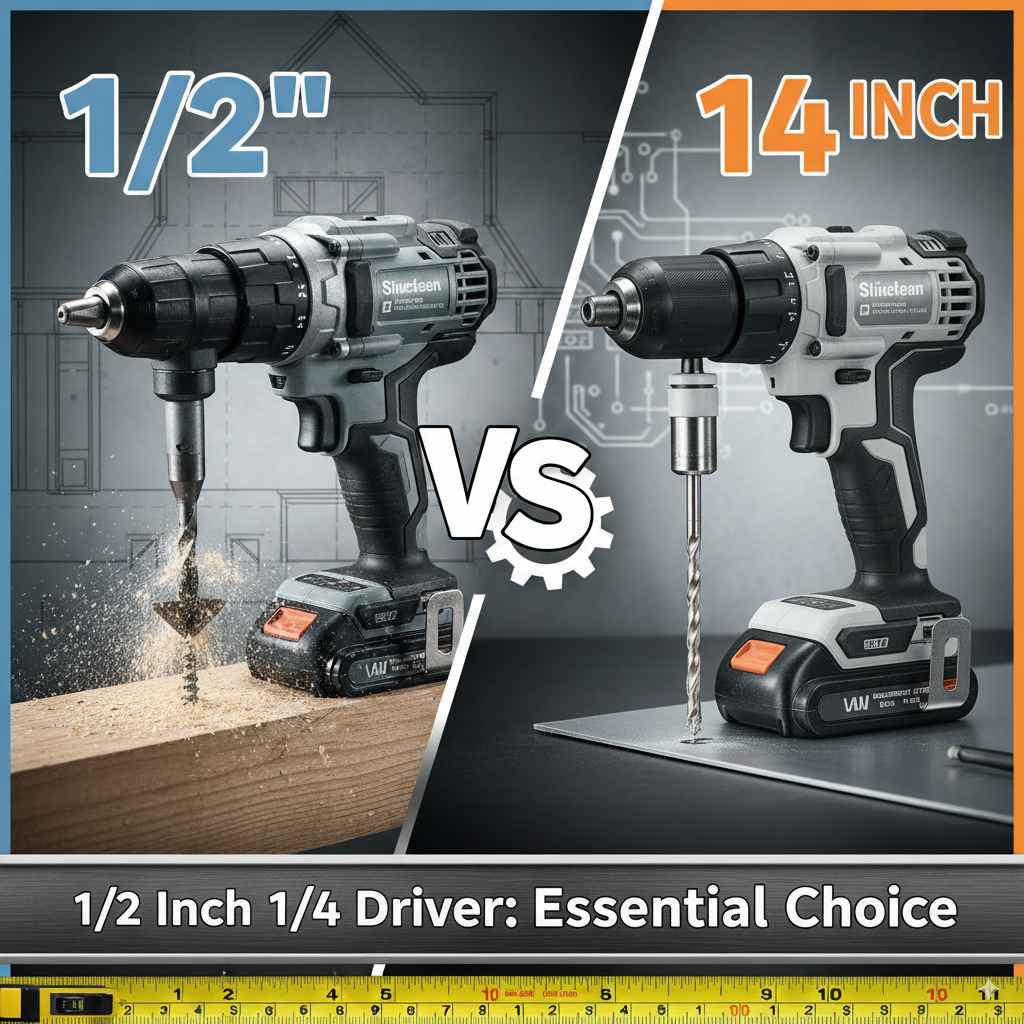
For most DIYers and homeowners, a 1/2-inch drill driver offers superior versatility and power for a wider range of tasks, especially when dealing with larger bits or demanding materials. A 1/4-inch driver is lighter and more agile for smaller screws and pilot holes, but the 1/2-inch chuck is the better all-around choice for getting more done around the house and workshop.
Choosing the right drill driver can feel like a big decision when you’re just starting out in woodworking or tackling those home improvement projects. You’ve probably seen them: drills with bits that look just a little different. The sizes — 1/2 inch and 1/4 inch — often refer to the chuck size, which is the part that holds the drill bit. This can seem confusing, but understanding the difference between a 1/2-inch and a 1/4-inch drill driver isn’t as complicated as it sounds. It’s an essential choice that can make your projects smoother and more enjoyable. We’ll break down exactly what these sizes mean and help you pick the perfect drill for your needs. Let’s get your projects started right!
Understanding Drill Driver Chuck Sizes: What Does 1/2 Inch vs 1/4 Inch Really Mean?
When we talk about “1/2 inch” or “1/4 inch” in the context of drill drivers, we’re primarily referring to the maximum diameter of the drill bit shank that the chuck can securely hold. The chuck is that adjustable clamping mechanism at the front of your drill that grips the drill bit. It’s crucial to match your drill’s chuck size to the bits you intend to use.
Think of it like this: a larger chuck can accommodate larger drill bits, and often, larger drill bits are designed for heavier-duty tasks. A drill driver is a versatile tool that can both drill holes and drive screws, making it a staple for any DIY toolkit.
The 1/4-Inch Drill Driver: Lightweight and Nimble
A 1/4-inch drill driver, often found in smaller, more compact and lightweight models, is designed to accept drill bits with shanks up to 1/4 inch in diameter. These drills are fantastic for:
- Driving smaller screws into softer materials like drywall or thinner wood.
- Drilling small pilot holes for nails or tiny screws.
- Working in tight spaces where a bulkier tool wouldn’t fit.
- General light-duty home tasks like assembling flat-pack furniture.
The primary advantage here is maneuverability and ease of use. They are less fatiguing to hold for extended periods and are often more affordable. However, their power and capacity are limited.
The 1/2-Inch Drill Driver: The Workhorse
A 1/2-inch drill driver, on the other hand, can hold drill bits with shanks up to 1/2 inch in diameter. This larger capacity opens up a world of possibilities:
- Drilling larger holes in wood, metal, and even masonry (with the right bit and drill setting).
- Driving larger screws, lag bolts, or bolts into tougher materials.
- Using drill bits like hole saws or spade bits, which are often 1/4 inch or larger at their shank.
- Handling more demanding jobs that require more torque and power, such as framing or deck building.
The 1/2-inch chuck is more robust and can transfer more power from the motor to the bit. While they are generally larger and heavier than their 1/4-inch counterparts, they offer significantly more capability for a wider range of projects.
Key Differences: A Side-by-Side Comparison
To make the choice even clearer, let’s look at the main differences you’ll encounter:
| Feature/Aspect | 1/4-Inch Drill Driver | 1/2-Inch Drill Driver |
|---|---|---|
| Maximum Bit Shank Diameter | 1/4 inch | 1/2 inch |
| Typical Use Cases | Driving small screws, pilot holes, light-duty tasks, tight spaces | Drilling larger holes, driving larger screws/bolts, heavy-duty tasks, woodworking, construction |
| Power & Torque | Lower power, less torque | Higher power, more torque |
| Versatility | Limited to smaller bits and lighter tasks | Handles a much wider range of bits and tasks |
| Size & Weight | Generally smaller and lighter | Generally larger and heavier |
| Compatibility with Large Bits | Cannot accept bits larger than 1/4 inch shank | Can accept bits up to 1/2 inch shank, including most large bits like hole saws and spade bits |
| Ideal User | Beginners focusing on simple assembly, crafters, those needing a secondary light-duty tool | Homeowners, DIYers, woodworkers, contractors needing an all-around tool |
Which One is Right for You? Essential Factors to Consider
The “essential choice” really boils down to what you plan to do with your drill. Here are the key questions to ask yourself:
- What kind of projects will you be working on? Are you just assembling IKEA furniture and hanging pictures, or are you planning on building shelves, a deck, or working with larger lumber?
- What size drill bits do you anticipate using? If you foresee yourself needing to drill holes larger than 1/4 inch regularly, or using specialized bits like hole saws, a 1/2-inch driver is essential.
- How important is weight and ergonomics for you? If you have limited strength or will be working overhead for long periods, a lighter 1/4-inch driver might seem appealing. However, consider that for tougher tasks, a 1/2-inch driver might be necessary regardless of weight.
- Do you need one drill to do it all, or are you willing to have multiple tools? If you only want one drill, the 1/2-inch is almost always the more practical choice for overall capability.
When a 1/4-Inch Drill Driver Is a Smart Choice
While the 1/2-inch drill driver offers more power, there are specific scenarios where a 1/4-inch drill driver shines:
- The Ultra-Lightweight Option for Specific Tasks: If your primary need is driving small screws in sensitive materials where over-torqueing could cause damage, a smaller drill often provides better control.
- Tireless Screw Driving: For tasks that involve driving hundreds of small screws, the lighter weight of a 1/4-inch driver can be a huge benefit for comfort.
- Navigating Super Tight Spots: Some compact 1/4-inch drills are designed to be exceptionally small, allowing you to work in cabinets or behind fixtures where larger tools simply won’t fit.
- Beginner’s First Tool (with caveats): For someone who is truly intimidated by power tools and only intends to do the most basic tasks, a 1/4-inch driver can be a less daunting entry point. However, many modern 1/2-inch drills can be adjusted to be quite gentle.
It’s important to note that many modern drills are “cordless drill/drivers” and come with adjustable torque settings. This means even a 1/2-inch drill can be set to a low torque to prevent stripping screws or damaging soft materials. You can learn more about how torque settings work on power tools from resources like Popular Mechanics, which offers excellent guides for homeowners.
When a 1/2-Inch Drill Driver is Essential
For most people looking for a primary drill driver, the 1/2-inch chuck is the way to go. Here’s why it’s the workhorse you’ll likely need:
- Maximum Versatility: The main reason to choose a 1/2-inch driver is its ability to handle practically any drill bit you throw at it, as long as the bit’s shank is 1/2 inch or smaller. This includes:
- Spade Bits and Auger Bits: Essential for drilling larger-diameter holes, often found in woodworking or plumbing.
- Hole Saws: Used for cutting large, clean holes for things like doorknobs, electrical boxes, or vents. These bits almost always have shanks larger than 1/4 inch.
- Large Twist Bits: For creating substantial holes in wood, metal, or plastic.
- Superior Power and Torque: Larger bits require more force to turn. A drill with a 1/2-inch chuck is typically built with a more powerful motor and a gearbox designed to deliver higher torque. This is critical for:
- Driving long or large screws and lag bolts without stalling.
- Drilling into dense hardwoods or metal.
- Working through tough materials where resistance is high.
- Durability and Longevity: Tools designed for heavier-duty tasks are often built with more robust components. A 1/2-inch drill driver is generally designed to withstand more abuse and last longer, making it a better long-term investment for a homeowner or serious DIYer.
- Future-Proofing Your Toolkit: Even if you don’t need a 1/2-inch drill today, you might need one for a project down the line. Investing in one now means you won’t be caught short when a bigger job comes up.
Many modern 1/2-inch drills are also available in compact “brushless” models that significantly reduce weight and improve battery life, making them much more manageable than older, heavier corded drills. For a comprehensive look at drill features, you can explore resources from organizations like the National Tooling & Manufacturing Association (NTMA), which discusses tooling standards relevant to drill bit compatibility.
Beyond Chuck Size: Other Important Drill Driver Features
While chuck size is a primary differentiator, it’s not the only thing to consider when buying a drill driver. Here are a few other features that can significantly impact your experience:
- Voltage (for Cordless): Higher voltage (e.g., 18V vs. 12V) generally means more power and longer run time. For a 1/2-inch drill, 18V is usually recommended for optimal performance.
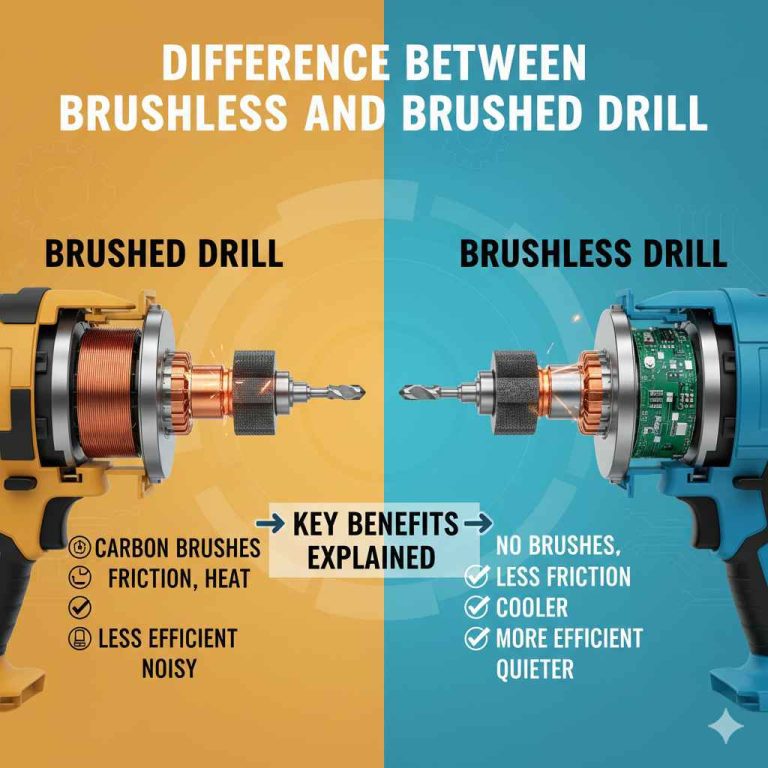
- Brushless vs. Brushed Motors: Brushless motors are more efficient, durable, and provide more power than traditional brushed motors, though they can be more expensive.
- RPM Range: Revolutions per minute (RPM) indicates how fast the drill spins. A variable speed trigger allows you to control this, which is crucial for both delicate screw driving and high-speed drilling. Look for a range that can go from very slow (for screws) to quite fast (for general drilling).
- Clutch Settings: This feature on drill drivers allows you to set a maximum torque. When that torque is reached, the clutch disengages to prevent over-driving screws, stripping them, or damaging the material. This is a must-have for precision work.
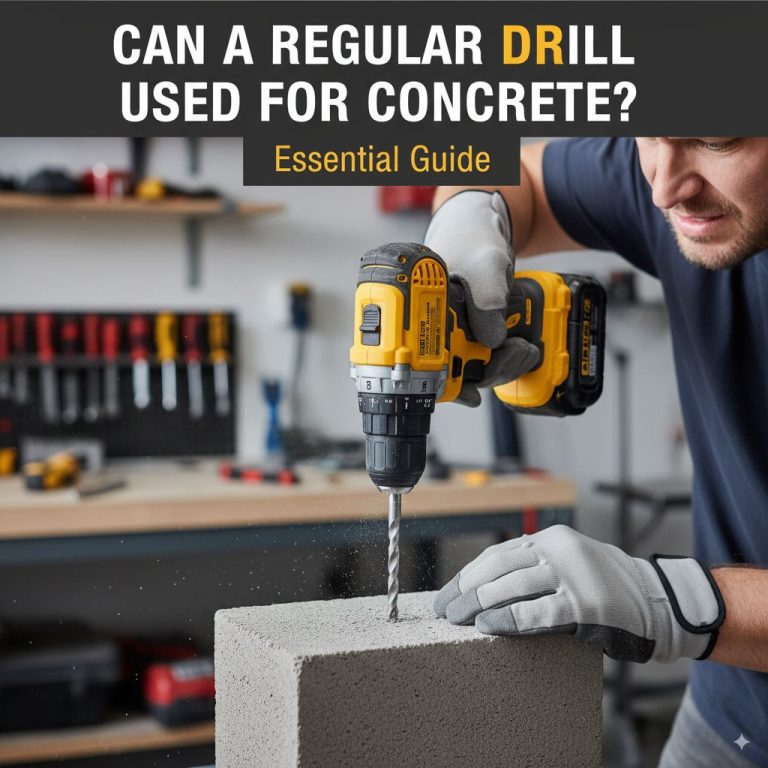
- Hammer Function (for Hammer Drills): Some 1/2-inch drills also include a hammer function, turning them into hammer drills. These are excellent for drilling into concrete or masonry, though they are a step up in complexity and weight.
- Ergonomics and Grip: How the drill feels in your hand is important. A comfortable grip, balanced weight, and easy-to-reach controls can make a big difference during use.
Corded vs. Cordless: Another Key Decision
When choosing between 1/4-inch and 1/2-inch drill drivers, you’ll also face the corded vs. cordless decision. Both have their pros and cons:
Cordless Drill Drivers
Pros:
- Portability: No cord means freedom to move anywhere.
- Convenience: No need to find an outlet or deal with extension cords.
- Modern Features: Most new drills with 1/2-inch chucks are cordless and come with advanced features.
Cons:
- Battery Life: Can run out of power, requiring battery changes or charging.
- Cost: Often more expensive upfront, especially if you need multiple batteries.
- Power Limitations: While improving dramatically, some very demanding tasks might still favor a powerful corded tool.
Corded Drill Drivers
Pros:
- Consistent Power: Never worry about running out of battery.
- Potentially Higher Power: Can offer more sustained power for very tough jobs.
- Lower Upfront Cost: Generally cheaper than comparable cordless models.
Cons:
- Tethered: Limited by cord length and the need for an outlet.
- Inconvenience: Extension cords can be a hassle and a tripping hazard.
- Weight: Older corded models can be quite heavy, though modern ones are more ergonomic.
For most homeowners and DIY enthusiasts today, a cordless drill driver, especially one with a 1/2-inch chuck and an 18V battery, represents the best balance of power, convenience, and versatility. Organizations like Energy.gov offer insights into the efficiency of electric tools, which can be helpful when considering battery life and power consumption.
Putting It All Together: Your Tooling Strategy
As your trusted woodworking mentor, my advice is this: if you’re just starting and want one tool to tackle most home improvement, woodworking, and general DIY tasks, opt for a 1/2-inch cordless drill driver.
This single tool will allow you to:
- Assemble furniture with speed and precision.
- Hang shelves, pictures, and curtains securely.
- Drill pilot holes for screws and nails of various sizes.
- Install new fixtures.
- Even take on more ambitious projects like building a birdhouse, a small shed, or repairing a fence.
If you find yourself doing a lot of very fine detail work with tiny screws, or if you have a need to work in extremely confined spaces and find even compact 1/2-inch drills too cumbersome, then consider adding a smaller, lighter 1/4-inch drill or impact driver later on. But for your first, or primary, drill driver, the 1/2-inch size offers the most bang for your buck and the broadest range of capabilities. It’s the ultimate versatile tool for any homeowner’s toolkit.
Frequently Asked Questions (FAQ)
Q1: Can I use a 1/4-inch drill for driving large screws?
Generally, no. While you might be able to drive a few smaller screws, a 1/4-inch drill lacks the torque and power needed for larger screws, especially in dense wood. You risk stalling the motor or stripping the screw head.
Q2: Will a 1/2-inch drill driver be too heavy for small tasks like assembling furniture?
Not usually. Most modern 1/2-inch drill drivers come with variable speed triggers and adjustable clutch settings. You can set them to low torque and slow speed, making them just as precise and gentle as a 1/4-inch drill for screws, while offering more power when you need it.
Q3: Do I really need both a drill and a driver?
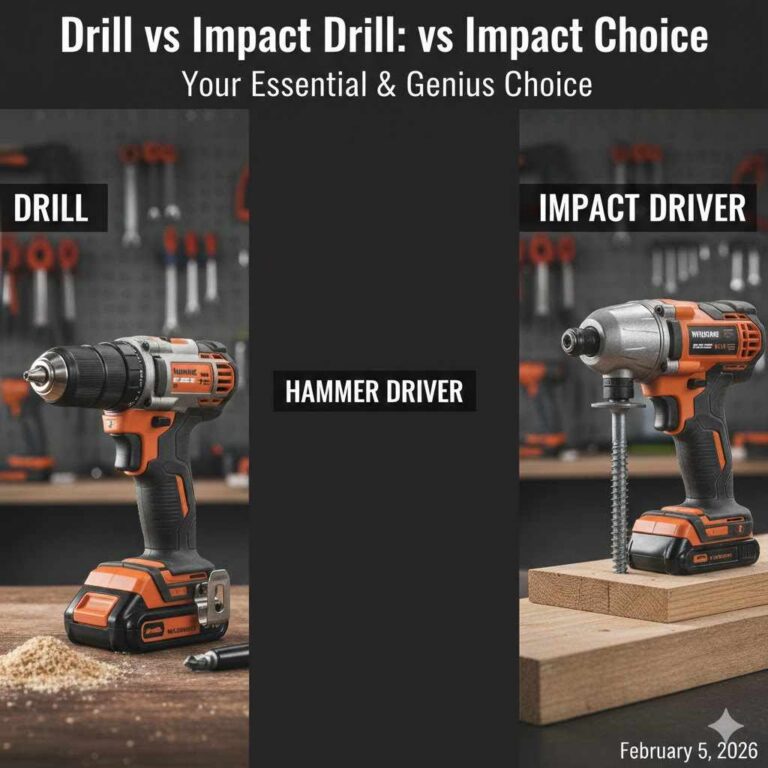
A “drill driver” is designed to do both jobs! For most people, one good drill driver with a 1/2-inch chuck is all you need. An “impact driver” is a separate tool specializing in driving screws but can also be used for drilling in some cases.
Q4: What’s the difference between a drill and a hammer drill?
A standard drill (including most 1/2-inch models) spins to drill holes or drive screws. A hammer drill adds a hammering or pulsating action that rotates and pounds simultaneously, which is essential for drilling into concrete, brick, or stone.