4X8 Wood Beam Span Calculator: Ensure Safe Loads!
The 4×8 wood beam span calculator helps determine the maximum span a 4×8 beam can support under specific loads. It takes into account factors like wood type, load, and spacing for accurate results.
Understanding how to calculate the span of a wood beam is crucial for any construction project. The 4×8 wood beam span calculator simplifies this process, allowing builders and homeowners to ensure structural integrity. By entering details such as wood type, load requirements, and spacing, users can obtain precise span limits.
This tool not only saves time but also prevents potential safety hazards related to underestimating beam capacity. Whether you’re building a deck, renovating a home, or constructing a new structure, knowing the correct span is essential for successful and safe building practices.
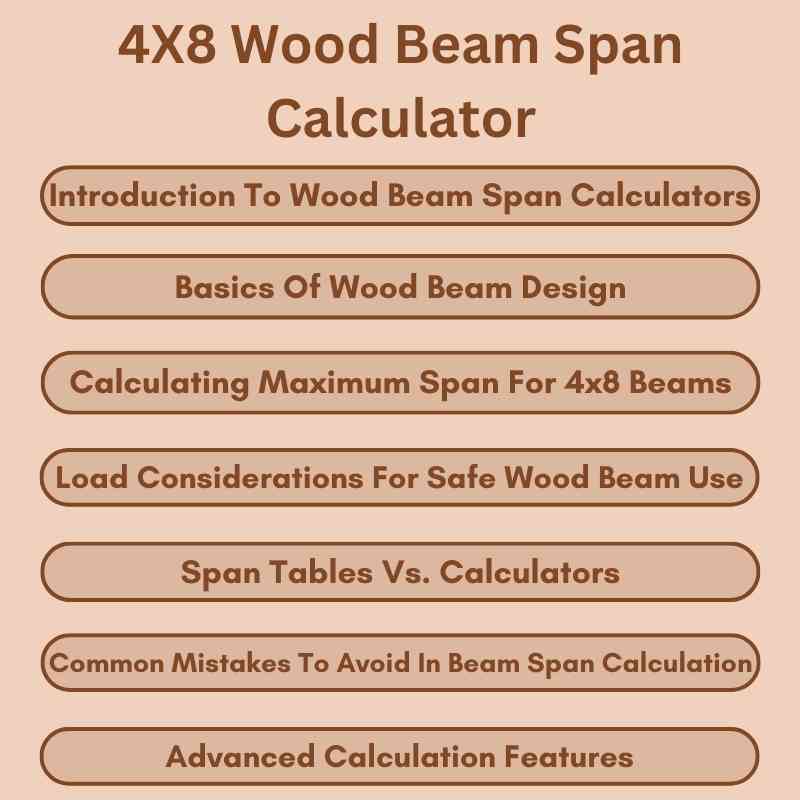
Introduction To Wood Beam Span Calculators
Wood beam span calculators play a crucial role in construction. They help determine how far a beam can safely span without support. Accurate load calculations ensure the safety and stability of structures. Builders and architects rely on these tools to design safe buildings.
Using a span calculator can prevent costly mistakes. It helps avoid using undersized beams, which can lead to structural failure. Accurate calculations support better material efficiency and reduce waste. This ultimately saves time and money on construction projects.
Furthermore, understanding the load capacity of beams ensures compliance with building codes. It promotes a safer environment for occupants. A reliable wood beam span calculator is essential for any construction professional.
Basics Of Wood Beam Design
Several key factors affect the span of a wood beam. Understanding these elements helps ensure safety and stability.
The wood species plays a crucial role. Different types of wood have varying strength and flexibility. Common species include pine, fir, and cedar. Each type offers unique benefits.
The grade of wood also matters. Higher grades indicate fewer defects and better performance. Always check the grading before making a choice.
Load conditions are important too. This includes both live loads, like people and furniture, and dead loads, like the beam itself. Knowing these helps in calculating the appropriate span.
Finally, consider local building codes. They provide guidelines for safe construction practices. Following them ensures your project meets safety standards.
Calculating Maximum Span For 4×8 Beams
To calculate the maximum span for 4×8 wood beams, specific input parameters are essential. The most important factors include the type of wood, spacing between beams, and the load they will carry. Common wood types include Douglas Fir, Southern Pine, and Hemlock. Each type has different strength properties.
Also, consider the live load and dead load when calculating spans. Live load refers to temporary loads, like people or furniture, while dead load is the weight of the beam itself. Inputting these parameters into a span calculator can provide accurate results.
| Parameter | Description |
|---|---|
| Wood Type | Different woods have varying strength. |
| Beam Spacing | Distance between each beam affects load capacity. |
| Load Types | Live load and dead load are crucial for calculations. |
After inputting data, the calculator will show the maximum span. Understanding these results helps in construction projects. It ensures safety and structural integrity.
Load Considerations For Safe Wood Beam Use
Understanding the types of loads is essential for safe wood beam use. Live loads refer to movable weights. These include people, furniture, and snow. Dead loads are permanent fixtures like beams, walls, and roofs. Knowing the difference helps in calculating support needs.
Live loads change over time and can vary greatly. They require beams to be more flexible. In contrast, dead loads remain constant. This makes them easier to calculate. Both loads impact how much weight a beam can hold.
| Load Type | Description | Examples |
|---|---|---|
| Live Load | Temporary and changeable weight | People, furniture, snow |
| Dead Load | Permanent weight | Beams, walls, roofs |
Span Tables Vs. Calculators
Using span tables helps in quickly finding acceptable beam spans. It is useful for simple projects. Span tables are easy to read and understand. They provide standard values for common wood types.
Calculators offer more precise results tailored to specific needs. Inputting different variables can yield exact spans. It considers factors like load, wood type, and beam size. This approach ensures safety in more complex designs.
- For simple, small projects.
- When quick information is needed.
- If using common wood sizes.
- Provides customized results.
- Considers various load conditions.
- Helps with complex designs.
Common Mistakes To Avoid In Beam Span Calculation
Overloading risks can lead to serious structural failures. Always check the load capacity of your wood beams. Exceeding this can cause bending or breaking. Proper calculations are essential to ensure safety.
Neglecting wet service conditions is another common mistake. Moisture can weaken wood, reducing its strength. Consider local climate conditions when calculating spans. Using wood in wet environments requires special care. Treatment options are available to help protect the wood.
Advanced Calculation Features
Adjusting for load duration is crucial for accurate calculations. Different materials react differently over time. For instance, a beam can support more load for shorter durations. Always check load duration factors to ensure safety.
Factoring in deflection limits is also essential. Deflection refers to how much a beam bends under weight. Limitations help maintain structural integrity. Excessive deflection can lead to damage or failure. Keep deflection limits within safe ranges for reliable performance.
Case Studies: Real-world Applications
Residential construction often utilizes 4×8 wood beams for various applications. These beams are perfect for supporting load-bearing walls in homes. A typical example is a single-story house with an open floor plan. The span calculator ensures the right size for beams, maintaining safety.
In commercial projects, considerations differ significantly. Buildings require beams that can support heavier loads due to larger spaces. 4×8 beams might be used in interior partitions or as support beams for canopies. Using a span calculator helps architects choose the appropriate beam size for specific needs.
Choosing The Right Beam Span Calculator
Finding the right beam span calculator is essential for any construction project. Many online tools exist to help. Popular calculators include the Omni Calculator, Medeek Beam Calculator, and resources from the American Wood Council. Each offers unique features to assist users.
Key features to look for in a span calculator include:
- Input flexibility: Allows various lumber sizes and load types.
- User-friendly interface: Simple navigation for quick results.
- Accurate calculations: Ensures reliable and precise span measurements.
- Output details: Provides clear explanations of results.
- Mobile compatibility: Access from any device.
Choosing the right calculator can save time and improve project safety. Always ensure the tool meets specific project needs.
DIY Tips For Homeowners Using Span Calculators
Using a span calculator can simplify your DIY projects. Follow these steps:
- Measure the length of the beam you want to calculate.
- Enter the width and thickness of the beam.
- Input the type of wood you are using.
- Specify the load the beam needs to support.
- Click calculate to get the maximum span.
To verify your calculations, compare results from different calculators. Cross-check with span tables available online. Always consult a professional if unsure about your findings. Ensuring safety is key in any DIY project.
Frequently Asked Questions
How Far Will A 4×8 Beam Span?
A 4×8 beam typically spans up to 10 to 12 feet, depending on the load it carries. Always consult local building codes and a structural engineer for precise requirements. Proper support and spacing can also influence the maximum span.
How Far Can A Wood Beam Span Without Support?
A wood beam can typically span 10 to 15 feet without support, depending on its size and type. Factors like load and wood species also influence this span. Always consult local building codes for specific requirements. Proper calculations ensure safety and structural integrity.
What Size Wood Beam Will Span 10 Feet?
To span 10 feet, a wood beam typically needs to be at least 2×8 or 2×10, depending on the load. For heavier loads, consider using larger dimensions like 2×12. Always consult a structural engineer for specific requirements and safety.
What Size Wood Beam To Span 16 Feet?
For a 16-foot span, a minimum wood beam size of 2×10 is typically recommended. Consider using engineered wood, like LVL, for added strength. Always consult a structural engineer for specific load requirements and local building codes.
Conclusion
Calculating the span of a 4X8 wood beam is essential for any construction project. Understanding load requirements ensures safety and stability. Use a reliable span calculator to make informed decisions. With the right tools, you can achieve optimal support and structural integrity for your project.
Stay safe and build wisely!