How to Measure Hinges: Door, Cabinet and Euro Sizes (Chart)
To measure a hinge, open it flat and measure the height along the barrel, then the width across both leaves, then check the corner radius (square, 1/4 inch or 5/8 inch) and the screw-hole pattern. Hinge size is quoted as height x width, and most replacement mistakes come from measuring a closed hinge or skipping the radius. This guide covers door hinges, Euro cabinet hinges, overlay and the other numbers a replacement must match. For how the parts work, see our guide to how a hinge works.
How to Measure a Door Hinge: Height, Width, Radius and Thickness
Best Hinge Measuring Tool | |
 |
Stainless Steel 6-Inch Digital Caliper (inch, mm, fraction), $15.18 Reads hinge thickness, leaf width and screw-hole spacing in one tool, and switches between inches, millimeters and fractions, which helps when a cabinet hinge is specified in mm and a door hinge in inches.
|
As an Amazon Associate we earn from qualifying purchases. Price checked at time of writing and may change. | |
A butt hinge has two flat leaves joined by a knuckle barrel and a pin. Every number below is taken with the hinge unfolded, because the width of a closed hinge is only half the figure a hardware store or catalog uses.
- Open the hinge flat: if the door is still hanging, swing it open and measure the leaves as they sit, or lift the pin and take the hinge off. Lay it on a table with both leaves in one plane.
- Measure height: run the rule along the barrel from the top end to the bottom end. This is the first number in the size, so a 4 inch hinge is 4 inches tall.
- Measure width: measure from the outer edge of one leaf, across the barrel, to the outer edge of the other leaf. On a standard hinge this matches the height, so 4 x 4 inches is typical.
- Check the corner radius: look at the outside corners. They are square, 1/4 inch radius or 5/8 inch radius. The radius decides whether the hinge sits cleanly in the mortise already cut in the door.
- Measure thickness: take the thickness of one leaf (use a caliper if you have one). Thick leaves need a deeper mortise, and a thin replacement leaves the hinge sitting proud of the surface.
- Count and space the screw holes: note the number of holes per leaf, the hole diameter and the center-to-center spacing, so the new screws land in solid wood and not in the old holes’ stripped edges.
If the hinge is painted over, scrape the paint off the leaf edges first. Several coats can add a visible amount to the width reading and hide the corner radius completely.
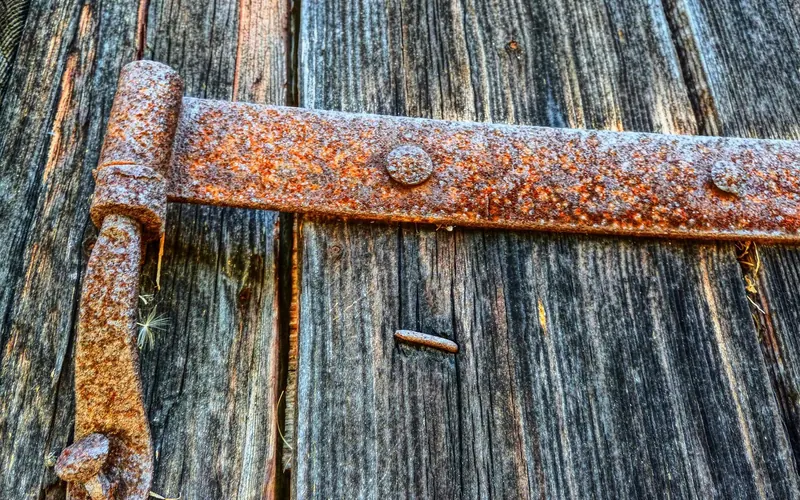
Standard Door Hinge Sizes by Door Thickness and Width
Door hinge size is chosen from two things: how thick the door is and how wide it is. Thicker and wider doors weigh more, so they need longer, heavier hinges. The chart below follows the sizing most hardware charts use for residential butt hinges.
| Door thickness | Door width | Typical hinge size (height x width) |
|---|---|---|
| 1-3/8 in | up to 32 in | 3.5 x 3.5 in |
| 1-3/8 in | 32 to 36 in | 4 x 4 in |
| 1-3/4 in | 32 to 36 in | 4.5 x 4.5 in |
| 1-3/4 in | 36 to 42 in | 5 x 5 in |
Charts are not identical from one manufacturer to the next, and some residential suppliers pair a 1-3/4 inch exterior door with a 4 inch hinge instead of 4.5 inch. Treat the table as a starting point and always match the hinge that was actually working in your door, since the mortise is cut to its size.
One detail that trips people up: a 4 inch hinge and a 4.5 inch hinge are not interchangeable without work. The extra half inch means the mortise has to be re-cut longer, and the screw holes will no longer line up with the old ones. Staying within the same size is almost always less work than moving up a size.
How many hinges does a door need?
A standard interior door hangs on three hinges, one near the top, one near the bottom and one in the middle to keep the door from bowing. Heavy solid-core or tall doors benefit from a fourth. If a door sags or binds, the cause is often loose screws rather than the wrong size, and our guide to door hinges with loose screws walks through that fix before you buy anything.
Corner Radius: Square, 1/4 Inch or 5/8 Inch
The corner radius is the measurement most guides leave out, and it decides whether a replacement drops straight in. US residential butt hinges come in two standard radii, 1/4 inch and 5/8 inch, plus square corners.
| Corner type | Looks like | Circle it follows | Fits which mortise |
|---|---|---|---|
| Square | Sharp 90 degree corners | None | Square mortise, or one squared out by hand |
| 1/4 inch radius | Slightly softened corner | about 1/2 in across | Router-cut mortise with a small round |
| 5/8 inch radius | Obviously rounded corner | about 1-1/4 in across | Router-cut mortise with a large round |
A quick field check: a 1/4 inch radius follows a curve tighter than a dime (about 0.7 inch across), while a 5/8 inch radius follows a curve a little larger than a half dollar (about 1.2 inches across). Hold the coin in the corner of the leaf and see which one nestles in without a gap.
The mismatch rules are simple. A square-cornered hinge will not seat in a rounded mortise until you square the corners with a sharp chisel, while a rounded hinge in a square mortise fits but shows a small gap at each corner. If you are replacing every hinge on a door, pick the radius that matches the existing mortises and the job takes minutes.
How to Measure Cabinet Hinges (Euro Concealed Hinges)
Concealed cabinet hinges are measured differently from door hinges. Instead of height and width, you record the cup, the arm type and the mounting plate. The dimensions below are the ones to match when ordering a replacement.
| What to measure | Typical value | Why it matters |
|---|---|---|
| Cup diameter | 35 mm (standard Forstner bit size) | Decides whether the new hinge fits the hole already bored in the door |
| Cup depth | 11.5 to 13 mm | Too deep for a thin door and the bit can show through the face |
| Distance from door edge to cup | 3 to 7 mm | Changes the overlay you actually get |
| Arm type | Straight, half-crank or full crank | Sets full overlay, half overlay or inset |
| Mounting plate screws | Spacing and hole size | The new plate has to match the cabinet side or face frame |
Those cup figures come from published hinge boring guidance such as this boring dimensions reference, and individual brands can differ by a millimeter or so, so check the spec sheet for your hinge line.
Full overlay, half overlay and inset
Overlay is how much of the cabinet opening or face frame the closed door covers, and the hinge arm is what sets it. A straight arm gives full overlay, common on frameless cabinets, where the door covers the cabinet side. A half-crank arm gives half overlay, used where two doors share one partition. A full crank gives inset, where the door sits inside the opening and ends flush with the cabinet front.
To measure overlay on an existing cabinet, close the door and measure how far the door edge sits beyond the edge of the cabinet side or face frame on the hinge side. A door that sits flush with the front and inside the opening is inset, which means you need a crank arm. Face-frame cabinets often use overlays measured in fractions of an inch, such as 1/2 inch, so write the number down in the same unit as the hinge spec.
If you are not sure which size and arm you need, the cabinet door hinge calculator helps you work from your door and opening measurements.
Measuring a concealed hinge you cannot see
Concealed hinges hide the arm when the door is closed, so open the door past 90 degrees and measure the cup straight across the round recess. If the hinge is already out, the pair of screw holes for the plate and the round cup hole give you every number in the table above. A paper template or a straight edge across the hinge side of the door helps you mark the cup distance from the edge.
Measuring Other Hinge Types
The same open-and-flat method works for most other styles. What changes is which dimension matters.
| Hinge type | Measure | Watch out for |
|---|---|---|
| Strap or T-hinge | Strap length, leaf width, barrel diameter | Long straps that run past the door edge need clear space on the frame |
| Piano (continuous) hinge | Overall length and open width | Cut to length with a hacksaw, so measure the door height first |
| Small box or picture-frame hinge | Open width, leaf length and thickness | A thin gap leaves no room for a thick leaf, so check thickness |
| Window hinge | Hinge length, open width and offset | The offset sets how far the sash swings clear of the frame |
Best Tools for Measuring Hinges
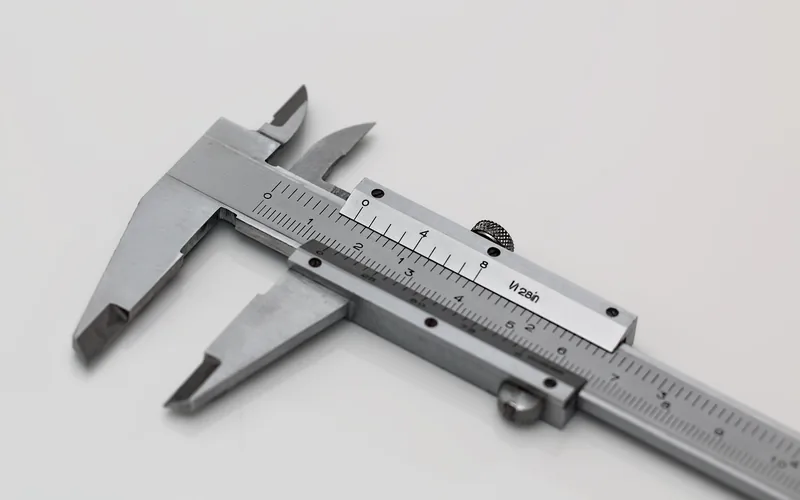
A tape measure is fine for door hinge height and width, but hinge work often needs smaller numbers than a tape marked in 1/16 inch steps can give you.
| Tool | Best for | Limit |
|---|---|---|
| Tape measure or steel rule | Door hinge height and width, overlay | Marked in 1/16 inch steps, so it cannot read thickness |
| Digital caliper | Thickness, cup diameter, hole spacing, radius | More than you need for rough door-hinge sizing |
| Combination square | Mortise depth and edge distances | Does not measure curved corners |
| Coin or radius gauge | Corner radius | Gives a match, not an exact number |
Common Hinge Measuring Mistakes
| Mistake | What goes wrong | Fix |
|---|---|---|
| Measuring the hinge closed | You get about half the true width | Open it flat and measure across both leaves |
| Ignoring corner radius | Replacement does not seat in the mortise | Match square, 1/4 inch or 5/8 inch |
| Moving up a size | Mortise and screw holes no longer line up | Stay at the same size, or re-cut the mortise on purpose |
| Skipping thickness | Hinge sits proud or the door binds | Measure the leaf thickness and mortise depth |
| Guessing overlay | Euro hinge door ends up crooked or gapped | Close the door and measure overlay before ordering |
| Reusing stripped holes | New hinge pulls loose within weeks | Repair the holes first, then rehang |
Frequently Asked Questions About Measuring Hinges
What size hinge do I need for an interior door?
Most interior doors are 1-3/8 inches thick and up to 32 inches wide, which usually takes 3.5 x 3.5 inch hinges. Wider interior doors, up to about 36 inches, commonly step up to 4 inch hinges. Always confirm by measuring the hinge already on the door, because the mortise it sits in is cut for that exact size.
Are hinges measured open or closed?
Open. Lay the hinge flat with both leaves fully open and measure height along the barrel and width from the outer edge of one leaf to the outer edge of the other. Measuring a closed hinge gives you only about half the true width, which is the most common reason a replacement hinge arrives the wrong size.
How do you measure a cabinet hinge for replacement?
Measure the cup diameter (35 mm on most concealed hinges), then note the overlay type, which is set by the arm: straight for full overlay, half-crank for half overlay, full crank for inset. Also check the distance from the door edge to the cup and the spacing of the mounting-plate screws, then match all of them.
How can you tell a 5/8 inch radius hinge from a 1/4 inch radius hinge?
Look at the leaf corners. A 5/8 inch radius is a big, obviously rounded corner that follows a circle about 1-1/4 inches across, while a 1/4 inch radius is a tight curve on a circle about half an inch across. Square corners have no curve at all. Hold a known coin or a radius gauge against the corner to confirm.
Are door hinges a standard size?
Mostly, yes. Residential butt hinges come in a small set of sizes, 3.5, 4, 4.5, 5 and 6 inches, and in two standard corner radii, 1/4 inch and 5/8 inch. Cabinet hinges are less uniform: the 35 mm cup is common, but overlay, opening angle and mounting plates vary by brand.
Measure Once, Match Everything
A hinge replacement goes smoothly when you match four numbers: height and width open, corner radius, thickness and screw pattern. For cabinets, swap those for cup diameter, arm type and plate spacing. Take thirty seconds to record all of them before you remove the old hinge, and bring the old one with you if you can.
Sponsored / affiliate links. As an Amazon Associate I earn from qualifying purchases. I may earn additional commission from eligible campaigns.