Acacia Wood Vs Walnut: Proven Essential Guide
Acacia wood versus walnut wood comes down to budget, appearance, and project goals. Acacia often wins on cost and hardness for durable indoor/outdoor use, while walnut is prized for its rich, dark color and superior finish quality, making it the premium choice for fine furniture.
Choosing the right wood for your project doesn’t have to feel like a tough puzzle. When you are starting out, two wood types often pop up: the budget-friendly, tough Acacia, and the luxurious, deep-toned Walnut. It is easy to feel confused about which one deserves a spot in your workshop. Will the final piece look great? Will it last? Relax, we will break down everything you need to know about acacia wood vs walnut. We will compare them on looks, toughness, and cost so you can pick the perfect timber for your next build with total confidence.
Acacia Wood Vs Walnut: The Beginner’s Essential Comparison Guide
When you stand in the lumber yard, the choices can be overwhelming. Acacia and Walnut represent two very different paths in woodworking. Acacia is often seen as the hard-working, versatile champion, frequently used for cutting boards, outdoor items, and affordable furniture. Walnut, on the other hand, is the classic luxury choice, famous for inheriting a rich legacy in high-end furniture and veneers.
Understanding their core differences will save you time, money, and frustration. Let’s look closely at what makes each wood unique so you can start crafting pieces you are truly proud of.
Understanding the Basics: Where Do These Woods Come From?
Before comparing them side-by-side, it helps to know their origins. Wood characteristics are deeply tied to where they grow and how they are harvested.
Acacia: The Global Survivor
Acacia isn’t just one tree; it’s a diverse group of trees found all over the world, especially in tropical and subtropical regions like Australia, Africa, and Asia. Because it grows quickly in varied conditions, it is often an abundant and sustainable choice.
Durability: Many acacia species are naturally resistant to moisture and pests, making them fantastic for challenging environments.
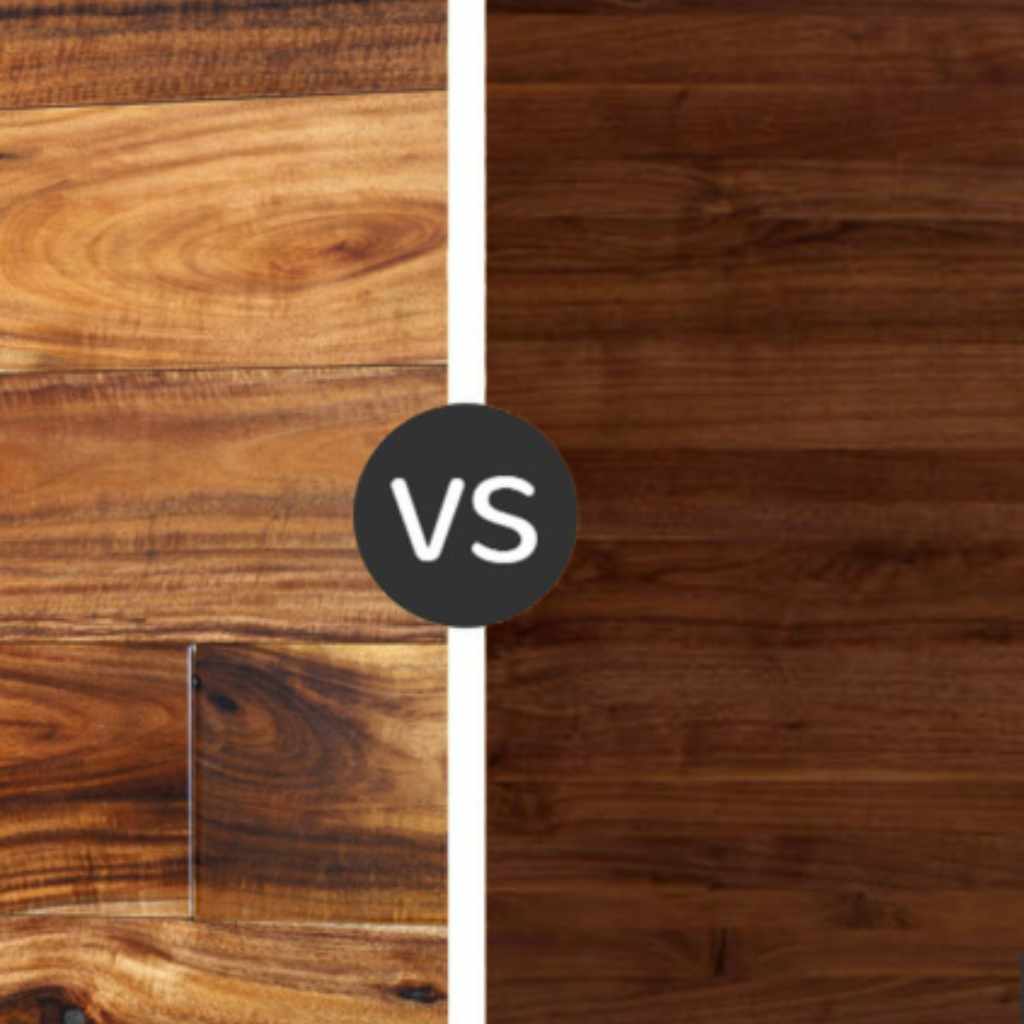
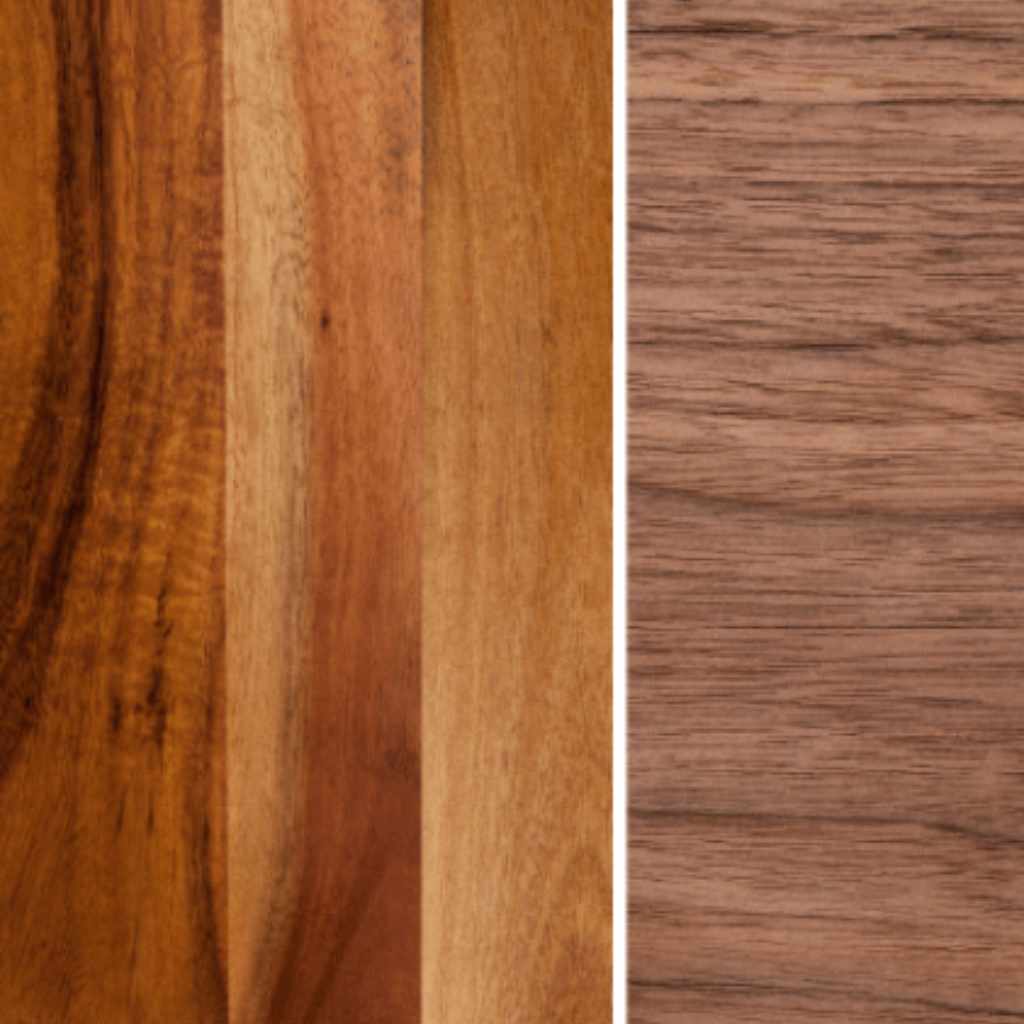
Color: Expect a wide color range, often golden to reddish-brown, sometimes with striking, contrasting grain patterns.
Walnut: The American Classic
When woodworkers talk about Walnut, they usually mean Black Walnut (Juglans nigra), native to North America. This wood has been a benchmark for quality for centuries.
Prestige: It’s considered a cabinet wood, meaning it’s traditionally used for fine cabinetry, veneers, and musical instruments.
Color: Famous for its deep, chocolate-brown heartwood, which darkens beautifully with age and light exposure.
Key Differences: Hardness, Grain, and Workability
The most practical differences for a beginner involve how the wood feels under the saw, sander, and router. These factors dictate what projects they are best suited for.
Hardness Matters: Janka Scale Comparison
The Janka Hardness Test measures how much force it takes to embed a steel ball halfway into a piece of wood. This tells you how resistant the wood is to dents and wear.
| Wood Type | Average Janka Hardness (Lbs) | Beginner Takeaway |
| :— | :— | :— |
| Acacia | 1700 – 2300 | Very hard, excellent resistance to dents. |
| Walnut (Black) | 1010 | Medium hardness; softer than Acacia but resists moderate wear well. |
As you can see, Acacia is significantly harder than Walnut. If your project will see heavy foot traffic (like outdoor decking or high-use flooring) or constant knocks (like a busy workbench top), Acacia’s hardness gives it an edge.
Grain Structure: How They Look and Behave
The grain is the “fingerprint” of the wood—it dictates aesthetics and challenges during drying and finishing.
Acacia Grain: It often features a straight, interlocking, or wavy grain pattern. This can sometimes make it slightly trickier to plane perfectly smooth because the interlocked fibers can tear out if your blade angle isn’t just right.
Walnut Grain: Usually straight-grained and relatively uniform, which makes it easier to achieve a glass-smooth surface. Its distinct, beautiful color contrast between the light sapwood (the outer wood) and the dark heartwood is highly prized.
Workability in the Shop
How easy is it to cut, sand, and glue?
Acacia: Because of its density and interlocking grain, cutting and routing can require a sharper, slower feed rate or more power to avoid burning. It glues well but requires good clamping pressure due to its hardness.
Walnut: Walnut is considered a dream to work with. It machines beautifully, accepts screws and nails easily, and sands to a fantastic finish with less effort than many other hardwoods. It is stable once dried, which is great for complex joinery.
Cost and Availability: Budgeting Your Project
For DIYers learning the ropes, cost is often a deciding factor.
Acacia: The Economical Choice
Acacia is generally more affordable than Walnut. Its widespread growth and faster harvesting cycles mean it reaches the market at a lower price point. This makes it an excellent choice for large projects where material cost adds up quickly, like shelving units or large tables where premium aesthetics aren’t the absolute top priority.
Walnut: The Investment Wood
Walnut is considered a premium hardwood. Its slower growth rate and high demand for its rich color mean it commands a significantly higher price per board foot. When choosing Walnut, you are investing in the final visual impact and traditional woodworking standards. For a beginner, using Walnut for smaller, display-worthy items might be a better way to experience it without breaking the bank.
Finishing: Bringing Out the Beauty
The finish is the final layer that protects the wood and shows off its natural beauty.
Finishing Acacia
Acacia can sometimes be slightly resistant to stains due to its natural oils. It often takes clear oil finishes or sealers very well, which enhances its natural golden tones. If you want dramatic changes in color, you might need to use specific pre-stain conditioners.
Finishing Walnut
Walnut truly shines with simple clear finishes like natural oil (like Tung or Danish oil) or lacquer. These types of finishes deepen the chocolate brown color, making it look richer and more three-dimensional. Because of its already dark appearance, it rarely needs opaque stains, allowing you to focus on sanding technique.
Project Suitability: Where Each Wood Excels
Knowing where to use these woods prevents future headaches down the line.
Best Projects for Acacia Wood
Due to its fantastic moisture resistance and hardness, Acacia is a versatile workhorse:
1. Outdoor Furniture: Its natural resistance to water and rot makes it perfect for patios.
2. Cutting Boards & Butcher Blocks: The extreme hardness handles knife work well (though it dulls knives faster than softer woods).
3. Flooring and Countertops: A cost-effective, durable choice for high-traffic areas.
4. Simple Shelving: Great for utility shelving where looks are secondary to strength.
Best Projects for Walnut Wood
Walnut is reserved for projects where aesthetics and a smooth feel are paramount:
1. Fine Furniture: Dining tables, dressers, and end tables where the deep color adds elegance.
2. Cabinetry: Used for high-end kitchen or library cabinets.
3. Decorative Items: Boxes, picture frames, and detailed carvings where the smooth texture is appreciated.
4. Wood Turning: Excellent for bowls and spindles due to its consistent density.
Safety Note: Dust Matters
As a beginner mentor, I must stress safety. Wood dust is not harmless.
Always wear appropriate Personal Protective Equipment (PPE), including safety glasses and hearing protection when using power tools.
Proper dust collection is essential for both types, but Walnut dust is known to cause sensitization (allergic reactions) in some people after repeated exposure. Always check safety data sheets if you are unsure: the American Wood Council provides guidance on safe handling practices.
Step-by-Step Guide: How to Choose Between Acacia and Walnut
Making the final decision comes down to asking yourself three key questions about your intended project. Follow these steps to select the right wood confidently.
Step 1: Define the Project Environment and Use
What will this item experience daily?
1. Outdoor Use or High Moisture: If the piece will be exposed to rain, humidity, or heavy water spills (like a bathroom vanity), Choose Acacia. Its natural resistance is a major advantage here.
2. Indoor Fine Furniture: If the goal is a stunning Heirloom quality piece for inside the living room, Choose Walnut. Its color and finish quality are unmatched here.
3. High-Impact Utility (Workbench, Storage): If maximum toughness against dings is the priority, Choose Acacia.
Step 2: Determine Your Budget Comfortably
Be honest about your budget for this specific project.
1. Budget is Tight / Material Cost is High Priority: Select Acacia. You get a durable hardwood for much less money than Walnut.
2. Budget Allows for Premium Material: If you are okay spending three to four times more per board foot for superior color and workability, Choose Walnut.
Step 3: Consider Finishing Goals
What look are you aiming for?
1. Golden, Rustic, or Varied Look: Aim for Acacia. Embrace the natural variability in hue.
2. Deep, Rich Brown, Uniform Look: You must choose Walnut, as no stain will perfectly replicate its natural depth.
Tool Comparison: Adjusting Your Setup for Each Wood
While many tools work for both, a slight adjustment in technique or blade sharpness can make your job much easier when switching between these two distinct hardwoods.
Tooling Recommendations for Acacia
Because Acacia is dense and can have interlocking grain, you need tools set up for hard, sometimes unpredictable wood.
Planer/Jointer: Ensure your blades are razor sharp. Dull blades will certainly lead to tear-out, especially when planing against the grain direction.
Saws: Use a higher Tooth Per Inch (TPI) blade (60T or 80T for fine work) on your table saw or miter saw to minimize chipping on the edges.
Router Bits: Use carbide-tipped bits designed for hardwoods. Run your router at a slightly slower speed than you might if you were working with softer lumber like pine.
Tooling Recommendations for Walnut
Walnut is much more forgiving, but proper setup still ensures the best result.
Sanding: Walnut sands beautifully. Start with 120 grit and work your way up quickly to 220 grit. It rarely requires aggressive initial sanding if machinery work was done cleanly.
Drilling: Drill bits glide through Walnut easily. Use standard high-speed steel (HSS) bits at moderate speed to prevent burning the wood fibers.
Clamping: While it takes glue well, ensure you have adequate clamp pressure, as the pores in Walnut can sometimes absorb too much glue if you over-apply.
In-Depth Look: Long-Term Performance
A great project should last for years, not just weeks. Let’s discuss how these two perform over time.
Acacia’s Longevity
Acacia earns high marks for longevity, especially if properly sealed against the elements.
Pest Resistance: Generally very good due to natural tannins and density.
Warping/Movement: It can be more prone to movement (expansion/contraction) if improperly dried or used in inconsistent climates—always buy kiln-dried lumber if possible.
Surface Maintenance: For heavy-use items like tables, plan to re-oil or reseal the surface every few years to maintain its water resistance.
Walnut’s Longevity
Walnut is known for being dimensionally stable once cured, meaning it holds its shape well once acclimated to indoor humidity.
Color Change: The most notable long-term change is that the heartwood darkens beautifully over time, gaining a richer patina. This is usually viewed as an asset.
Durability: While softer than Acacia, it is plenty durable for indoor use and shows wear gracefully. Scratches can often blend into the grain pattern better than on, say, maple.
Maintenance: Indoor pieces typically only require occasional dusting and perhaps a light application of furniture oil once a year to keep the wood looking nourished.
Frequently Asked Questions (FAQ) for Beginners
This section answers common, simple questions beginners have when comparing these two popular hardwoods.
Q1. Can I use Acacia wood outside like I would use teak?
A. Yes, Acacia has natural oils and density that provide good resistance to water and insects, making it a suitable, more affordable alternative to traditional outdoor woods like teak for many outdoor furniture projects. Always use an exterior-grade sealant for maximum lifespan.
Q2. Is Walnut wood too soft for a dining table top?
A. No, Walnut (Janka 1010) is perfectly adequate for indoor dining tables. While Acacia is much harder, Walnut offers a superior finish and aesthetic that works wonderfully indoors where it won’t face constant weather changes or heavy abuse from outdoor elements.
Q3. Does Walnut wood take stain well?
A. Walnut rarely needs much stain because its natural color is so deep and desirable. If you do choose to stain, it usually takes oil-based stains evenly, though a pre-stain conditioner is always recommended to ensure the darkest and most uniform appearance.
Q4. Why is Acacia so much cheaper than Walnut?
A. Acacia grows much faster globally, leading to higher availability and quicker harvest cycles. Walnut is a slower-growing, highly sought-after North American hardwood, which drives its price up significantly as a premium species.
Q5. Which wood is better for a beginner learning to carve or rout details?
A. Walnut is generally easier for detailed work. Its grain is more uniform, and it is softer than many varieties of Acacia, allowing cutters and routers to move through it with less resistance and fewer chances of tear-out.
Q6. Will Acacia look antique or rustic over time?
A. Acacia tends to maintain its golden-brown tones but often develops a rich patina with use. Walnut, conversely, darkens to a deeper chocolate brown over time, giving it a classic, rich, aged appearance.
Q7. Can I mix Acacia and Walnut in the same project?
A. While you can technically mix them, it is generally discouraged unless you are aiming for high contrast. The vast difference in natural color (light gold vs. deep brown) and hardness can make the finished piece look disjointed, especially with just a clear finish.
The Final Word: Building Confidence in Your Wood Choice
Deciding between acacia wood vs walnut doesn’t have to be a source of anxiety—it should be an exciting step in defining your project’s character.
If your goal is to build something tough, durable, and easy on the wallet, especially for use outdoors or in high-wear areas, Acacia is your reliable, value-packed partner. Embrace its unique patterns and enjoy the strength it offers your craftsmanship.
If, however, your heart is set on creating an immediate classic—a piece defined by deep, rich color, traditional elegance, and unparalleled smoothness under the hand—then investing in Walnut is precisely the right move. You are choosing a wood that speaks of quality and permanence.
Remember, every piece of wood you work with teaches you something new. Trust the process, set up your tools safely, and know that whether you pick the resilient Acacia or the luxurious Walnut, you are taking a huge step forward in your woodworking journey. Now, grab your lumber and get building!