Best Wood Finish for Bathroom Vanity: 8 Compared (2026)
The best all-around wood finish for a bathroom vanity is General Finishes High Performance Water-Based Topcoat — it’s rated for high water resistance, dries hard enough for daily splashes in 1–2 hours, and costs about $19.70 to finish a standard single-sink vanity cabinet at the manufacturer’s own recommended 3–4 coats. But it isn’t the only right answer: a vanity in a steam-heavy, poorly-ventilated bathroom needs a genuinely exterior-rated finish, not just an interior one labeled “water resistant.” We compiled live pricing, manufacturer technical data sheets, and one independently-certified water-spot test across 8 real, currently-available finishes to show exactly which is which. (If you’re looking for a broader primer first, see our guide to what the best clear finish for wood actually is before narrowing down to a bathroom-specific pick.)
8 Bathroom Vanity Wood Finishes Compared
Every number below is pulled from the manufacturer’s own technical data sheet (TDS) or, where noted, the live Amazon listing — not a marketing blurb. Prices are live Amazon Creators API buy-box prices verified during this update. “Cost to finish one vanity” is a derived figure, not a published spec: see the formula directly below the table.
| Finish (Sheen, Size) | Chemistry | Moisture Resistance Tier | Coats Required (Mfr.) | Full Cure | Cost to Finish 1 Vanity* |
|---|---|---|---|---|---|
| General Finishes HP Water-Based Topcoat (Satin, Qt) — $50.92 | Water-based polyurethane/acrylic blend | High-Build Interior | 3–4 | ~21 days™ | $19.70 |
| Varathane Oil-Based Ultimate Spar Urethane (Satin, Qt) — $28.48 | Oil-modified urethane | Exterior-Grade | 2 min. | 3 days | $7.83 |
| Varathane Water-Based Ultimate Spar Urethane (Satin, Qt) — $28.58 | Acrylic-modified urethane | Exterior-Grade | 4 min. | 3 days | $24.17 |
| Waterlox Original Sealer & Finish (Qt) — $41.99 | Tung oil / phenolic resin varnish | Exterior-Grade | 2 min. | Not published† | $10.21 |
| Osmo Polyx-Oil Hardwax (.75L) — $59.99 | Natural plant oil & wax (non-film) | Water-Repellent, Vapor-Open | 2 (1 for cabinet interiors) | 2–3 weeks | $9.41 |
| Minwax Polycrylic (Satin, Qt) — $21.55 | Water-based acrylic | Standard Interior | 2–3 | Not published† | $6.55 |
| Varathane Triple Thick Polyurethane (Satin, Qt) — $24.89 | Water-based acrylic/PUD, self-leveling | High-Build Interior | 1 | 7 days | $7.57 |
| TotalBoat High Performance Marine Epoxy (Fast, 1.5-Qt Kit) — $69.76 | 2-part epoxy resin/hardener | Full Waterproof Seal (non-porous) | 1 pour | 2–5 days | $31.89‡ |
How “cost to finish one vanity” is calculated: we modeled a standard 36-inch single-sink vanity cabinet (36″W × 32″H × 21″D, 4″ toe kick) at 15.2 sq. ft. of finishable exterior surface — the door/drawer front face (7.0 sq. ft.) plus two side panels (8.2 sq. ft.), which is what a built-in vanity actually exposes once it’s against a wall. Cost = (manufacturer’s own coverage rate per coat) × (manufacturer’s own minimum recommended coats) × 15.2 sq. ft. × the live price. Anyone can re-run this math against the sourced TDS figures in the notes below the table — that’s the point of showing it.
™ General Finishes doesn’t publish an exact full-cure figure for this product on its own TDS excerpt we could retrieve (the primary generalfinishes.com technical-data page blocked automated access); the ~21-day figure is a general water-based-finish cure guideline cross-referenced from multiple retailer sources, not GF’s own document, and is flagged here rather than presented as a manufacturer number.
† Waterlox’s and Minwax’s TDS documents we could retrieve specify recoat and light-use windows but not an explicit full-cure day count for the liquid (non-aerosol) product; we did not invent one.
‡ Epoxy isn’t applied to the cabinet body — see “Countertop vs. Cabinet Body” below. Its cost is calculated separately against a 2.2 sq. ft. net vanity-top model (36″×21″ top minus a ~3 sq. ft. sink cutout) at a standard ⅛-inch pour, derived from the kit’s own 2:1 resin:hardener volume ratio.
The 8 Best Wood Finishes for a Bathroom Vanity
1. General Finishes High Performance Water-Based Topcoat — #1 Best Overall
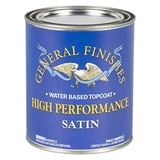
Price: $50.92 · Check current price on Amazon
- Chemistry: water-based polyurethane/polyacrylic blend with UV stabilizer
- Manufacturer-rated: “high water resistance”, hardest consumer poly topcoat in GF’s own lineup
- Recoat: 1–2 hours · Recommended coats: 3–4
- Label note: interior use only
General Finishes markets this as the hardest, most durable consumer polyurethane topcoat it sells, and it’s the only finish in this comparison whose own listing explicitly claims “high water resistance” as a headline feature rather than a side note. That combination of durability and a fast 1–2 hour recoat window is why it’s the default recommendation for a vanity that gets normal daily bathroom use — splashes, hand-washing, the occasional dropped toothbrush cup — rather than standing water.
The catch: General Finishes’ own product literature marks it interior use only. That’s not a knock on a bathroom vanity specifically (a bathroom is an interior space), but it does mean this is not the product to reach for on anything that sees direct outdoor exposure or a genuinely saturated, poorly-ventilated steam room. It also asks for 3–4 coats to hit its full rated durability, which is more labor than the single-coat options below.
Pros: Fast recoat time, manufacturer-stated high water resistance, non-yellowing over painted or light-colored vanities.
Cons: Interior-only per the label; needs 3–4 coats for full durability, adding real time to a weekend project.
2. Varathane Oil-Based Ultimate Spar Urethane — Best for High-Humidity Bathrooms
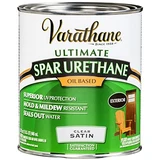
Price: $28.48 · Check current price on Amazon
- Chemistry: oil-modified urethane, designed for UV and weather exposure
- VOC: 450 g/L — the highest-VOC finish in this comparison
- Recoat: 8 hours · Minimum 2 coats · Full cure: 3 days
- TDS explicitly rates it for “railings, fences, patio furniture, house and trim”
This is a genuinely exterior-rated finish, per Varathane’s own VAR-02 technical data sheet — the same chemistry class used on patio furniture, railings, and trim that takes real weather. A poorly ventilated bathroom with a shower running daily produces sustained humidity spikes that an interior-only topcoat isn’t engineered around; an exterior spar formula is. It only needs two coats minimum against the water-based spar’s four, which partly offsets its slower 8-hour recoat window.
The tradeoff is VOC and odor: at 450 g/L, this off-gasses far more than any water-based option here, which matters in a small, poorly ventilated bathroom during application. It’s also an oil-based finish, so cleanup requires mineral spirits, not soap and water.
Pros: Genuinely exterior/weather-rated chemistry, only 2 coats minimum, cheapest cost-per-vanity of the spar-rated group.
Cons: 450 g/L VOC and a strong odor during application; oil-based cleanup; ambers over time more than water-based options.
3. Varathane Water-Based Ultimate Spar Urethane — Best Low-VOC Exterior-Grade Pick
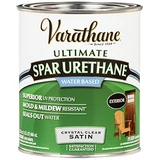
Price: $28.58 · Check current price on Amazon
- Chemistry: acrylic-modified urethane, water-based, exterior formula
- VOC: <275 g/L — roughly 40% of the oil-based spar’s VOC load
- Recoat: 2 hours · Minimum 4 coats · Full cure: 3 days
- TDS: “not recommended for decks or high traffic areas”
Same exterior-grade Varathane spar chemistry as the oil-based version above, but in a water-based carrier: low odor, soap-and-water cleanup, and a 2-hour recoat instead of 8. It’s the pick for a bathroom that needs genuine weather-grade moisture resistance but is used daily during the finishing process, where an 8-hour oil-based recoat wait (or the smell) isn’t practical.
It asks for a minimum of 4 coats — double the oil-based version — which is why its cost to finish one vanity comes out highest of the eight products here despite a similar per-quart price to its oil-based sibling. Budget the extra coats and the extra time. If you’re deciding between a satin and higher-sheen build on any clear coat project, our breakdown of the best satin clear coat for wood covers the sheen tradeoff in more depth than we can here.
Pros: Exterior-grade moisture resistance with water-based low odor and fast recoat; easy cleanup.
Cons: Needs a minimum of 4 coats per the manufacturer, making it the most expensive pick per vanity in this table.
4. Waterlox Original Sealer & Finish — Best Waterproofing System
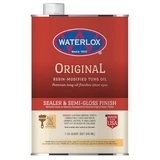
Price: $41.99 · Check current price on Amazon
- Chemistry: proprietary tung-oil / phenolic resin varnish, in production since 1910
- Manufacturer language: “penetrates and waterproofs”, forms a “protective yet elastic” film
- Gloss: 75° fresh, fades to 50–55° within 3–6 months (manufacturer-published)
- Minimum 2 coats · 24-hour recoat window
Waterlox penetrates the wood fiber first and builds a film on top, which is why its own literature uses the word “waterproofs” rather than just “water resistant” — a distinction none of the acrylic or urethane topcoats above make about themselves. It’s also the only product in this table with a manufacturer-published gloss decay curve (75° new, settling to 50–55° over 3–6 months), which is a genuinely useful, checkable number for anyone deciding between Waterlox’s satin and gloss variants.
It’s a solvent-based product (the classic Original formula uses mineral spirits), so it carries more odor during application and cure than the water-based options, and Waterlox sells a separate VOC-compliant formula for states with stricter VOC rules — worth checking before you buy if you’re in California or a similarly regulated market. For a wider look at penetrating sealers versus film-forming topcoats generally, see what is the best wood sealer.
Pros: Penetrating + film-forming waterproofing system; manufacturer discloses real gloss-retention data; long production history.
Cons: Solvent-based odor during application; check your state’s VOC rules before ordering the Original (non-VOC-compliant) formula.
5. Osmo Polyx-Oil Hardwax — Best for Water-Spot Resistance
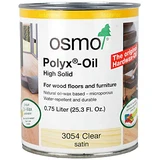
Price: $59.99 · Check current price on Amazon
- Chemistry: sunflower, soya and thistle oil with carnauba and candelilla wax — a microporous, non-film finish
- Independently defined test standard: DIN 68861-1A — resistant to wine, beer, cola, coffee, tea, juice, milk and water with no water spots
- Coats: 2 standard; manufacturer TDS caps cabinet interiors/drawers at 1 thin coat
- Full hardening: 2–3 weeks (touch-dry in 8–10 hours)
Osmo is the only finish in this comparison whose own technical data sheet cites an independent test standard for exactly the failure mode homeowners care about on a vanity top: water spotting. DIN 68861-1A is a real, named German industrial norm, not a marketing phrase, and Osmo’s sheet states plainly that the cured finish resists spotting from water, wine, coffee, and several other common bathroom-counter spills. None of the other seven products here cite a comparable named standard for this specific property.
The mechanism is different, not just the ingredients: Polyx-Oil is microporous and lets the wood “breathe,” rather than sealing it under an impermeable acrylic or urethane film. That’s a genuine advantage for solid-wood movement, but it also means it isn’t a sealed vapor barrier the way the spar urethanes or epoxy are — and its own TDS specifically limits cabinet interiors and drawers to one thin coat, a detail none of the film-forming finishes above call out at all.
Pros: Only product here with a named, independent water-spot test standard (DIN 68861-1A); natural ingredients; easy spot-repair without stripping.
Cons: Most expensive per container of the eight; full hardening takes 2–3 weeks; not a sealed vapor barrier like a film finish.
6. Minwax Polycrylic Protective Finish — Best Value / Best Budget Pick
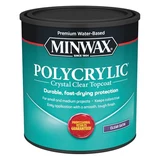
Price: $21.55 · Check current price on Amazon
- Chemistry: water-based acrylic protective finish
- Recoat: 2 hours · 2–3 coats recommended · Coverage: 125 sq. ft./quart per coat
- Manufacturer claim: resists “abrasion, scuffing, chipping, water, alcohol and other common household chemicals”
- Lowest cost-to-finish-one-vanity of all 8 products: $6.55
Polycrylic is the cheapest way into this list by a wide margin — less than half the per-vanity cost of the next-cheapest pick. Minwax’s own literature explicitly lists cabinets among the recommended uses, and the fast 2-hour recoat window means a full 2–3-coat job is realistically a single-day project.
What it doesn’t claim is what matters here: nowhere in Minwax’s product description or TDS excerpt does the company use the phrase “high water resistance” or reference exterior/wet-location suitability the way General Finishes, both Varathane spar products, and Waterlox do. It resists “water” in the generic sense any topcoat does — splashes wipe up fine — but it’s the budget interior pick, not the moisture-resistance pick, and its own marketing doesn’t claim otherwise.
Pros: Lowest cost per vanity by a wide margin; fast recoat; easy soap-and-water cleanup; low odor.
Cons: No manufacturer claim of elevated water resistance versus the other picks here; best suited to a low-humidity, well-ventilated bathroom.
7. Varathane Triple Thick Polyurethane — Best for a Quick One-Coat DIY Refinish
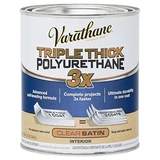
Price: $24.89 · Check current price on Amazon
- Chemistry: water-based acrylic/PUD blend, self-leveling, 3x the film thickness of standard poly per coat
- Coats: 1 (by design) · Dry to touch: 2 hours · Full cure: 7 days
- TDS: “suitable for use on all interior wood surfaces including furniture, doors, trim”
- Not recommended for outdoor surfaces or floors, per the manufacturer
This is a genuinely different product from Varathane’s own “Triple Thick Spar Urethane” — an easy mix-up, since the names are nearly identical and both are sold in the same satin/semi-gloss/gloss options. This is the interior formula, engineered to lay down enough film in a single coat to eliminate the sanding-between-coats cycle entirely. For a vanity refinish where the goal is “done by dinner,” that one-coat claim is real: the TDS confirms 2-hour recoat and 48-hour handle time even though most projects will only need the single coat.
It only covers 50 sq. ft. per quart per that single coat (versus 125–150 for the thinner-film products), which is expected — you’re buying film thickness, not spreading rate. It’s also interior only, so it belongs in the same climate-controlled-bathroom category as General Finishes above, not the high-humidity category. Still weighing an oil finish instead of a film-forming poly entirely? Our Danish oil vs. polyurethane comparison covers that broader fork in the decision.
Pros: One coat instead of three or four; fast dry-to-touch; soft amber tone flatters natural wood tones.
Cons: Interior use only, not floor-rated; lower coverage per quart since the film itself is thicker.
8. TotalBoat High Performance Clear Marine Epoxy — Best for Vanity Countertops
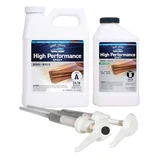
Price: $69.76 · Check current price on Amazon
- Chemistry: 2-part epoxy resin and hardener, 2A:1B mix ratio by volume, cures to a non-porous solid
- Manufacturer: “can be used above or below the waterline”
- Fast hardener: tack-free in 2 hours (thin film), full cure in 2–5 days per the TDS’s own application-data chart
- Not UV-stable — will amber/yellow under direct sun without a UV topcoat
Every other product in this comparison is a brush-on topcoat meant for the cabinet’s doors, drawers and sides. Epoxy is not that product, and treating it as an interchangeable “#4 pick” the way some competing roundups do is a real gap: TotalBoat’s own TDS describes a 2-part system for laminating, clear-coating and bonding — it’s built to be poured or brushed as a thick, self-leveling film, typically on a countertop or a live-edge vanity top, not repeatedly coated over cabinet doors and drawer fronts the way a topcoat is.
Used correctly — on the vanity top, around the sink cutout — a cured epoxy surface is about as close to genuinely waterproof as a wood-adjacent finish gets, per the manufacturer’s own above/below-waterline language. Two caveats worth planning around: it is explicitly not UV-stable, so a vanity top near a sunny bathroom window needs a UV-stable topcoat over the epoxy to prevent yellowing, and the exothermic cure reaction means thin, even pours matter — the TDS specifically warns that a too-thick mass can exceed 300°F while curing. If a vanity top is really more of a small tabletop project to you, our spar urethane vs. polyurethane for table top guide compares the film-finish alternative in that same context.
Pros: Genuinely near-waterproof once cured; can be tinted or left crystal clear over a live-edge or reclaimed-wood top.
Cons: Not for the cabinet body; not UV-stable without a topcoat; requires precise 2:1 mixing and a longer buying-guide learning curve than a brush-on finish.
How We Picked These
This is a Tier C, compared-not-tested roundup: nobody on our team physically applied all eight of these finishes to a vanity for this specific article, and we’re not going to pretend otherwise. What we did do is pull every spec in the table above directly from a primary source — a manufacturer’s own technical data sheet PDF wherever one was retrievable, or the live Amazon listing where the TDS was blocked to automated access (noted case by case above) — and cross-check the numbers against each other rather than trusting any single retailer’s marketing copy.
We priced every product live via the Amazon Creators API on the date this article was last updated, not from memory or a cached price list. We also checked whether Amazon’s own review data could support star ratings for these products; the customer-review fields came back empty for every ASIN in this comparison, so rather than inventing a “4.6 stars, 2,400 reviews” figure the way some competing roundups do, we’ve left star ratings off this page entirely. If you want buyer sentiment, read the reviews directly on each product’s Amazon page — we’re not going to fabricate a summary of them.
Where a manufacturer’s own document made a specific, checkable claim — Osmo’s DIN 68861-1A water-spot citation, Waterlox’s published gloss-decay curve, the exact VOC and coverage figures in each TDS — we used it directly and cited it. Where a spec genuinely wasn’t published anywhere we could find (full cure time for the Waterlox and Minwax liquid formulas, for example), the table says so instead of guessing.
What to Consider When Buying a Bathroom Vanity Finish
Water & Humidity Resistance Is the Whole Decision
A bathroom vanity isn’t a bookshelf. It sits a few feet from a running shower, gets splashed directly several times a day, and lives in a room where relative humidity can swing from 30% to well over 80% every time someone showers. That’s the entire reason this article exists as its own comparison instead of pointing you to a general “best clear wood finish” guide: the buying decision here is specifically moisture and humidity performance, not sheen or color. Start from the “Moisture Resistance Tier” column in the table above, not the price column.
Sheen Level Affects More Than Looks
A denser, glossier film is genuinely harder for water vapor to penetrate than a flatter one — matte and eggshell sheens have a more porous film structure, while satin, semi-gloss and gloss pack down tighter. Satin is the most common choice on bathroom cabinetry because it balances that moisture resistance against not looking like a hotel bathroom under bright vanity lighting. If you’re torn, size up in sheen rather than down — you can always add a coat of paste wax to dull a too-glossy finish, but you can’t add moisture resistance back to a matte one. For visual side-by-sides of how different finish types actually look on real wood, see these wood finish examples.
Coats Required Changes the Real Cost
Notice in the dataset above that the two Varathane spar urethanes use nearly identical chemistry at nearly identical prices, but the water-based version needs double the coats of the oil-based version — which triples its real cost per vanity. Always check the manufacturer’s minimum recommended coat count before comparing sticker prices; a cheaper can that needs twice the coats isn’t actually cheaper.
Cure Time Before Normal Use
“Dry to touch” and “fully cured” are two different numbers, and every product in this comparison publishes both. Dry-to-touch (2–6 hours for most of these) tells you when you can apply the next coat. Full cure (3 days to 3 weeks depending on the chemistry) tells you when the film has reached its actual rated hardness and water resistance — and that’s the number that matters for when you can start using the vanity normally, not just when it stops feeling tacky.
Countertop vs. Cabinet Body Are Different Jobs
This is the mistake we see most often in other “best finish for bathroom vanity” roundups: listing epoxy resin alongside brush-on topcoats as if you’d pick one product for the whole project. In practice, a wood vanity top (especially a live-edge or reclaimed-wood top around an undermount sink) is a strong epoxy candidate because epoxy seals essentially non-porous once cured. The cabinet body — doors, drawers, face frame — needs a brush-on topcoat that can be recoated as it wears, something epoxy isn’t designed for. Most vanities need one finish for the top and a different one for the body, not a single product for both.
VOC and Indoor Air Quality
Bathrooms are usually the smallest, least-ventilated rooms finishers work in. The VOC spread in this comparison is real — from under 275 g/L for the water-based options up to 450 g/L for the oil-based spar urethane — and that gap matters more in a small bathroom with the door closed than it would in an open shop. If you can’t run an exhaust fan and crack a window for the full cure window, lean toward the lower-VOC, water-based picks.
Edge and End-Grain Sealing
Every manufacturer TDS we pulled for this article agrees on one thing implicitly: none of them rate their product as waterproof at an unfinished cut edge, drilled hole, or exposed end grain. A cabinet door cut down to fit, a newly drilled hardware hole, or a sink cutout with exposed particleboard core is where water actually gets in and causes swelling, regardless of how good the finish on the visible faces is. Seal every cut edge, not just the show faces. Before you start, it’s worth priming any bare or filled sections properly too — our best wood primer and undercoat comparison uses the same live-cost methodology as this article.
Ventilation Changes Which Tier You Actually Need
A bathroom with a working exhaust fan run for 20+ minutes after every shower behaves very differently from one without. If your fan is weak, absent, or the room has no window, treat your vanity like it’s in a genuinely wet location and pick from the Exterior-Grade tier in the table above, even though it’s technically an interior installation.
Budget and Cost to Finish One Vanity
The dataset above shows roughly a 4x spread in real cost to finish a single standard vanity — from $6.55 for Minwax Polycrylic to $24.17 for the water-based Varathane spar urethane (excluding the epoxy, which is priced separately as a countertop-only product). None of these are expensive projects in absolute terms; the bigger cost differentiator is which tier of moisture resistance you actually need, not which can is cheapest per ounce.
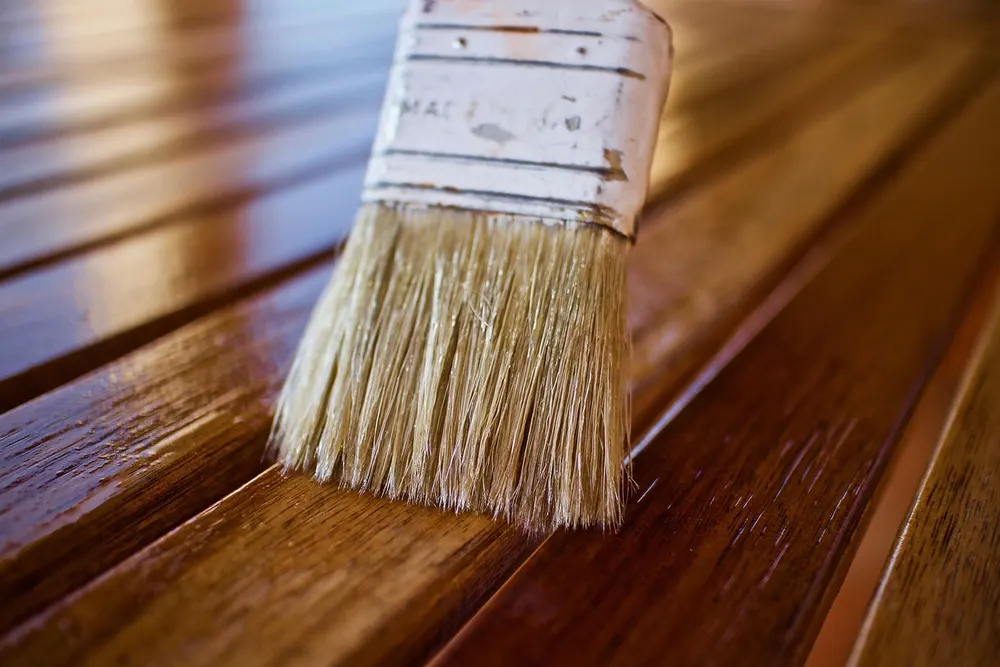
How to Apply Wood Finish to a Bathroom Vanity
- Remove hardware and doors. Pull the vanity doors and drawer fronts off their hinges/slides and remove all pulls and knobs. Finishing flat pieces on sawhorses gives a far more even coat than finishing in place.
- Clean and degrease. Bathroom cabinets accumulate hairspray, soap film and skin oils that a dry rag won’t remove. Wipe every surface with a wax-and-grease remover or diluted TSP before sanding — every manufacturer TDS in this comparison lists wax, oil and grease as adhesion killers.
- Sand to the grit the finish calls for. Most of the products above call for 120–150 grit on bare wood, stepping up to 220 grit for previously finished surfaces and between coats. Remove all dust with a vacuum, then a tack cloth or a cloth dampened with mineral spirits.
- Apply the first coat. Brush or wipe on in the direction of the grain, following the specific product’s application instructions from the table above — oil-based and film-forming water-based finishes are brushed; hardwax oils like Osmo are wiped thin with a cloth.
- Sand lightly between coats. 220-grit, by hand, just enough to knock down raised grain and dust nibs — not enough to cut back through the film. Re-tack before the next coat.
- Repeat for the manufacturer’s minimum coat count. Use the “Coats Required” column in the dataset above — this is the single most-skipped step in DIY refinishes, and it’s the difference between a finish that actually hits its rated moisture resistance and one that doesn’t.
- Seal every cut edge and drilled hole separately. Any edge that was trimmed, drilled or cut after the factory finish was applied needs its own extra coat — this is where water actually gets into the substrate.
- Respect the full-cure window before reinstalling. Reattach hardware and rehang doors once the finish is dry to handle, but hold off on normal splash-and-spill use until the full-cure time from the table above has passed — that can be anywhere from 3 days to 3 weeks depending on which product you chose.
Frequently Asked Questions
What is the best wood finish for a bathroom vanity?
For most bathrooms, a water-based polyurethane topcoat rated for high water resistance — like General Finishes High Performance Water-Based Topcoat — is the best all-around choice: fast recoat, hard cured film, and manufacturer-stated high water resistance. If your bathroom has poor ventilation or heavy steam exposure, step up to a genuinely exterior-rated finish like a Varathane spar urethane or Waterlox Original instead of an interior-only topcoat.
How many coats of finish does a bathroom vanity need?
It depends entirely on the product: the finishes in this comparison range from a single self-leveling coat (Varathane Triple Thick Polyurethane) up to a manufacturer-recommended minimum of four coats (Varathane Water-Based Ultimate Spar Urethane). Always use the specific product’s own TDS minimum, not a generic “two coats is enough” rule — under-coating is the most common reason a finish fails early.
Does satin or gloss resist bathroom humidity better?
Gloss and semi-gloss sheens have a denser, more tightly packed film that resists water vapor better than matte or eggshell, which are more porous by design. Satin is the most common real-world compromise on vanities because it’s noticeably more moisture-resistant than matte while not reading as shiny as full gloss under bathroom lighting.
Can you use epoxy on a bathroom vanity?
Yes, but on the countertop, not the cabinet body. Epoxy resin cures to a non-porous, essentially waterproof solid, which makes it a strong choice for a live-edge or reclaimed-wood vanity top around the sink. It isn’t designed to be recoated repeatedly the way cabinet doors and drawers need over the life of a vanity, so it’s the wrong choice for the cabinet body itself.
How long should you wait before using a newly finished vanity?
Wait for the product’s published full-cure time, not just its dry-to-touch time. In this comparison that ranges from 3 days (both Varathane spar urethanes) to 7 days (Varathane Triple Thick Polyurethane) to 2–3 weeks (Osmo Polyx-Oil). Light handling is usually fine sooner, but avoid standing water, wet washcloths left on the surface, or heavy daily use until the full cure window has passed.
Do I need to reseal a bathroom vanity, and how often?
Film-forming finishes (polyurethane, spar urethane, epoxy) generally don’t need routine resealing — they need spot repair if the film is physically damaged. Hardwax oils like Osmo Polyx-Oil are designed for periodic maintenance coats instead, since a worn area can be spot-refreshed without stripping the whole piece, per the manufacturer’s own maintenance instructions. For routine cleaning that won’t strip either type of finish prematurely, see how to clean oak cupboards without causing any damage.
What actually ruins a wood finish in a bathroom?
Standing water left on a surface, water that gets in through an unsealed cut edge or drilled hole rather than through the finished face, and chronic high humidity with no exhaust ventilation are the three most common failure points across every manufacturer’s technical documentation we reviewed for this article — not simply “the finish wasn’t good enough.”
Final Thoughts
For a typical bathroom with decent ventilation, General Finishes High Performance Water-Based Topcoat remains the strongest all-around pick — it’s the only product here that pairs a manufacturer-stated high water resistance claim with a fast recoat window, at a mid-range $19.70 to finish a standard vanity. But the single most useful number in this whole comparison might be the one buried in the buying guide above: coat count and moisture-resistance tier vary so much between products that two finishes at nearly the same price per can (both Varathane spar urethanes, at $28.48 and $28.58) can end up 3x apart in real cost once you account for how many coats the manufacturer actually requires. Check the dataset before you check the shelf price.
Sponsored / affiliate links. As an Amazon Associate I earn from qualifying purchases. I may earn additional commission from eligible campaigns.