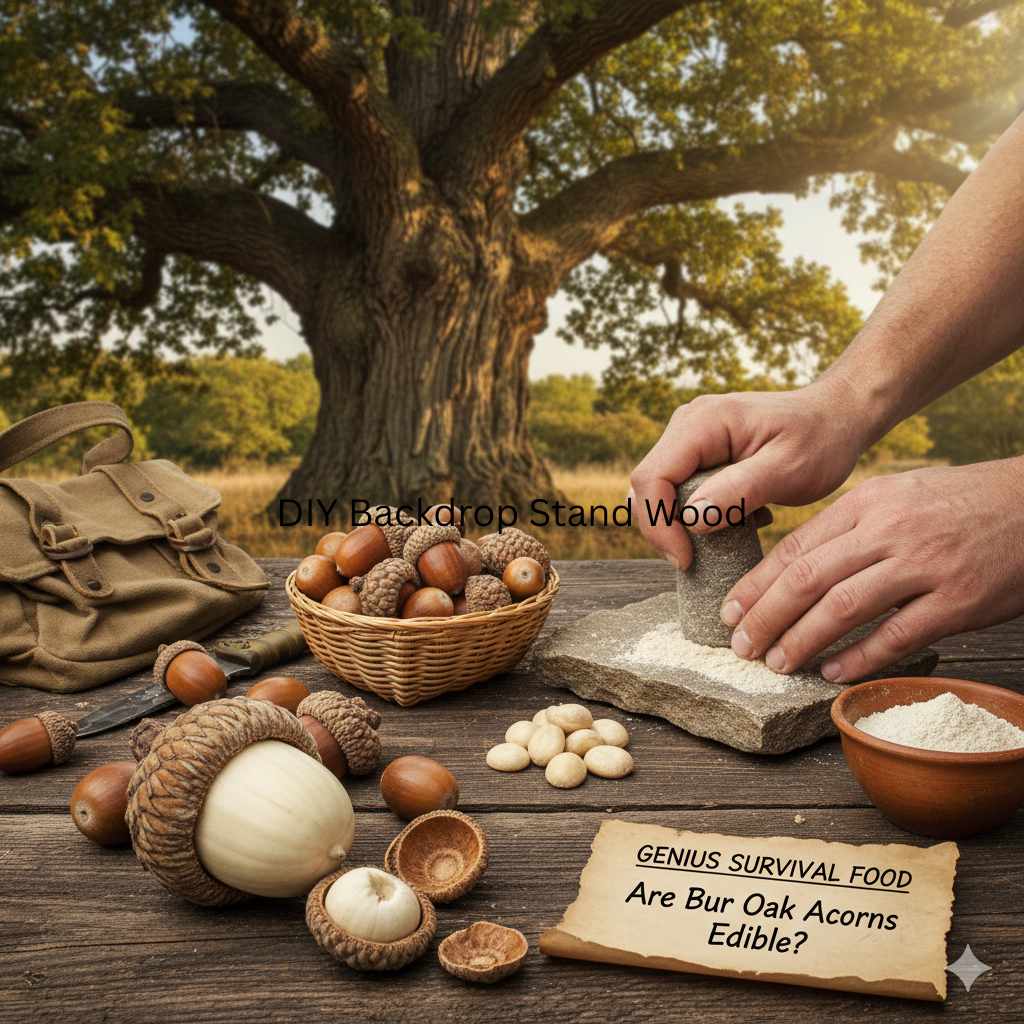
Are Bur Oak Acorns Edible: Genius Survival Food
Yes, Bur Oak acorns are edible after proper processing due to their low tannin content compared to other oaks, making them a surprisingly viable survival food source.
Ever wondered if those generous acorns from the mighty Bur Oak tree could be more than just squirrel snacks? If you’ve found yourself staring at a pile of these fascinating nuts and thinking, “Can I actually eat these?”, you’re not alone! Many of us walk past these trees every day, unaware of the potential nature offers right beneath our feet. It’s easy to feel a bit lost when it comes to wild edibles. But don’t worry, learning how to prepare Bur Oak acorns is simpler than you might think, and it’s a fantastic skill for any beginner looking to connect with nature’s pantry. We’ll break down exactly what you need to know to safely identify and prepare them, transforming them from a curious find into a genuinely useful food. Get ready to discover a hidden gem in your own backyard!
Why Bur Oak Acorns Are Special
Bur Oak acorns stand out from the crowd of oak nuts for a very important reason: their taste and, more crucially, their preparation. While many types of acorns can be bitter and require extensive leaching to remove tannins, Bur Oak acorns are often called “sweet acorns” or “edible acorns.” This isn’t to say they are sweet like a candy bar, but their tannin levels are significantly lower than those found in Red Oak or White Oak acorns. This makes the processing much, much simpler and faster, bringing them within the reach of even a novice wildcrafter.
Tannins are natural compounds found in plants that can cause a bitter, astringent taste. In high concentrations, they can also cause digestive upset. The lower tannin content in Bur Oak acorns means less work for you, making them a more practical and approachable food source. This makes them a genuinely “genius” survival food – readily available, nutritious, and relatively easy to prepare for consumption.
Identifying the Mighty Bur Oak
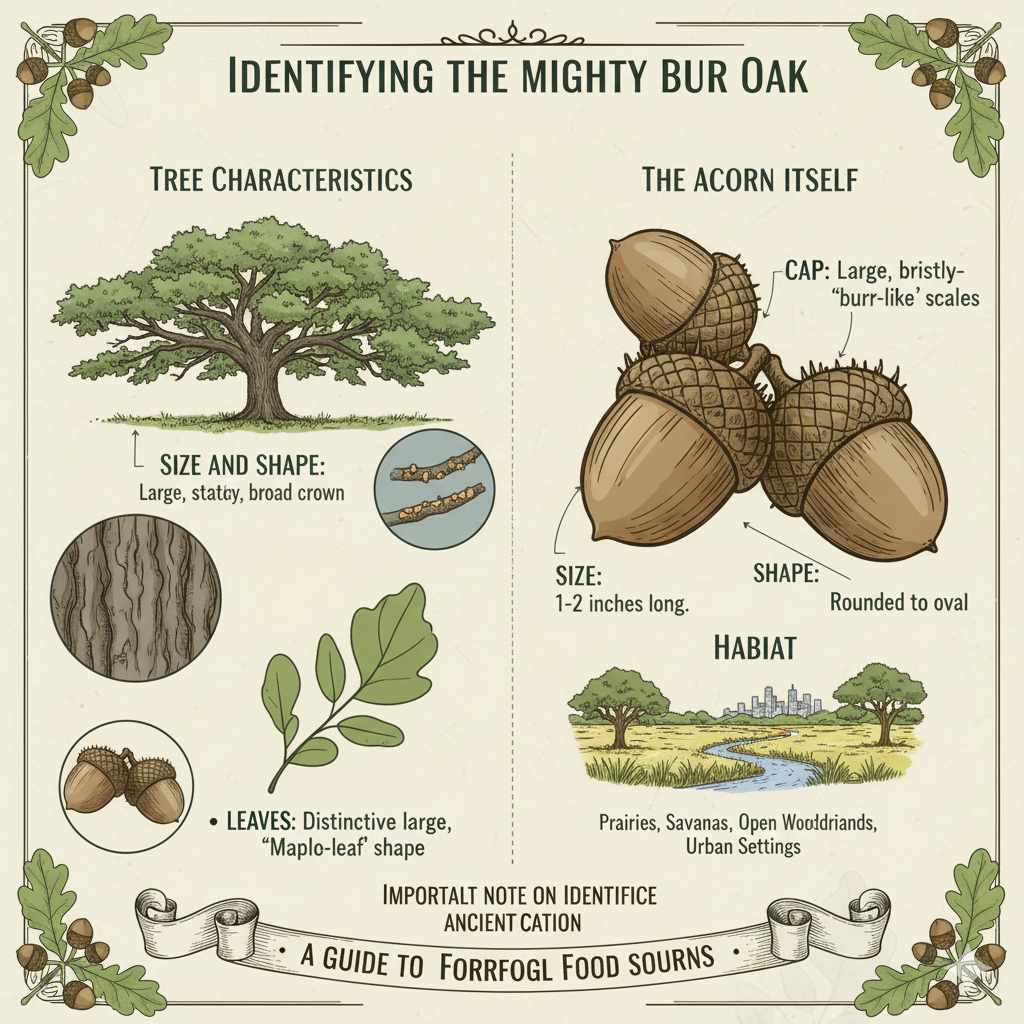
Before we get to eating, we need to be sure we’re gathering from the right tree! The Bur Oak (Quercus macrocarpa) is a magnificent and widespread tree, especially in North America. Knowing how to spot it will ensure you’re gathering the correct type of acorn. Here are some key features to look for:
Tree Characteristics
- Size and Shape: Bur Oaks are large, stately trees that can grow very tall, often with a broad, spreading crown.
- Bark: The bark is typically deeply furrowed and grayish-brown, becoming more rugged with age.
- Leaves: The leaves are distinctive and usually have a large, rounded, or “maple-leaf” like shape with deeply cut lobes. The leaves are often broader towards the tip.
- Twigs: Twigs are usually stout and can have corky ridges, especially on older branches.
The Acorn Itself
This is your most important identification marker for eating! Bur Oak acorns are among the largest acorns you’ll encounter. They are easily recognizable by their:
- Size: They are generally large, often 1-2 inches long.
- Cap: The cap is a defining feature. It covers about half to two-thirds of the acorn and is usually covered in numerous, long, bristly scales that give it a “burr-like” appearance – hence the name “Bur Oak.”
- Shape: The acorn itself is typically rounded to oval.
Habitat
Bur Oaks thrive in a variety of conditions but are often found in prairies, savannas, open woodlands, along rivers, and in urban settings. They are quite adaptable and can tolerate a range of soil types.
Important Note on Identification
While Bur Oak acorns are generally safe and easy to process, it’s crucial to be 100% certain of your identification. When in doubt, always consult with a local expert or experienced forager. For more on oak varieties and their edibility, the USDA Forest Service offers great resources on tree identification.
Nutritional Value of Bur Oak Acorns
Beyond their survival potential, Bur Oak acorns are a powerhouse of nutrition. They are a good source of complex carbohydrates, healthy fats, and protein. Historically, indigenous peoples and early settlers relied on acorns as a staple food, grinding them into flour to make breads, porridges, and stews. They also provide essential minerals and vitamins.
Here’s a general breakdown of their nutritional content:
| Nutrient | Approximate Amount per 100g (Dry) |
|---|---|
| Calories | ~450-500 kcal |
| Carbohydrates | ~50-60g |
| Fat | ~20-30g |
| Protein | ~5-8g |
| Fiber | ~15-20g |
| Vitamins | Good source of Vitamin E, B vitamins |
| Minerals | Contains Potassium, Phosphorus, Magnesium, Calcium |
It’s important to remember that these are approximate values, and the exact nutritional profile can vary based on the specific tree, soil conditions, and acorn maturity. The processing method can also affect nutrient retention. The fat content makes them calorie-dense, a crucial factor in survival scenarios. The carbohydrates provide energy, and the fiber aids digestion.
The Crucial Step: Processing Bur Oak Acorns
Even though Bur Oak acorns have lower tannins, they still require processing to make them palatable and safe for consumption. The primary goal is to remove any lingering bitterness and make them digestible. Fortunately, the process is less arduous than with other oak species.
Gathering Your Acorns
When to Gather: The best time to gather acorns is in the fall, after they have naturally dropped from the trees. Look for mature, firm acorns. Avoid any that are soft, moldy, worm-eaten, or cracked.
Initial Check: Perform a “float test.” Place your gathered acorns in a bowl of water. Healthy, mature acorns will sink. Acorns that float are usually hollow, rotten, or have been damaged by insects, so discard them.
Removing the Shells
This is often the most time-consuming part, but it’s essential.
- Drying: Spread the cleaned acorns on a tray or screen in a well-ventilated area for a few days to a week. This will help them dry out slightly, making the shells easier to crack and remove without sacrificing too much moisture from the nut meat.
- Cracking: You can crack the shells using a hammer (gently!), a vise, or even by stepping on them (carefully!). The goal is to break the hard outer shell without crushing the inner nut meat too much.
- Shelling: Once cracked, pick out the inner nut meat. Try to remove as much of the papery inner skin (the pericarp) as possible, as this can also contain tannins and be difficult to digest. Small pieces of shell can be removed later if missed.
Tip: For a simpler shelling process, some people prefer to roast the acorns lightly before cracking. This can sometimes make the shell brittle and easier to remove. However, be careful not to over-roast.
Tannin Removal (Leaching)
While Bur Oak acorns require less leaching than others, some residual bitterness might still be present. There are a few methods to remove it:
Cold Water Leaching (Recommended for Bur Oaks)
This is the gentlest and most effective method for lower-tannin acorns like Bur Oak.
- Preparation: Place your hulled acorn meats in a large bowl or pot.
- Soaking: Cover the acorns with plenty of cool water. If the water becomes noticeably brown, it indicates tannins are dissolving.
- Changing Water: Drain the tannic water and refill with fresh cool water. Repeat this process daily.
- How Long: For Bur Oak acorns, you might only need to soak for 2-5 days, changing the water 1-2 times a day. Taste a small piece of acorn after a couple of days. It should no longer be unpleasantly bitter. The nut meat will start to feel softer and slightly gelatinous.
Boiling Water Leaching (Faster, but can lose nutrients)
This method is quicker but can leach out more of the acorn’s nutrients and flavor compared to cold water.
- Preparation: Place your hulled acorn meats in a pot.
- Boiling: Cover with water and bring to a boil. Boil for about 15-20 minutes.
- Draining: Drain the water. You’ll notice it’s often brownish.
- Repeating: Refill with fresh water. Repeat the boiling and draining process.
- How Long: You may need to do this 2-4 times until the bitterness is gone. Taste a piece to check.
Important: Always use fresh, cool water for leaching. Over-soaking or boiling can degrade the quality of the acorn meat.
Drying and Storing
Once your acorns are no longer bitter, you have a few options:
- Drying: Spread the leached acorn meats on a dehydrator tray or a screen in a well-ventilated area. You can also use a low oven (around 150°F / 65°C) until they are completely dry and brittle. This can take several hours, depending on humidity and thickness.
- Grinding: Once dried, you can grind them into acorn flour using a clean coffee grinder, food processor, or a mortar and pestle.
- Storing: Store the dried acorn flour in airtight containers in a cool, dry place. It can last for several months, or even longer if refrigerated or frozen.
Culinary Uses of Prepared Bur Oak Acorns
Once processed, acorn flour is incredibly versatile. Its slightly nutty, earthy flavor can complement a wide range of dishes. Think of it as a nutritious alternative or addition to your regular flours.
Baking
- Breads and Muffins: Mix acorn flour with wheat flour (or other gluten-free flours) to make delicious breads, muffins, pancakes, and cookies. A ratio of 1:3 or 1:4 (acorn to other flour) is a good starting point.
- Crusts: Use acorn flour to create pie crusts or tart shells for a unique flavor.
Porridges and Cereals
Acorn flour makes an excellent breakfast porridge. Simply cook it with water or milk (dairy or non-dairy) until thickened, similar to oatmeal. You can sweeten it with honey, maple syrup, or fruit.
Thickening Agent
Its natural starches make acorn flour a great thickener for soups, stews, and gravies. Stir it in gradually to achieve your desired consistency.
Nutritional Boost
Even if you don’t use it as a primary flour, adding a tablespoon or two of acorn flour to your favorite recipes can boost their nutritional content with healthy fats and fiber.
Safety Considerations and What to Avoid
While Bur Oak acorns are a great survival food, safety is paramount. Here’s what you need to know:
Identification is Key
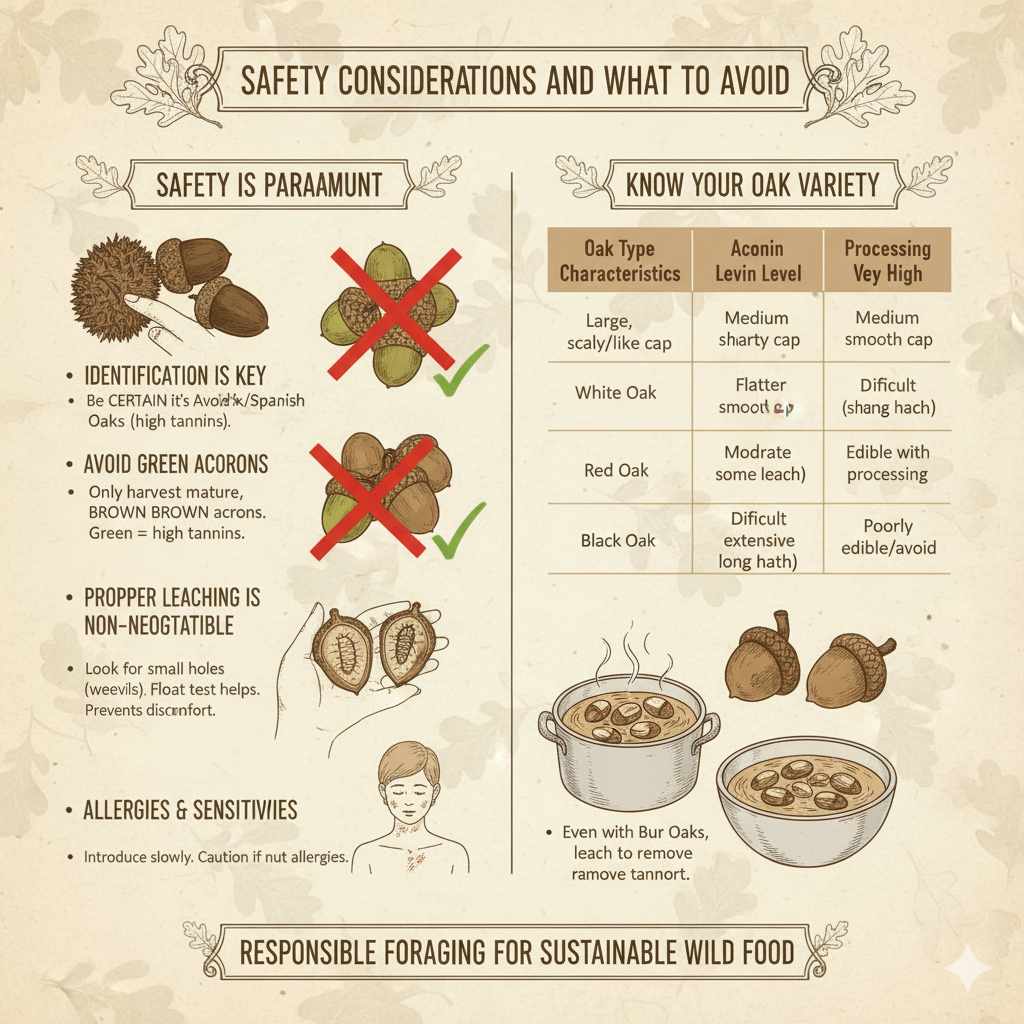
As stressed before, be absolutely certain you are harvesting Bur Oak acorns. Mistaking them for acorns from other oak species, especially Black Oaks or Spanish Oaks which have significantly higher tannin levels, could lead to a very bitter and uncomfortable experience, or even digestive upset.
Avoid Green Acorns
Only harvest mature, brown acorns. Green acorns are unripe and will likely contain higher levels of tannins and potentially other compounds that are not desirable.
Inspect for Pests
Look for signs of infestation, such as small holes in the acorn where weevils may have entered. While weevils themselves aren’t harmful, you might not want them in your food. The float test helps discard many of these.
Proper Leaching is Non-Negotiable
Even with Bur Oaks, do not skip the leaching process. While it’s less intensive, consuming raw or improperly leached acorns can still cause stomach discomfort due to residual tannins.
Allergies and Sensitivities
As with any new food, introduce processed acorns into your diet in small amounts. Some individuals may have sensitivities or allergies to nuts or specific compounds within them. If you have known allergies to nuts, proceed with extreme caution or avoid altogether.
Know Your Oak Variety
Here’s a simple table to help differentiate some common oaks regarding acorn edibility:
| Oak Type | Acorn Characteristics | Tannin Level | Processing Ease | Edibility |
|---|---|---|---|---|
| Bur Oak (Quercus macrocarpa) | Large acorn, cap covers 1/2-2/3, scaly/burr-like cap | Low | Easy (short leaching) | Highly edible |
| White Oak (Quercus alba) | Medium size, shallow warty cap, matures in one year | Moderate | Moderate (some leaching required) | Edible |
| Red Oak (Quercus rubra) | Tends to be flatter, cap covers 1/4-1/2, smooth | High | Difficult (extensive leaching) | Edible with significant processing |
| Black Oak (Quercus velutina) | Medium size, cap covers up to 1/2, often warty | Very High | Very Difficult (extensive leaching, especially inner bark layer) | Poorly edible, often avoided |
Environmental Harvesting Practices
Always harvest responsibly. Take only what you need and leave plenty for wildlife. Ensure you are allowed to forage in the area where you are gathering.
Frequently Asked Questions (FAQ)
Are all acorns edible?
No, not all acorns are equally edible or practical to eat. While technically many acorns contain some edible starch, a significant difference lies in their tannin content and how difficult they are to process. Acorns from White Oaks are generally edible with moderate processing, but Red Oak and Black Oak acorns are very high in tannins and require extensive leaching, making them less practical for beginners.
How bitter are Bur Oak acorns really?
Bur Oak acorns are considered the “sweetest” of the common oaks because their tannin levels are significantly lower. You might notice a slight astringency or bitterness if not leached, but it’s far less intense than in Red or Black Oak acorns. Proper leaching will remove almost all of this. Many people find properly processed Bur Oak acorns to have a mild, nutty, slightly earthy flavor with no unpleasant bitterness.
Can I eat an acorn raw?
It is not recommended to eat raw acorns, even Bur Oak acorns. While their tannin content is lower, it’s still present and can cause digestive upset, stomach cramps, or nausea in some individuals. Always process them through leaching to remove tannins and make them digestible and palatable.