Are Cherry Trees Native to North America? Explained
Have you ever admired a beautiful cherry blossom tree and wondered if it’s always been a part of the North American landscape? Many of us have seen these stunning trees, especially in spring, and assumed they were as native as maples or oaks. It’s a common question that sparks curiosity about the origins of our familiar flora.
This post will clear up any confusion about Are Cherry Trees Native to North America? Explained, helping you appreciate their history and presence in our parks and gardens. You’ll learn about which cherry species are native and which were introduced, enriching your knowledge and providing a clear answer to this popular query.
The Story of Cherry Trees in North America
The question of whether cherry trees are native to North America is a common one, and the answer is a bit more nuanced than a simple yes or no. While many of the cherry trees we see today, especially those celebrated for their ornamental blossoms, are indeed introduced species from Asia, North America also has its own fascinating collection of native cherry trees.
These native species play vital roles in their ecosystems and have their own unique beauty and history. Exploring this distinction helps us understand the plant diversity of the continent and how it has been shaped over time by natural processes and human influence.
Native North American Cherry Species
North America is home to several species of cherry trees that have grown here for millennia. These trees are not just pretty; they are important for wildlife, providing food and habitat for birds, insects, and mammals.
Prunus serotina Black Cherry
The Black Cherry, scientifically known as Prunus serotina, is one of the most widespread native cherry trees in North America. It’s found from southeastern Canada down to Florida and west to Texas and North Dakota. This tree is known for its beautiful dark bark, which becomes fissured with age, and its clusters of fragrant white flowers that bloom in late spring.
The fruit is small, dark red to black, and edible, though quite bitter for human consumption. However, it’s a crucial food source for many bird species, including orioles, robins, and cedar waxwings. Black Cherry wood is also highly valued for furniture, cabinetry, and musical instruments due to its rich color and fine grain. It’s a truly multi-purpose native tree.
Prunus virginiana Chokecherry
Another common native is the Chokecherry, Prunus virginiana. This species is typically a large shrub or a small tree and can be found across a vast area of North America, from Alaska and Canada down to New Mexico and the eastern United States. Its name comes from its fruit, which is astringent and, as the name suggests, can cause a puckering sensation if eaten raw in large quantities.
However, when processed into jellies, jams, or wines, the fruit is delicious and highly nutritious. Chokecherries are incredibly important for wildlife, offering shelter and sustenance to numerous animals. Their spring flowers are a welcome sight, and their fall foliage often displays vibrant shades of yellow, orange, and red.
Prunus pensylvanica Pin Cherry
The Pin Cherry, or Fire Cherry (Prunus pensylvanica), is a pioneer species that often appears in disturbed areas, such as after fires or logging. It’s a small, fast-growing tree native to northeastern North America, extending from Newfoundland to British Columbia and south to Pennsylvania and the Rocky Mountains. Its bright red, small fruits are a favorite of many birds, although they are quite tart
. The Pin Cherry’s rapid growth and ability to thrive in open, sunny conditions make it an important component of forest regeneration. Its delicate white flowers are followed by a profusion of tiny, tart cherries, giving it its common name.
Prunus emarginata Bitter Cherry
The Bitter Cherry (Prunus emarginata) is a native cherry tree found primarily in western North America, from British Columbia and Alberta in Canada down to California and Arizona in the United States. It usually grows as a shrub or small tree, often found in open woodlands and along streams. Like other native cherries, its small, bitter fruits are a valuable food source for wildlife, particularly birds. The tree itself provides habitat and can be quite attractive with its spring flowers and reddish-brown bark.
Introduced Cherry Species
The cherry trees that most people picture when they think of the iconic spring blossoms are often not native to North America. These ornamental cherries were brought from Asia, primarily Japan and Korea, for their spectacular floral displays.
Prunus serrulata Japanese Flowering Cherry
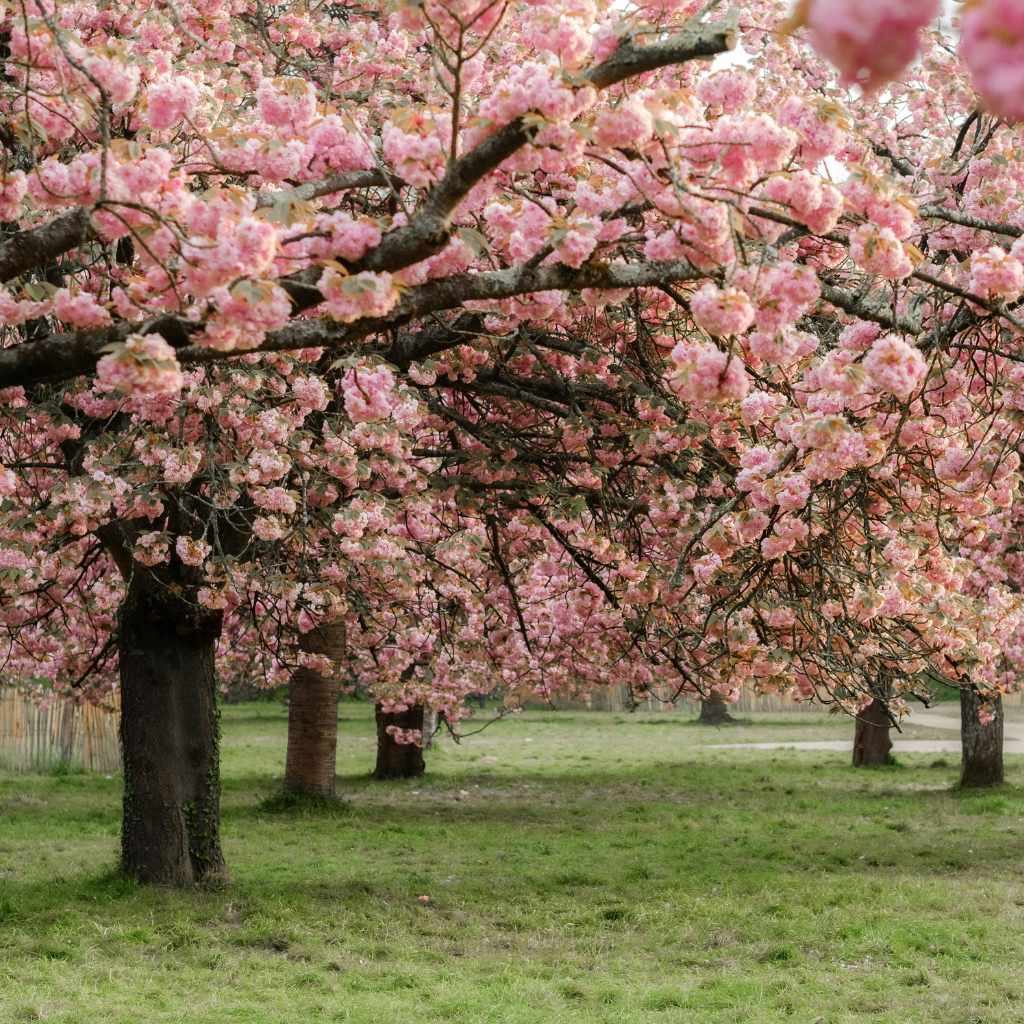
The Japanese Flowering Cherry, or Oriental Cherry (Prunus serrulata), is perhaps the most famous introduced cherry tree in North America. It is a hybrid group of cultivars that includes many popular ornamental varieties like ‘Kwanzan’, ‘Yoshino’, and ‘Shirotae’.
These trees were intentionally introduced for their showy, often double, pink or white flowers that bloom profusely in spring. They are widely planted in parks, gardens, and as street trees across the continent. While they are incredibly beautiful, it’s important to remember they are not part of the original North American flora.
Prunus avium Sweet Cherry
The Sweet Cherry (Prunus avium) is the ancestor of most cultivated sweet cherry varieties we eat today. Native to Europe and western Asia, it was introduced to North America by European colonists for its delicious fruit. While it has naturalized in some areas and can be found growing wild, it is not considered a native North American species. Its ornamental white flowers are lovely, and its fruit production is significant for agriculture.
Prunus cerasus Sour Cherry
Similarly, the Sour Cherry (Prunus cerasus), the ancestor of tart cherries used in pies and preserves, also originates from Europe and southwestern Asia. It was introduced by European settlers for its culinary fruit. Like the Sweet Cherry, it’s an important agricultural crop but not a native species to North America.
Distinguishing Native vs. Introduced Cherries
It can be challenging for the untrained eye to distinguish between native and introduced cherry trees, especially when they are not in fruit or bloom. However, several characteristics can help.
Key Differences to Look For
Flower and Fruit Appearance: Native cherries often have simpler, single-petaled flowers and smaller, darker fruits (though some native cherries have edible fruits). Introduced ornamental cherries, especially Prunus serrulata* cultivars, are famous for their abundant, often double, and showy flowers in shades of pink and white, and their fruits are usually small, ornamental, and not meant for consumption.
Bark: The bark of native species like Black Cherry (Prunus serotina) can be quite distinctive, becoming dark, rough, and almost scaly with age. Introduced species may have smoother or different bark textures.
Growth Habit: Native cherries, like Chokecherry (Prunus virginiana), can often grow as large shrubs or multi-stemmed trees, adapting to various environments. Many introduced ornamental cherries are cultivated for specific tree forms, often single-trunked and vase-shaped or spreading.
Ecological Role: Native cherries are deeply integrated into local ecosystems, supporting native insects and birds that have co-evolved with them. Introduced species may not provide the same level of ecological support for native wildlife.
Origin and Purpose: Remembering the origin and the reason for planting can be a good indicator. If a tree was planted specifically for its ornamental beauty and comes from a nursery catalog featuring Asian species, it’s likely introduced. If it’s a wild-looking tree providing abundant food for local birds, it might be native.
Why the Confusion?
The confusion arises because North America has a genus of trees, Prunus, which also includes plums and almonds, and it has native species. However, the most visually striking and widely recognized “cherry blossom” trees, especially those associated with festivals and city beautification, are predominantly cultivars of Asian origin. These introduced species have become so commonplace that they are often perceived as native.
The Appeal of Ornamental Cherries
The immense popularity of introduced ornamental cherry trees stems from their breathtaking spring bloom. The sheer volume of flowers, their delicate beauty, and the relatively short period of their display create a sense of urgency and wonder. This spectacle is celebrated globally, leading to many introductions for landscaping and horticultural purposes.
Ecological Importance of Native Cherries
The native cherry trees of North America are ecologically vital. They are foundational species in many habitats.
Food Source for Wildlife
As mentioned, the fruits of native cherries are a significant food source for a vast array of wildlife. Birds rely on them for sustenance, especially during migratory periods. Mammals, including bears, foxes, and deer, also consume the fruits. The flowers provide nectar for early-season pollinators.
Habitat and Shelter
The trees themselves offer shelter and nesting sites for birds and insects. Their dense foliage can provide shade and protection from the elements. In winter, their branches offer perching and roosting spots.
Contribution to Biodiversity
By supporting a wide range of native species, native cherry trees contribute directly to the biodiversity of North American ecosystems. Their presence ensures a healthier, more resilient environment.
Introducing Native Cherry Trees to Gardens
For those interested in supporting native ecosystems, incorporating native cherry trees into their gardens is an excellent idea. It offers the beauty of cherries while providing significant ecological benefits.
Choosing the Right Native Species
When selecting a native cherry for your garden, consider your local climate, soil conditions, and available space.
Black Cherry (Prunus serotina*) can grow into a large tree, so it’s best for larger properties. It offers attractive flowers, valuable fruit for birds, and beautiful wood.
Chokecherry (Prunus virginiana*) is a more adaptable choice, often growing as a shrub or small tree. It’s excellent for smaller gardens or as part of a hedgerow, providing abundant fruit and habitat.
Pin Cherry (Prunus pensylvanica*) is good for naturalizing areas or where rapid cover is needed, but it’s a shorter-lived pioneer species.
Bitter Cherry (Prunus emarginata*) is suitable for western landscapes and offers beauty and wildlife support.
Planting and Care
Native cherry trees generally prefer full sun but can tolerate some partial shade. They are often adaptable to various soil types, but good drainage is usually important. Planting native species helps preserve local genetic diversity and supports local wildlife that is adapted to these specific plants.
Conclusion on Native vs. Introduced
So, to circle back to the initial question: Are Cherry Trees Native to North America? Explained. The answer is yes, North America does have its own native cherry trees, such as the Black Cherry, Chokecherry, Pin Cherry, and Bitter Cherry. However, many of the most iconic and widely planted ornamental cherry trees, famous for their spectacular spring blossoms, are introduced species from Asia and Europe, like the Japanese Flowering Cherry and cultivated varieties of Sweet and Sour Cherries. Appreciating both native and introduced species enriches our connection to the natural world and helps us make informed choices about landscaping and conservation.

Frequently Asked Questions
Question: Are all cherry trees native to North America?
Answer: No, not all cherry trees are native to North America. While North America has several native cherry species, many of the ornamental cherry trees widely planted for their blossoms, and even the fruit-bearing trees like sweet and sour cherries, were introduced from Asia and Europe.
Question: What is the most common native cherry tree in North America?
Answer: The Black Cherry (Prunus serotina) is one of the most widespread and common native cherry trees in North America, found across a large portion of the continent.
Question: Are cherry blossoms native to North America?
Answer: The iconic, showy cherry blossoms typically seen in spring festivals and landscaping are usually from introduced ornamental cherry trees, most famously from species originating in Japan. North America does have native cherry trees that produce blossoms, but they are generally less showy than their Asian counterparts.
Question: Can I eat the fruit from native North American cherry trees?
Answer: The fruit from some native cherry trees, like the Chokecherry (Prunus virginiana), can be quite astringent and tart when eaten raw, hence the name “chokecherry.” However, they are delicious and nutritious when processed into jellies, jams, or wines. The fruit of the Black Cherry (Prunus serotina) is edible but bitter for human tastes, though a vital food for birds. The fruits of most ornamental introduced cherries are small and not typically eaten.
Question: Why are introduced cherry trees so popular in North America?
Answer: Introduced cherry trees, particularly ornamental varieties from Asia, are popular due to their spectacular and abundant spring floral displays, which are a major horticultural attraction. They are widely planted for their aesthetic appeal in parks, gardens, and urban landscapes.
Final Thoughts
It’s fascinating to learn that while many of us are accustomed to seeing stunning cherry blossoms grace our landscapes, not all of these trees are originally from North America. The continent is indeed home to its own native cherry species, each with its own ecological significance and unique charm. These native trees, like the Black Cherry and Chokecherry, have been integral parts of North American ecosystems for ages, providing essential food and shelter for local wildlife.
Recognizing the difference between native and introduced species allows for a deeper appreciation of plant biodiversity and helps us make more informed decisions about the plants we choose to cultivate. Whether you are drawn to the wild beauty of native cherries or the show-stopping bloom of their Asian relatives, understanding their origins adds a layer of richness to our appreciation of these beautiful trees. If you’re looking to enhance your garden’s ecological value while enjoying beautiful blooms, consider planting a native cherry species and contribute to the health of your local environment.