How Long Does It Take Cherry Trees to Produce Fruit?
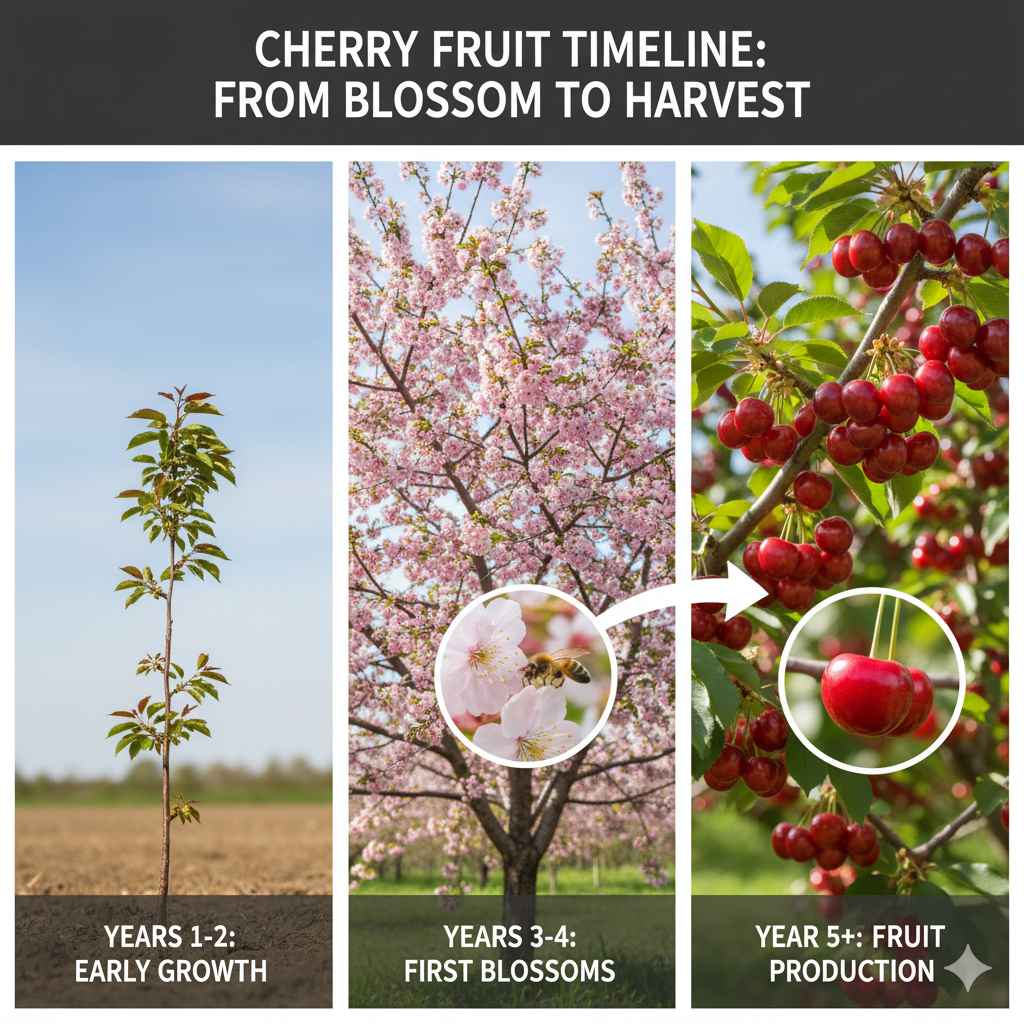
Grafted cherry trees typically bear their first fruit in 3 to 4 years — dwarf rootstocks like Gisela 5 can shorten that to 2, while seed-grown trees from a store-bought pit often take 6 to 10 years. Skipping a pollinator partner or choosing the wrong rootstock is the most common reason home growers wait far longer than expected. This guide breaks down rootstock timelines, variety-by-variety comparisons, and the exact signs your cherries are ready to pick.
Insert your Affiliate Disclosure reusable block here.
Cherry Tree Growth Stages, From Seed to First Harvest
Best Fruit Tree Fertilizer Pick
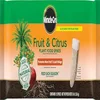
Miracle-Gro Fruit & Citrus Plant Food Spikes, 12 Spikes, 3 lb.
Pre-measured slow-release spikes formulated for fruit and citrus trees — no mixing or measuring.
- Best for: established cherry trees getting their twice-a-year spring/fall feeding
- Why we picked it: matches the feeding schedule described above with zero guesswork on ratios
- Main drawback: spikes concentrate nutrients near where they’re driven in, so placement around the dripline matters
Compare more fruit tree fertilizer options
 Option 1 Jobe’s Fruit & Citrus Fertilizer Spikes, 15 Count
|
 Option 2 Power Spike Essential Nutrient Spike for Fruit Trees
|
 Option 3 SimplyGro Fertilizer Spikes for Citrus & Fruit Trees
|
As an Amazon Associate we earn from qualifying purchases.
Cherry seeds germinate in 4 to 6 weeks when kept moist and protected from freezing temperatures. Seedlings then need 1 to 2 years of steady watering and full sun before their root systems are established enough to handle transplanting. Once a tree reaches maturity — 4 to 7 years for most seedling-grown trees — it needs comparatively little care beyond seasonal pruning and fertilizing to keep producing a crop every year.
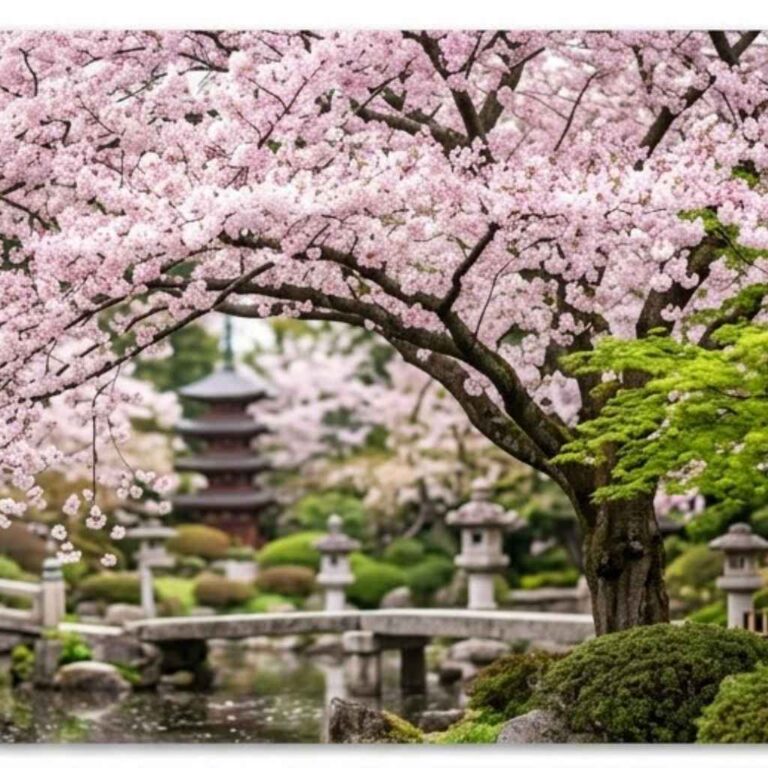
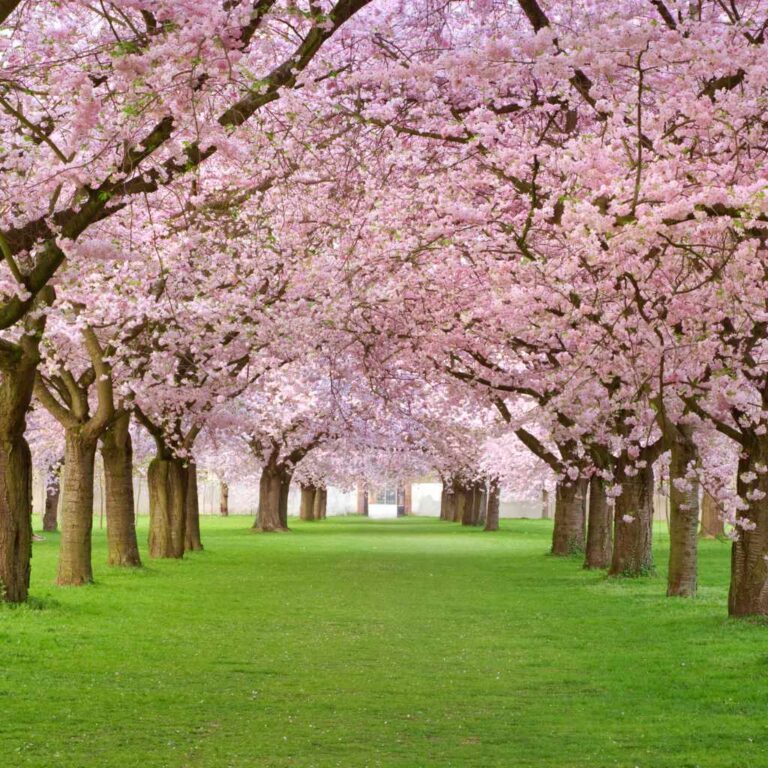
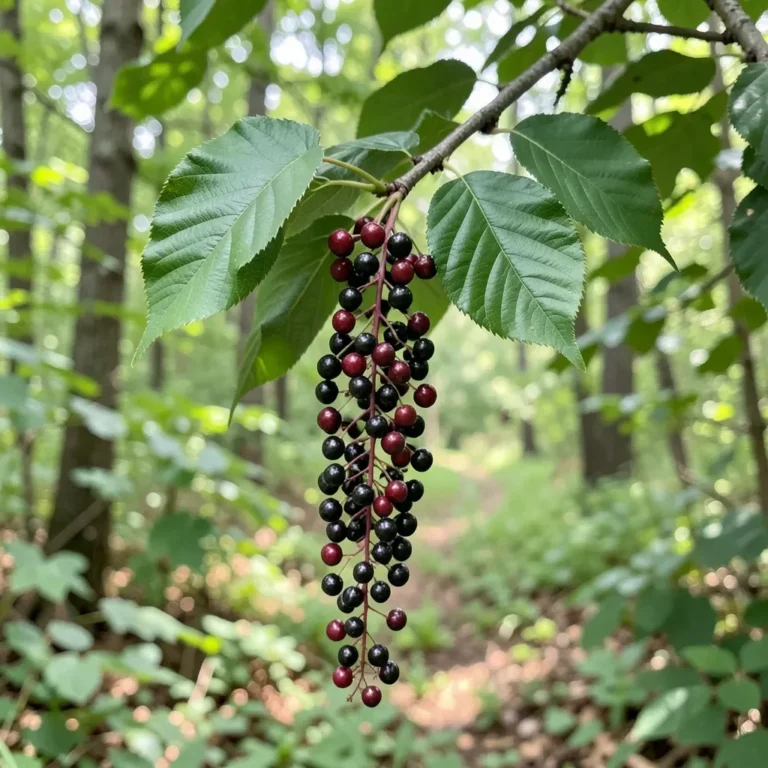
Not every cherry tree is grown for fruit. Some ornamental varieties are bred for their spring blossoms instead, and a few, like the seeds and pits of certain wild cherry species, are toxic if eaten — worth knowing before you plant one near kids or pets. If you’re just getting started with growing cherry trees, the rootstock and variety you choose up front will do more to shorten this timeline than anything you do afterward.
How Rootstock and Propagation Method Change the Timeline
The single biggest factor in how fast a cherry tree fruits isn’t the variety on the label — it’s what that variety is grafted onto. Nurseries graft named cultivars like Bing, Rainier, Montmorency, and Stella onto a separate rootstock chosen for size control and vigor. Dwarfing rootstocks such as Gisela 5 and Gisela 6 are bred specifically to be precocious — they push the tree into flowering and fruiting years earlier than a full-size rootstock ever would, in addition to keeping the tree small enough to manage in a container or small yard.
📊 Trees on Gisela 5 dwarfing rootstock typically flower and set their first fruit in year 2 to 3, while a tree grafted onto standard seedling (Mazzard) rootstock usually needs 6 to 10 years to produce a meaningful crop. — Source: Washington State University Tree Fruit Extension and Oregon State University Extension Service (PNW 619)
| Rootstock / Propagation | Years to First Fruit | Best For |
|---|---|---|
| Dwarf (Gisela 5) | 2–3 years | Small yards, containers, fastest results |
| Semi-dwarf (Gisela 6) | 3–4 years | Backyard orchards wanting size + speed |
| Standard grafted (Mazzard/Colt) | 4–7 years | Long-term size and total yield |
| Grown from seed | 6–10 years | Not recommended if fruit is the goal |
Fruiting Timelines by Variety
Sweet cherry trees (Bing, Rainier, Lapins) typically need 3 to 5 years on a grafted rootstock before their first real harvest, and grow around 12 inches of new growth a year under good conditions. They need full sun, well-drained loamy soil, and — with most sweet varieties — a second compatible tree nearby for pollination.
Sour cherry trees (Montmorency, North Star) are usually faster, fruiting in 3 to 4 years, and grow more slowly at 8 to 10 inches a year. They’re self-fertile, more cold-hardy than sweet varieties, and are the standard choice for pies, jams, and baking rather than fresh eating.
Self-fertile varieties like Stella are worth calling out separately: Stella doesn’t need a second tree to set fruit, which makes it the fastest practical path to a harvest for a single-tree yard. It also pollinates most other sweet cherry varieties, so planting one near a Bing or Rainier that flowers but never fruits often solves the problem.
Factors That Speed Up or Slow Down Fruit Production
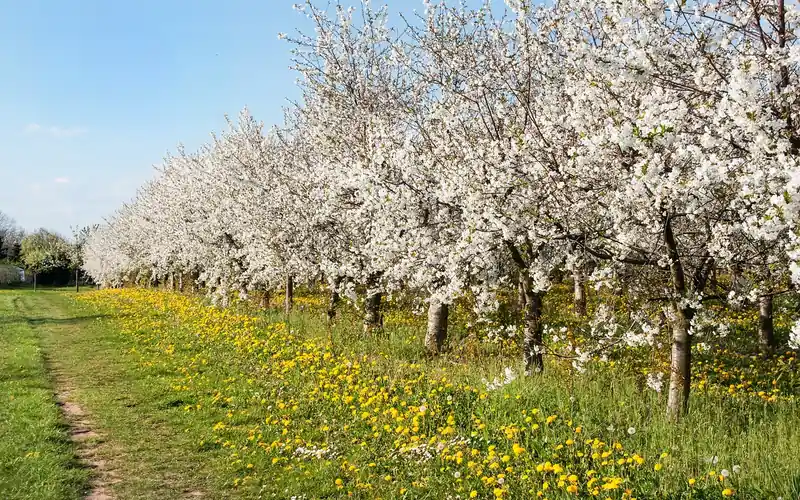
Cherry trees need a real winter chill followed by a mild spring to set fruit — cold dormancy triggers flowering, but a late frost after buds break can wipe out the whole season’s crop in a single night. Wind during bloom is almost as damaging, since it can strip flowers before bees finish pollinating them.
Soil matters more than most guides mention: cherry trees want well-drained loamy soil with a pH between 6.0 and 7.0. Heavy clay holds too much water and encourages root rot; pure sand drains too fast to hold nutrients. A basic soil pH test kit before planting saves years of poor growth later. Trees also need 6 to 8 hours of direct sun a day — anything less noticeably delays flowering and reduces fruit set even on an otherwise healthy tree.
Water deeply once a week rather than lightly every day — this trains roots to grow down instead of staying shallow near the surface. Overwatering rots roots just as reliably as drought stresses them, so consistency matters more than volume.
Optimal Growing Practices to Get Fruit Faster
Prune in late winter or early spring, before buds break, to remove dead or crossing branches and let sunlight reach the tree’s interior — sunlight exposure is what actually converts into fruit, not just branch count. Cherry trees are also more sensitive to over-pruning than most fruit trees; if you’re working on an older or neglected tree, cut gradually across two or three seasons rather than all at once.
Feed established trees twice a year — once in early spring as growth resumes, once in mid-fall after harvest — with a fertilizer formulated for fruit and citrus trees rather than a general all-purpose feed. Too much nitrogen pushes leafy growth at the expense of flowers, so follow the label rate rather than assuming more is better.
Pests are a smaller threat than disease or weather, but check leaves and branches regularly, remove visible pests by hand, and use natural sprays before reaching for anything stronger. A tree kept healthy overall resists pest damage far better than one already stressed by poor watering or nutrition.
Signs Your Cherries Are Ready to Pick
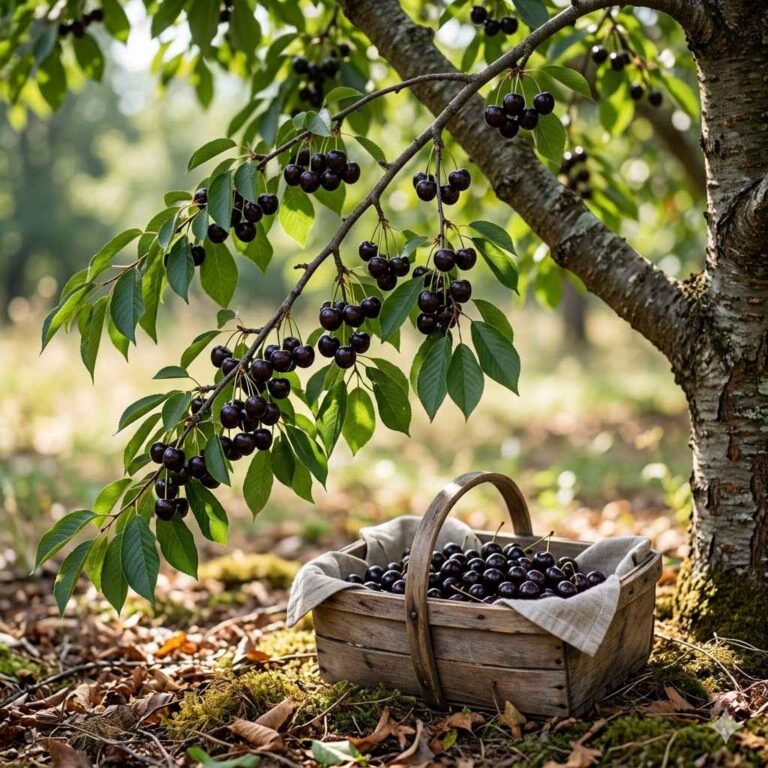
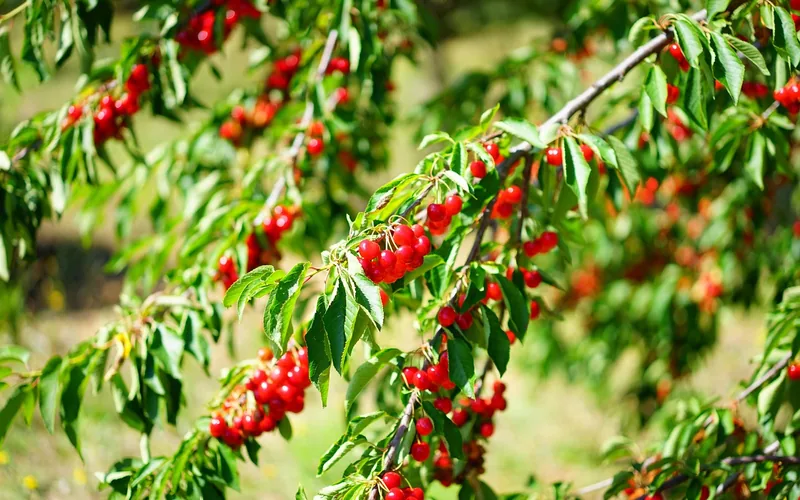
Cherries start green, then shift to red or dark purple as they ripen — color is the first signal, but it isn’t the whole story. A cherry that looks fully colored but is still firm to a gentle touch usually needs a few more days; ripe cherries give slightly when squeezed and separate from the stem with a light tug instead of resisting. Taste-test one or two before picking the whole tree, since color develops faster than sugar content, especially in a cool season.
Common Problems That Delay or Stop Fruiting
Disease Pressure
Fungal infections like brown rot and leaf spot are the most common disease threats to cherry trees, and both spread faster in humid, poorly ventilated canopies. Check leaves and branches regularly, remove and dispose of infected material rather than composting it, and treat early — waiting until a heavy infection is visible usually costs that season’s crop.
Weather Damage
A late frost after buds break is the single most common reason an otherwise healthy, mature tree produces no fruit in a given year — it kills the flowers before pollination can happen. Heavy rain during bloom washes pollen away and can cause fruit rot later, while strong wind breaks branches and strips blossoms. None of these are preventable, which is why even a well-cared-for tree can skip a year.
No Pollinator Partner
A tree that flowers heavily every spring but never sets fruit is almost always a pollination problem, not a disease or care problem. Most sweet cherry varieties need a second, compatible variety blooming at the same time — planting a self-fertile variety like Stella nearby usually fixes it within a season or two.
Frequently Asked Questions
How Soon Do Cherry Trees Fruit?
Grafted cherry trees typically begin to fruit 3 to 5 years after planting, though dwarf rootstocks like Gisela 5 can fruit in as little as 2. Sweet varieties usually take slightly longer than sour ones. Proper pruning, fertilizing, and choosing a variety suited to your climate all influence exactly how soon your tree produces.
Does Rootstock Affect How Fast a Cherry Tree Fruits?
Yes — rootstock affects fruiting speed more than variety does. Dwarfing rootstocks like Gisela 5 are bred to be precocious and typically fruit in 2 to 3 years, while standard seedling (Mazzard) rootstock usually takes 6 to 10 years. If speed matters more than final tree size, ask your nursery specifically what rootstock a tree is grafted onto.
What Fruit Tree Takes the Shortest Time to Bear Fruit?
The papaya tree is one of the fastest, producing fruit in as little as 6 to 12 months. Papayas thrive in warm climates and need minimal care beyond regular watering and sunlight. Among cold-hardy fruit trees, dwarf cherry and dwarf peach rootstocks are among the quickest, at 2 to 3 years.
What Tree Takes 100 Years to Produce Fruit?
The slow-growing jabuticaba tree can take up to 100 years to produce fruit in some cases. Native to Brazil, its fruit grows directly on the trunk. The dark purple berries resemble grapes and are known for a sweet, tart flavor. Patience is essential when cultivating this unusual fruit-bearing tree.
Do You Need Two Cherry Trees to Produce Fruit?
Most sweet cherry varieties are self-unfruitful and need a second, compatible variety nearby for pollination. Sour cherries and self-fertile sweet varieties like Stella are the exceptions — they set fruit reliably on their own. Even with a self-fertile variety, planting two trees generally increases total yield.
Why Is My Cherry Tree Not Producing Fruit?
The most common causes are a missing pollinator partner, a late frost that killed the blossoms, a tree that’s simply too young for its rootstock, or over-fertilizing with a high-nitrogen feed that pushes leaves instead of flowers. Rule out age first — if the tree hasn’t reached its expected fruiting year for its rootstock type, the fix is usually just time.
Conclusion
Most cherry trees need patience — 2 to 3 years on a dwarf rootstock, 3 to 5 for a standard grafted tree, and up to 10 if grown from seed. Rootstock choice matters more than most first-time growers realize, and a missing pollinator partner is the most overlooked reason a flowering tree never fruits. Get the rootstock, sun, soil pH, and feeding right, and the wait is genuinely worth it.
Sponsored / affiliate links. As an Amazon Associate I earn from qualifying purchases. I may earn additional commission from eligible campaigns.